
Habla, Tue 19.7.11, Morning
06:50 Habla
Dalya and Anat were already in the middle of filming when we arrived. At 07:00 the first people who’d been inspected begin exiting. They come through at a steady rate and people aren’t complaining. A relatively large number of soldiers at the checkpoint. About 30 people have crossed by 07:20.
Anat providing information]
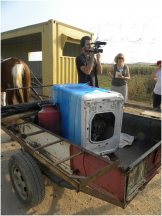 [Photo caption: The washing machine and the media]
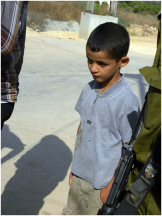 [Photo caption: Anat, Dalya, and the despairing owner of the washing machine]
08:30 Falmiya gate. A car carrying two farmers waitןמע for the DCO commander, to clear up a problem involving land ownership and the right to access the lands. Tedesa and Colonel A. arrive and go to the area with the complainants. When they return, A. has time to explain the complaint to us, as well as other complaints of the famers at the checkpoint. The gate, of course, is open.
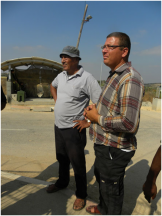 [Photo caption: The DCO commander trying to solve problems at Falamiya]
 [Photo caption: T. and Nina at Falamiya]
A. says that the disagreement regarding ownership of the lands is the result of the names they received, which don’t appear in the tabu. The names are historical, and the way they’ve changed over time create misunderstandings regarding ownership of the lands. A. promises to deal with the substance of each complaint by examining the records. Other farmers present ask him to deal with their requests for crossing permits for laborers. He emphasizes that permits are issued mainly for family members of landowners, but every request is considered and sometimes permits for laborers are approved. A. speaks clearly and forcefully about everything connected to the procedures intended to administer and serve the Palestinians, and explains to us that, with regard to the washing machine from Habla, nothing can be done, all the people and equipment going through the gates are intended solely for agricultural purposes, with no exceptions.
[Photo caption: Worried children at Falamiya]
[Photo caption: Worried adults at Falamiya]
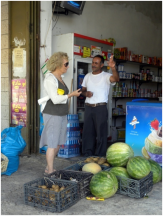
On our way back, Kufr Jamal, Zibad, Abbush, Khaja – we stop at the greengrocer in Khaja. A. offers us coffee and sorrowfully tells us about his son who was born a month and a half ago with a congenital brain defect that is irreparable. M., who’s older than A., misses the good old days when it was possible to move freely and enjoy something of Israel’s bounty. He misses the sea. We promised to contact our “ocean women.” A short conversation that might bring people closer, lead to cooperation.
[Photo caption: At the greengrocer in Funduq.]
Habla
See all reports for this place-
Habla CP (1393)
The Habla checkpoint (1393) was established on the lands of the residents of Qalqilya, on the short road that
connected it for centuries to the nearby town of Habla. The separation barrier intersects this road twice and cut off the residents of Qalqilya from their lands in the seam zone.(between the fence and the green line).
There is a passage under Road 55 that connects Qalqilya to the sabotage This agricultural barrier is used by the farmers and nursery owners established along Road 55 from the Green Line and on both sides of the kurkar road leading to the checkpoint.
This agricultural checkpoint serves the residents of Arab a-Ramadin al-Janoubi (detached from the West Bank), who pass through it to the West Bank and back to their homes. The opening hours (3 times a day) of this agricultural checkpoint are longer than usual, about an hour (recently shortened to 45 minutes), and are coordinated with the transportation hours of a-Ramadin children studying in the occupied in the West Bank.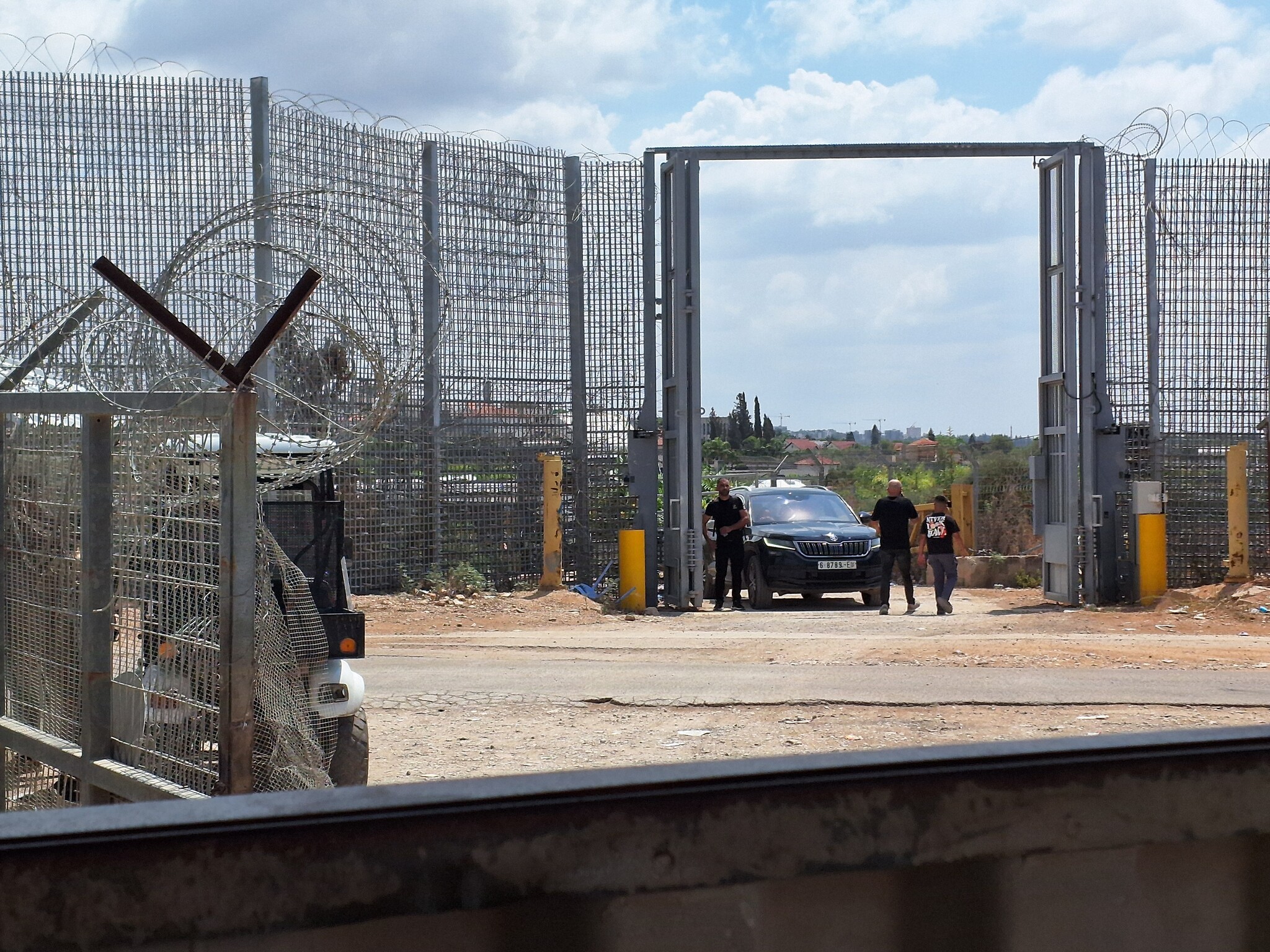 Ronit Dahan-RamatiAug-31-2026Habla. The gate is open
-
