
Hakvasim (sheep) Junction, Hebron, Sansana (Meitar Crossing), South Hebron Hills, Zif Junction
Building for themselves and destroying the homes of the Palestinians.
To the length of road 60 are blockages and barricades without soldiers manning them and allowing of opening according to discretion. This makes the people’s lives even more difficult.
At the turn of the road next to the Meitar checkpoint there is a new sign: A house just as you would want at the Mesuah hill which is at Susiya. Promising quality of building, a warm community and quietness of spirit. (This is the way when one lives at the expense of the neighbours and reality.
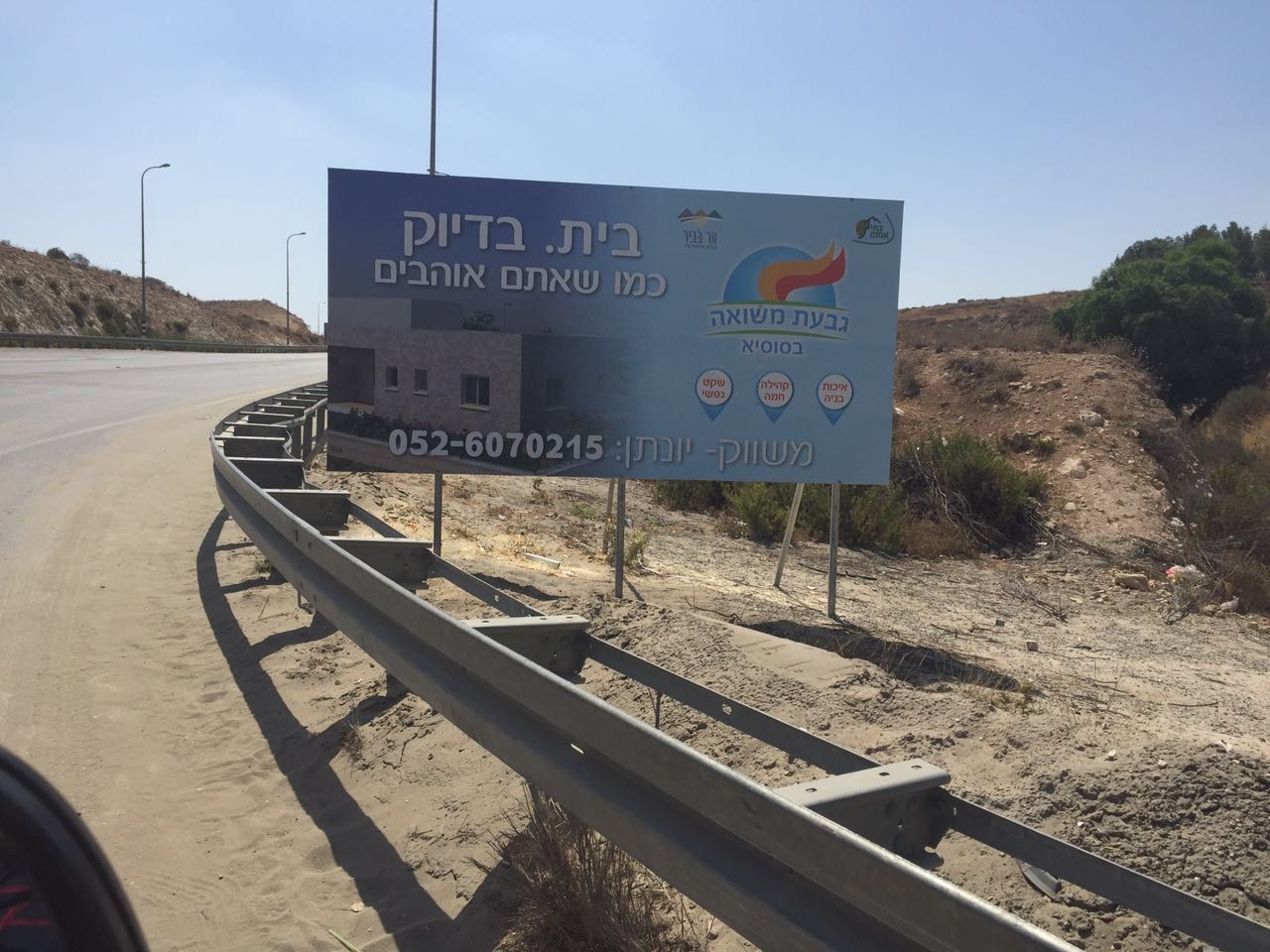
We go a bit further and at the entrance to Samoah there is a dirt and stone barricade which enforces back to back both to people and to commodities.
Also at the entrance to Simiah not far from there this is also so at the other side of the road is also blocked.
We continue and at Carma a blockage of stone and cement barriers and people waiting on both sides. A man runs to me and it is important to him to tell me about the long way they have to drive around to make various arrangements or to the hospital in Hebron or to return.
The entrance to Dahariya is blocked.
The entrance to Avda is blocked. A car which attempts to pass over the mountains of dust gets stuck and digs in.
The entrance to Dir Razah is blocked. Goods are transported back to back.
Next to the spring a man with a donkey is filling plastic bottles with water as if he is in the deserts of Afghanistan.
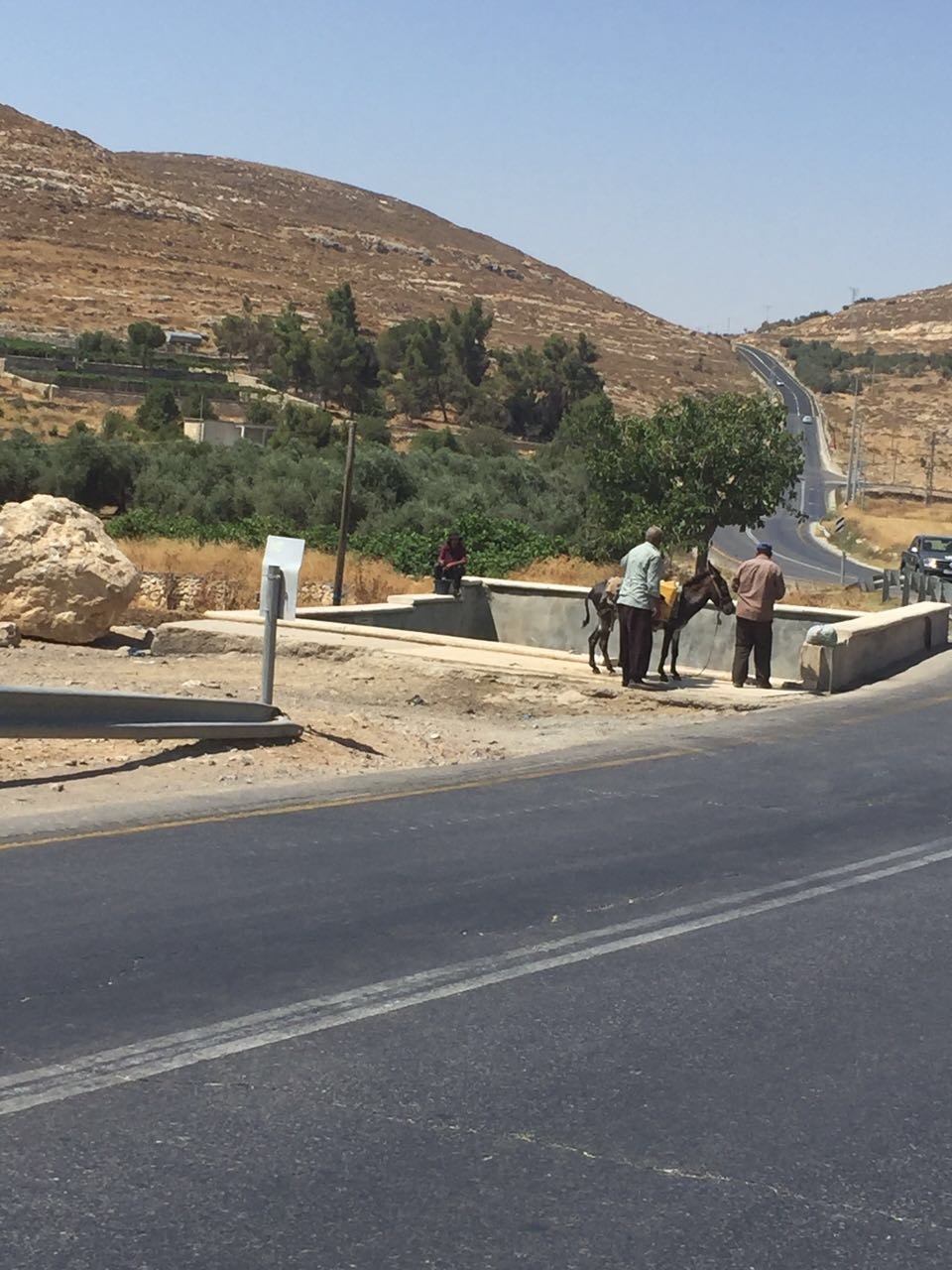
At the checkpoint of Dura-al Fawwar the yellow bars are closed. Also at Dura and also at Fawwar.
The crossroads on top of the sheep crossisng is open but the entrance to Hebron through the industrial area is closed.
Hebron
On the ruins of the synagogue Hazon Davied, there is a kiosk made of tarpaulin and the soldiers are on guard even though there are no Jews to be seen.
Next to the prayer route next to the Cave of the Patriarchs there is a crowd with a settler, soldiers and police.
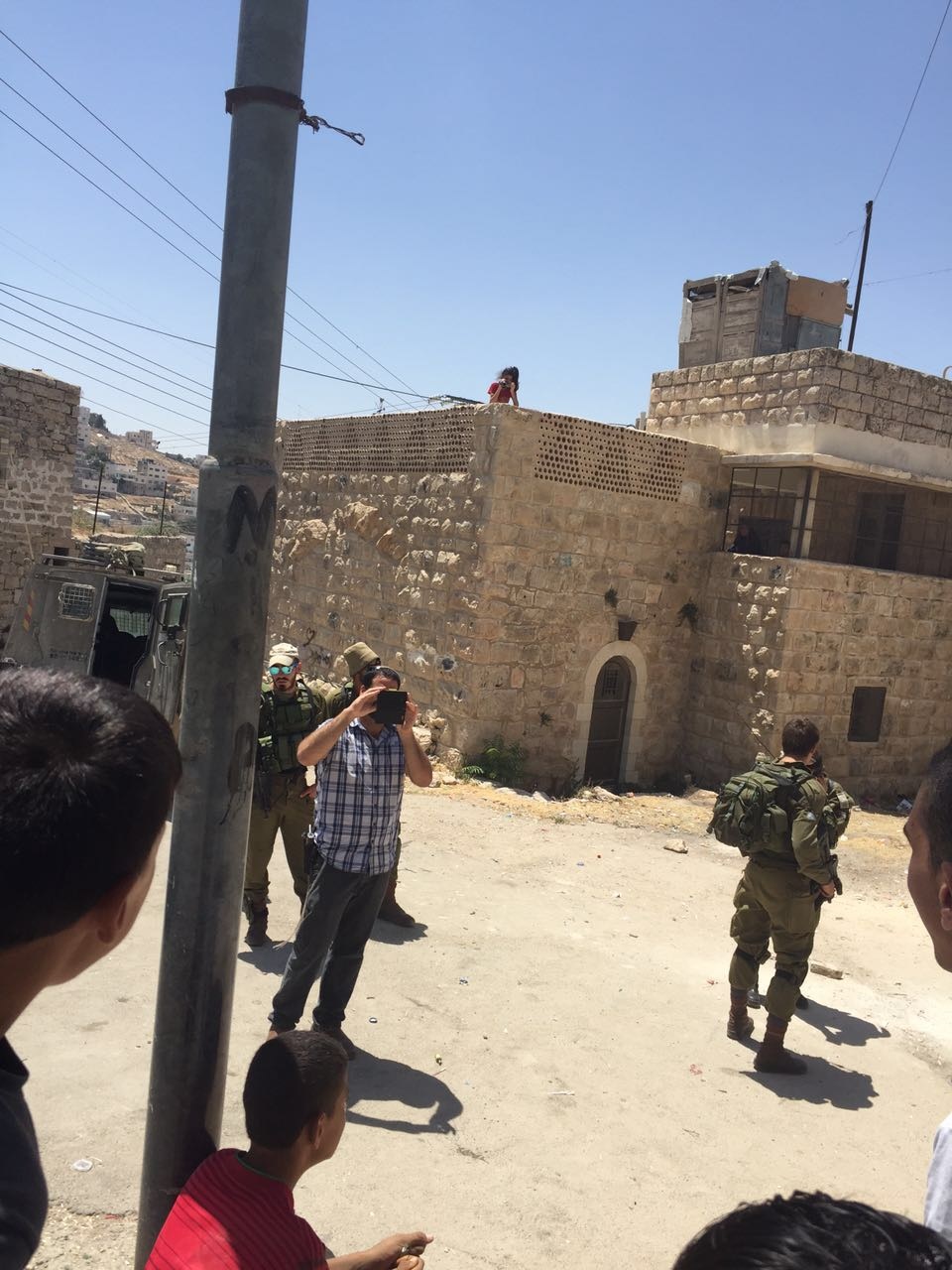
It seems that I.G. has been given a permit from the municipality of Hebron to build a second floor to his home…the settler Chaim has called in the army. He says as one who knows the law, that is forbidden to all who live there, to add on another floor because of security reasons and the permit is not sufficient.
The soldiers and the commander seem embarrassed . No one has trained them to carry out such laws. So Chaim orders them around. He at once photographs me and I photograph him photographing me. He is quiet and polite and explains to me how good life is for all and how many friends there are amongst the Jews and the Palestinians. Only the authorities cause problems.
In that case why is the army necessary here I ask. Because the authorities cause problems they kill nus and we do not kill. We only want peace, he replies. Maybe you should disguise yourself as an Arab I suggest. Go around Hebron for a month and then come and tell me how good it is to be an Arab in Hebron. I don’t need to do so he says. I owe very well what the life and the reality is here.
I phone Hanna Barag because I can not get hold of Muhannad of Yesh din. Hanna promises to be in touch with him. In the meantime the soldier also tries to explain to I. that he is not allowed to continue building and the soldiers prevent it. I. says that he is a witness at the trial of Elor Azariah and since then his traders’ permit had been taken from him for two months, Not that is has been returned to him the problems have started with building his second story. After a long time we leave. We do not know what happened afterwards. The family needs to be accompanied.
We went back through road 317. There everything seems quiet.
But the entrance to Yatta and at the checkpoint of Zif is blocked and barricaded also to back to back. People including women, children and the old drag their parcels and wait for cars to arrived from the other side.
Hakvasim (sheep) Junction
See all reports for this place-
One of the roadblocks (earthworks, rocks, concrete blocks or iron gates) that prevent transit of vehicles to Route 60 in the southern West Bank and block the southern entrance to Hebron. A manned pillbox supervises the place.
-
Hebron
See all reports for this place-
According to Wye Plantation Accords (1997), Hebron is divided in two: H1 is under Palestinian Authority control, H2 is under Israeli control. In Hebron there are 170,000 Palestinian citizens, 60,000 of them in H2. Between the two areas are permanent checkpoints, manned at all hours, preventing Palestinian movement between them and controlling passage of permit holders such as teachers and schoolchildren. Some 800 Jews live in Avraham Avinu Quarter and Tel Rumeida, on Givat HaAvot and in the wholesale market.
Checkpoints observed in H2:
- Bet Hameriva CP- manned with a pillbox
- Kapisha quarter CP (the northern side of Zion axis) - manned with a pillbox
- The 160 turn CP (the southern side of Zion axis) - manned with a pillbox
- Avraham Avinu quarter - watch station
- The pharmacy CP - checking inside a caravan with a magnometer
- Tarpat (1929) CP - checking inside a caravan with a magnometer
- Tel Rumeida CP - guarding station
- Beit Hadassah CP - guarding station
Three checkpoints around the Tomb of the Patriarchs
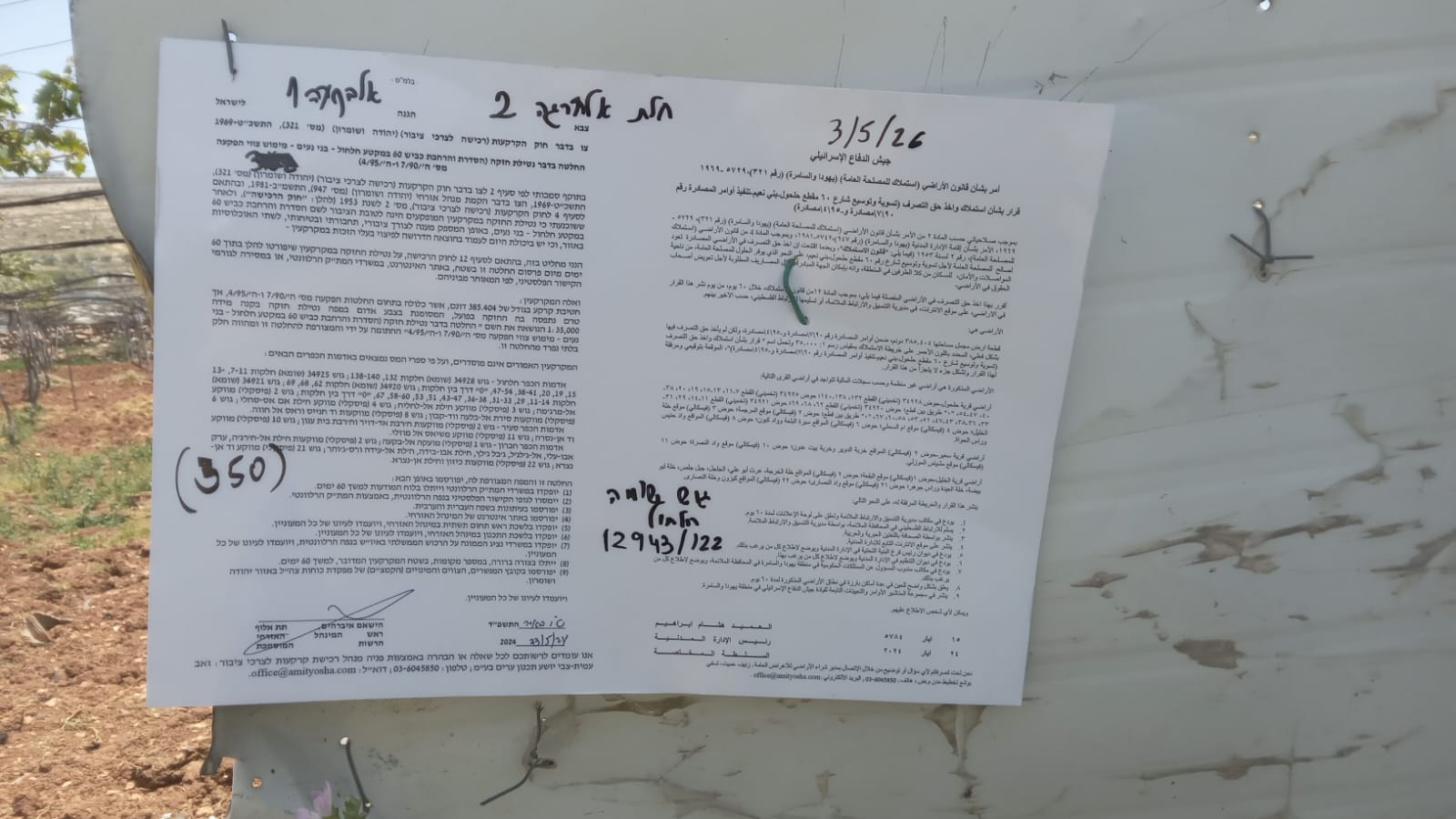 Muhammad D.May-13-2026Hebron - Request for compensation for land expropriation
-
Meitar checkpoint / Sansana
See all reports for this place-
Meitar Checkpoint / Sansana The checkpoint is located on the Green Line and serves as a border crossing between Israel and the West Bank. It is managed by the Border Crossing Authority of the Defense Ministry. It is comprised of sections for the transfer of goods as well as a vehicle checkpoint (intended for holders of blue identity cards, foreign nationals or diplomats and international organizations). Passing of Palestinians is prohibited, except for those with entry permits to Israel. Palestinians are permitted to cross on foot only. The crossing has a DCO / DCL / DCL / DCL (District Coordination Office), a customs unit, supervision, and a police unit. In the last year, a breach has been opened in the fence, not far from the crossing. This breach is known to all, including the army. There does not appear to be any interest in blocking it, probably as it permits needed Palestinian workers without the bureaucratic permits to get to work in Israel. Food stalls and a parking area economy have been created, but incidents of violent abuse by border police have also been recorded. Updated April 2022
-
South Hebron Hills
See all reports for this place-
South Hebron Hills
South Hebron Hills is a large area in the West Bank's southern part.
Yatta is a major city in this area: right in the border zone between the fertile region of Hebron and its surroundings and the desert of the Hebron Hills. Yatta has about 64,000 inhabitants.
The surrounding villages are called Masafer Yatta (Yatta's daughter villages). Their inhabitants subsist on livestock and agriculture. Agriculture is possible only in small plots, especially near streams. Most of the area consists of rocky terraces.Since the beginning of the 1980s, many settlements have been established on the agricultural land cultivated by the Palestinians in the South Hebron Hills region: Carmel, Maon, Susia, Masadot Yehuda, Othniel, and more. Since the settlements were established and Palestinians cultivation areas have been reduced; the residents of the South Hebron Hills have been suffering from harassment by the settlers. Attempts to evict and demolish houses have continued, along with withholding water and electricity. The military and police usually refrain from intervening in violent incidents between settlers and Palestinians do not enforce the law when it comes to the investigation of extensive violent Jewish settlers. The harassment in the South Hebron Hills includes attacking and attempting to burn residential tents, harassing dogs, harming herds, and preventing access to pastures.
There are several checkpoints in the South Hebron Hills, on Routes 317 and 60. In most of them, no military presence is apparent, but rather an array of pillboxes monitor the villages. Roadblocks are frequently set up according to the settlers and the army's needs. These are located at the Zif Junction, the Dura-al Fawwar crossing, and the Sheep Junction at the southern entrance to Hebron.
Updated April 2022
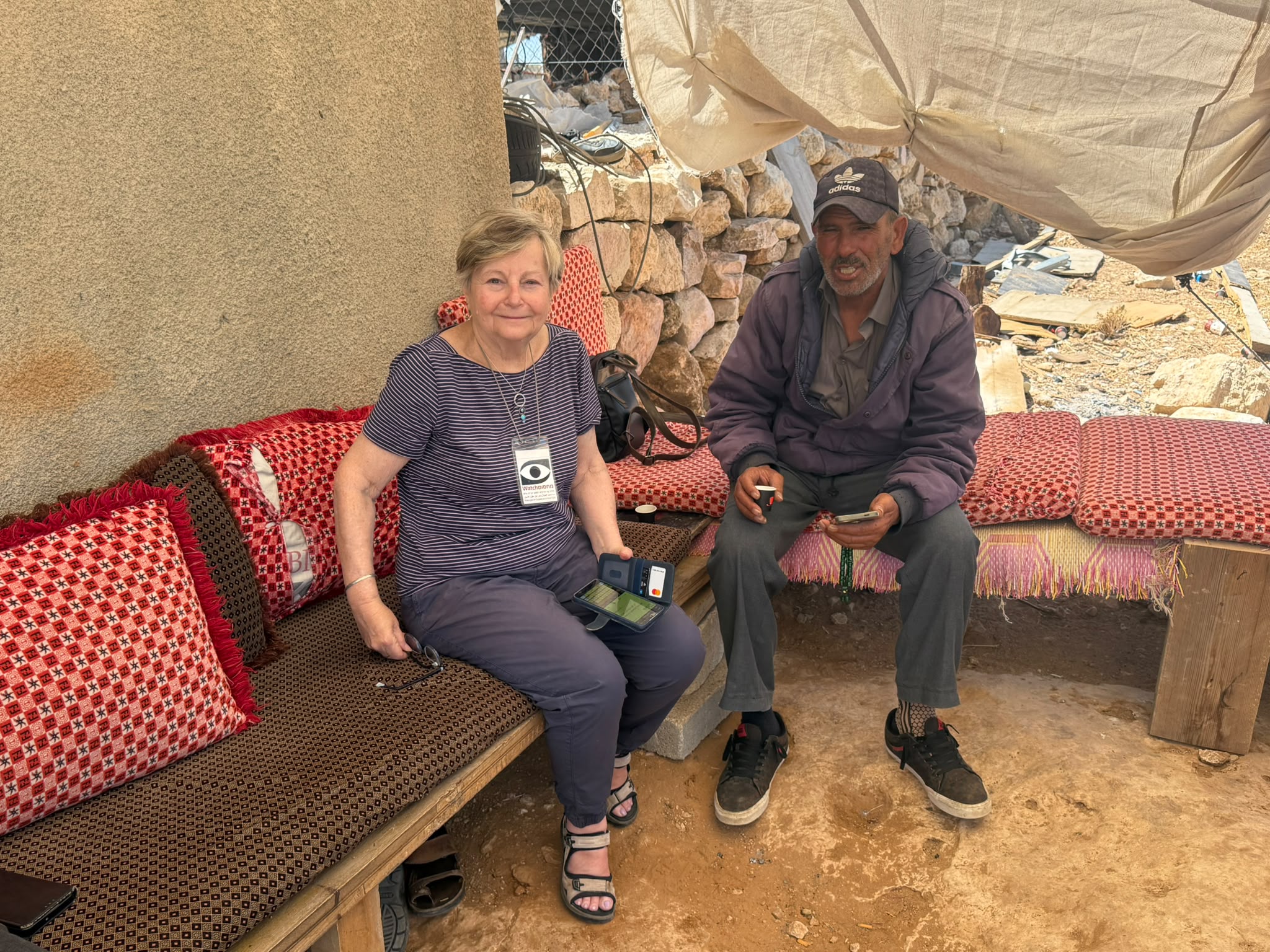 Muhammad D.Jul-12-2026Smadar with Taleb on duty at Qawawis
-
Zif Junction
See all reports for this place-
Zif Junction located on the crossroads that directs towards Road 356 to Yata. Yata is the district city of the southern Hebron Mountains. Usually, this junction is open to traffic. The nearby pillbox is unmanned. But the army and police are present occasionally, sometimes setting up a checkpoint and sometimes detaining residents from the big city. Often, the Israeli policemen inspect vehicles and distribute driving reports to Palestinian vehicles. s
-