
Hamra (Beqaot), Ma’ale Efrayim, Tayasir, Za’tara (Tapuah)
10:30 Za’tara/Tapuach junction checkpoint
No soldiers in position; two Border Policemen wander around the plaza, not stopping vehicles.
10:45 Ma’aleh Efrayim
No soldiers, neither when we returned in the afternoon.
13:30 Hamra checkpoint
Traffic flows, one lane is blocked, the same when we returned in the afternoon. We were told there’s congestion in the late afternoon.
Tayasir checkpoint
Open freely to traffic. A huge bulldozer is parked inside the checkpoint compound. Preparing for demolitions? (Demolitions were carried out the following day in Homsa)
El-Auja spring
It’s north of Jericho, in the southern Jordan Valley. Water flows copiously. Some of this year’s abundant rainfall still flows through the elaborate network of canals built by the Jordanians before 1967. The network served the town of el Auja and the surrounding villages, and also fed the Dead Sea. But the many years of neglect are evident. The dams are rusted and some of the canals are damaged. Palestinian families are having a good time in the trees’ shade and the channels where water flows. Children jump into the cool water with inner tubes and air mattresses. In a month or two this will all dry up because of Israel’s huge pumps (Na’aran 1, 2, 3, 4) which steal all the water from the Palestinians for the benefit of the settlements.
Effects of military exercises
A large military exercise was conducted in the Jordan Valley at the beginning of May, during which many residents were, as usual, chased from their homes for a few days and forced to find shelter for themselves and their flocks under bushes or bridges, crowded together and frightened, until the firing stopped. The rockets set afire the fields the Palestinians had worked hard to cultivate (and because of this year’s rains the crop was bountiful), and the unexploded ammunition, the thousands of shells and other live ammunition that the army, criminally negligent, leaves behind injures and kills shepherds, most of whom are just children. I was told an investigation by the Palestinian Authority determined that one of the youths was injured on 22.5.15 by a discarded phosphorous shell(!!!), whose use is prohibited by international law. On 19.5 the firing caused a huge fire which destroyed thousands of dunums of crops, from the Kfir base (near Hemdat) to near the Tayasir checkpoint. With no help from the army, and without running water, the residents fought the fire and lost. On the other hand, planes easily extinguished the flames that came near the Kfir base. One of the people fighting the fire was badly injured when the heat of the flames exploded live ammunition and shrapnel penetrated his head.
Child-slaves in the settlements
A group of some 15 laborers stood on a path leading to fields opposite the entrance to the Gilgal settlement, waiting for transportation at the end of the work day. It was 13:00 and the sun blazed. They were children aged 10-14, running around and arguing like children throughout the world. When we approached them they told us happily that they work in the fields of green peppers. They were very curious about us, and when we told them we’re Jews from Tel Aviv they rained questions on us. They arrive from the West Bank at 05:00, and work eight hours until early afternoon.
Hamra (Beqaot)
See all reports for this place-
One of the Jordan Rift Valley checkpoints that prevent direct transit between the West Bank and the Jordan Valley, in addition to Tayasir Checkpoint. Located next to Hamra settlement, on Route 57 and the Allon Road.
Read about the peple of the Jordan Valley and the quiet transfer happening there.
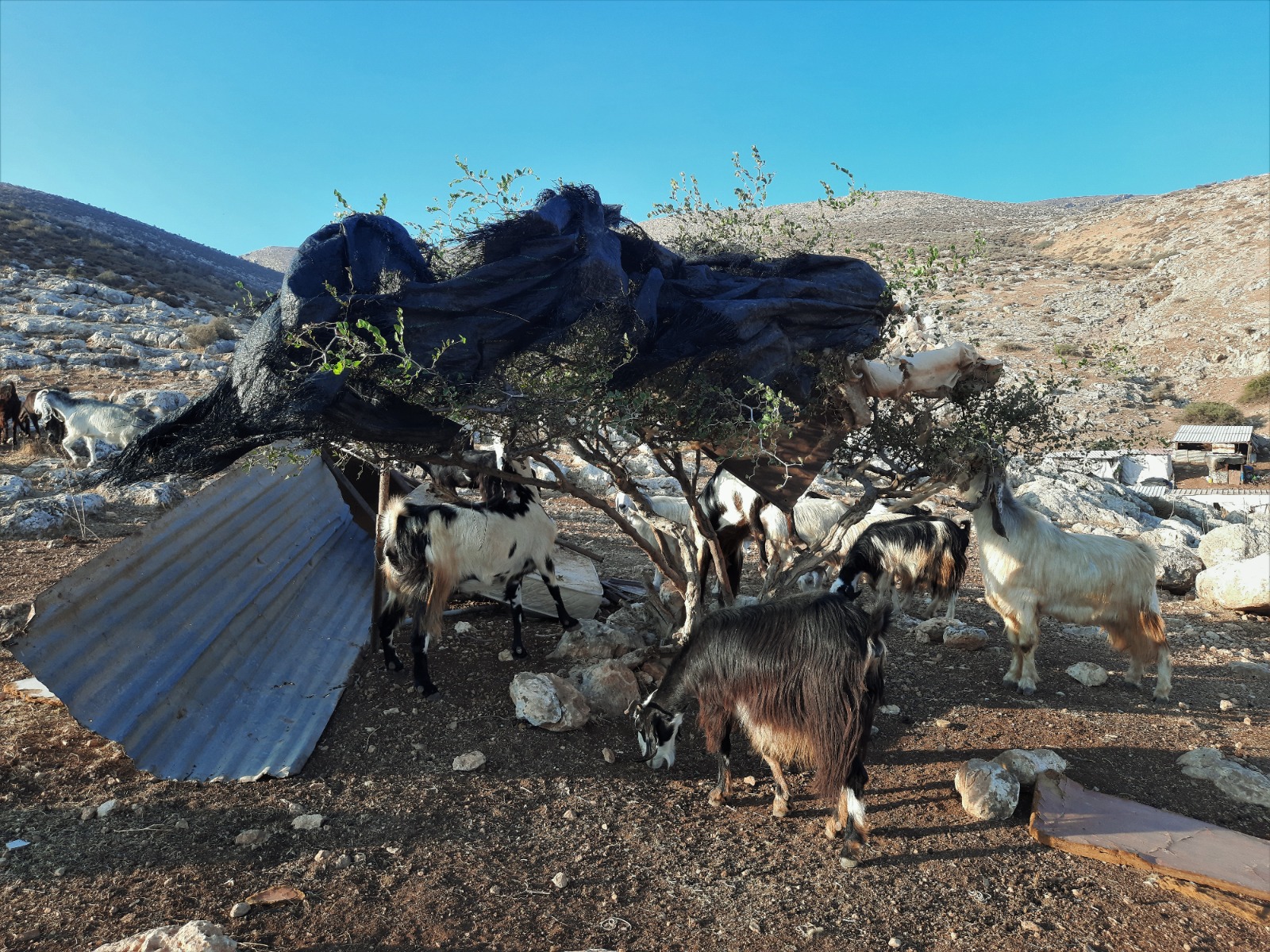 Shahar ShilohNov-3-2021Ein Shibli: grazing begins close to home
-
Ma'ale Efrayim
See all reports for this place-
Ma'ale Efrayim On the road connecting Route 90 (the Jordan Valley road) to the Allon Road.
-
Tayasir CP
See all reports for this place-
Located on road 5799, It is one of the checkpoints control the passage between the northern West Bank and the Jordan Valley. For a long time, it stood empty and open, with only a sign next to it warning against entering Area A. It was adjacent to an old military camp - now everything is neglected. How much money was invested here, and how much brainwashing was done to the soldiers of Netzah Yehuda and Kfir.
Today, it is very difficult to pass there. Many delays. Often, teachers from Tubas are not allowed to pass into the Valley to villages like Ein al-Bida where the local schools are located, and there are no classes. There are additional days when the checkpoint is closed. In general, there is a wait there of about two to four hours to go towards the Valley and also to return. Many times the Palestinians are forced to use the Hamra checkpoint, which also leads into Tubas and the West Bank, but there is also a huge queue there and a long wait.
Following a deadly attack on soldiers at the nearby base in February 2025, the checkpoint was completely closed for the time being. (Updated March 2025)
-
Za'tara (Tapuah)
See all reports for this place-
Za'tara (Tapuah) Za'tara is an internal checkpoint in the heart of the West Bank, at the intersection of Road 60 and Road 505 (Trans-Samaria), east of the Tapuah settlement. This checkpoint is the "border" marked by the IDF between the north and south of the West Bank, in accordance with the policy of separation between the two parts of the West Bank that has been in place since December 2005. At the Za'tara checkpoint, there are separate routes for Israelis and Palestinians. In the route for Israelis, there are no inspections and the route for Palestinians inspects. The queue lengthens and shortens suits. The checkpoint is open 24 hours a day. The checkpoint is partially staffed and the people who pass through it are checked at random.
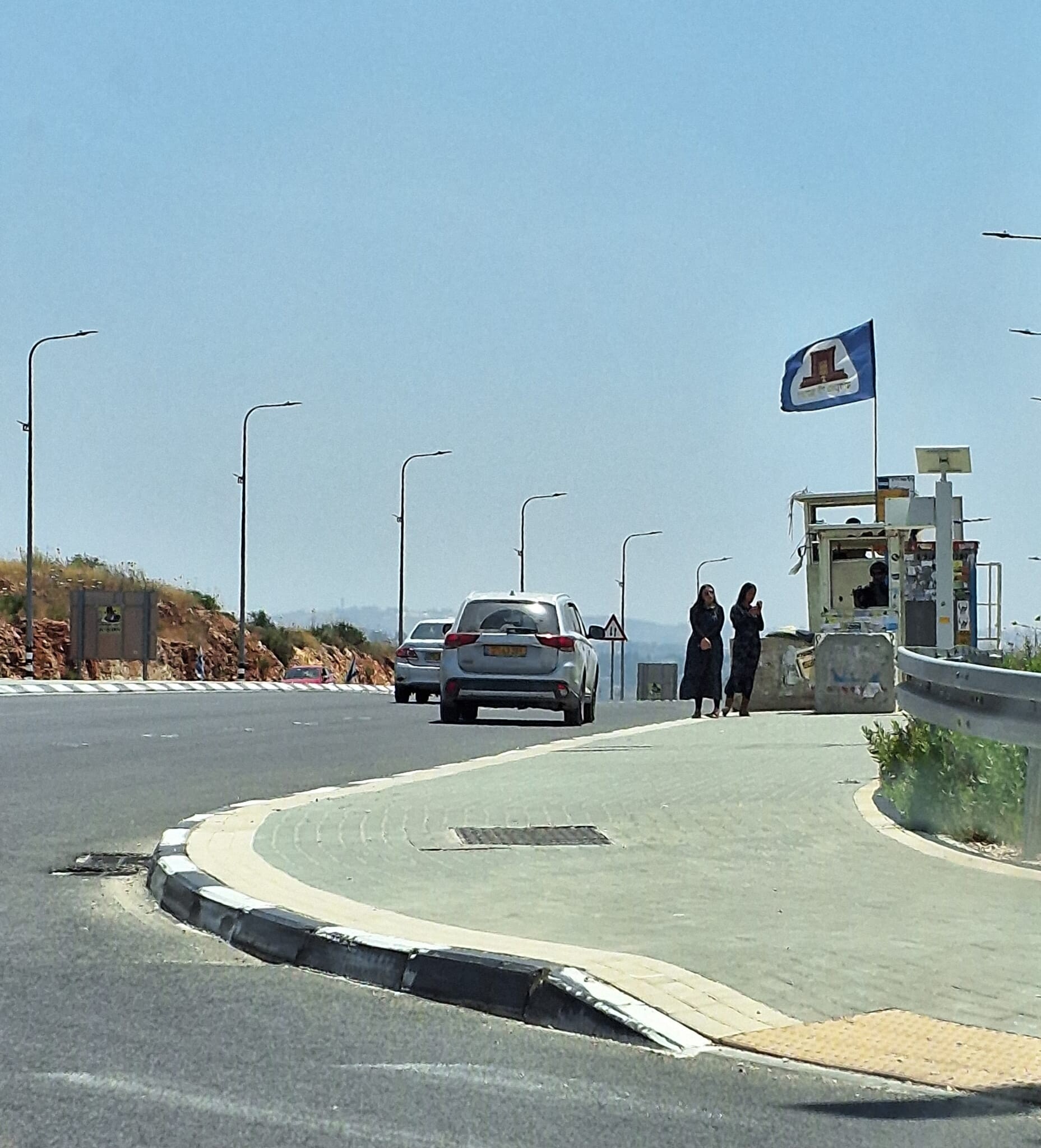 Ronit Dahan-RamatiJun-9-2026Za'atara (Tapuach Junction). The Temple Flag Above a Station
-
