
Hamra (Beqaot), Ma’ale Efrayim, Tayasir, Za’tara (Tapuah), Sun 15.4.12, Afternoon
Translator: Charles K.
*About ten days ago the army demolished two buildings that had been erected without a permit in the area of Parisiyya, north of Hamam el-Maliah. Because the Oslo Agreements define the entire Jordan Valley as Area C, completely under Israeli control, since 1967 the Civil Administration has not granted any Palestinian a permit to construct even a shed or dig a cistern to collect rainwater, and every building constructed during the past 45 years is illegal and subject to demolition at any moment.
*At the Za’tara junction, we witnessed activities that reminded us of how people were punished at the Huwwara and Beit Iba checkpoints during the difficult times before the Nablus checkpoints were removed.
*The Gochia checkpoint is closed as usual, as it has been during the past few months.
Za’tara junction 11:5-11:40
No inspections. We were waiting for a man blacklisted by the Shabak, who was to sign documents so Sylvia could file an appeal.
We picked up two young hitchhikers, settlers from Yizhar and Itamar. We had an interesting conversation, particularly with one of them, a hesder soldier from the Kfir Brigade. We learned about him, his education, what he expects out of life, etc. At the Hamra checkpoint, he met soldiers he knew from the brigade and said they’d received orders from their commanders not to talk to women from MachsomWatch.
Ma’aleh Efraim checkpoint
There were no soldiers when we came or when we returned.
Hamra checkpoint -12:20
Almost no traffic. Vehicles entering Area A go through quickly without inspection.
We saw two soldiers on the right side of the road before the Tayasir checkpoint, a water wagon, and two tents, and more soldiers some distance away.
Tayasir checkpoint – 14:00
Traffic is light here too. People crossing to Area A are inspected – they hand their IDs to the soldier. Those coming from the West Bank get out of their vehicles and are inspected, as are their belongings.
We spoke to a soldier who was on his way to the base next to the checkpoint, but he took care not to approach us (apparently because of the order given to the soldiers at the Hamra checkpoint).
M., who had been beaten in early February by the person in charge of security at the Rotem settlement, and filed a complaint with the police, is still waiting for the attacker’s trial to take place.
K. told us that ten days ago the Civil Administration demolished two buildings in the Parisiyya area even though they’d been built a few years ago because they’d been erected without a permit.
Three tanks and three tank transporters opposite the Ro’I settlement.
Gochia checkpoint – 15:15
The checkpoint is closed as usual, and no-one is waiting, because everyone knows there’s no chance of it opening. We phoned Zaharan at the DCO, as usual, who said he’d been promised that soldiers would be sent to open the gate. We didn’t wait to see whether they actually arrived.
Za’tara checkpoint (Tapuach junction) – 16:10-17:25
A Palestinian taxi and a minibus were detained in the middle of the plaza and we went over to see what was going on. Two young men have been removed from the taxi; the driver said that one didn’t have an ID. They’ve been waiting for five minutes. Most of the young people are students at Al-Najah. They were taken to be questioned by the Shabak on the other side of the white wall concealing the buildings at the northeast part of the plaza. Students from the second taxi were also taken for questioning. When they returned, they reported they’d been questioned about various matters, about their families, and the interrogators tried to enlist them to cooperate with the Shabak. Mostly, they were offered money. They refused.
One of the detainees from the first taxi returned about 20 minutes later. The soldier (there were 3-4 Border Police soldiers) tried to convince the driver to go on and leave the second detainee behind. The driver was uncertain, asked for our advice (we said it was his decision), and finally left. “His” detainee was made to stand inside a concrete cube next to an armed soldier and stood there for another hour until we left at 17:25. We weren’t able to speak to him. Two other young men stood near him, and after about half an hour a soldier brought their ID cards from the Shabak and they were released.
The students riding in the minibus were taken one by one, in turn, for questioning by the Shabak. The minibus was still waiting when we left – it had been delayed for more than an hour and a half.
It’s been a long time since we’ve seen young people detained at the checkpoints. Three weeks ago the same thing occurred here. It turns out that soldiers stop taxis randomly and send young passengers to be questioned by the Shabak.
A rental car from the Eldan company also stood in the plaza, carrying a police officer and a soldier. A Palestinian vehicle without a license plate but with the license plate number on a sign attached to the windshield was directed to it. The two young men in the vehicle were detained for a short time, had a friendly conversation with the soldier and then continued on their way.
Hamra (Beqaot)
See all reports for this place-
One of the Jordan Rift Valley checkpoints that prevent direct transit between the West Bank and the Jordan Valley, in addition to Tayasir Checkpoint. Located next to Hamra settlement, on Route 57 and the Allon Road.
Read about the peple of the Jordan Valley and the quiet transfer happening there.
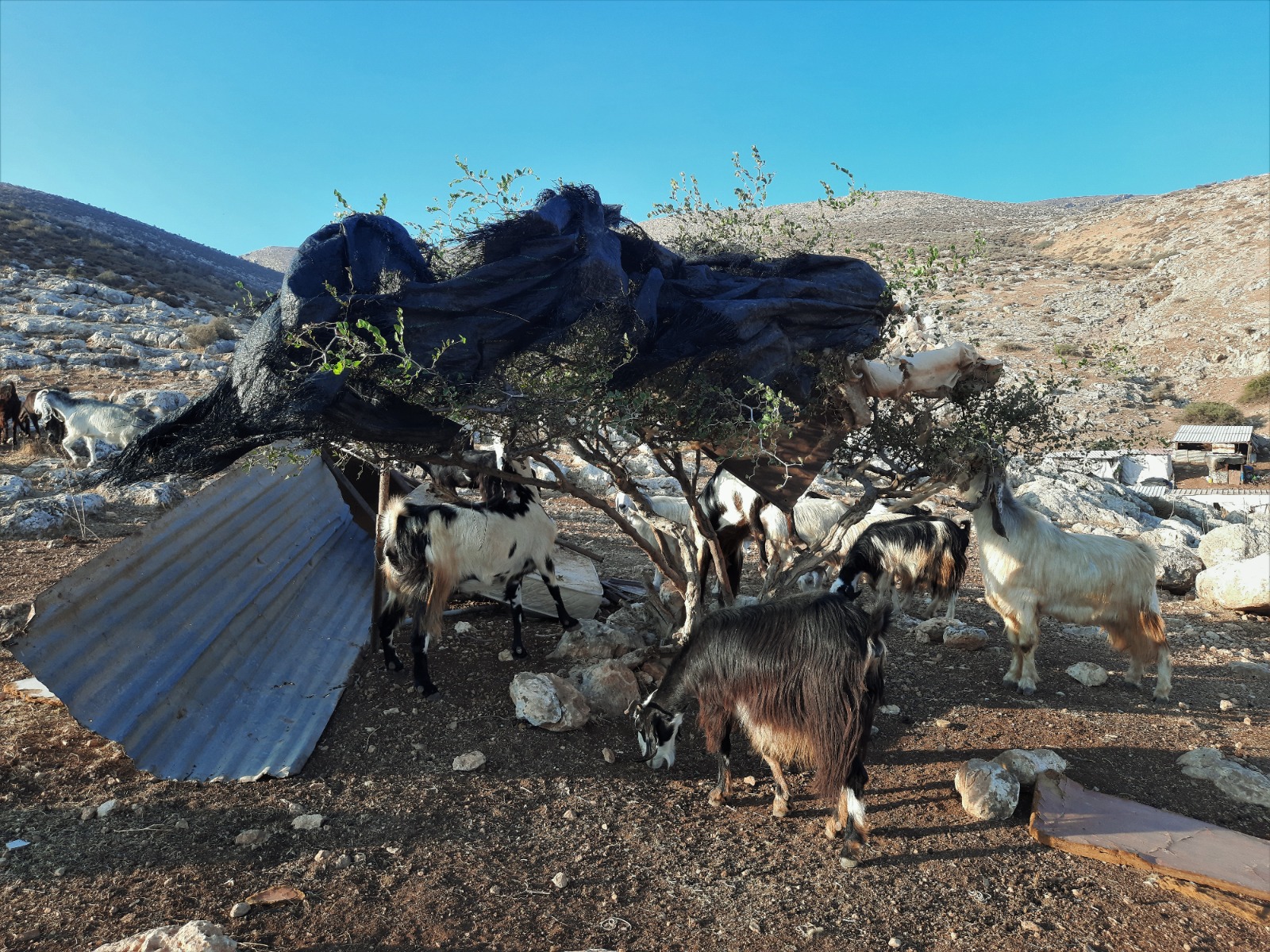 Shahar ShilohNov-3-2021Ein Shibli: grazing begins close to home
-
Ma'ale Efrayim
See all reports for this place-
Ma'ale Efrayim On the road connecting Route 90 (the Jordan Valley road) to the Allon Road.
-
Tayasir CP
See all reports for this place-
Located on road 5799, It is one of the checkpoints control the passage between the northern West Bank and the Jordan Valley. For a long time, it stood empty and open, with only a sign next to it warning against entering Area A. It was adjacent to an old military camp - now everything is neglected. How much money was invested here, and how much brainwashing was done to the soldiers of Netzah Yehuda and Kfir.
Today, it is very difficult to pass there. Many delays. Often, teachers from Tubas are not allowed to pass into the Valley to villages like Ein al-Bida where the local schools are located, and there are no classes. There are additional days when the checkpoint is closed. In general, there is a wait there of about two to four hours to go towards the Valley and also to return. Many times the Palestinians are forced to use the Hamra checkpoint, which also leads into Tubas and the West Bank, but there is also a huge queue there and a long wait.
Following a deadly attack on soldiers at the nearby base in February 2025, the checkpoint was completely closed for the time being. (Updated March 2025)
-
Za'tara (Tapuah)
See all reports for this place-
Za'tara (Tapuah) Za'tara is an internal checkpoint in the heart of the West Bank, at the intersection of Road 60 and Road 505 (Trans-Samaria), east of the Tapuah settlement. This checkpoint is the "border" marked by the IDF between the north and south of the West Bank, in accordance with the policy of separation between the two parts of the West Bank that has been in place since December 2005. At the Za'tara checkpoint, there are separate routes for Israelis and Palestinians. In the route for Israelis, there are no inspections and the route for Palestinians inspects. The queue lengthens and shortens suits. The checkpoint is open 24 hours a day. The checkpoint is partially staffed and the people who pass through it are checked at random.
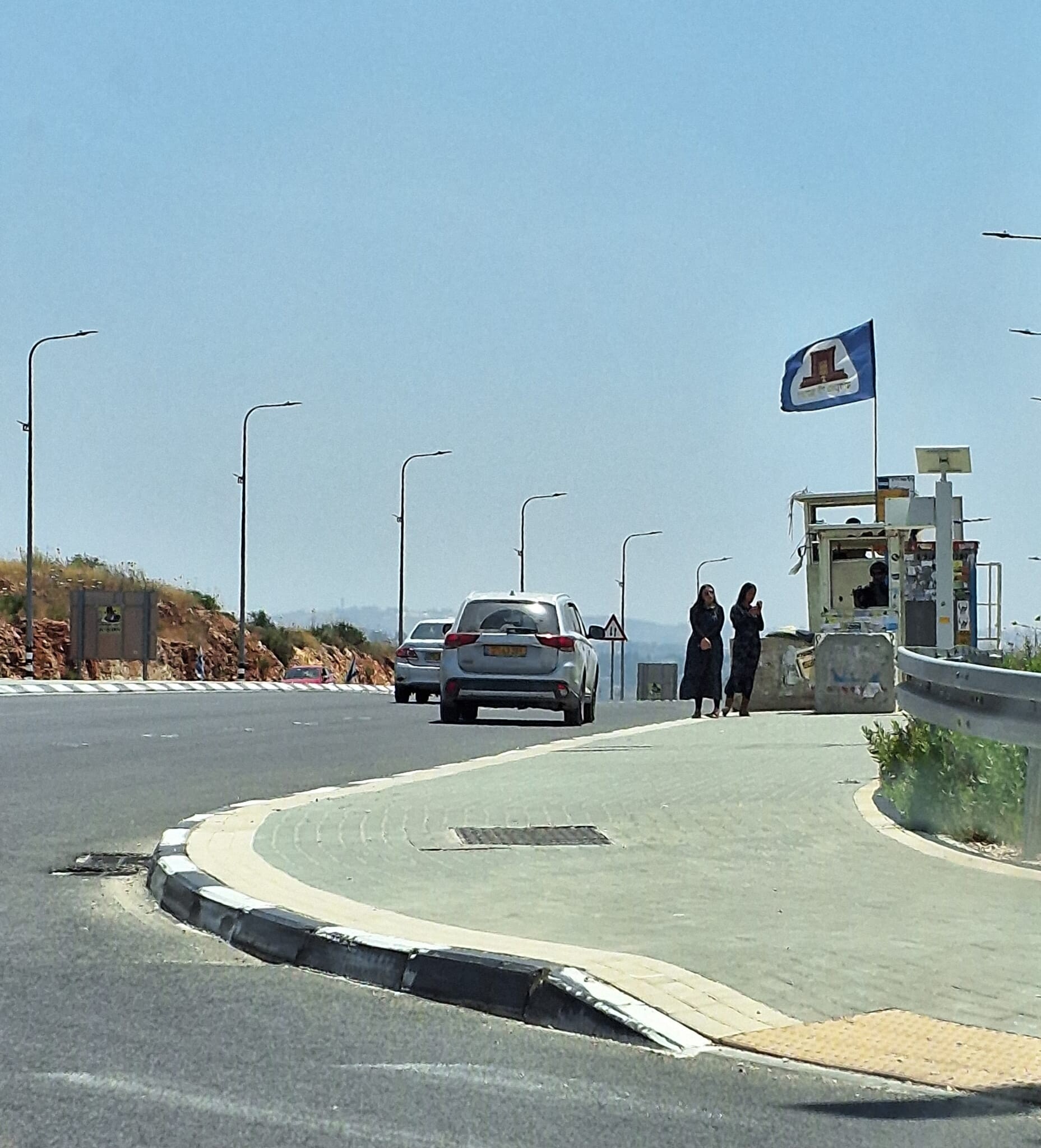 Ronit Dahan-RamatiJun-9-2026Za'atara (Tapuach Junction). The Temple Flag Above a Station
-
