
Hamra (Beqaot), Ma’ale Efrayim, Tayasir, Za’tara (Tapuah), Sun 9.9.12, Afternoon
Translator: Charles K.
Restrictions on the entry of West Bank residents to the Jordan Valley have been lifted. That’s what the commander of the Ma’aleh Efrayim checkpoint told us. Majid, at the DCO, confirmed it over the phone. We didn’t verify it at the Hamra and Tayasir checkpoints because we learned of it only when we left the Jordan Valley. The reason the checkpoints between the West Bank and the Jordan Valley continue to operate hasn’t changed (though the checkpoints within the West Bank have “opened” up) – to prevent vehicles belonging to West Bank residents from entering the Jordan Valley, although the residents may enter as passengers in vehicles belonging to residents of the Jordan Valley. So it isn’t clear why the checkpoints we visit in the northern Jordan Valley remain a daily nuisance and injustice to the population if they are now superfluous? It seems there’s no explanation other than to continue to prove “who’s in charge” and continue the harassment.
We met two youths from the Hebron hills, a boy and a girl, who had been sent to live with relatives because of the harassment of Bedouin there.
12:35 Za’tara checkpoint/Tapuach junction – Nothing unusual. No inspections.
12:55 Ma’aleh Efrayim checkpoint – No soldiers.
13:15 Hamra checkpoint
Traffic is light at this hour, as usual. Occasional cars cross from west to east almost without inspection. Two trucks arrive from the other direction. One is checked for about two minutes, the second for more than five minutes.
When we returned at 16:30 we again waited at the checkpoint because we saw many people who’d come through on foot and waited for the cars they’d arrived in. Everyone coming from the west gets out of the taxis and goes through a special crossing, including scanning of their belongings. We waited with them for about 10 minutes until the taxis came. I don’t know how long they’d waited before we arrived. Some people were travelling to Jordan, apparently with much luggage (which will be inspected again when they exit the territories).
One man, ten years blacklisted from entering Israel, is not prevented from working in a café owned by Jews. He asked us to get him removed from the blacklist; we referred him to Sylvia.
The setters are expanding the area they’re cultivating. As autumn comes they’ve begun plowing the fields to be planted. In the region between Gitit and Mechora, next to the abandoned packing house, fields are again being plowed. We also saw fields that Palestinians plowed, particularly around the road to Hamam al Malih. The difference is that the settlers receive generous water allocations from Mekorot for irrigation (to grow vegetables, which are gluttons for water), while the Palestinians, who aren’t allocated water, depend on the heavens and therefore limit themselves to a small number of crops, primarily fodder for the livestock. The drinking water available to Palestinians is also limited; water is allocated only to the villages, not to the Bedouins scattered through the area who are the majority of its inhabitants.
The settlement of Ro’i also expanded its cultivated area. A new vineyard has been planted west of the Alon road.
As usual, we visited a number of families, brought clothing, shoes and toys collected by good people who send them with us. In one of the families we met two youths, a boy and a girl, relatives from the Hebron hills, sent here because of the persecutions and the demolition of homes underway there. They asked whether we could give them a ride to their family. Living with an unfamiliar family isn’t easy; they’re very homesick. They’re not used to expressing their feelings.
15:15 Tayasir checkpoint
Light traffic, as usual at this hour.
17:00 Ma’aleh Efrayim checkpoint – To our surprise, the checkpoint is manned. Four vehicles wait on line from the West Bank and are inspected pretty quickly. A sergeant, who seems to be in command, approaches us, saying that residents of the West Bank are permitted entry to the Jordan Valley. That’s a huge innovation. True, that’s what we were also told last time, but it was during Ramadan and we thought it was only for the holiday.
So why the checkpoint?, we asked.
So dangerous elements don’t infiltrate the Jordan Valley. And there’s also a computer list of people who aren’t allowed entry.
17:20 Za’tara checkpoint/Tapuach junction
We always enter the plaza to look around. This time a police vehicle arrived along with two civilian vehicles; soldiers and police officers emerged. They gathered next to the guard tower and conversed. The shifts changed. The vehicles left; three Border Police soldiers remained, including a female and a male.
Hamra (Beqaot)
See all reports for this place-
One of the Jordan Rift Valley checkpoints that prevent direct transit between the West Bank and the Jordan Valley, in addition to Tayasir Checkpoint. Located next to Hamra settlement, on Route 57 and the Allon Road.
Read about the peple of the Jordan Valley and the quiet transfer happening there.
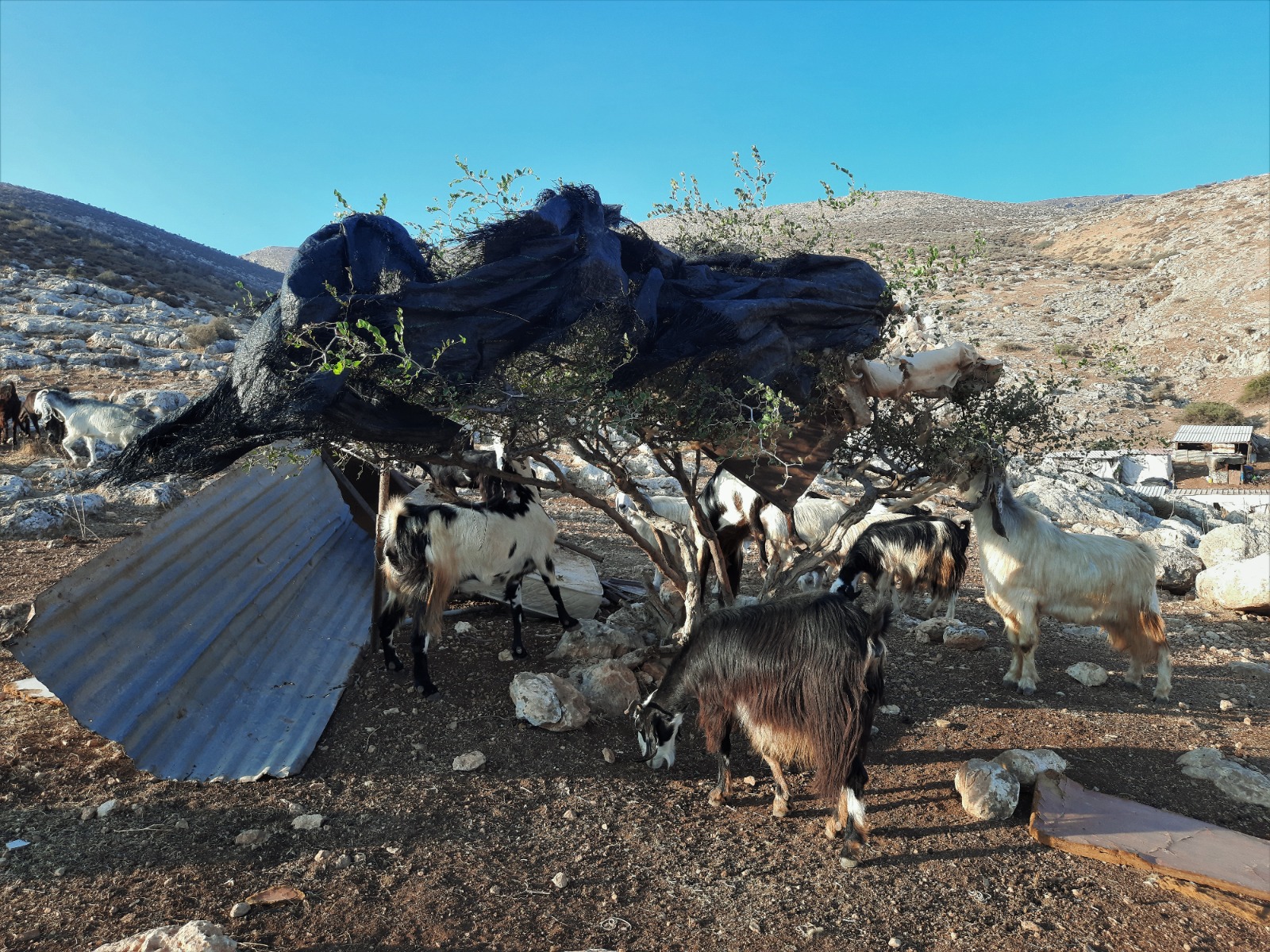 Shahar ShilohNov-3-2021Ein Shibli: grazing begins close to home
-
Ma'ale Efrayim
See all reports for this place-
Ma'ale Efrayim On the road connecting Route 90 (the Jordan Valley road) to the Allon Road.
-
Tayasir CP
See all reports for this place-
Located on road 5799, It is one of the checkpoints control the passage between the northern West Bank and the Jordan Valley. For a long time, it stood empty and open, with only a sign next to it warning against entering Area A. It was adjacent to an old military camp - now everything is neglected. How much money was invested here, and how much brainwashing was done to the soldiers of Netzah Yehuda and Kfir.
Today, it is very difficult to pass there. Many delays. Often, teachers from Tubas are not allowed to pass into the Valley to villages like Ein al-Bida where the local schools are located, and there are no classes. There are additional days when the checkpoint is closed. In general, there is a wait there of about two to four hours to go towards the Valley and also to return. Many times the Palestinians are forced to use the Hamra checkpoint, which also leads into Tubas and the West Bank, but there is also a huge queue there and a long wait.
Following a deadly attack on soldiers at the nearby base in February 2025, the checkpoint was completely closed for the time being. (Updated March 2025)
-
Za'tara (Tapuah)
See all reports for this place-
Za'tara (Tapuah) Za'tara is an internal checkpoint in the heart of the West Bank, at the intersection of Road 60 and Road 505 (Trans-Samaria), east of the Tapuah settlement. This checkpoint is the "border" marked by the IDF between the north and south of the West Bank, in accordance with the policy of separation between the two parts of the West Bank that has been in place since December 2005. At the Za'tara checkpoint, there are separate routes for Israelis and Palestinians. In the route for Israelis, there are no inspections and the route for Palestinians inspects. The queue lengthens and shortens suits. The checkpoint is open 24 hours a day. The checkpoint is partially staffed and the people who pass through it are checked at random.
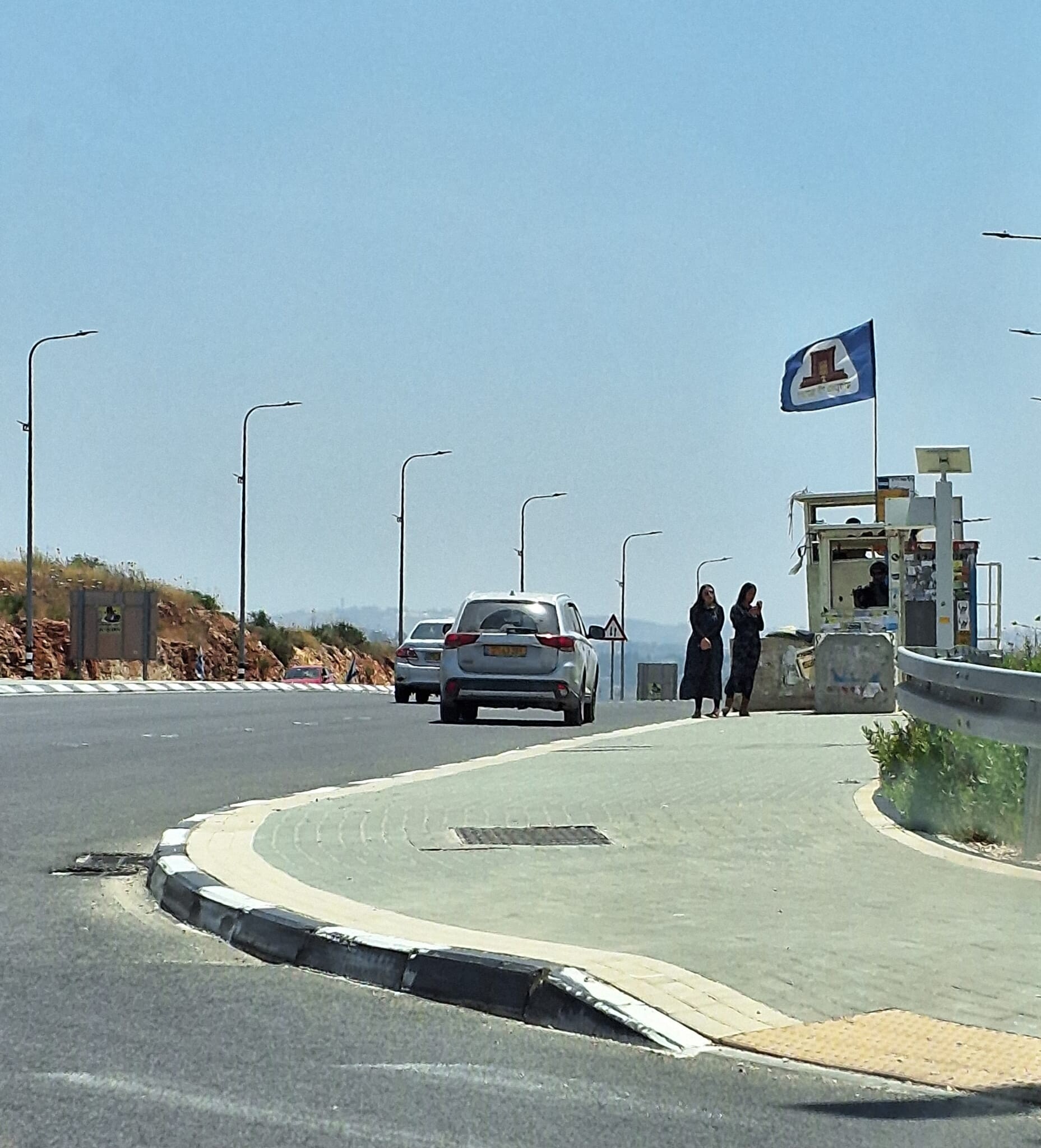 Ronit Dahan-RamatiJun-9-2026Za'atara (Tapuach Junction). The Temple Flag Above a Station
-
