
Hamra (Beqaot), Tayasir, Za’tara (Tapuah)
The lack of rain and the severe drought expected this year will make life very difficult for the Bedouin in the Jordan Valley. They’re barely surviving as it is. Now, when vegetation for their flocks is sparse and stunted, they’ll have to buy fodder for their animals throughout the year, not just during the summer. There won’t be enough pasture. No government is likely to compensate them for damage caused by the drought, nor be concerned in any way about their difficulties.
We saw non-irrigated fields of wheat and other crops a few centimeters high, still green, awaiting the rains. Most belong to Palestinians. Settlements receive very generous water allocations and depend little on the rain – or not at all.
09:30 Za’tara junction
Dogs are inspecting Palestinian vehicles. Two cars were detained when we arrived. Border Police soldiers conduct the procedure with the dog handlers. They make us leave the plaza, claiming civilian vehicles aren’t allowed there. But an Israeli vehicle parks on site nevertheless. A Jew wearning tzitziot and a yarmulke stands alongside it, speaking on a cellphone.
When the first car was released we learned from its driver the inspection had lasted 20-30 minutes. The driver of the second car had a long conversation with the Border Police soldiers. He was still there when we left 15 minutes later; his vehicle hadn’t yet been inspected. Meanwhile another car arrived and, as usual, its five passengers had to stand about five meters from the car. The dog handlers remained off to the side. They’re apparently in no hurry. It’s not the first time we’ve seen them using this main road junction during morning and afternoon rush hour to practice random inspections on cars which happen to pass by. At least that’s what it looks like to us – practice by the Oketz unit dogs and handlers. The inspections are, for most Palestinians, an insult (dogs are considered unclean, defiling all they come into contact with), not to mention a time-waster.
The plaza was empty on our way back; no inspections were underway in any direction.
09:55 Ma’ale Efrayim checkpoint
A soldier and policeman inspect a truck headed west. It’s rare to see inspections of vehicles going west. There were no soldiers at the checkpoint when we returned.
Gitit settlement
New hothouses have sprung up to the left of the Alon road. Most of the leased lands next to the pumping station aren’t being cultivated. Flocks of sheep belonging to the Bedouin graze on what’s left of the vegetation after the harvest.
Mechora settlement
A swather is reaping a non-irrigated field whose crop has reached a height of 10 cm. and begun to turn yellow. The drought.
10:25 Hamra checkpoint
Sparse traffic. People remain in their vehicles for inspection; the installation for inspecting people on foot isn’t in use. Each inspection takes 2-3 minutes.
12:15 Tayasir checkpoint
Sparse traffic. No needless delays.
Hamra (Beqaot)
See all reports for this place-
One of the Jordan Rift Valley checkpoints that prevent direct transit between the West Bank and the Jordan Valley, in addition to Tayasir Checkpoint. Located next to Hamra settlement, on Route 57 and the Allon Road.
Read about the peple of the Jordan Valley and the quiet transfer happening there.
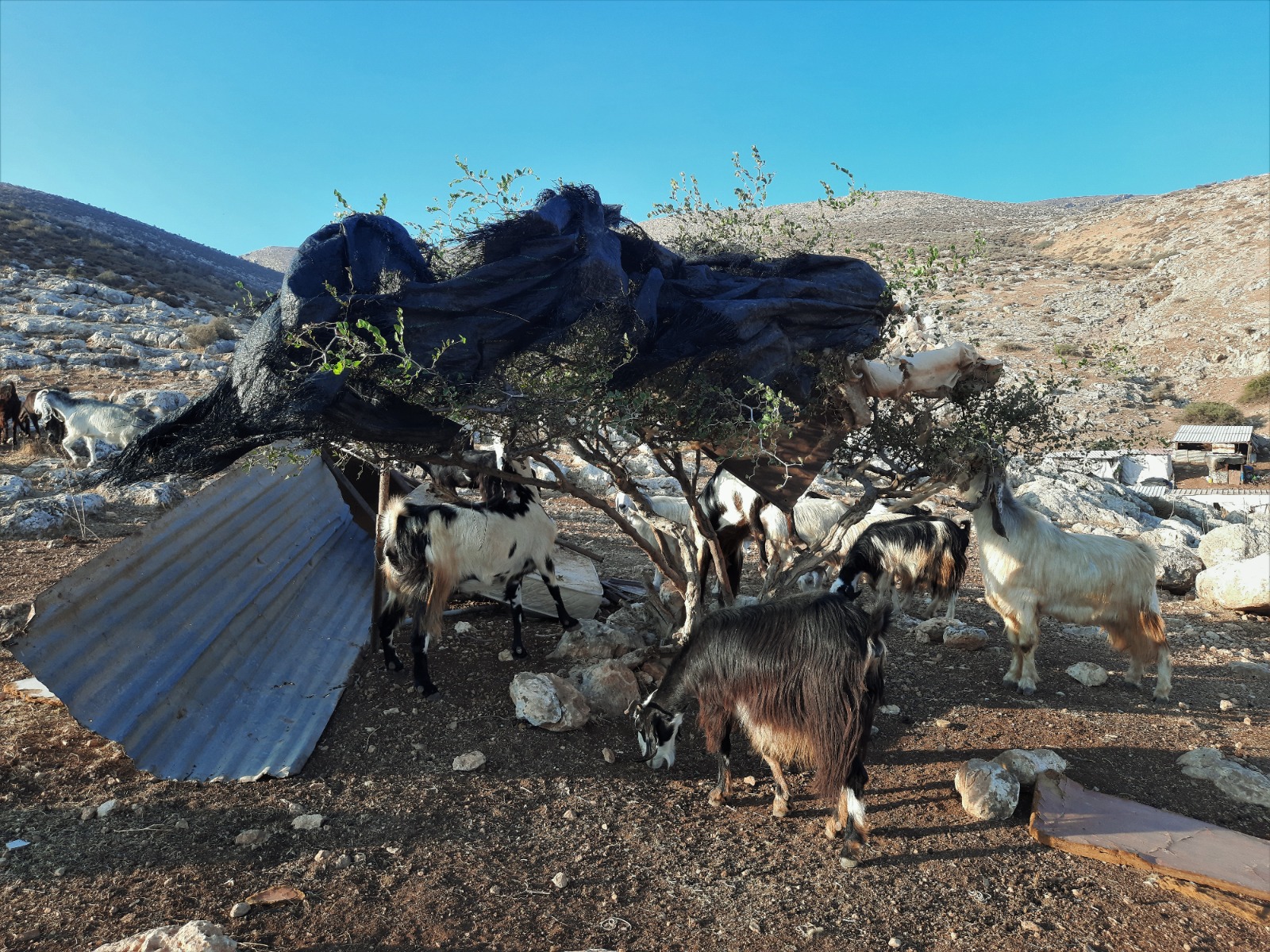 Shahar ShilohNov-3-2021Ein Shibli: grazing begins close to home
-
Tayasir CP
See all reports for this place-
Located on road 5799, It is one of the checkpoints control the passage between the northern West Bank and the Jordan Valley. For a long time, it stood empty and open, with only a sign next to it warning against entering Area A. It was adjacent to an old military camp - now everything is neglected. How much money was invested here, and how much brainwashing was done to the soldiers of Netzah Yehuda and Kfir.
Today, it is very difficult to pass there. Many delays. Often, teachers from Tubas are not allowed to pass into the Valley to villages like Ein al-Bida where the local schools are located, and there are no classes. There are additional days when the checkpoint is closed. In general, there is a wait there of about two to four hours to go towards the Valley and also to return. Many times the Palestinians are forced to use the Hamra checkpoint, which also leads into Tubas and the West Bank, but there is also a huge queue there and a long wait.
Following a deadly attack on soldiers at the nearby base in February 2025, the checkpoint was completely closed for the time being. (Updated March 2025)
-
Za'tara (Tapuah)
See all reports for this place-
Za'tara (Tapuah) Za'tara is an internal checkpoint in the heart of the West Bank, at the intersection of Road 60 and Road 505 (Trans-Samaria), east of the Tapuah settlement. This checkpoint is the "border" marked by the IDF between the north and south of the West Bank, in accordance with the policy of separation between the two parts of the West Bank that has been in place since December 2005. At the Za'tara checkpoint, there are separate routes for Israelis and Palestinians. In the route for Israelis, there are no inspections and the route for Palestinians inspects. The queue lengthens and shortens suits. The checkpoint is open 24 hours a day. The checkpoint is partially staffed and the people who pass through it are checked at random.
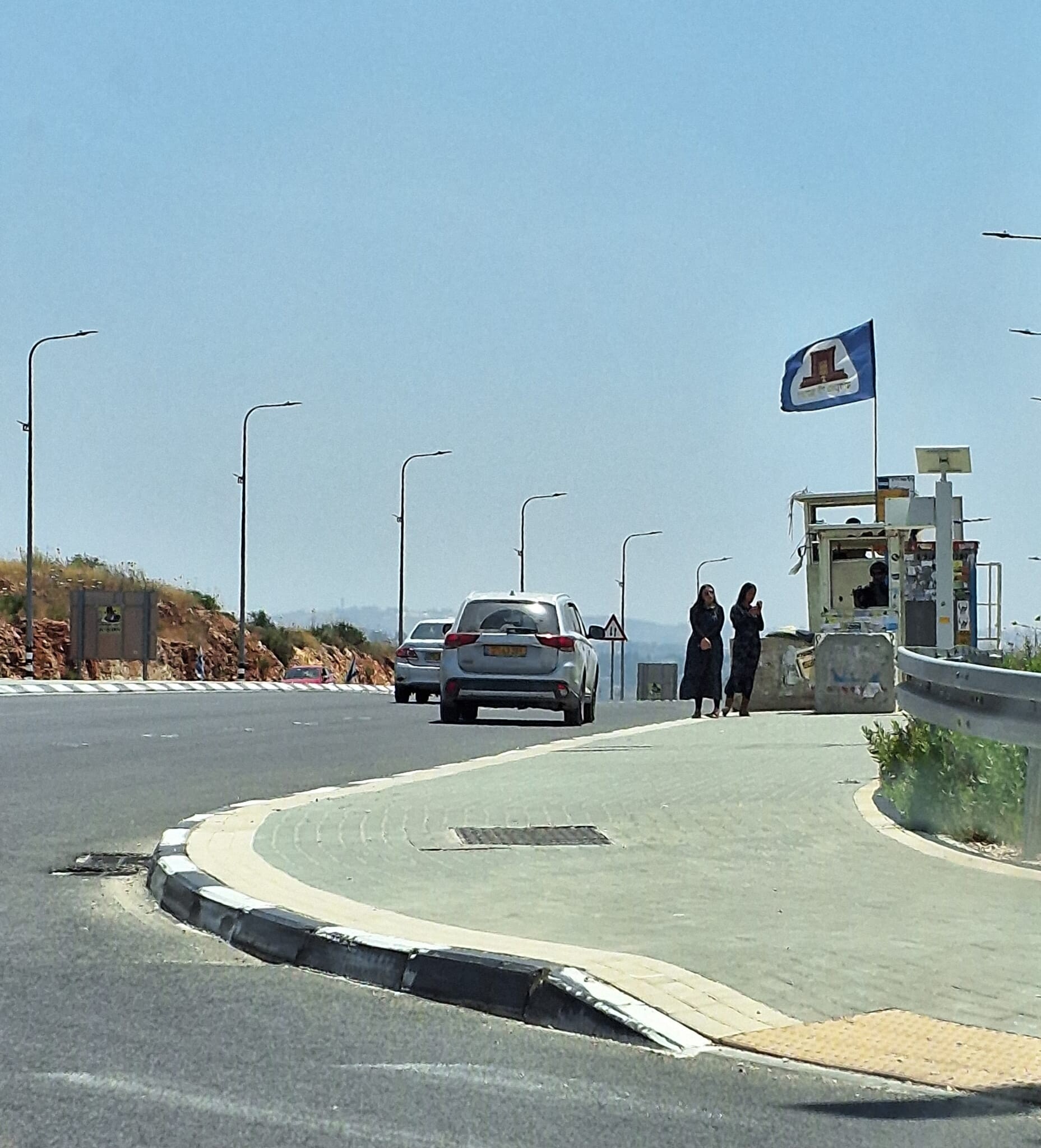 Ronit Dahan-RamatiJun-9-2026Za'atara (Tapuach Junction). The Temple Flag Above a Station
-
