
Hamra (Beqaot), Tayasir, Za’tara (Tapuah), Mon 28.1.13, Morning
Translator: Charles K.
On Thursday, 17.1.13, the army demolished 12 Bedouin encampments at El Malih in the Jordan Valley. Bulldozers destroyed the tents in which the families lived and the sheep sheds, then loaded them onto trucks and left them on barren ground. Since then they’ve been living in the open, in the rain and the cold Jordan Valley nights.
On Saturday, 19.1.13, peace activists tried to come to express solidarity with them (in two buses) but the army closed the entrance to the road from Highway 578 (the Alon Road) all day. A truck that came from the west with tents for the residents was stopped at the Tayasir checkpoint and the army confiscated the tents.
The residents hesitate to re-erect tents, afraid the army will demolish and destroy them again.
09:45 Za’atara/Tapuach junction checkpoint – No inspections.
10:00 Ma’aleh Efrayim checkpoint – No soldiers. Two private cars with Israeli plates parked at the checkpoint. That was also the situation when we returned.
The cultivated fields between the settlements of Gitit and Mechora – These broad fields belong to the Gitit settlement which leases them to various people along with the generous water allocations they receive from Mekorot. It looks as if the settlement received more land and water than it could handle so it makes money from the resources it received for nothing or for almost nothing. While at the same time the Bedouin are expelled from their lands and refused water for household use and for agriculture.
We spoke this time to people working for one of those leasing the lands, an Israeli from Tayibeh. The workers are from Aqraba (Palestinians from the West Bank). They said they weren’t allowed to enter the Jordan Valley through the Ma’aleh Efrayim checkpoint. That’s strange, because there are now no restrictions on entering the Jordan Valley. They were forced to walk a very long way through the hills. Since then, they’ve been sleeping there. Someone brings them food for NIS 30/day, which is deducted from their daily pay of NIS 80-100 (they aren’t all paid the same amount). But it’s still worth it to them to work and walk a long way through the hills because it’s hard for Palestinians in the occupied territories to earn a living.
10:55 Hamra checkpoint – Very sparse traffic.
We saw soldiers training all along the way, also with live ammunition, very near the shepherds and their flocks, and also near the K. family’s encampment, about 200 meters away.
Hamam el Malih – We visited two encampments that the army had destroyed ten days ago. At one we found N., a handicapped old woman, and her two granddaughters. She showed us the remains of the encampment and the sheep pen. Now they sleep in a tiny shed left from the demolition.
At the other we found only signs of destruction. The people had fled down to the wadi.
We met Amira Hass there, people from B’Tselem and representatives of the Palestinian Authority.
13:30 Tayasir checkpoint – We chatted with a few particularly nice reserve officers.
15:30 Tapuach junction/Za’tara checkpoint – Two Palestinian taxis detained in the fenced plaza, the drivers’ IDs taken to be checked on the computer. They were released shortly after we arrived because the computer wasn’t working. We couldn’t stay to see whether the Border Police are again sending people to be interrogated here by the Shabak, as we’ve seen in the past.
Hamra (Beqaot)
See all reports for this place-
One of the Jordan Rift Valley checkpoints that prevent direct transit between the West Bank and the Jordan Valley, in addition to Tayasir Checkpoint. Located next to Hamra settlement, on Route 57 and the Allon Road.
Read about the peple of the Jordan Valley and the quiet transfer happening there.
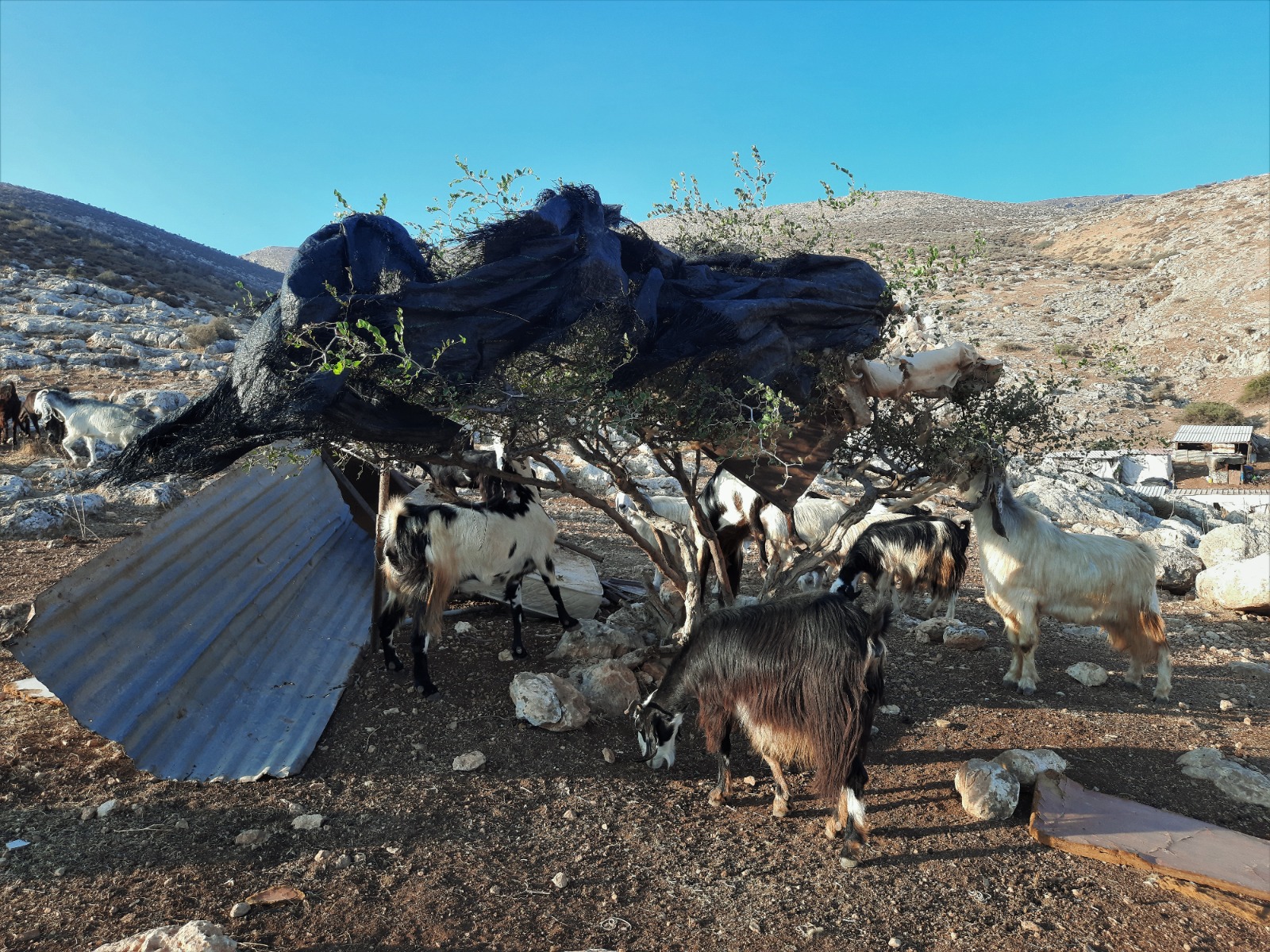 Shahar ShilohNov-3-2021Ein Shibli: grazing begins close to home
-
Tayasir CP
See all reports for this place-
Located on road 5799, It is one of the checkpoints control the passage between the northern West Bank and the Jordan Valley. For a long time, it stood empty and open, with only a sign next to it warning against entering Area A. It was adjacent to an old military camp - now everything is neglected. How much money was invested here, and how much brainwashing was done to the soldiers of Netzah Yehuda and Kfir.
Today, it is very difficult to pass there. Many delays. Often, teachers from Tubas are not allowed to pass into the Valley to villages like Ein al-Bida where the local schools are located, and there are no classes. There are additional days when the checkpoint is closed. In general, there is a wait there of about two to four hours to go towards the Valley and also to return. Many times the Palestinians are forced to use the Hamra checkpoint, which also leads into Tubas and the West Bank, but there is also a huge queue there and a long wait.
Following a deadly attack on soldiers at the nearby base in February 2025, the checkpoint was completely closed for the time being. (Updated March 2025)
-
Za'tara (Tapuah)
See all reports for this place-
Za'tara (Tapuah) Za'tara is an internal checkpoint in the heart of the West Bank, at the intersection of Road 60 and Road 505 (Trans-Samaria), east of the Tapuah settlement. This checkpoint is the "border" marked by the IDF between the north and south of the West Bank, in accordance with the policy of separation between the two parts of the West Bank that has been in place since December 2005. At the Za'tara checkpoint, there are separate routes for Israelis and Palestinians. In the route for Israelis, there are no inspections and the route for Palestinians inspects. The queue lengthens and shortens suits. The checkpoint is open 24 hours a day. The checkpoint is partially staffed and the people who pass through it are checked at random.
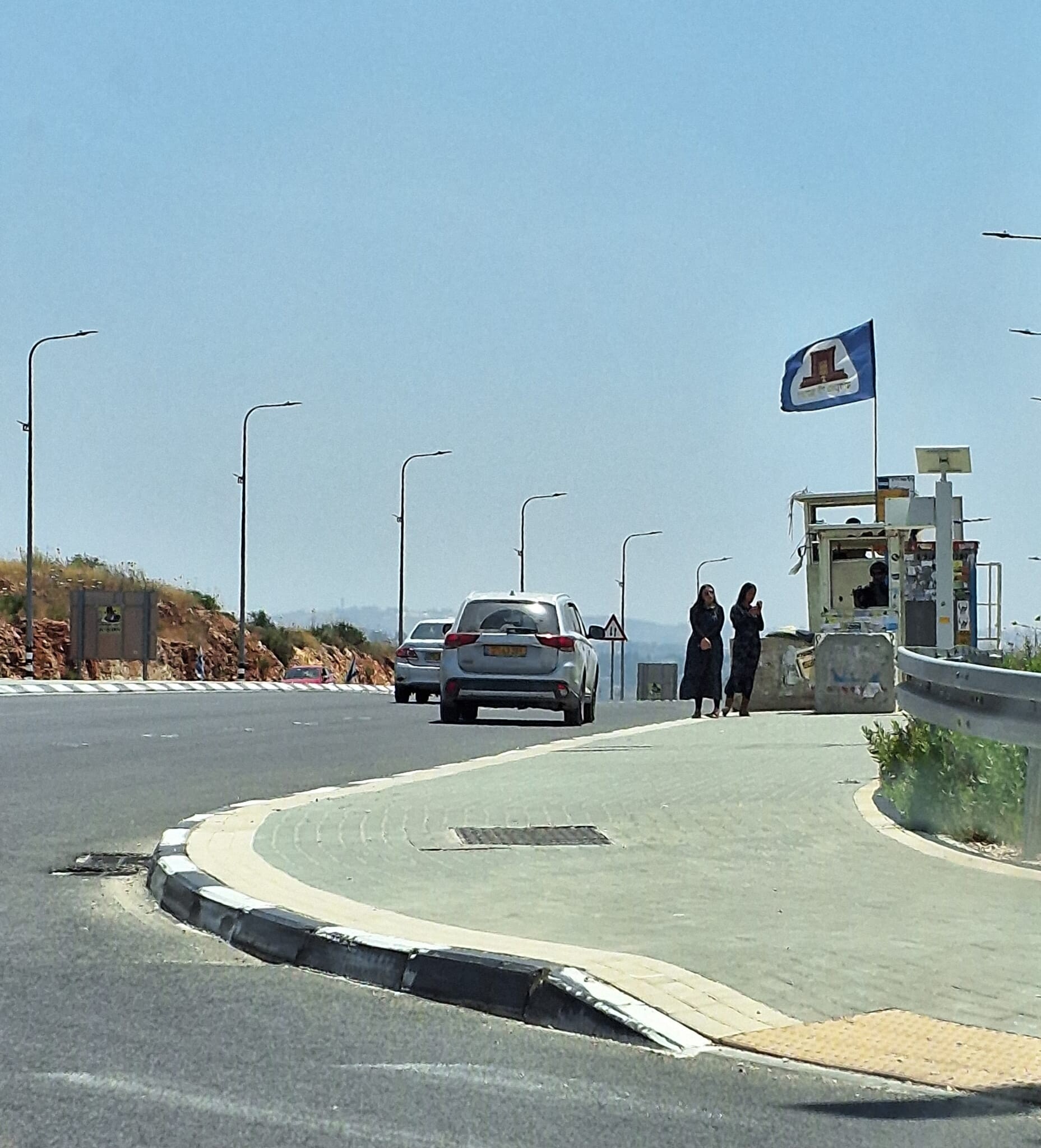 Ronit Dahan-RamatiJun-9-2026Za'atara (Tapuach Junction). The Temple Flag Above a Station
-
