
Hamra (Beqaot), Tayasir, Za’tara (Tapuah), Sun 25.3.12, Afternoon

Translator: Charles K.
An eviction order was issued to the brothers of the Darajmah family living on the outskirts of the Maskiyot settlement. This was after considerable harassment by the settlers, led by the settlement’s IDF security coordinator who, in one incident, abused the Bedouin’s horse so badly that he killed it. The horse’s owner was afraid to file a complaint. The harassment was intended to make their lives so unbearable that they’d leave. Now the Civil Administration is doing what the settlers want, ordering the Bedouin to remove his encampment, his family and his flock within 30 days, or else bulldozers will forcibly remove him. The land belongs to the Christian Patriarchate in Jerusalem, which does not object to the Bedouins’ presence, but it won’t fight for them. He also contacted an attorney who said nothing can be done. Yesh Din apparently said the same thing.
*
The Civil Administration foiled an EU initiative to construct a water cistern for the benefit of the Bedouin shepherds in the area of Hamam el Maliah, after having dispossessed them from the spring next to the Maskiyot settlement.
*
The young shepherd who had been severely beaten by Rotem’s security coordinator dared file a complaint with the police, which indicted the attacker. That’s truly a revolution in the behavior of the Jordan Valley authorities – to indict a settler for harming a Bedouin?!
*
The Shabak detained Palestinian police officers from Nablus, on their way to a conference in Jericho, at Tapuach junction to inspect their documents.
***
Za’tara checkpoint – Tapuach junction 11:15
Three Palestinian vehicles detained in the plaza for document inspection. Border Police soldiers give the documents to someone behind the plaza’s white fence. The people being checked say the Shabak conducts the inspection. It looks like there’s a special operation today to check documents of people coming from the direction of Nablus. Only young men are in almost all the vehicles. After one car is released, the one following is detained, about three at a time.
When we reached Hamra we understood the reason for the operation. Today there’s a Palestinian police conference in Jericho that will last ten days, part of the “cooperation” between Israeli and Palestinian security services, or Israeli retaliation for Palestinian Authority policies. Anyway, the detainees didn’t appear concerned by the delay.
In one car, which apparently didn’t contain police officers, was a Palestinian who’d come from Jordan after having lived there four years. He didn’t have an ID, which apparently had been taken from him, only a photocopy of it. He also was allowed through.
Kusra
Again we ran into the man accused by the Palestinian police of collaborating with the Shabak. His brother was shot and killed by Palestinian police officers, and he also has been arrested a number of times, interrogated and tortured. He fears for his life; he doesn’t know who could help him.
The fields between Ma’aleh Efrayim and Mechora, near the abandoned packing house, are starting to be cultivated again, after we were told last month that all the fields that had been cultivated by Eyal Levy had been abandoned.
Hamra checkpoint – 12:35
Light traffic. People coming through the checkpoint complain of inspections that are too rigorous.
Vehicles coming from the Jordan Valley to the West Bank aren’t inspected. On the other hand, everyone travelling from the West Bank to the Jordan Valley is carefully checked. Every bag goes through the scanner.
Police officers are crossing here also on their way to the Jericho conference.
Tayasir checkpoint – 14:30
Children from the encampments on the other side of the checkpoint, who attend school in Tubas, have kilometers to walk. A few got rides. The unit serving at the checkpoint has been replaced by soldiers from the Kfir brigade. They welcome us.
Light traffic, no lines.
There’s a group of soldiers and about 20 pup-tents in the wadi next to the road from the Tayasir checkpoint to Hamam el Maliah, as well as larger tents and an army truck.
Gochia checkpoint – Closed, as usual, at the time it’s supposed to be open. We called Zaharan, from the DCO, who said that he himself made sure it would be open, though he couldn’t come today.
An army vehicle arrived at 15:30. The stopped to see whether we were alright (we’d forgotten our flags today, so they couldn’t identify who we were). They told us they belonged to a unit at the Tayasir base responsible for opening the gate; since they arrived, they come to the gate each morning at 08:30, and if someone crosses they also come in the afternoon to open it. No one crossed today, so they didn’t come to open it at 15:00. This sounds like a reasonable arrangement; the question is, whether they’ll stick to it.
Ma’aleh Efrayim checkpoint – 15:20 Soldiers on site inspect vehicles entering the Jordan Valley.
Za’tara–Tapuach junction – 16:35 Two Border Police soldiers, no inspections.
Hamra (Beqaot)
See all reports for this place-
One of the Jordan Rift Valley checkpoints that prevent direct transit between the West Bank and the Jordan Valley, in addition to Tayasir Checkpoint. Located next to Hamra settlement, on Route 57 and the Allon Road.
Read about the peple of the Jordan Valley and the quiet transfer happening there.
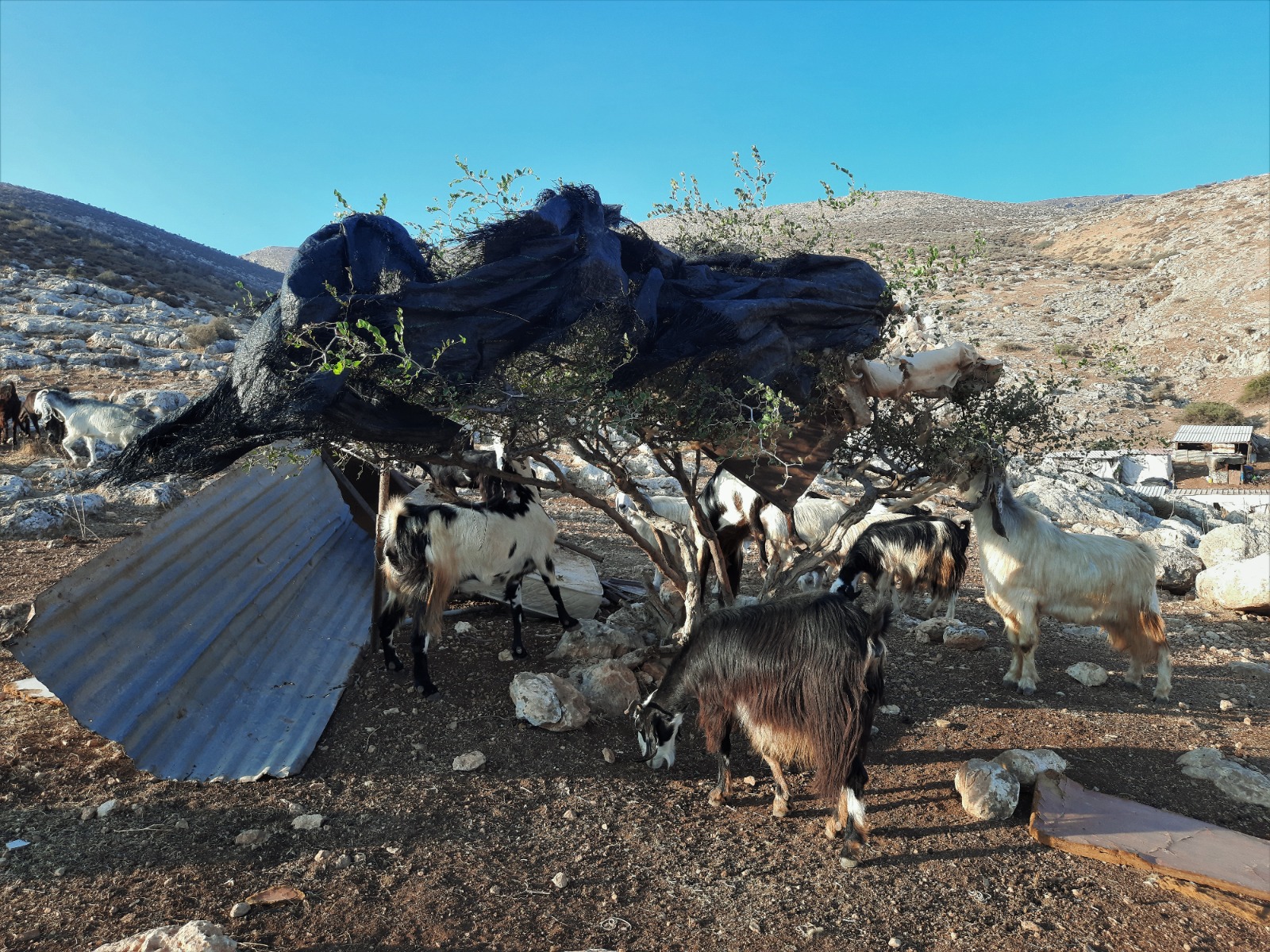 Shahar ShilohNov-3-2021Ein Shibli: grazing begins close to home
-
Tayasir CP
See all reports for this place-
Located on road 5799, It is one of the checkpoints control the passage between the northern West Bank and the Jordan Valley. For a long time, it stood empty and open, with only a sign next to it warning against entering Area A. It was adjacent to an old military camp - now everything is neglected. How much money was invested here, and how much brainwashing was done to the soldiers of Netzah Yehuda and Kfir.
Today, it is very difficult to pass there. Many delays. Often, teachers from Tubas are not allowed to pass into the Valley to villages like Ein al-Bida where the local schools are located, and there are no classes. There are additional days when the checkpoint is closed. In general, there is a wait there of about two to four hours to go towards the Valley and also to return. Many times the Palestinians are forced to use the Hamra checkpoint, which also leads into Tubas and the West Bank, but there is also a huge queue there and a long wait.
Following a deadly attack on soldiers at the nearby base in February 2025, the checkpoint was completely closed for the time being. (Updated March 2025)
-
Za'tara (Tapuah)
See all reports for this place-
Za'tara (Tapuah) Za'tara is an internal checkpoint in the heart of the West Bank, at the intersection of Road 60 and Road 505 (Trans-Samaria), east of the Tapuah settlement. This checkpoint is the "border" marked by the IDF between the north and south of the West Bank, in accordance with the policy of separation between the two parts of the West Bank that has been in place since December 2005. At the Za'tara checkpoint, there are separate routes for Israelis and Palestinians. In the route for Israelis, there are no inspections and the route for Palestinians inspects. The queue lengthens and shortens suits. The checkpoint is open 24 hours a day. The checkpoint is partially staffed and the people who pass through it are checked at random.
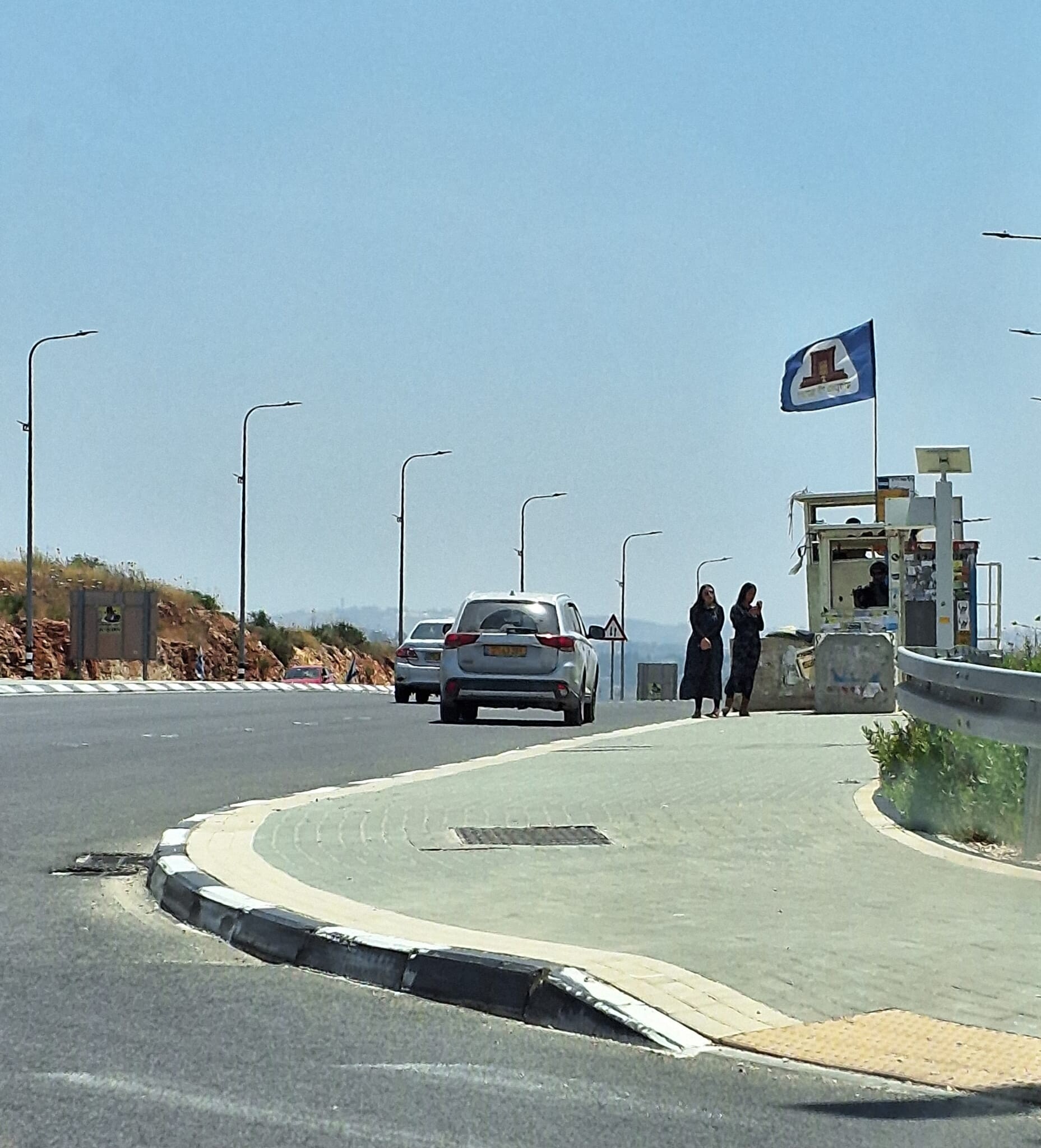 Ronit Dahan-RamatiJun-9-2026Za'atara (Tapuach Junction). The Temple Flag Above a Station
-
