
Hamra (Beqaot), Tayasir, Za’tara (Tapuah), Sun 8.7.12, Afternoon
-
Translator: Charles K.
More on the story of the stolen water wagons – the Bedouin who own them will have to pay a fine of a few thousand shekels to get them back, and also promise not to place them on the grazing lands for two years – or, to put it simply, to relinquish their only source of income for two years.
But something positive nevertheless: the Palestinian Authority compensated them by providing replacement water wagons, and the Tubas municipality provided them an attorney at no charge.
A family living north of the Ro’i settlement suffers continually from military live ammunition exercises conducted opposite its tent.
Settlers from Maskiyot stole a donkey last night from K., in the presence of Rami, the security coordinator. After a round of phone calls to various places, salvation came from the Ma’aleh Efrayim police station and the donkey was returned to its owner.
Za’tara/Tapuach checkpoint – 13:30
No inspections. A soldier is in the tower at the junction.
Ma’aleh Efrayim checkpoint – 13:45
No soldiers, nor when we returned.
A fire spread in the fields next to the abandoned packing house between Gitit and Mechora. We notified the guard at the entrance to Mechora.
Hamra checkpoint – 14:05
38 degrees Celsius. A minibus with no air conditioning waits for passengers, people going through the pedestrian crossing. They arrive one by one, putting back on the belts they removed for the scanner. When it’s full they drive off.
Cars driving west, to Area A, aren’t inspected.
Sparse traffic at this hour; no lines.
At the K. family’s encampment
The army continually conducts exercises opposite their tent, across the road. Last week as well, many soldiers trained there for two days, including using live ammunition. They’re very frightened, especially the children (four of them, aged 2 – 9).
At the A. family’s encampment
M.A. is one of the Bedouin residents of the JordanValleyfrom whom water wagons were taken last month – they took two from him. He gave us the names of six more people. They were fined thousands of shekels for placing the water wagons in a firing range. The entire northern JordanValley, except for the settlements, has been classified as a firing range, entry to which is prohibited, including where the Bedouin live and their grazing lands.
We spoke to Jamila, from the Association for Civil Rights. She said the Palestinian Authority compensated everyone whose water wagons had been confiscated and provided replacements. That doesn’t solve the problem of someone whose water wagon was taken in the middle of a boiling-hot day: they spilled out the precious (literally) water and he can’t water his sheep today and the following days, until he’s compensated. But it’s a good thing that the Palestinian Authority provides assistance. The Israeli authorities only harass and rob them.
She told us that the Civil Administration notified them that in addition to fines amounting to thousands of shekels, they’ll have to sign a document in which they commit not to repeat the “criminal act,” i.e., bringing water wagons to the grazing lands – or, to put it simply, they’ll relinquish their only source of income.
The Association for Civil Rights wrote the Civil Administration, the military commander and others a letter of complaint about this policy, but hasn’t yet received a reply.
Tayasir checkpoint – 16:20.
Sparse traffic. A car with Israeli license plates isn’t allowed to cross to the west. The two female passengers are dressed like secular people; they cross in a taxi.
At K’s encampment
Last night about 10 PM they saw the vehicle belonging to Rami, the security coordinator of the Maskiyot settlement, parked opposite their tent. Three guys emerged and took their donkey. They were afraid to intervene. When they called Rami today he denied it. We called various people who might help: the DCO, Yesh Din, and finally a call by B., K’s son, to the Ma’aleh Efrayim police station got results. Slightly over an hour later we received a call that the police arrived and the donkey was returned. K. didn’t want to file a complaint even though the police officer suggested he do so.
A donkey costs NIS1000.
Za’tara checkpoint – 19:15.
An Israeli traffic police vehicle alongside the road to Huwwara, next to a Palestinian vehicle. The driver got a ticket and a fine of NIS750 because the child seated next to him was too young to occupy that seat.
A female soldier and dog in the fenced area. A vehicle with four guys was sent there. The guys are standing at a distance while the dog sniffs the car. Because it was late we didn’t wait to see how long it took and how it ended.
Hamra (Beqaot)
See all reports for this place-
One of the Jordan Rift Valley checkpoints that prevent direct transit between the West Bank and the Jordan Valley, in addition to Tayasir Checkpoint. Located next to Hamra settlement, on Route 57 and the Allon Road.
Read about the peple of the Jordan Valley and the quiet transfer happening there.
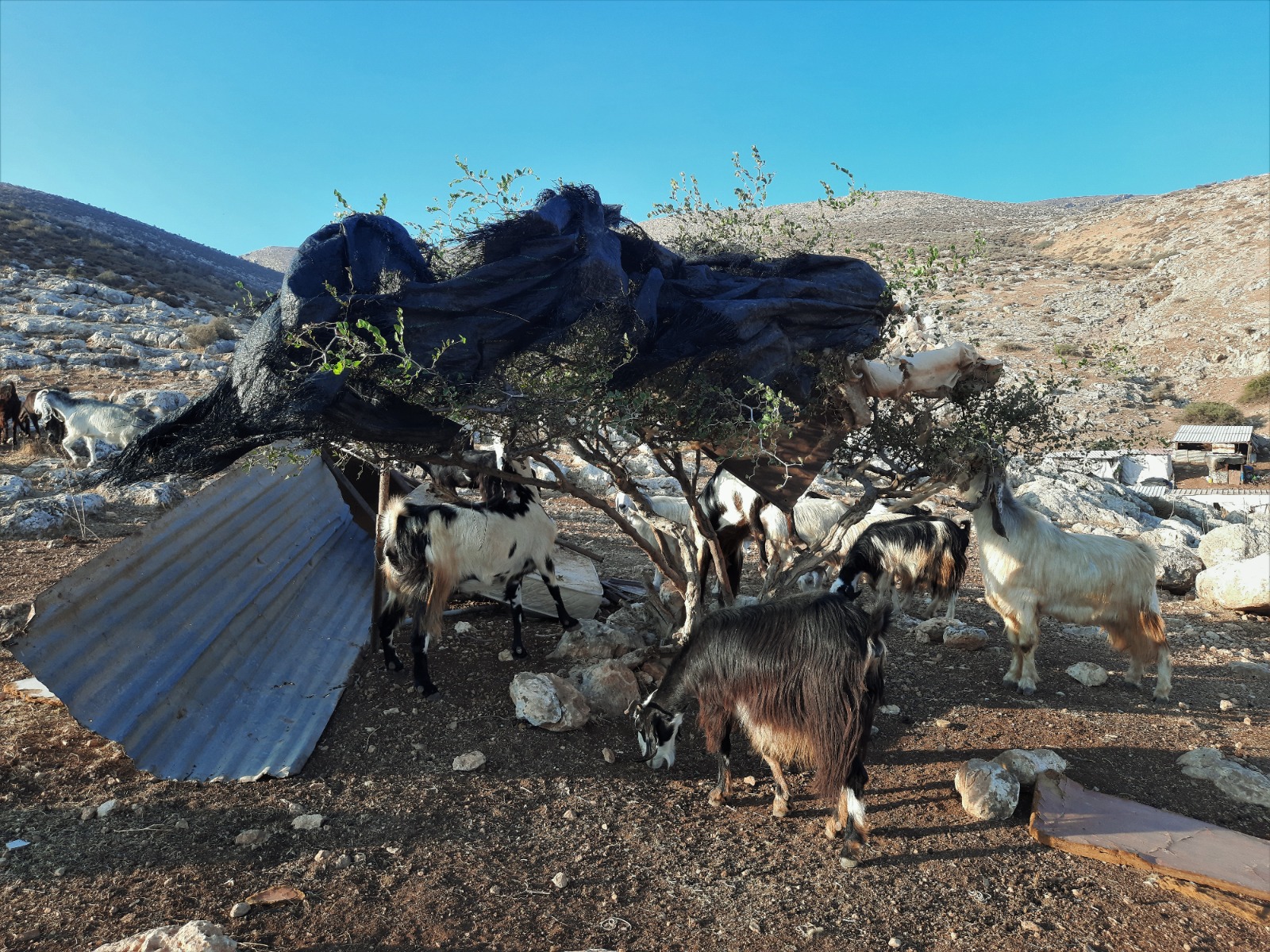 Shahar ShilohNov-3-2021Ein Shibli: grazing begins close to home
-
Tayasir CP
See all reports for this place-
Located on road 5799, It is one of the checkpoints control the passage between the northern West Bank and the Jordan Valley. For a long time, it stood empty and open, with only a sign next to it warning against entering Area A. It was adjacent to an old military camp - now everything is neglected. How much money was invested here, and how much brainwashing was done to the soldiers of Netzah Yehuda and Kfir.
Today, it is very difficult to pass there. Many delays. Often, teachers from Tubas are not allowed to pass into the Valley to villages like Ein al-Bida where the local schools are located, and there are no classes. There are additional days when the checkpoint is closed. In general, there is a wait there of about two to four hours to go towards the Valley and also to return. Many times the Palestinians are forced to use the Hamra checkpoint, which also leads into Tubas and the West Bank, but there is also a huge queue there and a long wait.
Following a deadly attack on soldiers at the nearby base in February 2025, the checkpoint was completely closed for the time being. (Updated March 2025)
-
Za'tara (Tapuah)
See all reports for this place-
Za'tara (Tapuah) Za'tara is an internal checkpoint in the heart of the West Bank, at the intersection of Road 60 and Road 505 (Trans-Samaria), east of the Tapuah settlement. This checkpoint is the "border" marked by the IDF between the north and south of the West Bank, in accordance with the policy of separation between the two parts of the West Bank that has been in place since December 2005. At the Za'tara checkpoint, there are separate routes for Israelis and Palestinians. In the route for Israelis, there are no inspections and the route for Palestinians inspects. The queue lengthens and shortens suits. The checkpoint is open 24 hours a day. The checkpoint is partially staffed and the people who pass through it are checked at random.
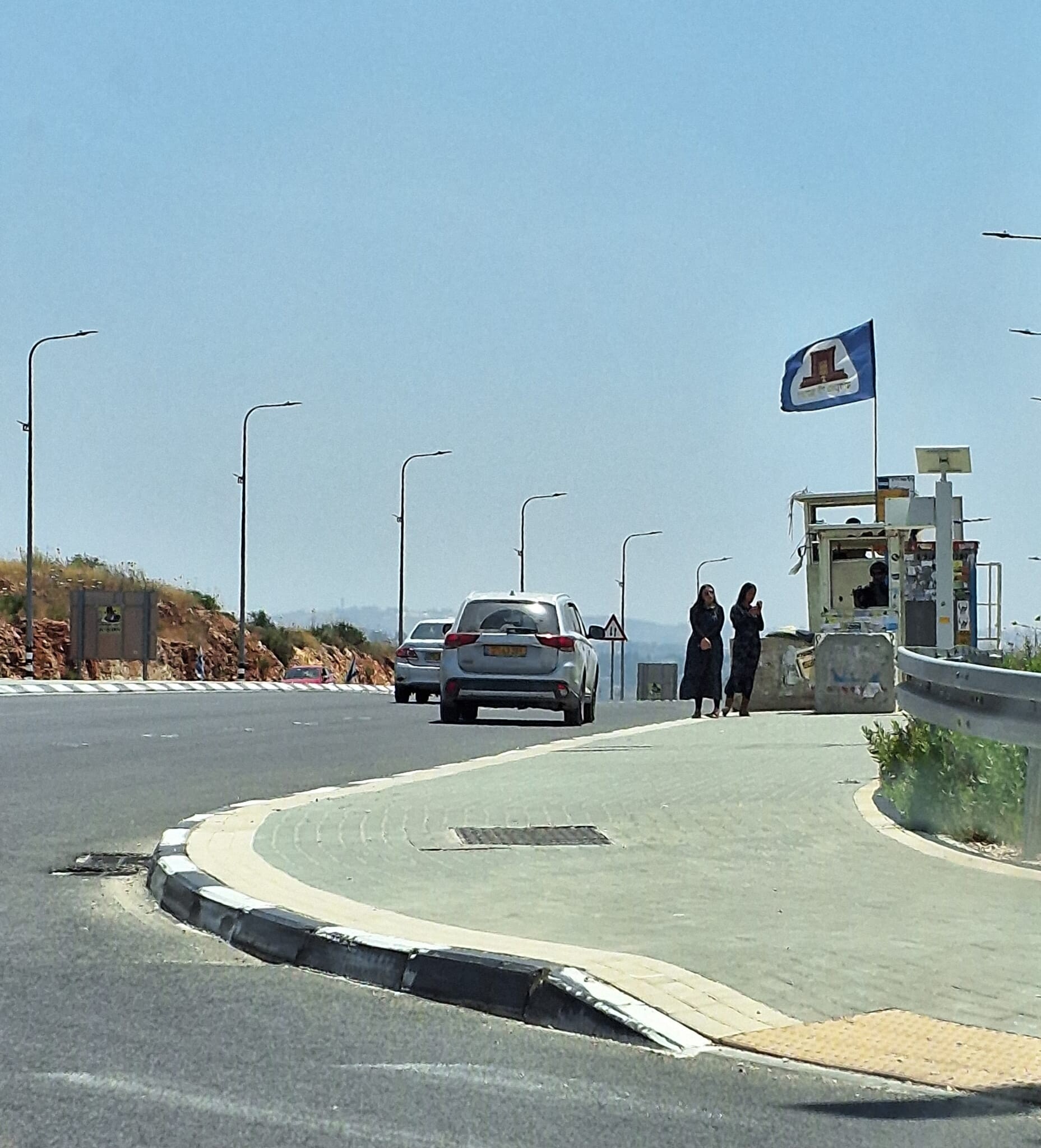 Ronit Dahan-RamatiJun-9-2026Za'atara (Tapuach Junction). The Temple Flag Above a Station
-
