
Hebron
13:30-16:30
We drove in the afternoon, bathed by a glorious autumn light.
I haven’t been in Hebron or its surroundings for nearly three months, and nothing has changed.
The occupation routine.
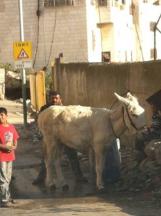
Children play outdoors in Hebron, TIPH observers host diplomats, the reconstruction of Palestinian buildings near the Curve 160 checkpoint has progressed, a flag flies on the renovated Tarpat checkpoint and a soldier continues to guard Beit HaMeriva, another on Beit Hadassah.
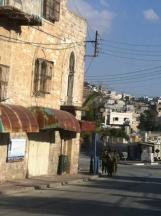
Giv’at Gal increasingly takes root on Palestinian lands and expands Kiryat Arba, and the possibility of two states for two peoples seems increasingly distant…One state – an apartheid state with different rights for each of the peoples. Sad, disheartening and outrageous.
Hebron
See all reports for this place-
According to Wye Plantation Accords (1997), Hebron is divided in two: H1 is under Palestinian Authority control, H2 is under Israeli control. In Hebron there are 170,000 Palestinian citizens, 60,000 of them in H2. Between the two areas are permanent checkpoints, manned at all hours, preventing Palestinian movement between them and controlling passage of permit holders such as teachers and schoolchildren. Some 800 Jews live in Avraham Avinu Quarter and Tel Rumeida, on Givat HaAvot and in the wholesale market.
Checkpoints observed in H2:
- Bet Hameriva CP- manned with a pillbox
- Kapisha quarter CP (the northern side of Zion axis) - manned with a pillbox
- The 160 turn CP (the southern side of Zion axis) - manned with a pillbox
- Avraham Avinu quarter - watch station
- The pharmacy CP - checking inside a caravan with a magnometer
- Tarpat (1929) CP - checking inside a caravan with a magnometer
- Tel Rumeida CP - guarding station
- Beit Hadassah CP - guarding station
Three checkpoints around the Tomb of the Patriarchs
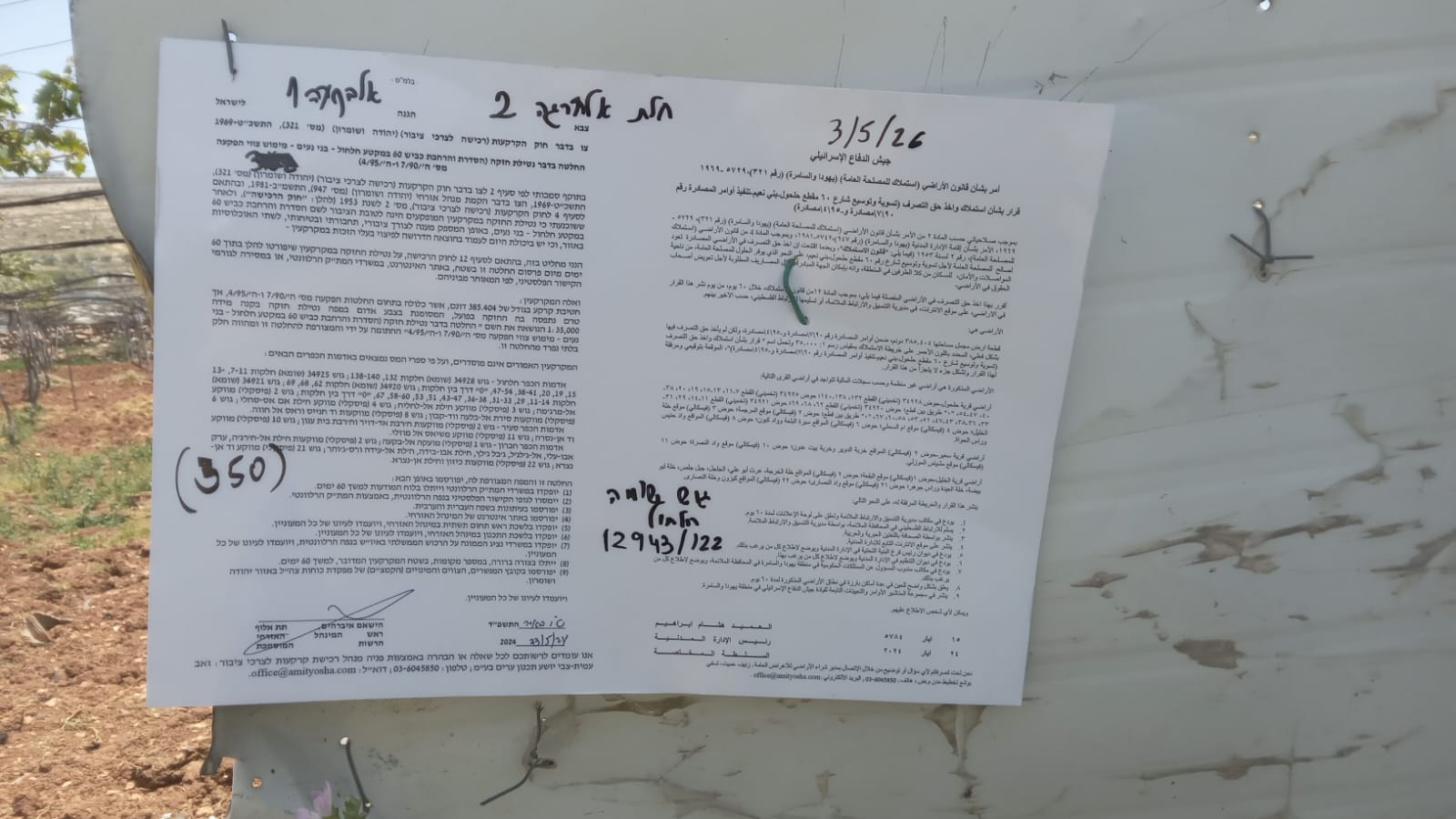 Muhammad D.May-13-2026Hebron - Request for compensation for land expropriation
-