
Hebron
Bethlehem and surroundings, Sunday, 19.3.2006, AfternoonObservers: Ilana H. Hagit S. (reporting) From Road 60, south of Gilo junction, until Ezon junction, we saw no military, except of course at the tunnels CP. As usual at this point the cars going north go through a quick selection, and the suspected ones are led to the right lane for checking. Al-Hader: We saw only a few people passing by, probably because of the closure, and many drivers unemployed and bored. We stayed there a few minutes and immediately people came over to us: one of them was an angry cab driver whose ID and driving license were taken by a policeman, in order to ensure his reporting to Hebron police station. He told us that he had in his cab one person more than the allowed number: a baby one year old. A sentence and a fine are waiting for him at “Ofer”. Ezyon DCO: Still under renovation. At the square behind the old shed a bulldozer is working moving concrete blocks and coiled wires from one place to another. We met Muhammad from Al-Hader who was already waiting for an hour before the entrance-gate (where we usually see the people waiting for a meeting with the GSS). He came to get a certificate that he and his family are the owners of a piece of land in Efrat. New regulations demand such a certificate in order to let him get to his land. The soldier at the gate did not understand what he was talking about, and did not bother to find out. He decided to send him to make a phone call to “employment”, but nobody answered the phone. So he stood and waited, and the soldier behind the gate and soldier on roof, as usual, indifferent, let him wait. The man had a letter from the person in charge of the security in Efrat to Ezyon DCO. In the letter it was written that he should get an entrance permit to Efrat in order to get to his land. The letter was written in Hebrew by hand, and didn’t give a name of whoever has to issue the permit. Meantime Muhammad, who was hand amputated, complained about pain in his chest and feeling ill. We called the person in charge of the security at Efrat – Yedidya, who told us to get in touch with the lands’ inspector at the DCO and with others who are connected to this subject according to Yedidya. No body answered the phone. We gave Muhammad the names and the phone numbers to whom he has to turn, and drove him to El-Hader. While talking to him we learnt that his employer at Maale-Edomim invited him to work tomorrow, as the closure does not apply for the workers working at the building site in Maale-Edomim.CP – 300: At the old Cp there are no detainees. At the new one there was little traffic. A few workers, coming back from work in Israel told us that in spite of the fact that they had permits, they went all the way round in the morning, and are going back home through the CP.
Hebron
See all reports for this place-
According to Wye Plantation Accords (1997), Hebron is divided in two: H1 is under Palestinian Authority control, H2 is under Israeli control. In Hebron there are 170,000 Palestinian citizens, 60,000 of them in H2. Between the two areas are permanent checkpoints, manned at all hours, preventing Palestinian movement between them and controlling passage of permit holders such as teachers and schoolchildren. Some 800 Jews live in Avraham Avinu Quarter and Tel Rumeida, on Givat HaAvot and in the wholesale market.
Checkpoints observed in H2:
- Bet Hameriva CP- manned with a pillbox
- Kapisha quarter CP (the northern side of Zion axis) - manned with a pillbox
- The 160 turn CP (the southern side of Zion axis) - manned with a pillbox
- Avraham Avinu quarter - watch station
- The pharmacy CP - checking inside a caravan with a magnometer
- Tarpat (1929) CP - checking inside a caravan with a magnometer
- Tel Rumeida CP - guarding station
- Beit Hadassah CP - guarding station
Three checkpoints around the Tomb of the Patriarchs
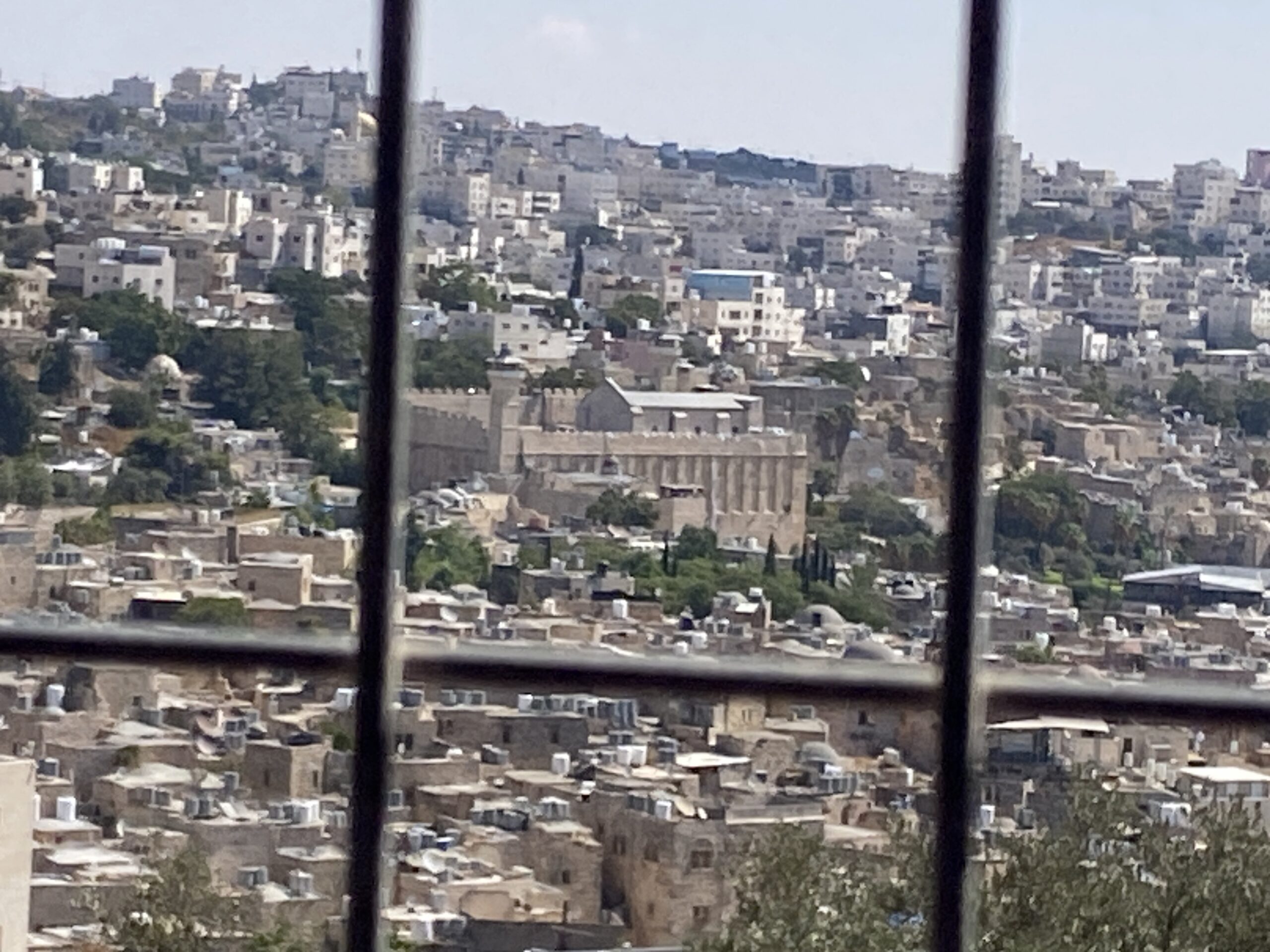 Yael ZoranSep-24-2026Hebron and the Cave of the Patriarchs from Beit Hashalom
-
