
Hebron
Hebron, Tuesday 15.11.05, Morning (10:30 – 14:30)Observers: Michal Z., Hagit B. (reporting)Guests: Our friends from Jerusalem Yael and Yael N.Route 60It is the Palestinian Independence Day. Families, dressed festively, wait at the side of the road for taxis. Other families harvest olives. We drove without stopping to Hebron.By Sansana CP there were no detainees. Palestinians are employed at the construction of the fence. We met Moussa from “Betselem” with his son at Dura el Pawar junction. He told us that the blue police had gone into a daily habit of stopping cars that venture to cross the route and write down reports. This is an easy method for the police of profiteering on the back of the Palestinians. In order to pay those reports, the driver has to spend, apart of money, hours and days for obtaining the needed tasrich, going to Ras el Amoud etc. At the Sheep Junction people crossed freely, and there was no military. At Shiuch – Hebron junction (the school of the girls) people go over from one taxi to the other. Goods are transferred by narrow carts, which are adjusted to the narrow passage.The taxi drivers told us that the military was present in the morning. Beith Chagai: A taxi was detained at a flying roadblock, but till we arrived the taxi was released. The gate to Karame was open. Along the whole route huge boulders along with cement pipes prevent cars from reaching the road.HebronGeneral information: 170,000 residents live in Hebron, which is divided into two zones: Zone H1 under the rule of the Palestinian Authority, and zone H2 under Israeli rule. In zone H2 live 65,000 Palestinians and 500 settlers. 8 check posts, many barriers and barbed wire as well as other military means separate the zones. Within the area, which is under Palestinian rule, there are 2 pillboxes and buildings that the military has seized. The soldiers of the Shacham battalion have moved to Jenin and the soldiers of the Lavie battalion are back. There were more people on the streets due to the Independence Day, and because the schools were closed. Here are some of the incidents that we came across:At the pharmacy CP a boy aged 16 was detained because he forgot to carry with him his ID. His home is another neighborhood. The soldiers wait for orders from their commander. The boy is very anxious. He speaks neither Hebrew nor English. The soldiers speak no Arabic. They promise that he would soon be released. We gave the boy our phone number, but he did not call. His crime: wanting to visit, on this free off day, a friend in Abu Snan, and got a lesson from the soldiers. On our way along the Route of the Prayers, near the exit from Kiryat Arba we met a group of Palestinian women. Usually they are not allowed to walk along this route, which is a strictly apartheid route. But today the soldiers did not trouble them and neither the settlers. We went together with them till the Cave of the Patriarchs. They seemed quite pleased to chat with us. They showed us a deserted house, theirs, which they left. Who can live in such a neighborhood with settler neighbors who pester and harass all the time? At the CP by the Cave of the Patriarchs were 2 detainees by the route the Apartheid route. We try to check what is going on but realize immediately that the Palestinians prefer that we do not interfere. Near Beit Hadassa, at the Kiosk, we get into conversation with a group of young soldiers and we tell them about Hebron and as to: “Suppose you are requested to show your ID near your house, on your way to school?” They listen carefully. Near Tel-Rumeida CP we met a crew of Al-Jazeera, working for a kids’ channel. We receive their phone numbers and we will try to connect them with our children TV channels. As we were talking with the crew, a settler came and stood near us, and wrote something in his notebook. Afterwards he spoke to someone on phone, and we noticed that settlers had gathered along the road “to guard us”.At the Circle of the Police two tourist looking people were going around. They are from the organization Doctors Without Frontiers. The soldier in the pillbox did not let them through. We explained the soldier who they were, and he let them immediately through. Soldiers – posted in Hebron – should know English and Arabic. It could have developed into a serious incident, just because of lack of understanding.
Hebron
See all reports for this place-
According to Wye Plantation Accords (1997), Hebron is divided in two: H1 is under Palestinian Authority control, H2 is under Israeli control. In Hebron there are 170,000 Palestinian citizens, 60,000 of them in H2. Between the two areas are permanent checkpoints, manned at all hours, preventing Palestinian movement between them and controlling passage of permit holders such as teachers and schoolchildren. Some 800 Jews live in Avraham Avinu Quarter and Tel Rumeida, on Givat HaAvot and in the wholesale market.
Checkpoints observed in H2:
- Bet Hameriva CP- manned with a pillbox
- Kapisha quarter CP (the northern side of Zion axis) - manned with a pillbox
- The 160 turn CP (the southern side of Zion axis) - manned with a pillbox
- Avraham Avinu quarter - watch station
- The pharmacy CP - checking inside a caravan with a magnometer
- Tarpat (1929) CP - checking inside a caravan with a magnometer
- Tel Rumeida CP - guarding station
- Beit Hadassah CP - guarding station
Three checkpoints around the Tomb of the Patriarchs
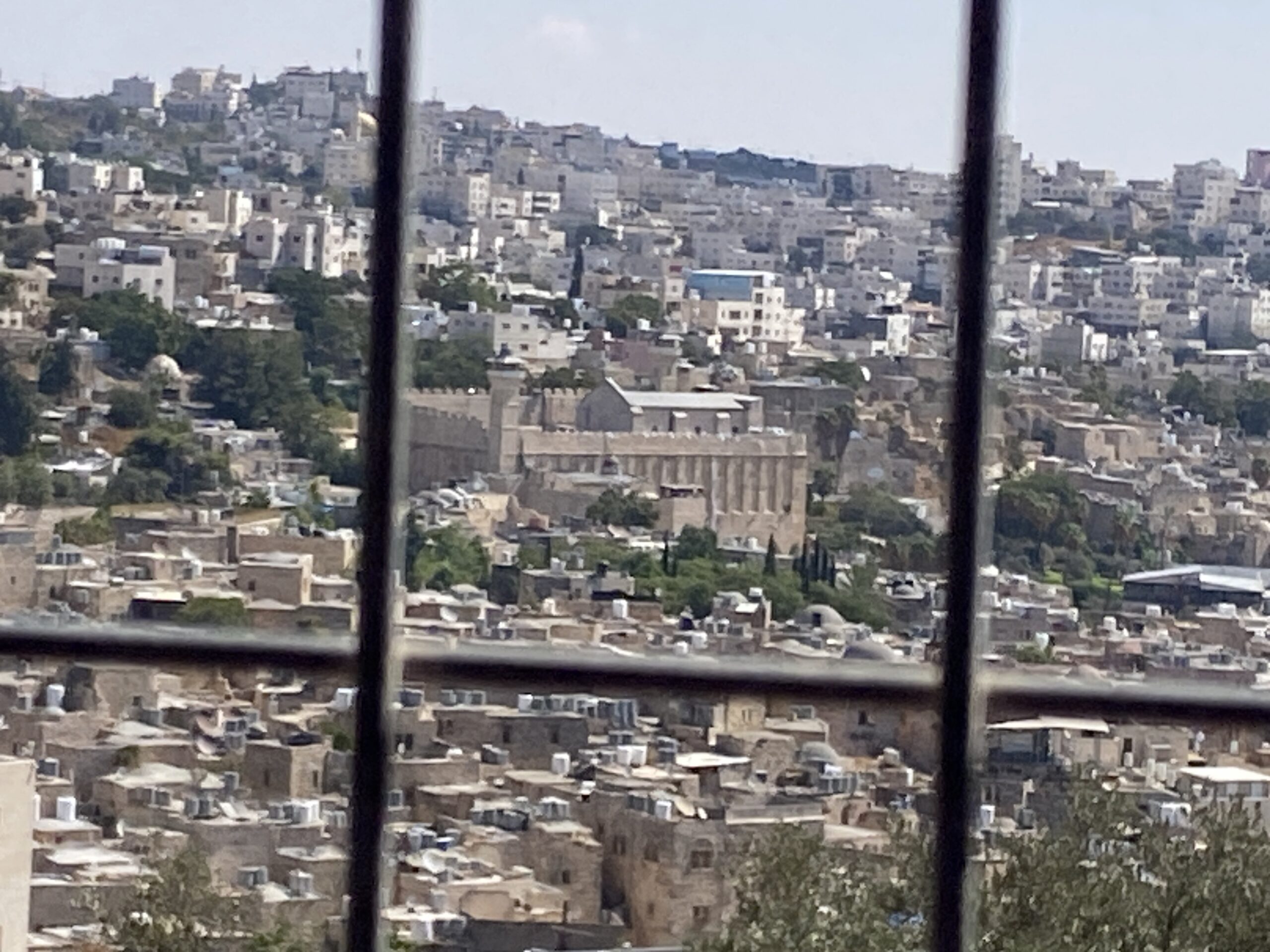 Yael ZoranSep-24-2026Hebron and the Cave of the Patriarchs from Beit Hashalom
-
Jerusalem
See all reports for this place-
The places in East Jerusalem which are visited routinely by MachsomWatch women are Silwan and Sheikh Jarrah. During the month of Ramadan, also the Old City and its environs are monitored.
-
