
Hebron – a tour with Ilana Hammermann after the pogrom of Chayei Sarah
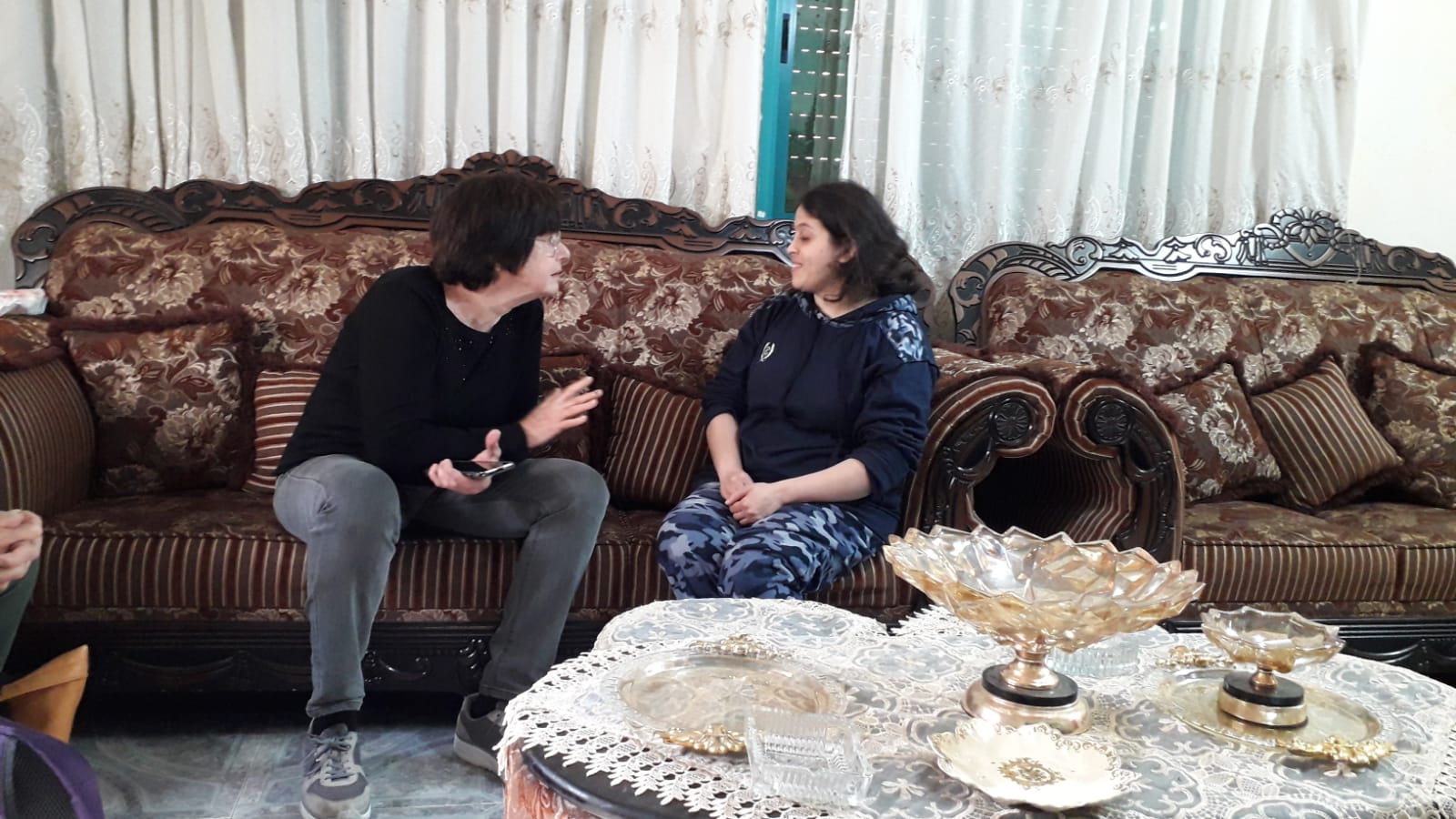
Ilana Hammerman returned to Hebron after several years of not visiting it. She asked to join us in order to talk with the Palestinian residents, and get to know the current situation in the city.
By prior arrangement, we arrived at the house of Abu Anan, whose only sin is that his house is under Givat Haavot (the Hill of the Fathers), and he shares an access road with the residents of the hill. When the settlers go out through the gate in the barbed wire fence to the tent of the Chazon David synagogue (which was destroyed and rebuilt many times), they cross his pastures and olive trees, and on their way they chase away the sheep and chop down the trees. Since Itamar Ben Gvir, a resident of Givat Haavot, became a member of the Knesset, the situation has worsened.
When you go up to the roof of Abu Anan’s house, you can clearly see the police station in Givat Haavot, and next to it Ben Gvir’s house with the guards entrusted to him (photo attached). The police station overlooks the entrance to Hebron from Kiryat Arba (in front of the synagogue tent), from the top of the slope, and on the dirt path leading to the house and on to Givat Haavot.
On Friday, Parshat Chayei Sarah, there were 45 family members who live in the Abu Anan house, and more guests, and then stones started being thrown at the house. They called the police, but the officers arrived after the incident, and collected the material from the private security cameras on the house. We saw on the roof of the house the stones that had been thrown, and areas (perhaps solar collectors) smashed. The members of the house said that the surrounding trees were also damaged, and that the attack on the house continued for a long time. That evening, more cars and houses of residents were stoned.
On Saturday, the army came to the house, following a complaint – this time from the settlers – that stones were thrown from the house and hit a Jewish car parked below. The soldiers entered and left the house many times, without explaining or justifying what they were looking for. It is not clear to the members of the house what they were looking for.
We went to Tel Rumeida to hear about the second site of the riots that weekend.
Givati Brigade soldiers guard the intersection (the site of Elor Azaria’s murder of an incapacitated Palestinian) and avoid talking to us.
In the grocery store located to the right of the intersection, we talked to the man in the wheelchair, the store clerk, who was photographed on Channel 11 news when the riots were reported. He also told us about stone throwing on both sides and soldiers who beat Palestinian children on the grounds that they had thrown stones.
Reminder: When the Jewish settlement in Tel Rumeida began in the early 1980s, the Tel Rumeida settlement included only the neighborhood called Yishai Lands, to the left of the intersection at the end of the road coming up from Shuhada Street. To the right of the intersection, the road winds up towards the old Jewish cemetery (where the Jews of the 1929 attack were buried, and which has now become a cemetery for the residents of the Jewish settlement in Hebron. Continuing up the hill, there were no barriers, and the traffic was mainly that of local Palestinian residents. Now, with the octagonal takeover method of the Hebron settlers, the cemetery has been renovated, a Chabad yeshiva was established up the road, and next to it a pillbox and a barrier with a formidable barbed wire fence.
The seller at the grocery store, who is confined to a wheelchair, says that although the chair is electric, in order to go up and down between his house and the store, the motor is not strong enough and he depends on an attendant to push the chair.
On the way up towards the cemetery we saw a group of travelers headed by a guide from the Hebron seminary — the overall escort for Hebron tourism is now in the hands of the Hebron seminary (public seminary). They are going to hear an explanation about the cemeteries Further up the hill.
After the impressive view of Arab Hebron bustling with life, we reached the checkpoint after the pillbox. The soldiers didn’t let us cross to the other side, claiming that it was area A — doubtless true. Ilana, who speaks Arabic, talked with a group of local young women through the barbed wire fence — unreal.
On the way back, two women who lived opposite each other on the same floor, told Ilana about the Shabbat events:
When the throwing of stones started, all the residents of the street gathered in their houses. The army came and took the young boys out into the street and beat them on the pretext that they were all throwing stones at Jews. One of the women insisted on showing Ilana her son who was hit by the beatings and needed treatment in the emergency room, and her daughter who received a stone in the face. This is the house that is located right below the caravans of the Jewish Tel Rumeida neighborhood, next to the center of activists which Issa Amro established in his home.
A unique collaboration between a Palestinian resident, Machsonwatch checkpoint volunteers and soldiers stationed at the Tel Rumeida intersection: one of the women with whom we spoke to holding a child with a ball in her arms. The boy threw the ball down the road to the neighborhood, we ran trying to stop the ball, and one of the soldiers stopped the ball and kicked it from below — as is appropriate for these World Cup days. With the help of the soldier, the ball returned safely to the woman.
On the way down towards the Cave of the Patriarchs it is quiet. There are almost no vehicles. In the parking lot below the Cave of the Patriarchs we counted 5 buses of tourists who came to hear the story of Hebron, from the Jewish-settler-religious side.
Route 60
At the Dura-El Fawwar intersection, the vegetable stalls are back in operation and they look colorful and fresher than ever.
Near the barrier, a row of police cars patrol the Israeli side of the fence, repairing breaches or checking the electricity along its length.
Dura Al-Fawwar Junction
See all reports for this place-
Junction on Route 60: west - the town of El Dura, east - the Al Fawwar refugee camp. There is a manned pillbox at the junction. From time to time the army sets up flying checkpoints at the entrance to El Fawwar and Al Dura. Al-Fawwar is a large refugee camp (7,000 inhabitants in 2007) established in 1949 to accommodate Palestinian refugees from Be'er Sheva and Beit Jubrin and environs. There are many incidents of stone-throwing. In the vicinity of the pillbox there are excellent agricultural areas, Farmers set up stalls adjacent to the plots close to the road. In recent months the civil administration has set up dirt embankments thereby blocking access to the stalls, and making it impossible for the farmers to sell their vegetables. Updated April 2021, Michal T.
-
Hebron
See all reports for this place-
According to Wye Plantation Accords (1997), Hebron is divided in two: H1 is under Palestinian Authority control, H2 is under Israeli control. In Hebron there are 170,000 Palestinian citizens, 60,000 of them in H2. Between the two areas are permanent checkpoints, manned at all hours, preventing Palestinian movement between them and controlling passage of permit holders such as teachers and schoolchildren. Some 800 Jews live in Avraham Avinu Quarter and Tel Rumeida, on Givat HaAvot and in the wholesale market.
Checkpoints observed in H2:
- Bet Hameriva CP- manned with a pillbox
- Kapisha quarter CP (the northern side of Zion axis) - manned with a pillbox
- The 160 turn CP (the southern side of Zion axis) - manned with a pillbox
- Avraham Avinu quarter - watch station
- The pharmacy CP - checking inside a caravan with a magnometer
- Tarpat (1929) CP - checking inside a caravan with a magnometer
- Tel Rumeida CP - guarding station
- Beit Hadassah CP - guarding station
Three checkpoints around the Tomb of the Patriarchs
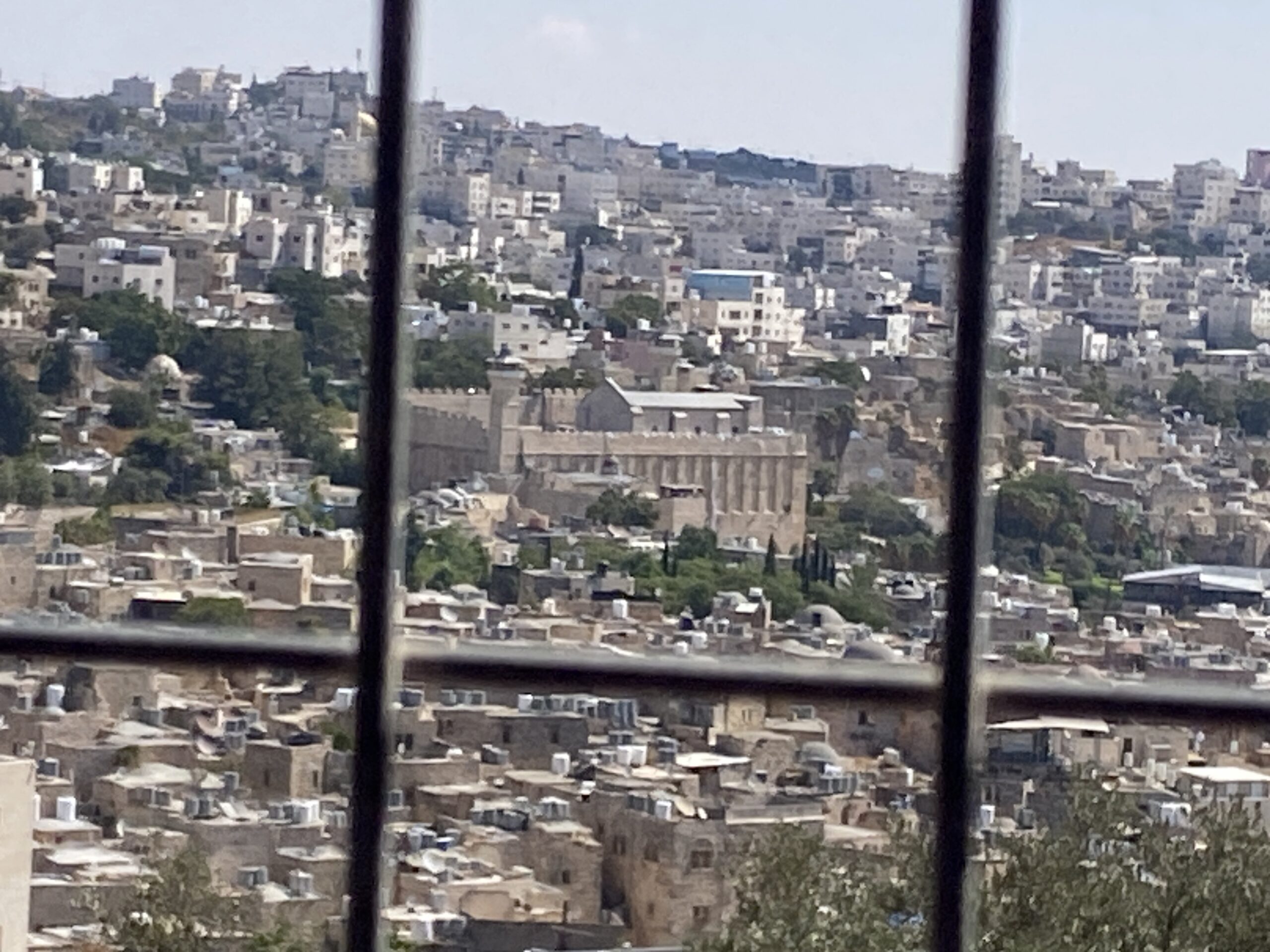 Yael ZoranSep-24-2026Hebron and the Cave of the Patriarchs from Beit Hashalom
-
Meitar checkpoint / Sansana
See all reports for this place-
Meitar Checkpoint / Sansana The checkpoint is located on the Green Line and serves as a border crossing between Israel and the West Bank. It is managed by the Border Crossing Authority of the Defense Ministry. It is comprised of sections for the transfer of goods as well as a vehicle checkpoint (intended for holders of blue identity cards, foreign nationals or diplomats and international organizations). Passing of Palestinians is prohibited, except for those with entry permits to Israel. Palestinians are permitted to cross on foot only. The crossing has a DCO / DCL / DCL / DCL (District Coordination Office), a customs unit, supervision, and a police unit. In the last year, a breach has been opened in the fence, not far from the crossing. This breach is known to all, including the army. There does not appear to be any interest in blocking it, probably as it permits needed Palestinian workers without the bureaucratic permits to get to work in Israel. Food stalls and a parking area economy have been created, but incidents of violent abuse by border police have also been recorded. Updated April 2022
-
South Hebron Hills
See all reports for this place-
South Hebron Hills
South Hebron Hills is a large area in the West Bank's southern part.
Yatta is a major city in this area: right in the border zone between the fertile region of Hebron and its surroundings and the desert of the Hebron Hills. Yatta has about 64,000 inhabitants.
The surrounding villages are called Masafer Yatta (Yatta's daughter villages). Their inhabitants subsist on livestock and agriculture. Agriculture is possible only in small plots, especially near streams. Most of the area consists of rocky terraces.Since the beginning of the 1980s, many settlements have been established on the agricultural land cultivated by the Palestinians in the South Hebron Hills region: Carmel, Maon, Susia, Masadot Yehuda, Othniel, and more. Since the settlements were established and Palestinians cultivation areas have been reduced; the residents of the South Hebron Hills have been suffering from harassment by the settlers. Attempts to evict and demolish houses have continued, along with withholding water and electricity. The military and police usually refrain from intervening in violent incidents between settlers and Palestinians do not enforce the law when it comes to the investigation of extensive violent Jewish settlers. The harassment in the South Hebron Hills includes attacking and attempting to burn residential tents, harassing dogs, harming herds, and preventing access to pastures.
There are several checkpoints in the South Hebron Hills, on Routes 317 and 60. In most of them, no military presence is apparent, but rather an array of pillboxes monitor the villages. Roadblocks are frequently set up according to the settlers and the army's needs. These are located at the Zif Junction, the Dura-al Fawwar crossing, and the Sheep Junction at the southern entrance to Hebron.
Updated April 2022
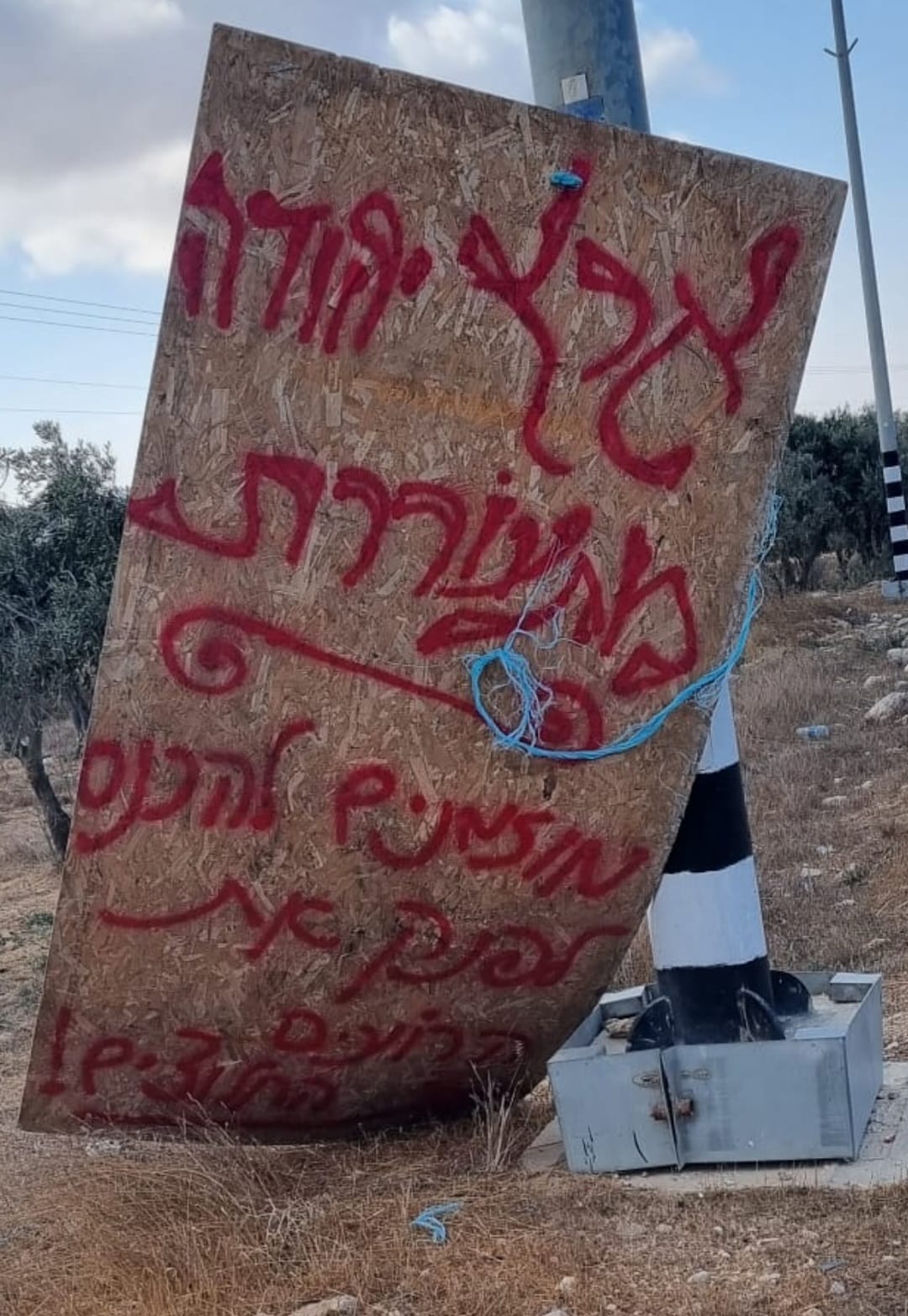 Smadar BeckerOct-17-2026A sign placed by those who call themselves the Pioneer Shepherds, at the outpost adjacent to Qawawis
-
