
Hebron - no tourists, no visitors

We passed through the Tarkumiya crossing and stopped at the grocery store at the Idna-Tarkumiya intersection to demand the safety of Muhammad and his family. Everything was reported to us as usual, but everyone is worried about Ben Gvir and Smotrich.
Hebron
We met Muhammad, the son of Abed, the owner of the souvenir shop in front of the Cave of the Patriarchs, who passed away not long ago. Muhammad says that the tourism situation is now dire, there are no tourists, no visitors, and only the Jews come to pray in the Cave of the Patriarchs. There are no buyers in the store, so it is difficult for them financially. In addition, they are afraid and worried about the new government. They have a direct acquaintance with Ben Gvir, a resident of the Givat HaAvot: he is one of the violent people who previously rioted in their shop selling souvenirs.
Muhammad points to a Palestinian boy, and explains that he was wounded in the leg by a bullet fired by IDF soldiers, and is now practicing riding a bicycle. The boy will star in a film that tells his story. We saw the film’s cameraman, standing with his camera near Abed’s shop, in front of the Cave of the Patriarchs.
We went to Tel Rumeida in order to visit the Shamsiyah family (the head of the family was the photographer of the killing by Elor Azaria of the wounded Palestinian terrorist). But the house was closed, and in the phone call we were asked us to come visit.
Later we went to the glass and ceramic factory. Although all the workers are busy with their work, they are worried about the new government elected in Israel and the change in the situation for the worse, both for the Israelis and for themselves.
Hebron
See all reports for this place-
According to Wye Plantation Accords (1997), Hebron is divided in two: H1 is under Palestinian Authority control, H2 is under Israeli control. In Hebron there are 170,000 Palestinian citizens, 60,000 of them in H2. Between the two areas are permanent checkpoints, manned at all hours, preventing Palestinian movement between them and controlling passage of permit holders such as teachers and schoolchildren. Some 800 Jews live in Avraham Avinu Quarter and Tel Rumeida, on Givat HaAvot and in the wholesale market.
Checkpoints observed in H2:
- Bet Hameriva CP- manned with a pillbox
- Kapisha quarter CP (the northern side of Zion axis) - manned with a pillbox
- The 160 turn CP (the southern side of Zion axis) - manned with a pillbox
- Avraham Avinu quarter - watch station
- The pharmacy CP - checking inside a caravan with a magnometer
- Tarpat (1929) CP - checking inside a caravan with a magnometer
- Tel Rumeida CP - guarding station
- Beit Hadassah CP - guarding station
Three checkpoints around the Tomb of the Patriarchs
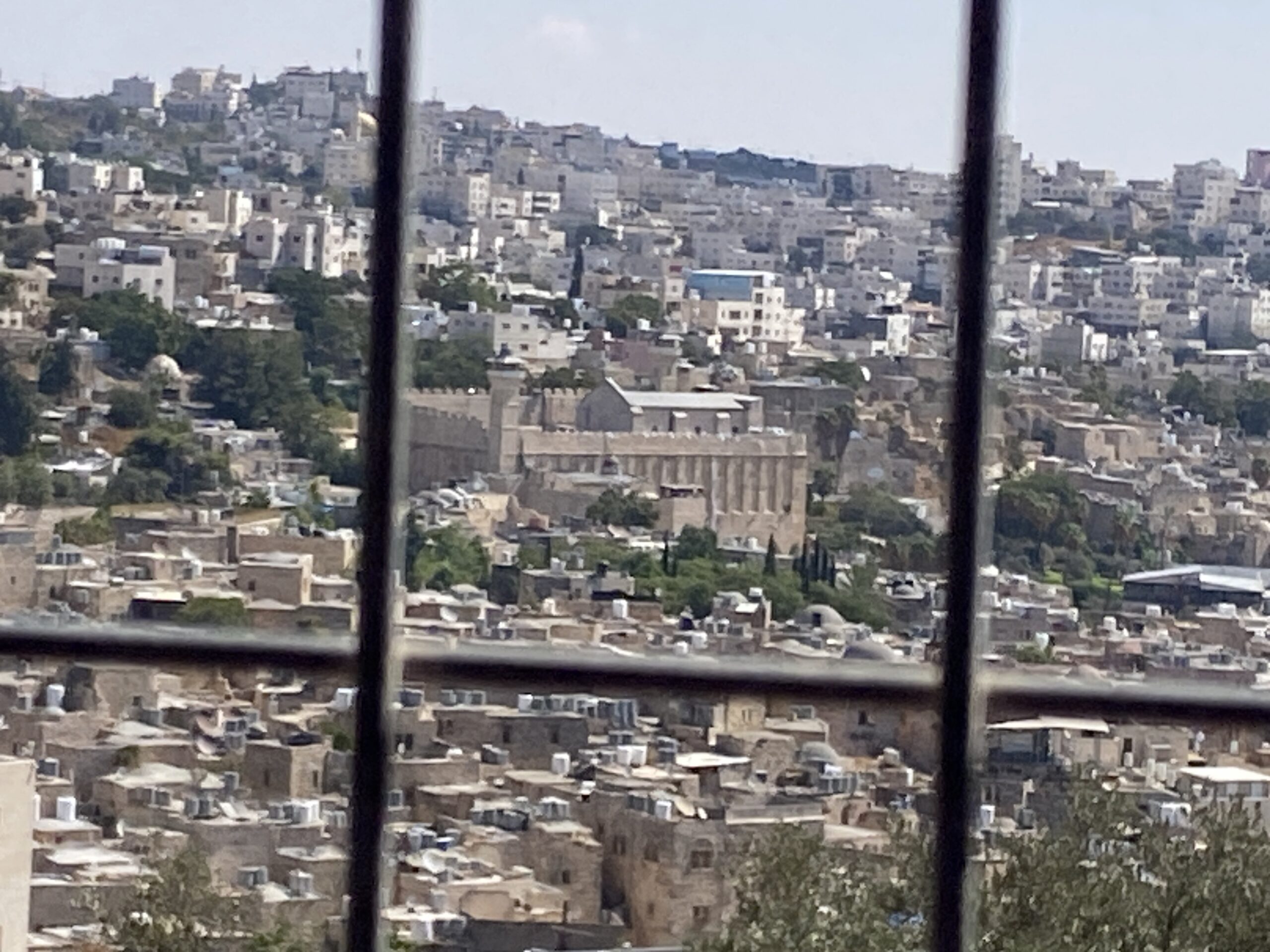 Yael ZoranSep-24-2026Hebron and the Cave of the Patriarchs from Beit Hashalom
-
Tarqumiya CP
See all reports for this place-
The Tarqumiya Checkpoint is one of the largest and busiest checkpoints where people and goods cross into Israel. It is located on the Separation Barrier close to the Green Line, on Road 35 (connecting Beer Sheva and Hebron). It is run by the Israel Defense Ministry’s Crossings Administration with civilian secuirty companies running the day to day operations. The checkpoint is indeed open to vehicles in both directions 24/7, but Palestinians are prevented from crossing in vehicles, except in special cases. MachsomWatch activists visit the checkpoint as it opens at 3:45 am, in order to observe the daily passage of nearly 10,000 Palestinian workers. The workers arrive from throughout the Southern West Bank. Our activists report on the tremendous overcrowding at this checkpoint; they have observed young men climbing and scrambling on the fences and roofs of the ‘access cages’. This is how the work day begins for those who ‘build the land of Israel’. updated November 2019
-
