
Hebron - One shift, two tales
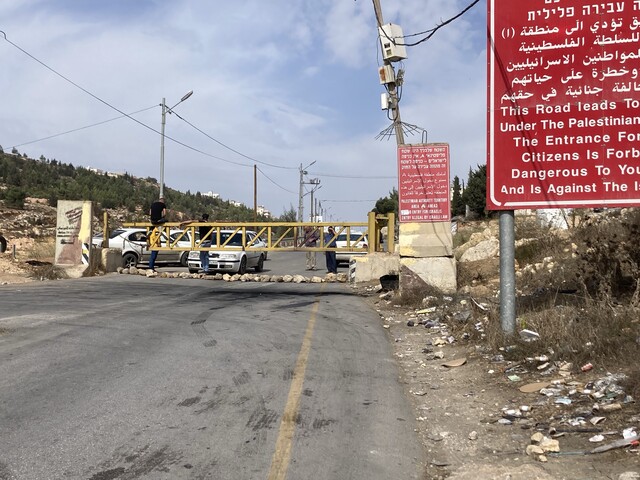
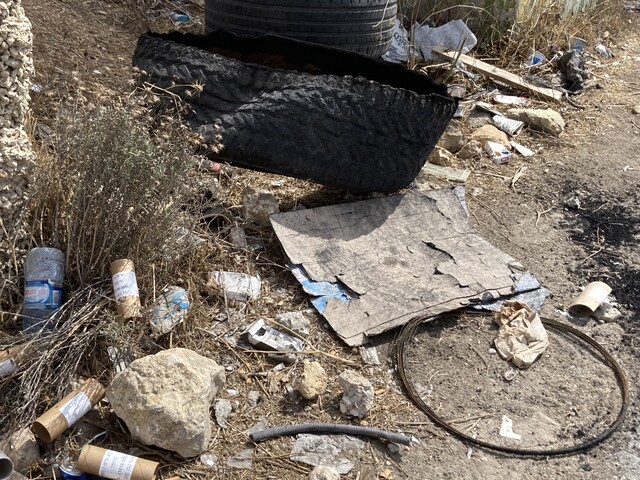
First tale – Dura-Al Fawwar junction on Highway 60.
The entrance to Dura from Highway 60 has been closed for a week. The gate is locked because, recently, every afternoon youths from Dura have been throwing rocks and burning tires. The army decided to impose collective punishment. We see again that people unable to go through in a vehicle transferred the goods by hand to a vehicle on the other side of the barrier – the back-to-back we’ve seen before. Those who must enter Dura must make a long detour on foot along a trail via Homsa.
On our way back we see soldiers stationed at all the concrete barriers. There are no vehicles and no youths.
The Palestinian youths we spoke with sound proud. They’re fighting for independence…an older man present smiled sadly but remained silent.
Second tale: Palestinians lick their wounds after Saturday’s “Hayye Sara” torah portion.


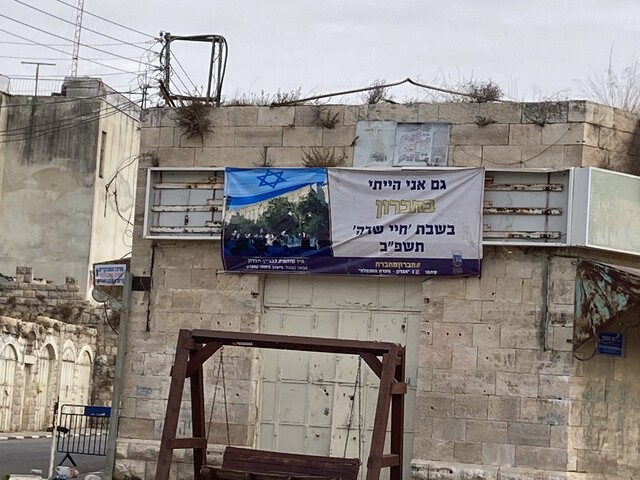
“Hayye Sara” tells of the patriarch Abraham’s purchase of Me’arat Hamachpela (the Cave of the Patriarchs). Religious Jews are accustomed to make a pilgrimage to Hebron in commemoration. The arrangements with the Moslem Waqf in connection with this period are known as “the Jewish exception.” In other words, only Jews are permitted to worship at the site. Prior to the weekend, the settlers in Hebron are very busy preparing housing for those who’ll arrive, and large tents to welcome the attendees. That weekend 45,000 religious Jews came to Hebron.
The army designates the H2 sector as a closed military area, accessible only to residents. A curfew is imposed on Palestinian residents of the sector; they are forbidden to leave their homes except in an emergency.
The army increases its presence. The soldiers attempt to interpose themselves physically between the settlers and the Palestinians.
Here’s what happened that weekend:
Two women from the Ja’abari neighborhood were injured by settlers throwing rocks.
Three bicycles were stolen from Palestinians.
Rocks were thrown on the “Tzion Axis”
Palestinians submitted seven complaints to the police.
The army deleted what cameras had recorded.
The camera tapes are preserved only if there’s an attack by Palestinians. Attacks by settlers are ignored, and the tapes are erased after 24 hours. That’s why the police don’t know who carried out the thefts (That’s what I learned after an unsuccessful attempt to help). One of the veterans of the Hebron Jewish settlement said that among the many arrivals are people who aren’t part of their community and behave violently…He apologized to me…
Hebron is very dirty today; big companies are dismantling the installations.
Otherwise, construction of the new Jewish neighborhood continues. The visitor center is also being renovated or a second story is being added.
In brief – the occupation is thriving.
The three photos above provide a taste of the atmosphere during “Hayye Sara.”
Dura Al-Fawwar Junction
See all reports for this place-
Junction on Route 60: west - the town of El Dura, east - the Al Fawwar refugee camp. There is a manned pillbox at the junction. From time to time the army sets up flying checkpoints at the entrance to El Fawwar and Al Dura. Al-Fawwar is a large refugee camp (7,000 inhabitants in 2007) established in 1949 to accommodate Palestinian refugees from Be'er Sheva and Beit Jubrin and environs. There are many incidents of stone-throwing. In the vicinity of the pillbox there are excellent agricultural areas, Farmers set up stalls adjacent to the plots close to the road. In recent months the civil administration has set up dirt embankments thereby blocking access to the stalls, and making it impossible for the farmers to sell their vegetables. Updated April 2021, Michal T.
-
Hebron
See all reports for this place-
According to Wye Plantation Accords (1997), Hebron is divided in two: H1 is under Palestinian Authority control, H2 is under Israeli control. In Hebron there are 170,000 Palestinian citizens, 60,000 of them in H2. Between the two areas are permanent checkpoints, manned at all hours, preventing Palestinian movement between them and controlling passage of permit holders such as teachers and schoolchildren. Some 800 Jews live in Avraham Avinu Quarter and Tel Rumeida, on Givat HaAvot and in the wholesale market.
Checkpoints observed in H2:
- Bet Hameriva CP- manned with a pillbox
- Kapisha quarter CP (the northern side of Zion axis) - manned with a pillbox
- The 160 turn CP (the southern side of Zion axis) - manned with a pillbox
- Avraham Avinu quarter - watch station
- The pharmacy CP - checking inside a caravan with a magnometer
- Tarpat (1929) CP - checking inside a caravan with a magnometer
- Tel Rumeida CP - guarding station
- Beit Hadassah CP - guarding station
Three checkpoints around the Tomb of the Patriarchs
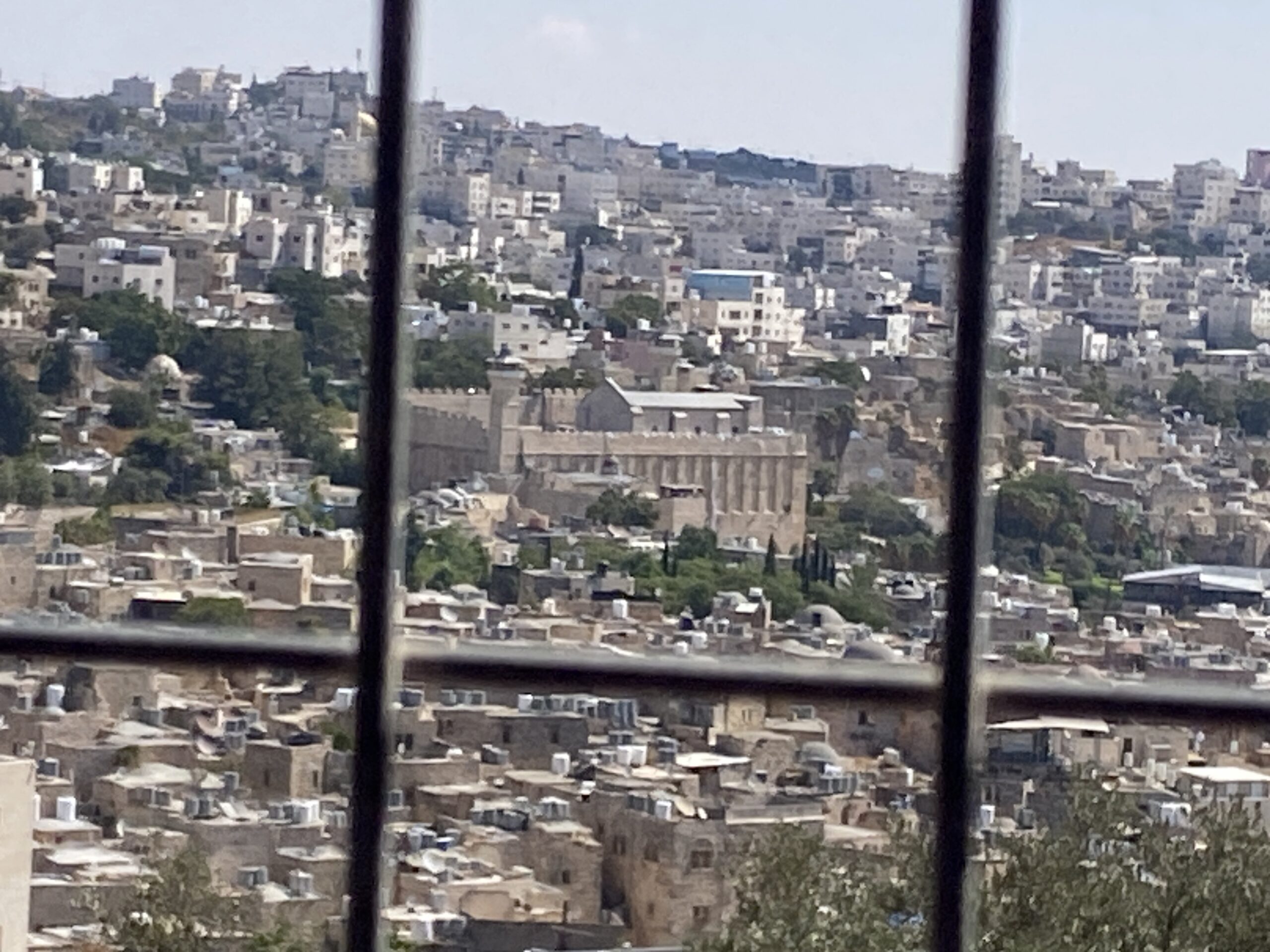 Yael ZoranSep-24-2026Hebron and the Cave of the Patriarchs from Beit Hashalom
-
