
Hebron, Sansana (Meitar Crossing), South Hebron Hills, Tarqumiya, Mon 3.9.12, Morning
Translator: Charles K.
Meitar crossing
At 06:40 there are no laborers on the Palestinian side of the crossing. Many are waiting for transportation on the Israeli side. It should be clear that Israel is also responsible for the Palestinian side because it’s in Area C according to the Oslo accords. The Israeli army is sovereign in this occupied territory.
Highway 60
An army jeep observes what’s happening at Samu’a. There’s almost no traffic on this road, but Big Brother is watching. The hill opposite Samu’a is covered with blossoming sea squills. Has autumn arrived?
Hebron
People are still praying in the synagogue as we drive past the illegal outpost below Giv’at Ha’Avot. Responsibility for both the Pharmacy checkpoint and the one at Curve 160 was transferred this week from the Border Police to the Naha”l brigade. Soldiers still sit on the roof of the house at the junction of the worshippers route.
A sewer pipe is being laid on the Tzion route. The workers are Palestinians; the funding comes from the Kiryat Arba local council. The Palestinians have permits to work in the settlements.
Today children pass through all the checkpoints on their way to school without having their satchels inspected. TIP police observe at all the checkpoints. One even speaks fluent Arabic and has friendly discussions with the children.
At the Tel Rumeida checkpoint the teachers are allowed to cross through the side entrance without going through the magnemometer. I hope that continues, because it always leads to an argument.
A little girl from the family living just past the checkpoint gets stuck in the revolving gate at the Pharmacy checkpoint; her weeping is heartrending. I run over and pick her up. The soldiers, who’d formerly asked me not to come near, don’t stop me; “heartbreaking,” one of them mutters. Her mother comes down; we see that the girl was only very frightened, but not hurt. The family gives me a cup of tea and the fear passes. An old man who wants to cross, bypassing the checkpoint without being inspected by the soldiers, has a short discussion with them. The soldiers don’t prevent me from standing beside him quietly. I recognize him from past visits; once again, the heart-wrenching tale of the four shops he once had next to the checkpoint, and today nothing remains. The pleasant TIP soldier continues to listen to him. Classes have already begun in the Al Ibrahimiyya school, even though the renovations haven’t been completed.
Peace activists also stand at all the checkpoints.
Highway 35
Muhammad, from the grocery in Idna, tells us that the soldiers come down from the pillbox every afternoon. He says, grinning, that it’s so they won’t fall asleep. He shows us where they leave the plastic barriers from the checkpoint near his shop. Muhammad is a member of the group of bereaved families; he asks whether I’ve seen Ruby Damalin’s film – After Peace… We were both moved.
Tarqumiyya
We get here at a quarter of nine in the morning. Tzion, the checkpoint manager, says that every day 4000 laborers come through here by 07:20, and by the time we arrived 250 vehicles had also been inspected.
When we arrive we’re asked where we came from. Kiryat Arba, we reply. They take our IDs and tell us to wait for the vehicle inspection. Five cars cross without being inspected while we wait. Why!? Because our driver is Arab, unlike those in the other cars, even though they all have Israeli IDs. Have we already mentioned racism? There are 15 cars in the vehicle inspection line with us, and 13 staff. The procedure is as follows: the driver and passengers take all their belongings to the scanner, put them through and move to the shed where they wait for the underside of the car to be inspected with a mirror and for the dog handlers. It can take up to an hour. Today one of the drivers is a young woman from Kafr Qassem who went to Hebron to return the wedding dress she had rented for her wedding. They’re waiting for her; she’s afraid to go through alone and doesn’t stop crying. Since I’m the only other woman there she was glad to receive my help; I intervened to ask that they inspect her more quickly. It turned out that the bottleneck was a shortage of dogs, who were tired from the morning’s inspections. Tzion, the checkpoint manager, approached me to again explain the reason. I wonder aloud: If the settlers were required to undergo that inspection every day, would the same thing happen? He admitted that he already knows all the drivers, and certainly know us, so why are things like this? The answer lies with the lord of injustice and the crossings unit.
But Justice Levy says there’s no occupation.
Hebron
See all reports for this place-
According to Wye Plantation Accords (1997), Hebron is divided in two: H1 is under Palestinian Authority control, H2 is under Israeli control. In Hebron there are 170,000 Palestinian citizens, 60,000 of them in H2. Between the two areas are permanent checkpoints, manned at all hours, preventing Palestinian movement between them and controlling passage of permit holders such as teachers and schoolchildren. Some 800 Jews live in Avraham Avinu Quarter and Tel Rumeida, on Givat HaAvot and in the wholesale market.
Checkpoints observed in H2:
- Bet Hameriva CP- manned with a pillbox
- Kapisha quarter CP (the northern side of Zion axis) - manned with a pillbox
- The 160 turn CP (the southern side of Zion axis) - manned with a pillbox
- Avraham Avinu quarter - watch station
- The pharmacy CP - checking inside a caravan with a magnometer
- Tarpat (1929) CP - checking inside a caravan with a magnometer
- Tel Rumeida CP - guarding station
- Beit Hadassah CP - guarding station
Three checkpoints around the Tomb of the Patriarchs
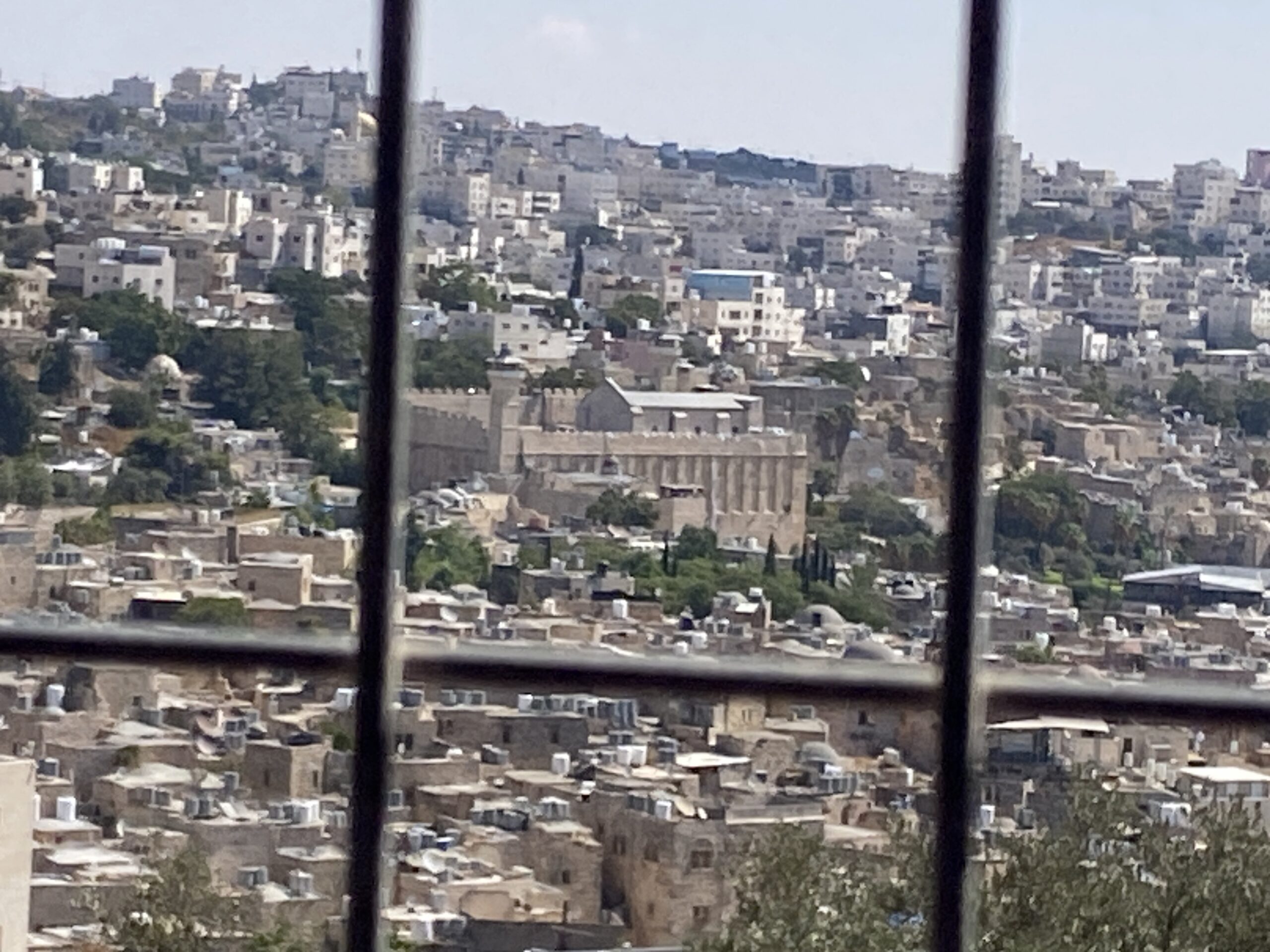 Yael ZoranSep-24-2026Hebron and the Cave of the Patriarchs from Beit Hashalom
-
Meitar checkpoint / Sansana
See all reports for this place-
Meitar Checkpoint / Sansana The checkpoint is located on the Green Line and serves as a border crossing between Israel and the West Bank. It is managed by the Border Crossing Authority of the Defense Ministry. It is comprised of sections for the transfer of goods as well as a vehicle checkpoint (intended for holders of blue identity cards, foreign nationals or diplomats and international organizations). Passing of Palestinians is prohibited, except for those with entry permits to Israel. Palestinians are permitted to cross on foot only. The crossing has a DCO / DCL / DCL / DCL (District Coordination Office), a customs unit, supervision, and a police unit. In the last year, a breach has been opened in the fence, not far from the crossing. This breach is known to all, including the army. There does not appear to be any interest in blocking it, probably as it permits needed Palestinian workers without the bureaucratic permits to get to work in Israel. Food stalls and a parking area economy have been created, but incidents of violent abuse by border police have also been recorded. Updated April 2022
-
South Hebron Hills
See all reports for this place-
South Hebron Hills
South Hebron Hills is a large area in the West Bank's southern part.
Yatta is a major city in this area: right in the border zone between the fertile region of Hebron and its surroundings and the desert of the Hebron Hills. Yatta has about 64,000 inhabitants.
The surrounding villages are called Masafer Yatta (Yatta's daughter villages). Their inhabitants subsist on livestock and agriculture. Agriculture is possible only in small plots, especially near streams. Most of the area consists of rocky terraces.Since the beginning of the 1980s, many settlements have been established on the agricultural land cultivated by the Palestinians in the South Hebron Hills region: Carmel, Maon, Susia, Masadot Yehuda, Othniel, and more. Since the settlements were established and Palestinians cultivation areas have been reduced; the residents of the South Hebron Hills have been suffering from harassment by the settlers. Attempts to evict and demolish houses have continued, along with withholding water and electricity. The military and police usually refrain from intervening in violent incidents between settlers and Palestinians do not enforce the law when it comes to the investigation of extensive violent Jewish settlers. The harassment in the South Hebron Hills includes attacking and attempting to burn residential tents, harassing dogs, harming herds, and preventing access to pastures.
There are several checkpoints in the South Hebron Hills, on Routes 317 and 60. In most of them, no military presence is apparent, but rather an array of pillboxes monitor the villages. Roadblocks are frequently set up according to the settlers and the army's needs. These are located at the Zif Junction, the Dura-al Fawwar crossing, and the Sheep Junction at the southern entrance to Hebron.
Updated April 2022
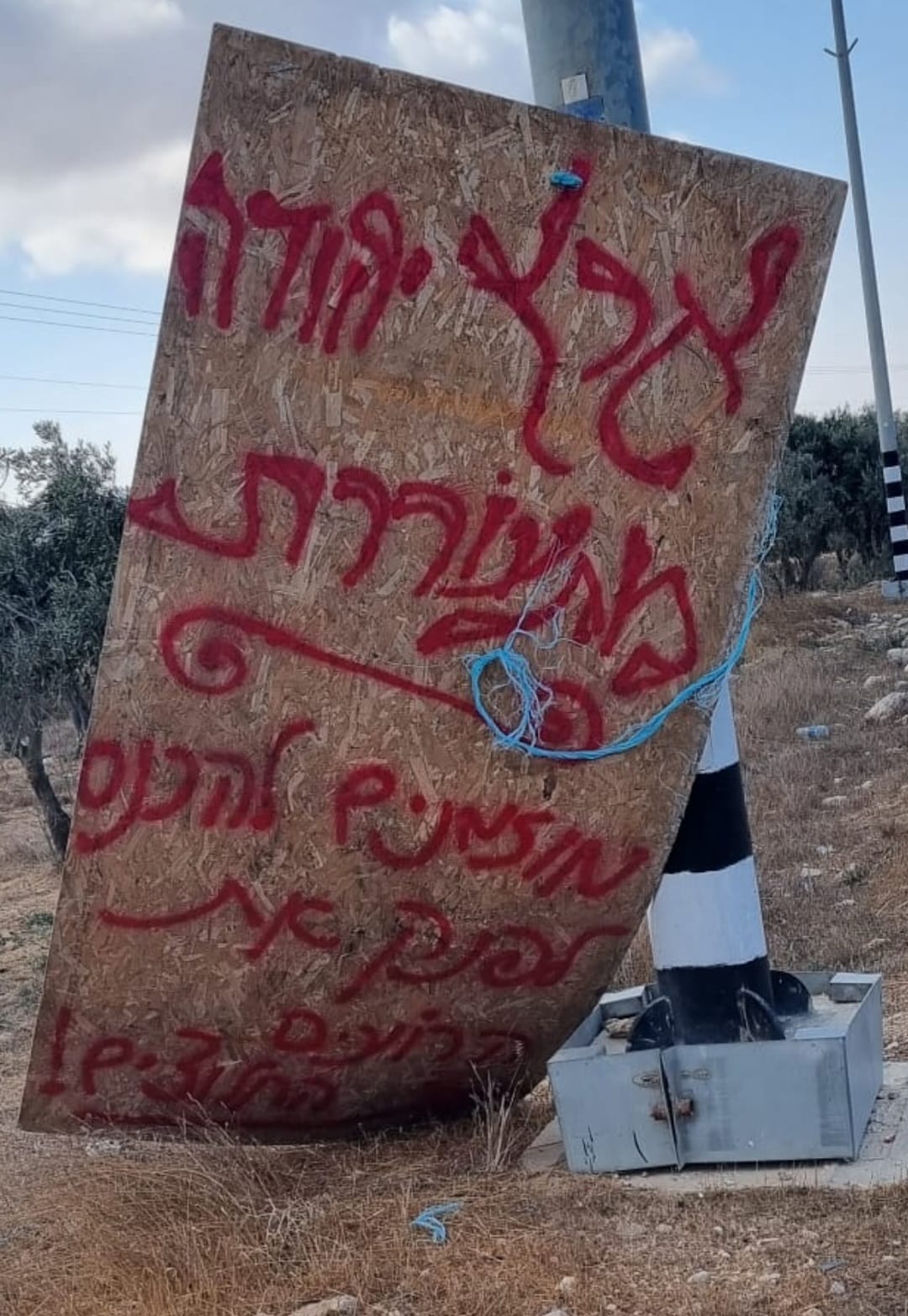 Smadar BeckerOct-17-2026A sign placed by those who call themselves the Pioneer Shepherds, at the outpost adjacent to Qawawis
-
Tarqumiya CP
See all reports for this place-
The Tarqumiya Checkpoint is one of the largest and busiest checkpoints where people and goods cross into Israel. It is located on the Separation Barrier close to the Green Line, on Road 35 (connecting Beer Sheva and Hebron). It is run by the Israel Defense Ministry’s Crossings Administration with civilian secuirty companies running the day to day operations. The checkpoint is indeed open to vehicles in both directions 24/7, but Palestinians are prevented from crossing in vehicles, except in special cases. MachsomWatch activists visit the checkpoint as it opens at 3:45 am, in order to observe the daily passage of nearly 10,000 Palestinian workers. The workers arrive from throughout the Southern West Bank. Our activists report on the tremendous overcrowding at this checkpoint; they have observed young men climbing and scrambling on the fences and roofs of the ‘access cages’. This is how the work day begins for those who ‘build the land of Israel’. updated November 2019
-
