
Hebron, Sansana (Meitar Crossing), South Hebron Hills, Tue 13.8.13, Morning
Meitar crossing was empty this morning at 09:00.
All laborers had already crossed; there were no unusual inspection procedures.
Highway 317.
Little traffic. We showed Nina the differences between a Jewish locality and Palestinian localities adjacent to it: Susya vs. Susya, Carmel vs. Umm el Hir. Even though we’ve seen no end of sights and of evil, the gap always shocks us anew.
Hebron – Nothing has changed in Hebron – Giv’ati soldiers still occupy Beit HaMeriva and Beit HaMachpela is still quiet. As we approached the entrance to the Cave of the Patriarchs plaza we’re stopped by Border Police soldiers. They don’t ask for permits but ask, threateningly, Are you Muslim? Do you know you’re not allowed to enter? Since we’re aware that their motivation can sometimes be excessive we decided not to stop and instead parked in the lot next to Beit HaMeriva.
Suddenly two children run from the direction of the Border Police booth. We know them; they always hang around asking for money. This time the soldier chased them (excess motivation?), they approach us, he follows and chases them away. I think our presence saved them from being slapped – given their grins. That’s what they do for fun. The soldiers at the entrance to the Avraham Avinu neighborhood have relocated the emplacement. It’s now right on the road up to Shuhadah, on our left.
No detainees at any of the checkpoints in the city. A settler sits talking to a soldier at the Tel Rumeida emplacement – just in case we forget who’s in charge.
Yesterday Irit Struck was asked on a radio program about her plans for the Knesset recess. She’ll take some new members to visit Hebron.
How wonderful.
We, on the other hand, were happy to leave.
The observation balloon floats above Highway 60. Near Beit Haggai they’re preparing to open the yellow gate at the southern entrance to Hebron, to ease Palestinian traffic. A concrete booth is under construction.
Hebron
See all reports for this place-
According to Wye Plantation Accords (1997), Hebron is divided in two: H1 is under Palestinian Authority control, H2 is under Israeli control. In Hebron there are 170,000 Palestinian citizens, 60,000 of them in H2. Between the two areas are permanent checkpoints, manned at all hours, preventing Palestinian movement between them and controlling passage of permit holders such as teachers and schoolchildren. Some 800 Jews live in Avraham Avinu Quarter and Tel Rumeida, on Givat HaAvot and in the wholesale market.
Checkpoints observed in H2:
- Bet Hameriva CP- manned with a pillbox
- Kapisha quarter CP (the northern side of Zion axis) - manned with a pillbox
- The 160 turn CP (the southern side of Zion axis) - manned with a pillbox
- Avraham Avinu quarter - watch station
- The pharmacy CP - checking inside a caravan with a magnometer
- Tarpat (1929) CP - checking inside a caravan with a magnometer
- Tel Rumeida CP - guarding station
- Beit Hadassah CP - guarding station
Three checkpoints around the Tomb of the Patriarchs
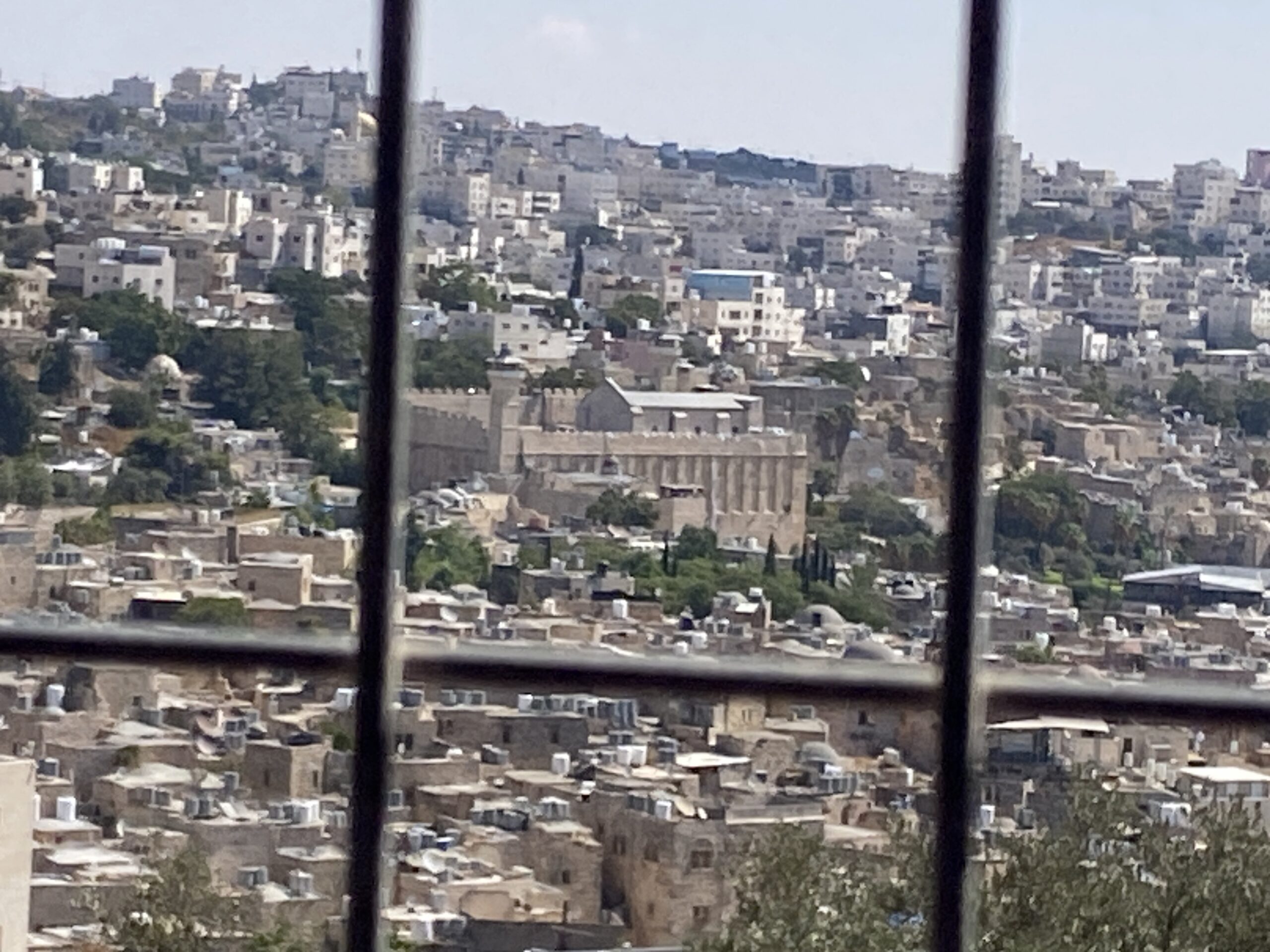 Yael ZoranSep-24-2026Hebron and the Cave of the Patriarchs from Beit Hashalom
-
Meitar checkpoint / Sansana
See all reports for this place-
Meitar Checkpoint / Sansana The checkpoint is located on the Green Line and serves as a border crossing between Israel and the West Bank. It is managed by the Border Crossing Authority of the Defense Ministry. It is comprised of sections for the transfer of goods as well as a vehicle checkpoint (intended for holders of blue identity cards, foreign nationals or diplomats and international organizations). Passing of Palestinians is prohibited, except for those with entry permits to Israel. Palestinians are permitted to cross on foot only. The crossing has a DCO / DCL / DCL / DCL (District Coordination Office), a customs unit, supervision, and a police unit. In the last year, a breach has been opened in the fence, not far from the crossing. This breach is known to all, including the army. There does not appear to be any interest in blocking it, probably as it permits needed Palestinian workers without the bureaucratic permits to get to work in Israel. Food stalls and a parking area economy have been created, but incidents of violent abuse by border police have also been recorded. Updated April 2022
-
South Hebron Hills
See all reports for this place-
South Hebron Hills
South Hebron Hills is a large area in the West Bank's southern part.
Yatta is a major city in this area: right in the border zone between the fertile region of Hebron and its surroundings and the desert of the Hebron Hills. Yatta has about 64,000 inhabitants.
The surrounding villages are called Masafer Yatta (Yatta's daughter villages). Their inhabitants subsist on livestock and agriculture. Agriculture is possible only in small plots, especially near streams. Most of the area consists of rocky terraces.Since the beginning of the 1980s, many settlements have been established on the agricultural land cultivated by the Palestinians in the South Hebron Hills region: Carmel, Maon, Susia, Masadot Yehuda, Othniel, and more. Since the settlements were established and Palestinians cultivation areas have been reduced; the residents of the South Hebron Hills have been suffering from harassment by the settlers. Attempts to evict and demolish houses have continued, along with withholding water and electricity. The military and police usually refrain from intervening in violent incidents between settlers and Palestinians do not enforce the law when it comes to the investigation of extensive violent Jewish settlers. The harassment in the South Hebron Hills includes attacking and attempting to burn residential tents, harassing dogs, harming herds, and preventing access to pastures.
There are several checkpoints in the South Hebron Hills, on Routes 317 and 60. In most of them, no military presence is apparent, but rather an array of pillboxes monitor the villages. Roadblocks are frequently set up according to the settlers and the army's needs. These are located at the Zif Junction, the Dura-al Fawwar crossing, and the Sheep Junction at the southern entrance to Hebron.
Updated April 2022
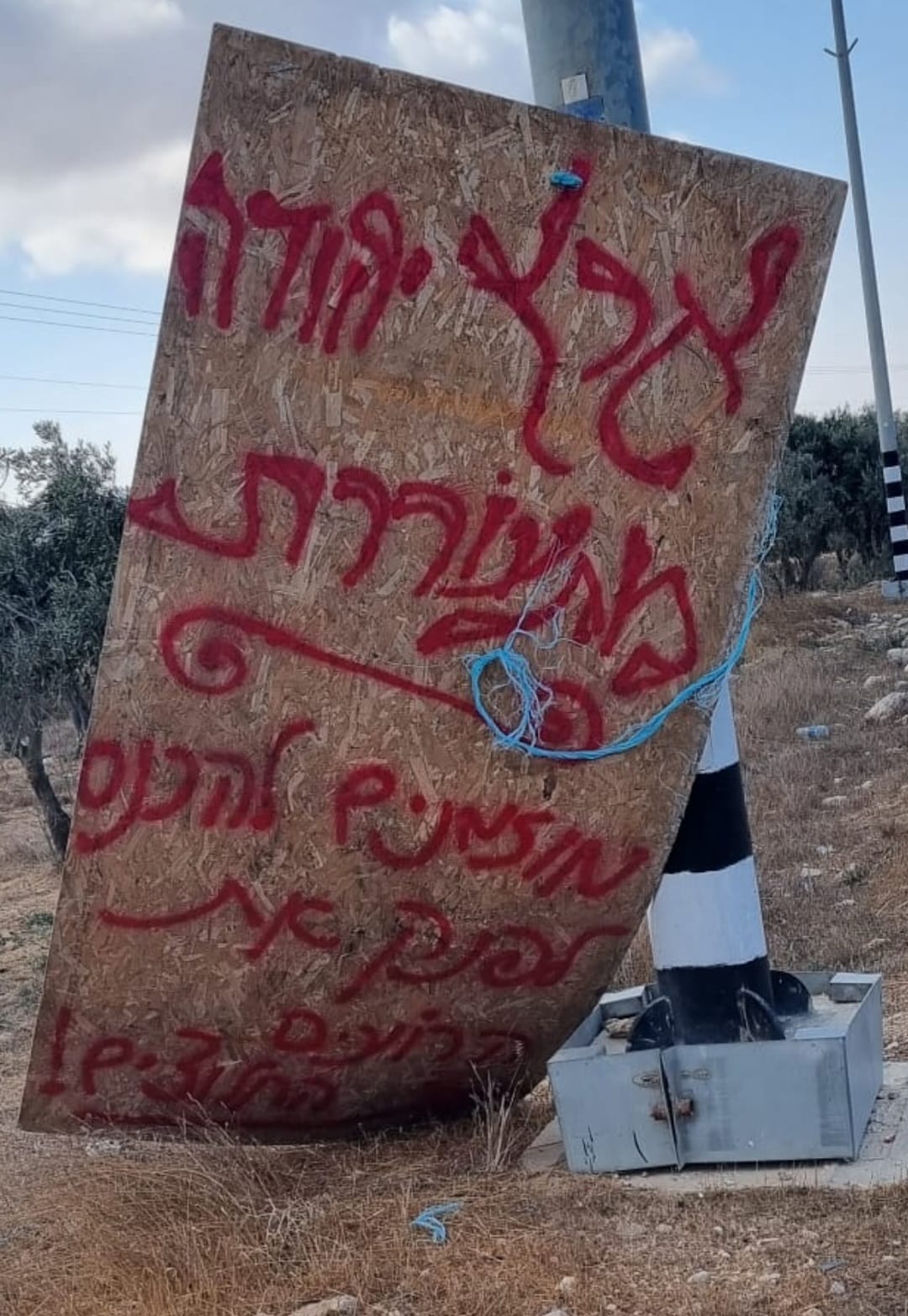 Smadar BeckerOct-17-2026A sign placed by those who call themselves the Pioneer Shepherds, at the outpost adjacent to Qawawis
-
