
Hebron, Sansana (Meitar Crossing), South Hebron Hills, Wed 13.3.13, Morning
Translator: Charles K.
The photographs:
Curve 160 checkpoint in Hebron – small stones the children threw
Soldiers who came from the Jabel Juhar neighborhood (Area H1, which is supposed to be under Palestinian control)
Helmets sitting on the concrete barriers instead of on the soldiers’ heads.
The pillbox on Highway 60 at the Dura – Al Fawwar junction.
The sign warning it’s dangerous to enter Area A, soldiers alongside.
Yesterday a Palestinian youth was killed by live fire at the Dura Al Fawwar junction on Highway 60. And today?! Today everyone’s on alert, sad, with heavy hearts. If you read the entire report you’ll agree with me that Edmond Levi is wrong – there is in fact an occupation!!!
What we did on today’s shift (tales of the occupation)
Meitar checkpoint
By 06:45 all the laborers had crossed and wait for their rides…the earthworks continue and the rubbish is still there.
Highway 60, Southern Hebron Hills
Khirbet Tawwani – The soldiers escorting the children walking to school from Umm Tuba arrive on time this morning. The Palestinians have asked us to try to arrange for the children to be driven to school. The Civil Administration representatives have thus far refused – we asked our attorney, Gabi Lassky, to write some letters. We’ll see what happens. The children have been walking to school with a military escort since 2004. Wouldn’t it be easier to find the hoodlums from the Ma’on Farm and get rid of them? They’re on privately owned land; cf. Talia Sasson’s report.
Zif junction – We see here for the first time the army’s heightened preparations – vehicles for dispersing demonstrations, Border Police vehicles and a squad of soldiers at the checkpoint – no one is crossing and there’s very little vehicle traffic.
Kvasim junction – Border Police soldiers standing under the pillbox stop a Palestinian motorcyclist, check him and release him immediately when they see us.
The junction to Kiryat Arba on Highway 60
Palestinian families own land beyond the gas station, below Mitzpeh Avichai and before Giv’at Mamreh – approximately 30 dunums. For thirteen years they haven’t been allowed to reach their land and cultivate it. Today, following coordination between the Palestinian and the Israeli DCO, they came with tractors to try to enter and work the land. They reached the entrance gate; the Kiryat Arba security people didn’t let them through. When we met them they’d already been waiting for three hours, trying every way they could to convince the Palestinian DCO to arrange things with the Israeli DCO, but to no avail. We see the despair and helplessness in their eyes. We referred them to Yesh Din. They talked to M., from Yesh Din, in our presence; let’s hope something comes of it.
Hebron
We visit the teachers at the Cordova school. The handrail of the stairs has been repainted…giving apartheid a festive air. Again they request what we haven’t been able to implement …Hebrew classes…
The green apartheid fence on the eastern side of the Cave of the Patriarchs plaza sparkles in the sun.
Curve 160 – The occupation’s Rashomon continues. A Palestinian stops us just before the checkpoint. He tells us that five 9 and 10 year old children from the Assissiya boys’ school in Jabel Johar threw stones at the checkpoint. In response, the soldiers entered the school and sprayed tear gas. The teachers then closed the school; they’re now on strike. An ambulance evacuated pupils who were injured.
We reach the checkpoint – the gate is open, three police cars and a military vehicle, senior officers on site – no one wearing a helmet, everyone relaxed, some drinking coffee, a few small stones scattered on the street. We asked how many children were here – 50-100, they reply. (We see almost no children and very few passersby). The gate is still open; two soldiers walked into the neighborhood, stopped past the first grocery store and then came out.
What really happened? You decide between the two versions. On the basis of what I saw, I tend to believe the Palestinians. One of the soldiers checks his iPhone to see whether there were reports on Walla or Ynet.
The occupation routine?
Hebron
See all reports for this place-
According to Wye Plantation Accords (1997), Hebron is divided in two: H1 is under Palestinian Authority control, H2 is under Israeli control. In Hebron there are 170,000 Palestinian citizens, 60,000 of them in H2. Between the two areas are permanent checkpoints, manned at all hours, preventing Palestinian movement between them and controlling passage of permit holders such as teachers and schoolchildren. Some 800 Jews live in Avraham Avinu Quarter and Tel Rumeida, on Givat HaAvot and in the wholesale market.
Checkpoints observed in H2:
- Bet Hameriva CP- manned with a pillbox
- Kapisha quarter CP (the northern side of Zion axis) - manned with a pillbox
- The 160 turn CP (the southern side of Zion axis) - manned with a pillbox
- Avraham Avinu quarter - watch station
- The pharmacy CP - checking inside a caravan with a magnometer
- Tarpat (1929) CP - checking inside a caravan with a magnometer
- Tel Rumeida CP - guarding station
- Beit Hadassah CP - guarding station
Three checkpoints around the Tomb of the Patriarchs
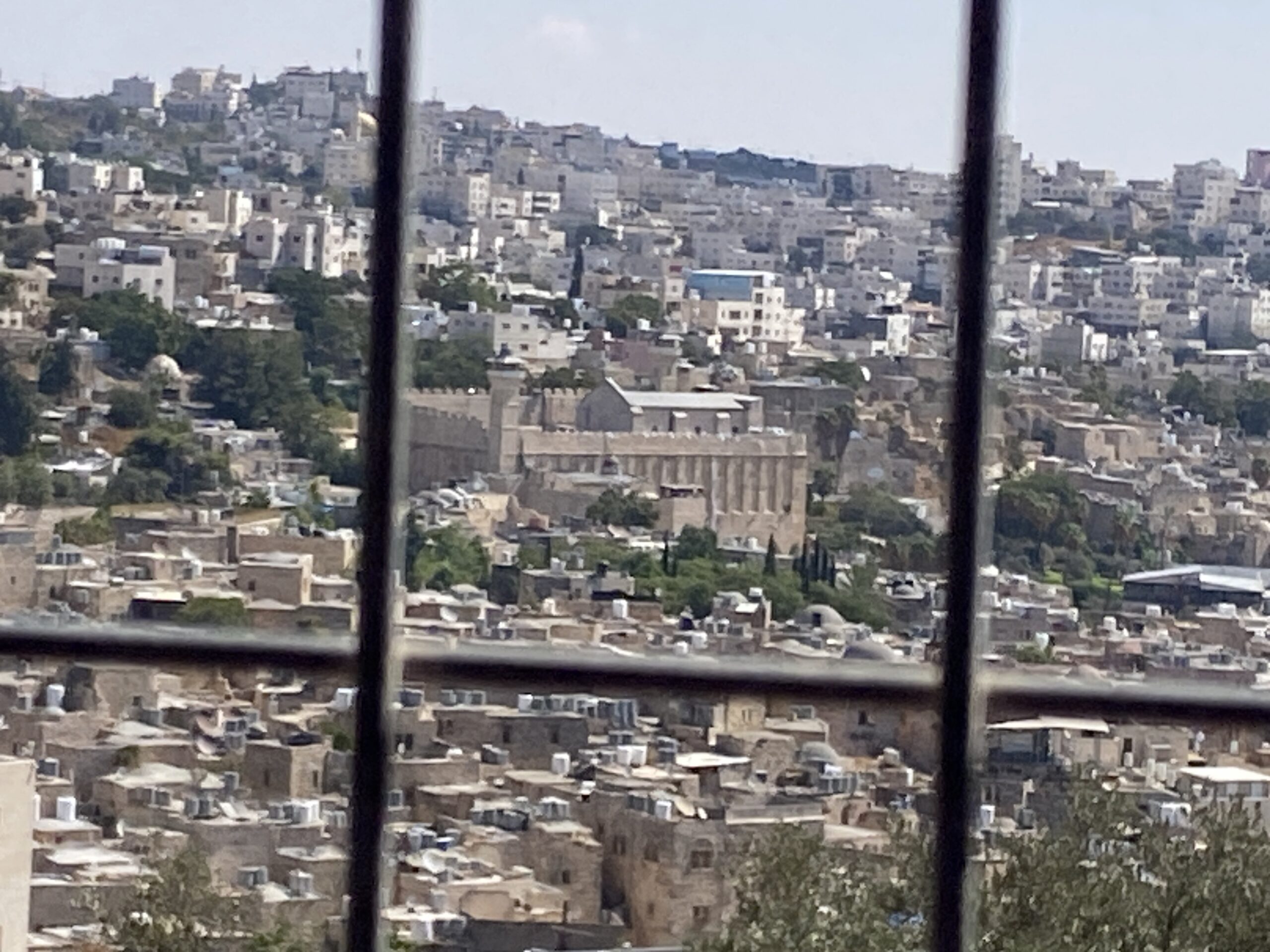 Yael ZoranSep-24-2026Hebron and the Cave of the Patriarchs from Beit Hashalom
-
Meitar checkpoint / Sansana
See all reports for this place-
Meitar Checkpoint / Sansana The checkpoint is located on the Green Line and serves as a border crossing between Israel and the West Bank. It is managed by the Border Crossing Authority of the Defense Ministry. It is comprised of sections for the transfer of goods as well as a vehicle checkpoint (intended for holders of blue identity cards, foreign nationals or diplomats and international organizations). Passing of Palestinians is prohibited, except for those with entry permits to Israel. Palestinians are permitted to cross on foot only. The crossing has a DCO / DCL / DCL / DCL (District Coordination Office), a customs unit, supervision, and a police unit. In the last year, a breach has been opened in the fence, not far from the crossing. This breach is known to all, including the army. There does not appear to be any interest in blocking it, probably as it permits needed Palestinian workers without the bureaucratic permits to get to work in Israel. Food stalls and a parking area economy have been created, but incidents of violent abuse by border police have also been recorded. Updated April 2022
-
South Hebron Hills
See all reports for this place-
South Hebron Hills
South Hebron Hills is a large area in the West Bank's southern part.
Yatta is a major city in this area: right in the border zone between the fertile region of Hebron and its surroundings and the desert of the Hebron Hills. Yatta has about 64,000 inhabitants.
The surrounding villages are called Masafer Yatta (Yatta's daughter villages). Their inhabitants subsist on livestock and agriculture. Agriculture is possible only in small plots, especially near streams. Most of the area consists of rocky terraces.Since the beginning of the 1980s, many settlements have been established on the agricultural land cultivated by the Palestinians in the South Hebron Hills region: Carmel, Maon, Susia, Masadot Yehuda, Othniel, and more. Since the settlements were established and Palestinians cultivation areas have been reduced; the residents of the South Hebron Hills have been suffering from harassment by the settlers. Attempts to evict and demolish houses have continued, along with withholding water and electricity. The military and police usually refrain from intervening in violent incidents between settlers and Palestinians do not enforce the law when it comes to the investigation of extensive violent Jewish settlers. The harassment in the South Hebron Hills includes attacking and attempting to burn residential tents, harassing dogs, harming herds, and preventing access to pastures.
There are several checkpoints in the South Hebron Hills, on Routes 317 and 60. In most of them, no military presence is apparent, but rather an array of pillboxes monitor the villages. Roadblocks are frequently set up according to the settlers and the army's needs. These are located at the Zif Junction, the Dura-al Fawwar crossing, and the Sheep Junction at the southern entrance to Hebron.
Updated April 2022
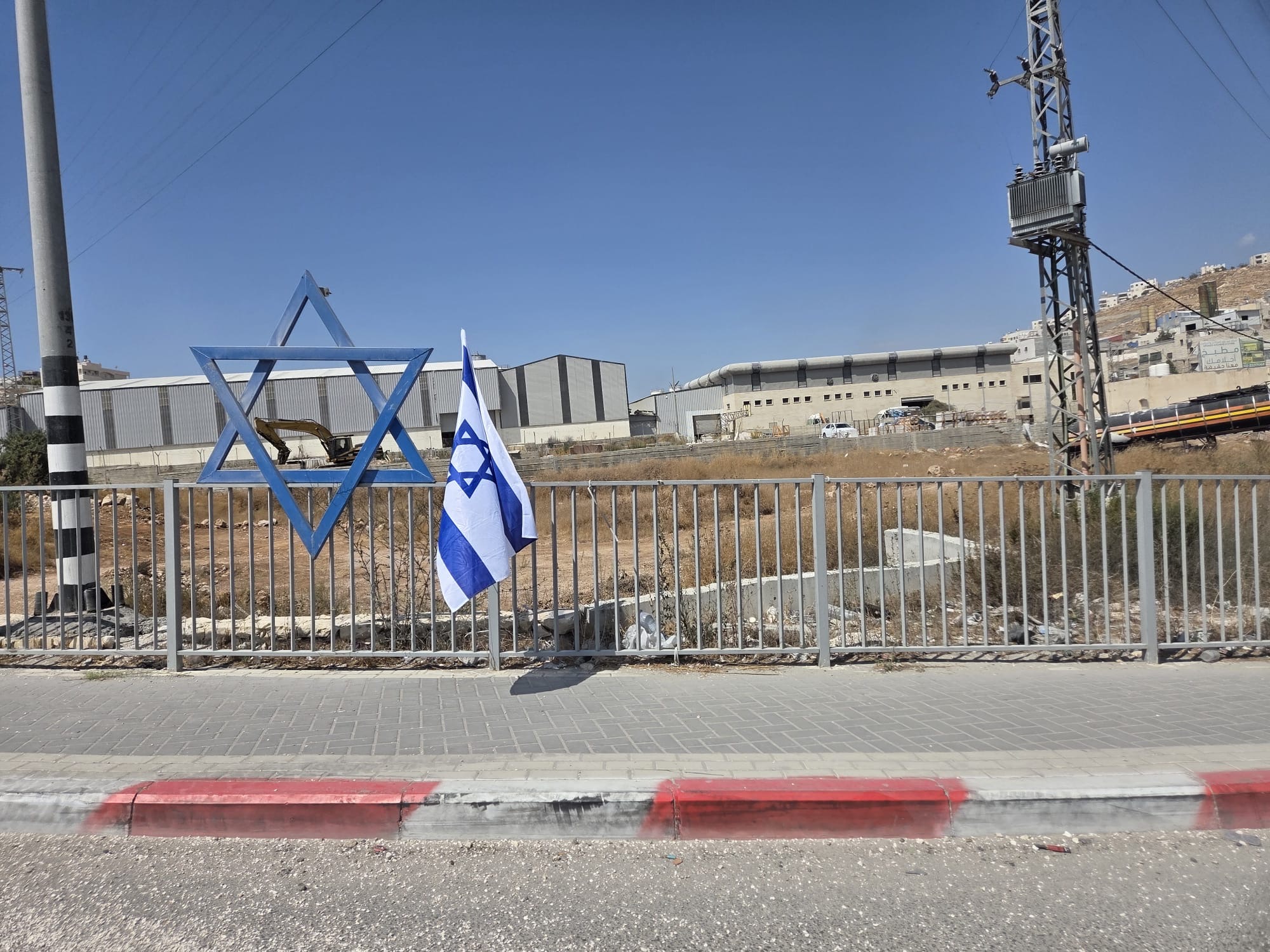 Timna OrevSep-24-2026Replacing flags on Highway 6
-
