
Hebron, Sansana (Meitar Crossing), South Hebron Hills, Zif Junction
At the Meitar crossing when we passed through we saw the last of the workers and one bus for families of the prisoners.
We drove to Yatta so as to see if truly there is an “encirclement” and if it continues.
It seems that after the terrorist attack at Yavneh, large army forces entered Yatta through the Zif crossroads and remained there until the morning. We were told that the house of the terrorist had not yet been destroyed and that nothing was know about thefts. From Friday everything has been open as usual.
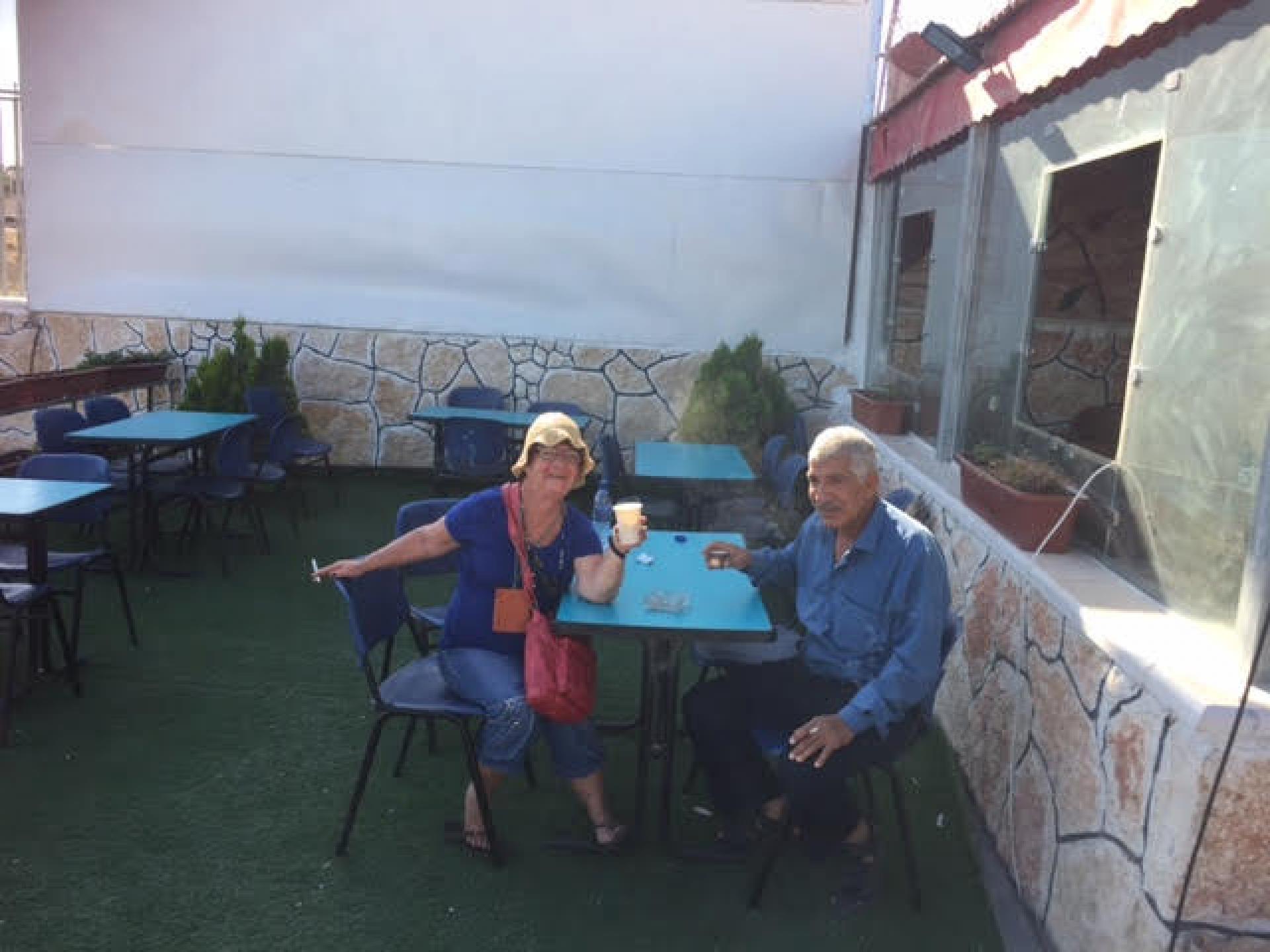
In the photo I am sitting with the man who gave me the information at the restaurant which has been opened at the Zif crossing.
While we were chatting it turned out that we shared the same birthday and that he was a year older than I. So we took a photo together so that it should be known that there are Israelis of a different kind.
The checkpoint at the Kapisha crossing is nearly complete.
Basem who lives opposite the House of contention told us the following story:
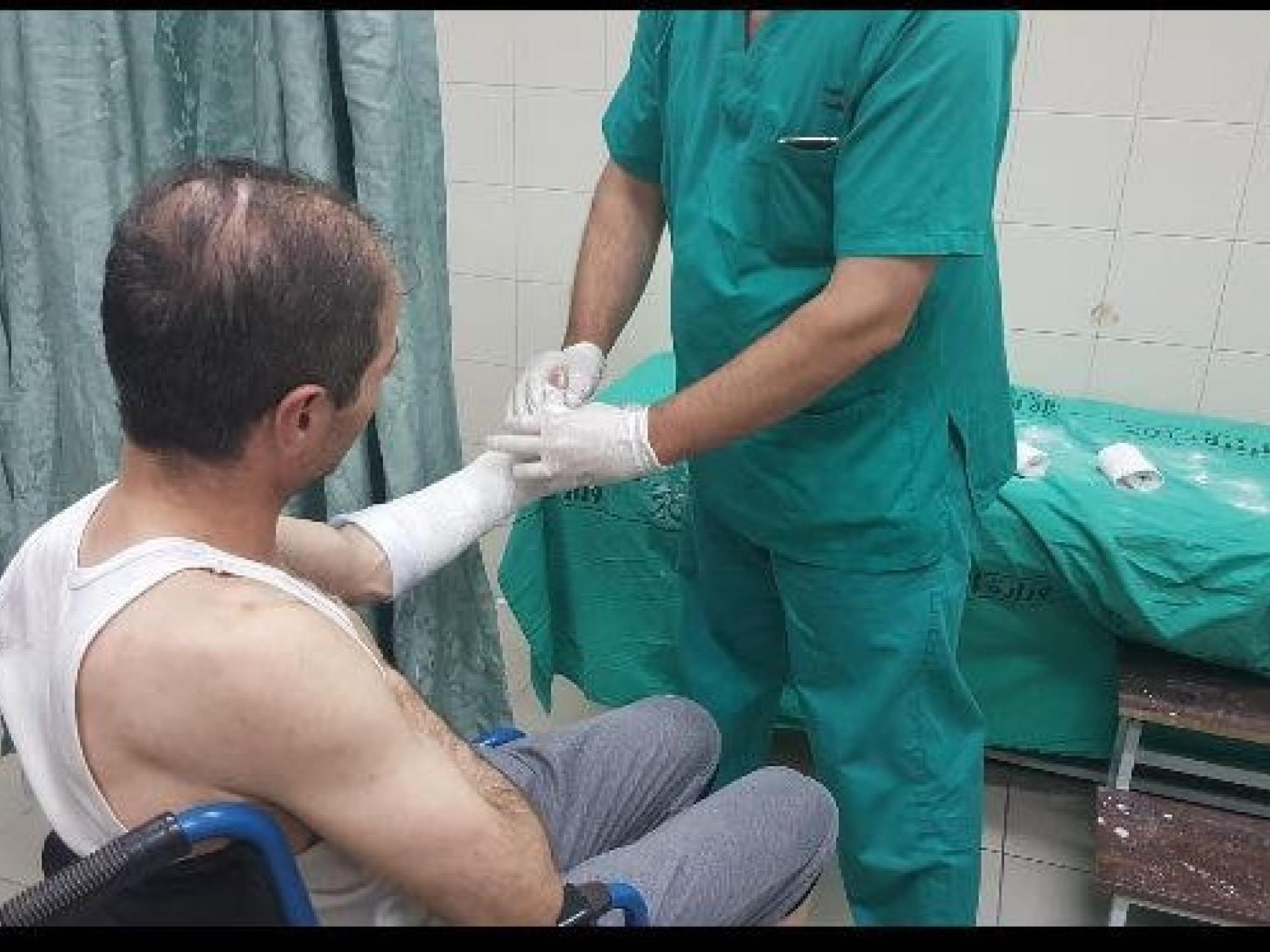
Last Friday in the afternoon a group of friends were sitting outside their houses which are next to the Route of the Worshippers. The settlers who were coming from Kiryat Arba began throwing stones at them and they had to be hospitalized. Basem shows us photos. The soldiers who were accompanying them did not stop them. The soldiers then went from house to house and ordered the Palestinians to stay inside until the following morning. There was an absolute curfew.
The following morning soldiers stationed themselves on the roofs of the Palestinians.
On the road the soldiers stationed themselves in groups of twos at a distance of about 10 metres from one another. This was to protect the settlers who were coming down from Kiryat Arba. Shabbat in the evening at about ten two groups of settlers came down and went wild in the streets One group came down from the House of Contention and another group of older people from Kiryat Arba and they sat in the area which the settlers call the neighborhood of the heroes. They went wild and even beat the handicapped.
The soldiers ran after the settlers and did not catch even one of them. Basem said that the settlers looked like a flock of sheep.
Only in the morning did the frenzy subside and not one of the settlers was arrested. We met the TIPH who corroborate the story.
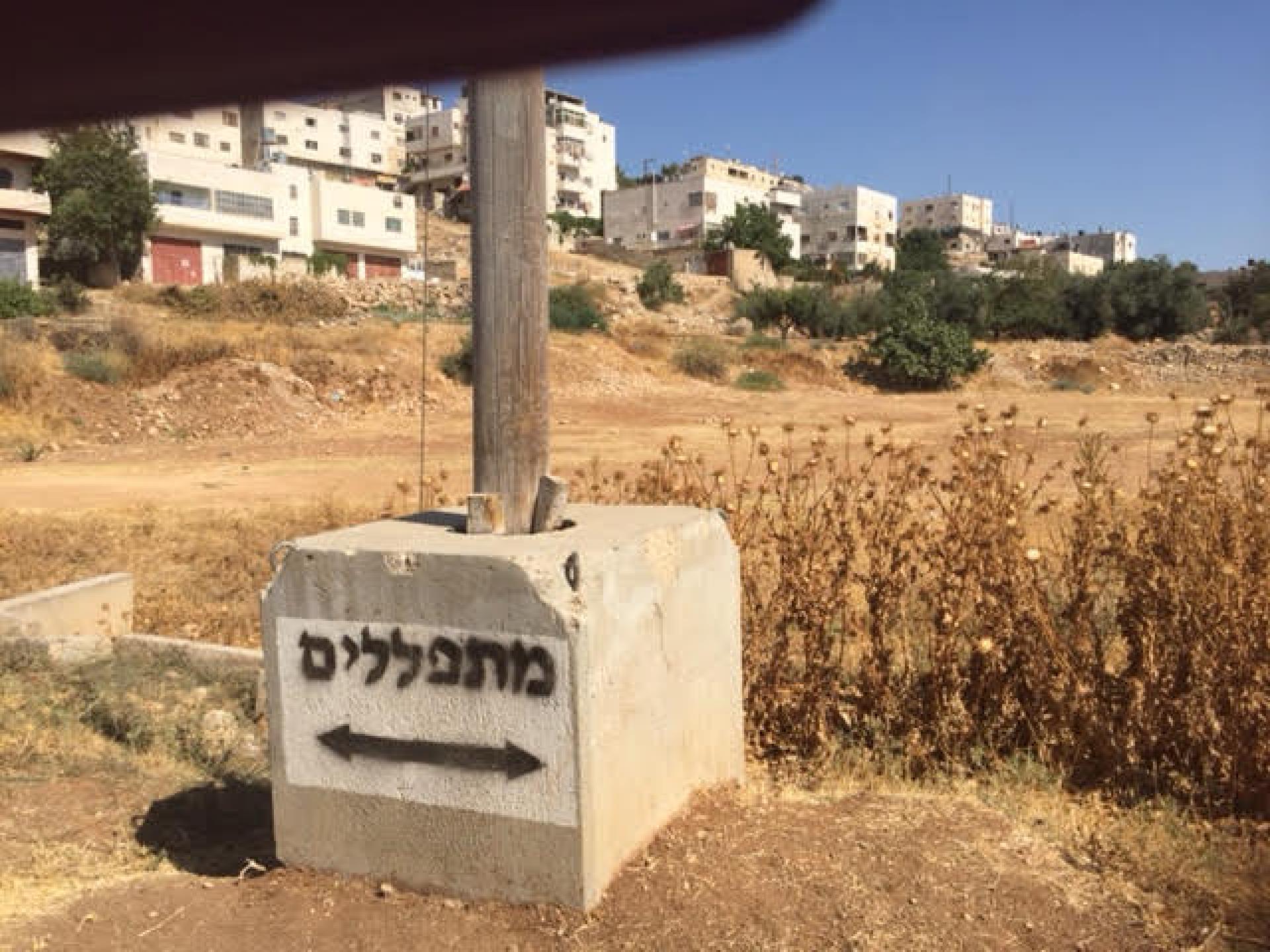
In the picture the army signpost of the Route of the Worshippers.
In my opinion the checkpoints which are now at the entrance of H2 are the following:
There are six checkpoints:
- Kapisha
- The bend 160
- The pharmacy
- The barricade of the soldier
- The cemetery of Habad
- The archaeological garden.
The closer one comes to the Cave of the Patriarchs there are more and more checkpoints with Border Police and soldiers.
H2 will become more and more a ghetto to the Palestinians.
The Palestinians again complain they cannot travel in their cars on the Zion route and there is very little parking space for them next to the routes.
In short it seems that the settlers will make every effort to make the life difficult for the Palestinians and force them to leave ‘willingly’ this part of the town.
The other thing I saw today was the massive extension of the illegal outpost of Asael on road 317 and also the wide extension of Givat Gal next to the industrial area of Kiryat Arba
What will happen?
How much longer will we have to live with this nightmare?

Hebron
See all reports for this place-
According to Wye Plantation Accords (1997), Hebron is divided in two: H1 is under Palestinian Authority control, H2 is under Israeli control. In Hebron there are 170,000 Palestinian citizens, 60,000 of them in H2. Between the two areas are permanent checkpoints, manned at all hours, preventing Palestinian movement between them and controlling passage of permit holders such as teachers and schoolchildren. Some 800 Jews live in Avraham Avinu Quarter and Tel Rumeida, on Givat HaAvot and in the wholesale market.
Checkpoints observed in H2:
- Bet Hameriva CP- manned with a pillbox
- Kapisha quarter CP (the northern side of Zion axis) - manned with a pillbox
- The 160 turn CP (the southern side of Zion axis) - manned with a pillbox
- Avraham Avinu quarter - watch station
- The pharmacy CP - checking inside a caravan with a magnometer
- Tarpat (1929) CP - checking inside a caravan with a magnometer
- Tel Rumeida CP - guarding station
- Beit Hadassah CP - guarding station
Three checkpoints around the Tomb of the Patriarchs
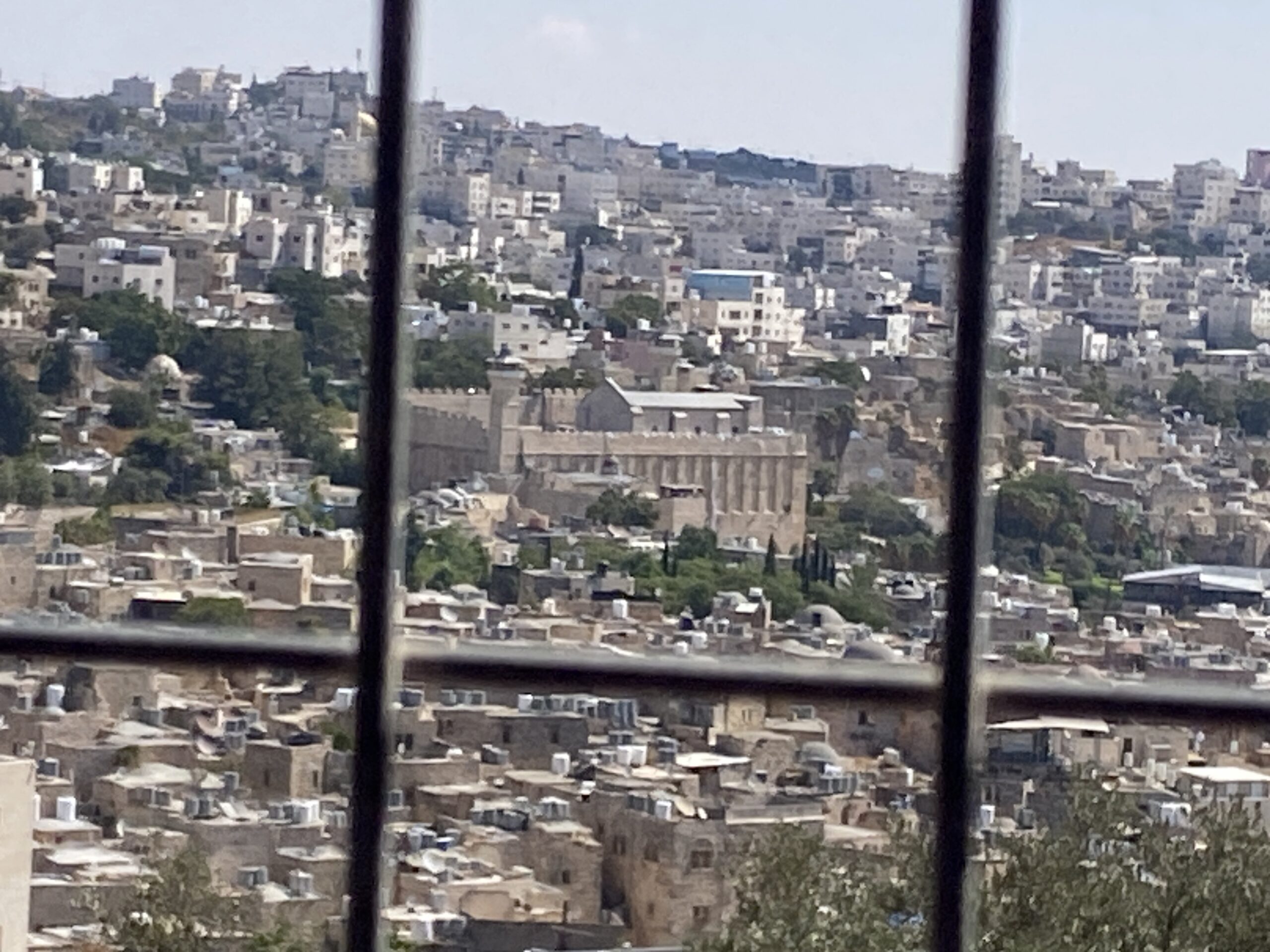 Yael ZoranSep-24-2026Hebron and the Cave of the Patriarchs from Beit Hashalom
-
Meitar checkpoint / Sansana
See all reports for this place-
Meitar Checkpoint / Sansana The checkpoint is located on the Green Line and serves as a border crossing between Israel and the West Bank. It is managed by the Border Crossing Authority of the Defense Ministry. It is comprised of sections for the transfer of goods as well as a vehicle checkpoint (intended for holders of blue identity cards, foreign nationals or diplomats and international organizations). Passing of Palestinians is prohibited, except for those with entry permits to Israel. Palestinians are permitted to cross on foot only. The crossing has a DCO / DCL / DCL / DCL (District Coordination Office), a customs unit, supervision, and a police unit. In the last year, a breach has been opened in the fence, not far from the crossing. This breach is known to all, including the army. There does not appear to be any interest in blocking it, probably as it permits needed Palestinian workers without the bureaucratic permits to get to work in Israel. Food stalls and a parking area economy have been created, but incidents of violent abuse by border police have also been recorded. Updated April 2022
-
South Hebron Hills
See all reports for this place-
South Hebron Hills
South Hebron Hills is a large area in the West Bank's southern part.
Yatta is a major city in this area: right in the border zone between the fertile region of Hebron and its surroundings and the desert of the Hebron Hills. Yatta has about 64,000 inhabitants.
The surrounding villages are called Masafer Yatta (Yatta's daughter villages). Their inhabitants subsist on livestock and agriculture. Agriculture is possible only in small plots, especially near streams. Most of the area consists of rocky terraces.Since the beginning of the 1980s, many settlements have been established on the agricultural land cultivated by the Palestinians in the South Hebron Hills region: Carmel, Maon, Susia, Masadot Yehuda, Othniel, and more. Since the settlements were established and Palestinians cultivation areas have been reduced; the residents of the South Hebron Hills have been suffering from harassment by the settlers. Attempts to evict and demolish houses have continued, along with withholding water and electricity. The military and police usually refrain from intervening in violent incidents between settlers and Palestinians do not enforce the law when it comes to the investigation of extensive violent Jewish settlers. The harassment in the South Hebron Hills includes attacking and attempting to burn residential tents, harassing dogs, harming herds, and preventing access to pastures.
There are several checkpoints in the South Hebron Hills, on Routes 317 and 60. In most of them, no military presence is apparent, but rather an array of pillboxes monitor the villages. Roadblocks are frequently set up according to the settlers and the army's needs. These are located at the Zif Junction, the Dura-al Fawwar crossing, and the Sheep Junction at the southern entrance to Hebron.
Updated April 2022
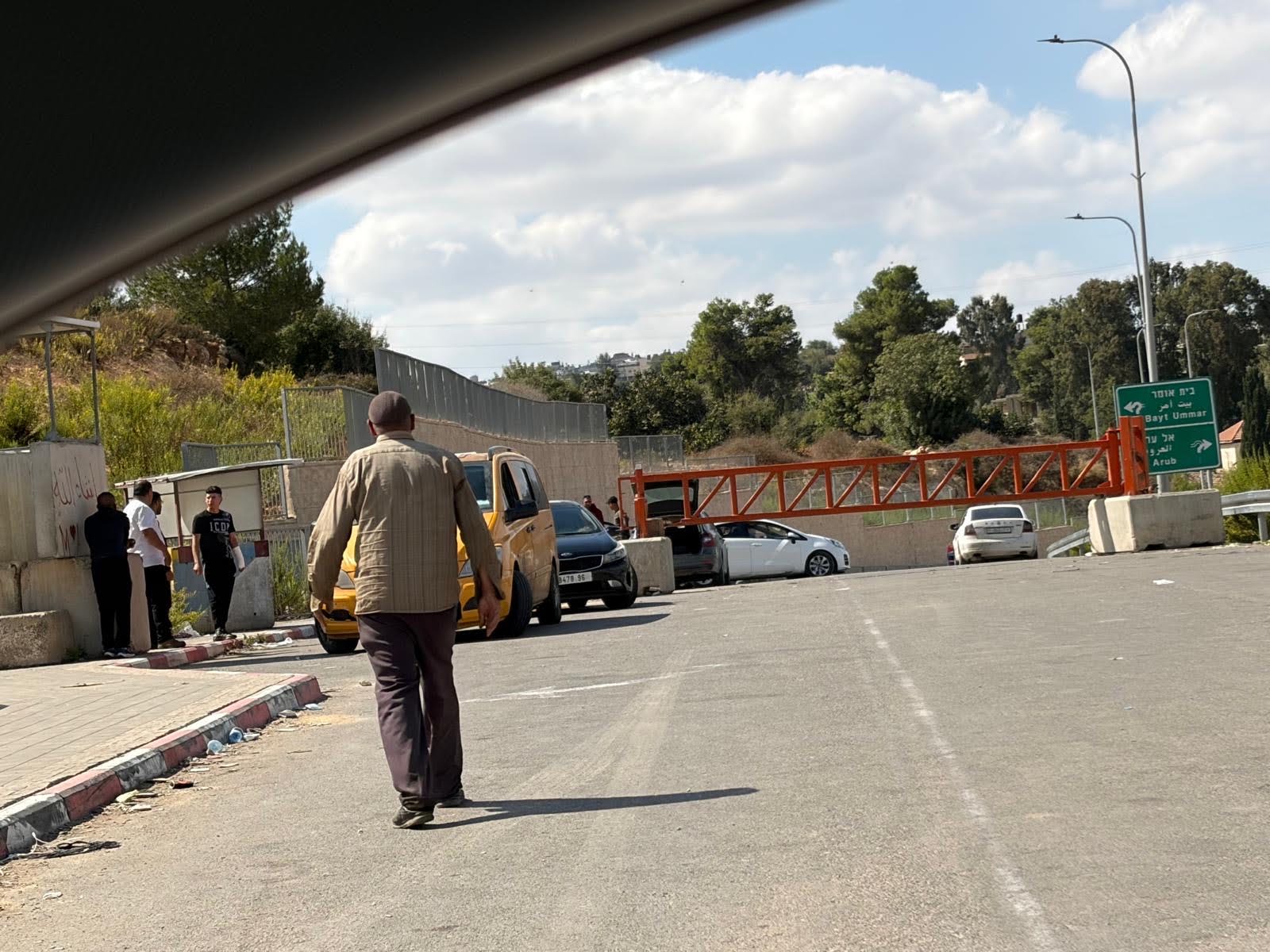 Natanya GinsburgOct-5-2026Beit Ummar - a red barrier to prevent Palestinians from entering or exiting the town
-
Zif Junction
See all reports for this place-
Zif Junction located on the crossroads that directs towards Road 356 to Yata. Yata is the district city of the southern Hebron Mountains. Usually, this junction is open to traffic. The nearby pillbox is unmanned. But the army and police are present occasionally, sometimes setting up a checkpoint and sometimes detaining residents from the big city. Often, the Israeli policemen inspect vehicles and distribute driving reports to Palestinian vehicles. s
-
