
Hebron, Sansana (Meitar Crossing), Thu 24.5.12, Morning
Translator: Charles K.
07:20-10:00
Meitar
The last of the laborers hurry through. The peddlers tell us that lately the crossing has closed at 7:30 in the morning, until evening, in protest against the stench of sewage in the area. We saw it close as soon as the bus carrying relatives of prisoners had been inspected.
Hebron
The city is quiet. The information stand opposite Beit HaMeriva is deserted and dirty. Only one female settler watches over the empty tents. There’s no one to explain to.
Anat welcomes us opposite Beit Hadassah with her usual curses; right behind her, opposite the soldiers’ position, we meet two CPT volunteers. One of them, Petahya, is crying; she tells us that Anat had just fallen upon her, yelling, and then kicked her. We see the red mark on her calf; she’s particularly angry at the soldier who’d just stood there without intervening. We try to interrogate the soldier, and the sergeant who’d also joined him. The soldier said he’d spoken to her, which is why she’d left. The sergeant demonstrates how the soldier responded, this time to us, off-handedly. So we left Petahya, who had decided to complain to the police, which made her feel better.
The schools are giving exams, the pupils finish early, and as we left we saw them walking home along Highway 60.
Shayukh-Sa’ir – The entrance to the village from Highway 60 is open to vehicles. An army jeep that had been parked at the junction was no longer there when we returned from Tarqumiyya.
Hebron
See all reports for this place-
According to Wye Plantation Accords (1997), Hebron is divided in two: H1 is under Palestinian Authority control, H2 is under Israeli control. In Hebron there are 170,000 Palestinian citizens, 60,000 of them in H2. Between the two areas are permanent checkpoints, manned at all hours, preventing Palestinian movement between them and controlling passage of permit holders such as teachers and schoolchildren. Some 800 Jews live in Avraham Avinu Quarter and Tel Rumeida, on Givat HaAvot and in the wholesale market.
Checkpoints observed in H2:
- Bet Hameriva CP- manned with a pillbox
- Kapisha quarter CP (the northern side of Zion axis) - manned with a pillbox
- The 160 turn CP (the southern side of Zion axis) - manned with a pillbox
- Avraham Avinu quarter - watch station
- The pharmacy CP - checking inside a caravan with a magnometer
- Tarpat (1929) CP - checking inside a caravan with a magnometer
- Tel Rumeida CP - guarding station
- Beit Hadassah CP - guarding station
Three checkpoints around the Tomb of the Patriarchs
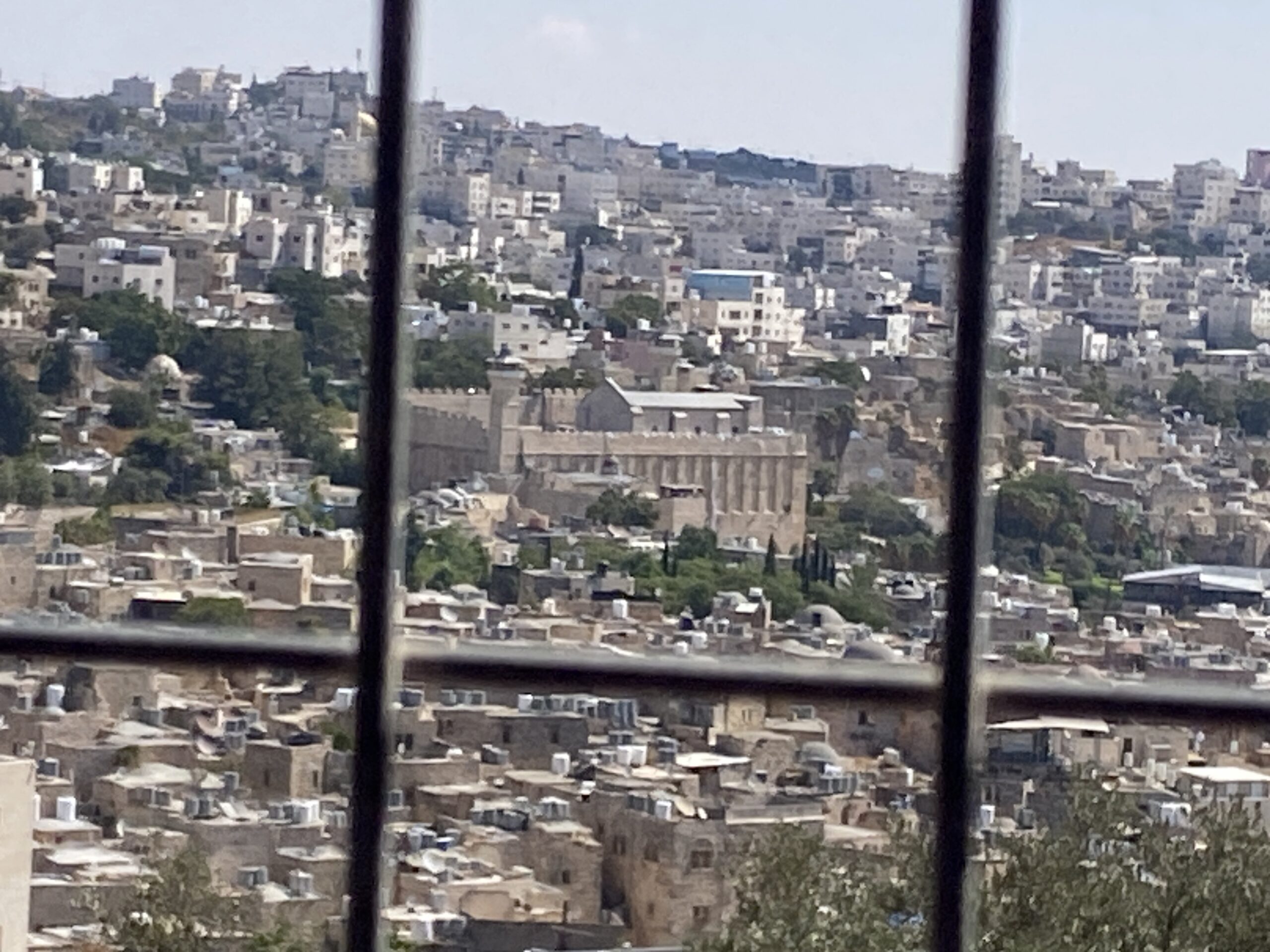 Yael ZoranSep-24-2026Hebron and the Cave of the Patriarchs from Beit Hashalom
-
Meitar checkpoint / Sansana
See all reports for this place-
Meitar Checkpoint / Sansana The checkpoint is located on the Green Line and serves as a border crossing between Israel and the West Bank. It is managed by the Border Crossing Authority of the Defense Ministry. It is comprised of sections for the transfer of goods as well as a vehicle checkpoint (intended for holders of blue identity cards, foreign nationals or diplomats and international organizations). Passing of Palestinians is prohibited, except for those with entry permits to Israel. Palestinians are permitted to cross on foot only. The crossing has a DCO / DCL / DCL / DCL (District Coordination Office), a customs unit, supervision, and a police unit. In the last year, a breach has been opened in the fence, not far from the crossing. This breach is known to all, including the army. There does not appear to be any interest in blocking it, probably as it permits needed Palestinian workers without the bureaucratic permits to get to work in Israel. Food stalls and a parking area economy have been created, but incidents of violent abuse by border police have also been recorded. Updated April 2022
-
