
Hebron, Sansana (Meitar Crossing), Tue 11.6.13, Morning
Translator: Charles K.
“No news is good news” doesn’t apply here.
The despair, the evil of the occupation routine, continues.
Sansana checkpoint (Meitar crossing)
8:00 Three buses at the checkpoint, transporting relatives to visit prisoners in Israeli jails. The shed on the Palestinian side is already empty; the passengers have crossed to the Israeli side.
Highway 60
Calm and quiet. A flying checkpoint at the Dura-al Fawwar junction. As soon as we arrive the soldiers who emerge from the pillbox pack up their things. The “hour of harassment” is over for now.
Hebron
The town isn’t yet fully awake. Summer vacation affects everyone. Soldiers (Giv’ati brigade) everywhere, but no delays at any checkpoint. I think we should start later in the day.
On our way out, we saw at the Kiryat Arba gas station a huge truck carrying pipes and a rig for dismantling agricultural equipment. M. called it to our attention. We wondered whether it’s a harbinger of destruction – yet to come, or already accomplished? Driving on we saw a convoy of military vehicles (including Border Police) going in the other direction; it wasn’t clear where they were headed. Someone must have already “hit the jackpot” today.
H. called; he owns the olive grove that was vandalized. He told us that law enforcement personnel came to his grove and tore to pieces a pipe another family had lain to steal water for its own plot of land. He says everyone knows he’s not the criminal, and they also exactly who is. But the work permit they confiscated because they suspected him still hasn’t been returned. Let’s see how long it takes the few people working to obtain justice to get him the right to earn an honest living.
Hebron
See all reports for this place-
According to Wye Plantation Accords (1997), Hebron is divided in two: H1 is under Palestinian Authority control, H2 is under Israeli control. In Hebron there are 170,000 Palestinian citizens, 60,000 of them in H2. Between the two areas are permanent checkpoints, manned at all hours, preventing Palestinian movement between them and controlling passage of permit holders such as teachers and schoolchildren. Some 800 Jews live in Avraham Avinu Quarter and Tel Rumeida, on Givat HaAvot and in the wholesale market.
Checkpoints observed in H2:
- Bet Hameriva CP- manned with a pillbox
- Kapisha quarter CP (the northern side of Zion axis) - manned with a pillbox
- The 160 turn CP (the southern side of Zion axis) - manned with a pillbox
- Avraham Avinu quarter - watch station
- The pharmacy CP - checking inside a caravan with a magnometer
- Tarpat (1929) CP - checking inside a caravan with a magnometer
- Tel Rumeida CP - guarding station
- Beit Hadassah CP - guarding station
Three checkpoints around the Tomb of the Patriarchs
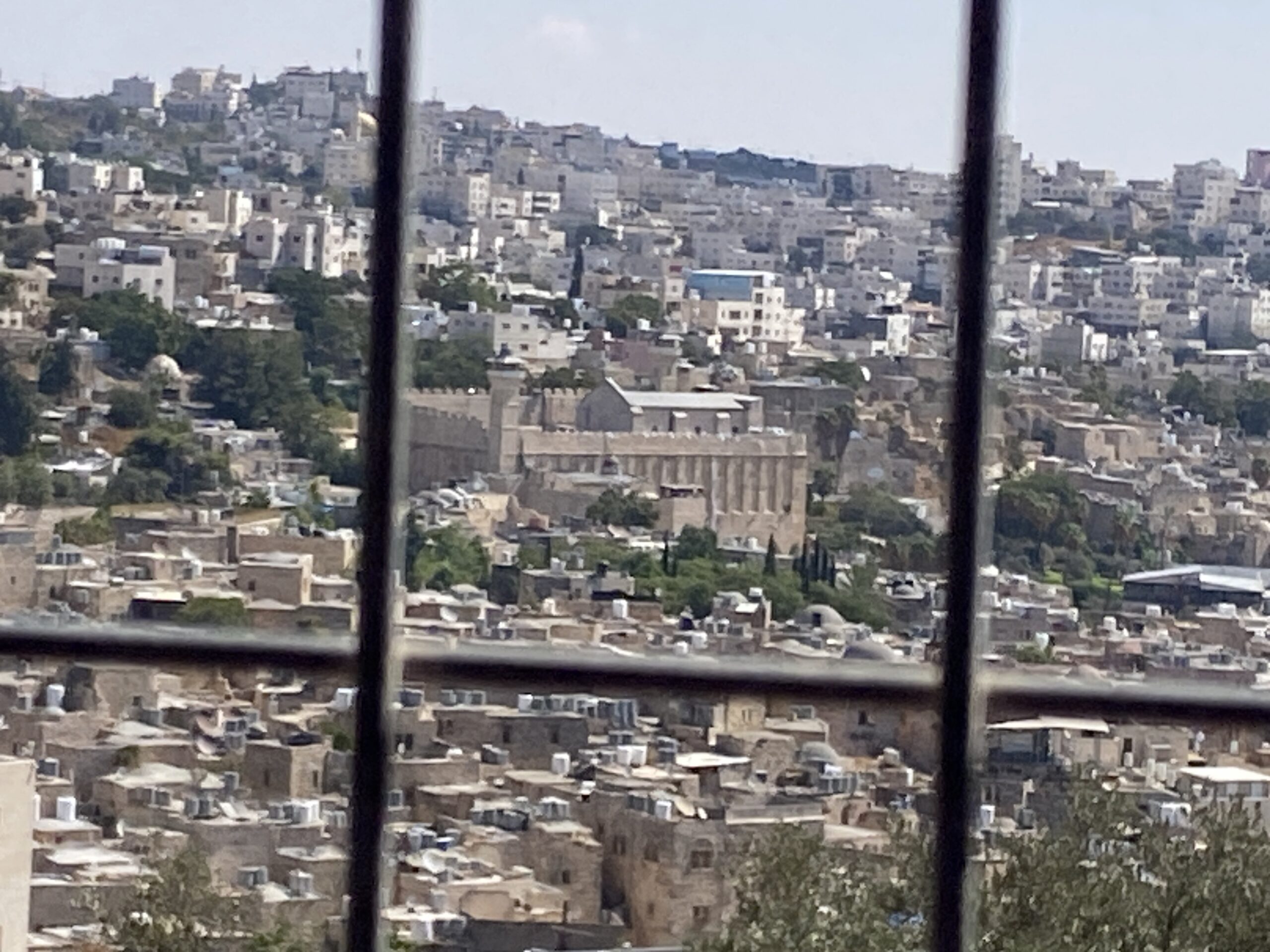 Yael ZoranSep-24-2026Hebron and the Cave of the Patriarchs from Beit Hashalom
-
Meitar checkpoint / Sansana
See all reports for this place-
Meitar Checkpoint / Sansana The checkpoint is located on the Green Line and serves as a border crossing between Israel and the West Bank. It is managed by the Border Crossing Authority of the Defense Ministry. It is comprised of sections for the transfer of goods as well as a vehicle checkpoint (intended for holders of blue identity cards, foreign nationals or diplomats and international organizations). Passing of Palestinians is prohibited, except for those with entry permits to Israel. Palestinians are permitted to cross on foot only. The crossing has a DCO / DCL / DCL / DCL (District Coordination Office), a customs unit, supervision, and a police unit. In the last year, a breach has been opened in the fence, not far from the crossing. This breach is known to all, including the army. There does not appear to be any interest in blocking it, probably as it permits needed Palestinian workers without the bureaucratic permits to get to work in Israel. Food stalls and a parking area economy have been created, but incidents of violent abuse by border police have also been recorded. Updated April 2022
-
