
Hebron, Sansana, South Hebron Hills, Mon 5.11.07, Morning
Sansana crossing
6:45 – We crossed the checkpoint and saw hundreds of men waiting to cross through the checkpoint. They reported that they had been waiting since 3:30-4:00 in the morning and that they were being permitted through at a very slow pace. According to them, the soldiers were carefully and slowly checking all food, shoes, etc. We drove back across the checkpoint to try to find out why the process was so slow. There were only two soldiers checking identity cards. They were seated in an enclosed room with windows facing the pedestrian corridor. The men had to put their id papers against the glass window to be checked against information in a computer. If that was approved, the final step was identification via hand print. When we returned to the van, Yeela started making phone calls to see if there was a way to speed up the process. She was told by the soldier on duty in Matak Hebron, that he had checked what was going on and was told there were only 45-50 in line and the process was being done quickly. This was no more than 10 minutes after we saw hundreds waiting in line.
Dura and El Fawwar – checkpoint is open. Many children, big and small, walk along the sides of the narrow road on their way to school.
Sheep Junction – checkpoint is open.
Hebron
Pharmacy crossing
We arrived at the crossing at 7:35. Very little foot traffic there. The soldiers on duty were from Givati. Two women from the Christian Peacemakers Team had been monitoring the check point for a couple of hours and said there we no problems.
Tarpat crossing
7:50. Also manned by Givati soldiers. Very few people passing. One of the soldiers told us that a week ago children threw stones at the crossing from surrounding roofs. He also told us a woman had just been arrested for pulling a knife on a soldier near Tel Rumieda so we went to investigate.
Tel-Rumeida
There were two Christian groups observing and the TIPH also arrived. A woman from one of the Christian groups who witnessed the incident said that soldiers were doing spot checks. A girl of about 16-17 was found to have a knife up her sleeve and when asked to drop it refused and made what was interpreted as a threatening gesture to the soldier questioning her. She was taken into custody and when we arrived was being questioned in a jeep and was then taken elsewhere. We understood that she was not a girl from the immediate neighborhood but further up the hill.
Cave of Machpela
8:30 Two Border policemen were guarding the crossing that leads to an internal checkpoint near the Cave of Machpela. Very few people were crossing. A man and a woman, members of TIPH, were walking around taking pictures on their day off.
8:40 Took the road 317 back to Sansana. All quiet. Yeela succeeded in obtaining the name of the commander of Sansana who attributed the delays to the lack of facilities to check large numbers of people quickly. By the time we reached Sansana at 9:00, the place was empty of people waiting to cross.
Hebron
See all reports for this place-
According to Wye Plantation Accords (1997), Hebron is divided in two: H1 is under Palestinian Authority control, H2 is under Israeli control. In Hebron there are 170,000 Palestinian citizens, 60,000 of them in H2. Between the two areas are permanent checkpoints, manned at all hours, preventing Palestinian movement between them and controlling passage of permit holders such as teachers and schoolchildren. Some 800 Jews live in Avraham Avinu Quarter and Tel Rumeida, on Givat HaAvot and in the wholesale market.
Checkpoints observed in H2:
- Bet Hameriva CP- manned with a pillbox
- Kapisha quarter CP (the northern side of Zion axis) - manned with a pillbox
- The 160 turn CP (the southern side of Zion axis) - manned with a pillbox
- Avraham Avinu quarter - watch station
- The pharmacy CP - checking inside a caravan with a magnometer
- Tarpat (1929) CP - checking inside a caravan with a magnometer
- Tel Rumeida CP - guarding station
- Beit Hadassah CP - guarding station
Three checkpoints around the Tomb of the Patriarchs
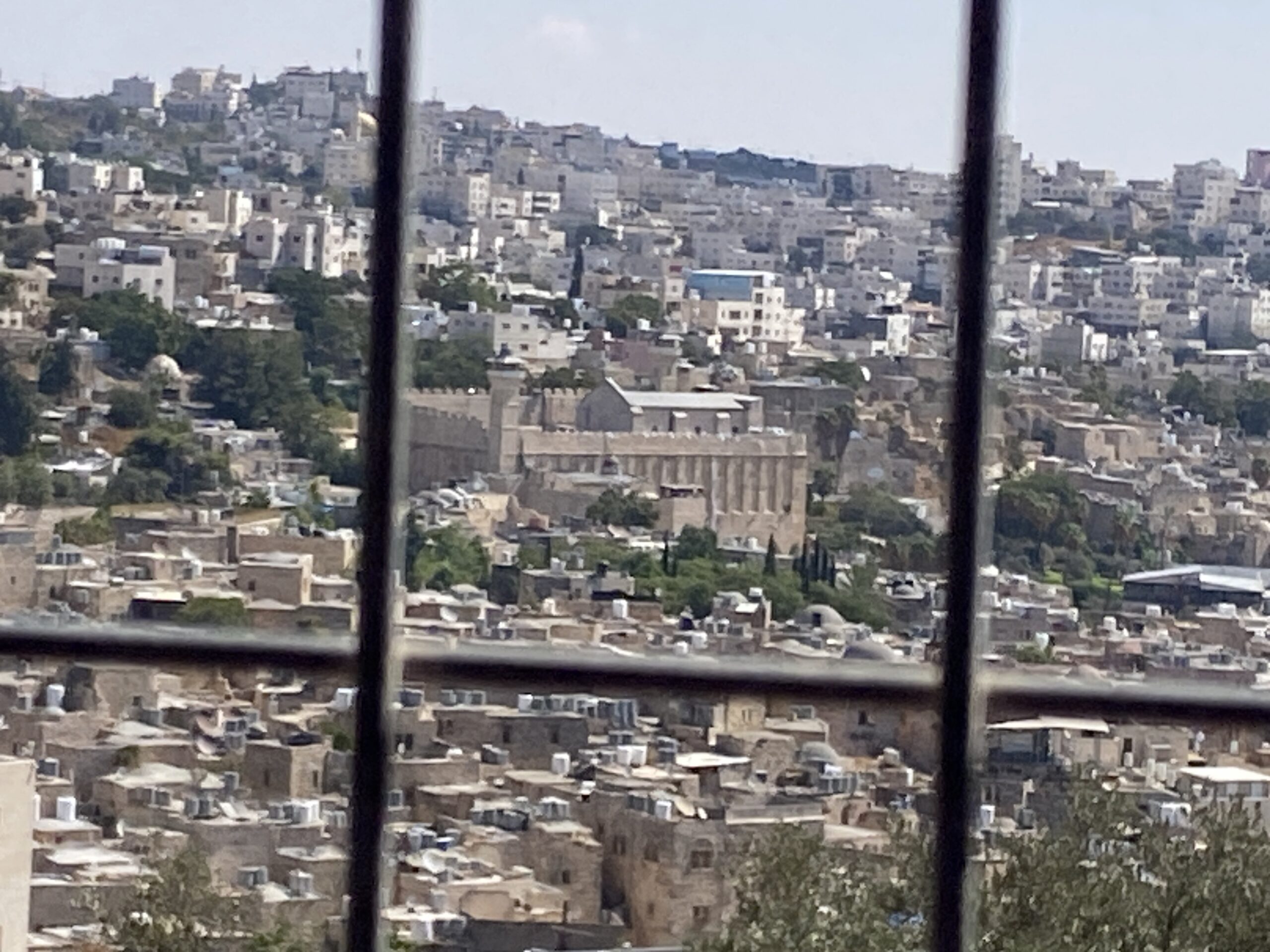 Yael ZoranSep-24-2026Hebron and the Cave of the Patriarchs from Beit Hashalom
-
Meitar checkpoint / Sansana
See all reports for this place-
Meitar Checkpoint / Sansana The checkpoint is located on the Green Line and serves as a border crossing between Israel and the West Bank. It is managed by the Border Crossing Authority of the Defense Ministry. It is comprised of sections for the transfer of goods as well as a vehicle checkpoint (intended for holders of blue identity cards, foreign nationals or diplomats and international organizations). Passing of Palestinians is prohibited, except for those with entry permits to Israel. Palestinians are permitted to cross on foot only. The crossing has a DCO / DCL / DCL / DCL (District Coordination Office), a customs unit, supervision, and a police unit. In the last year, a breach has been opened in the fence, not far from the crossing. This breach is known to all, including the army. There does not appear to be any interest in blocking it, probably as it permits needed Palestinian workers without the bureaucratic permits to get to work in Israel. Food stalls and a parking area economy have been created, but incidents of violent abuse by border police have also been recorded. Updated April 2022
-
South Hebron Hills
See all reports for this place-
South Hebron Hills
South Hebron Hills is a large area in the West Bank's southern part.
Yatta is a major city in this area: right in the border zone between the fertile region of Hebron and its surroundings and the desert of the Hebron Hills. Yatta has about 64,000 inhabitants.
The surrounding villages are called Masafer Yatta (Yatta's daughter villages). Their inhabitants subsist on livestock and agriculture. Agriculture is possible only in small plots, especially near streams. Most of the area consists of rocky terraces.Since the beginning of the 1980s, many settlements have been established on the agricultural land cultivated by the Palestinians in the South Hebron Hills region: Carmel, Maon, Susia, Masadot Yehuda, Othniel, and more. Since the settlements were established and Palestinians cultivation areas have been reduced; the residents of the South Hebron Hills have been suffering from harassment by the settlers. Attempts to evict and demolish houses have continued, along with withholding water and electricity. The military and police usually refrain from intervening in violent incidents between settlers and Palestinians do not enforce the law when it comes to the investigation of extensive violent Jewish settlers. The harassment in the South Hebron Hills includes attacking and attempting to burn residential tents, harassing dogs, harming herds, and preventing access to pastures.
There are several checkpoints in the South Hebron Hills, on Routes 317 and 60. In most of them, no military presence is apparent, but rather an array of pillboxes monitor the villages. Roadblocks are frequently set up according to the settlers and the army's needs. These are located at the Zif Junction, the Dura-al Fawwar crossing, and the Sheep Junction at the southern entrance to Hebron.
Updated April 2022
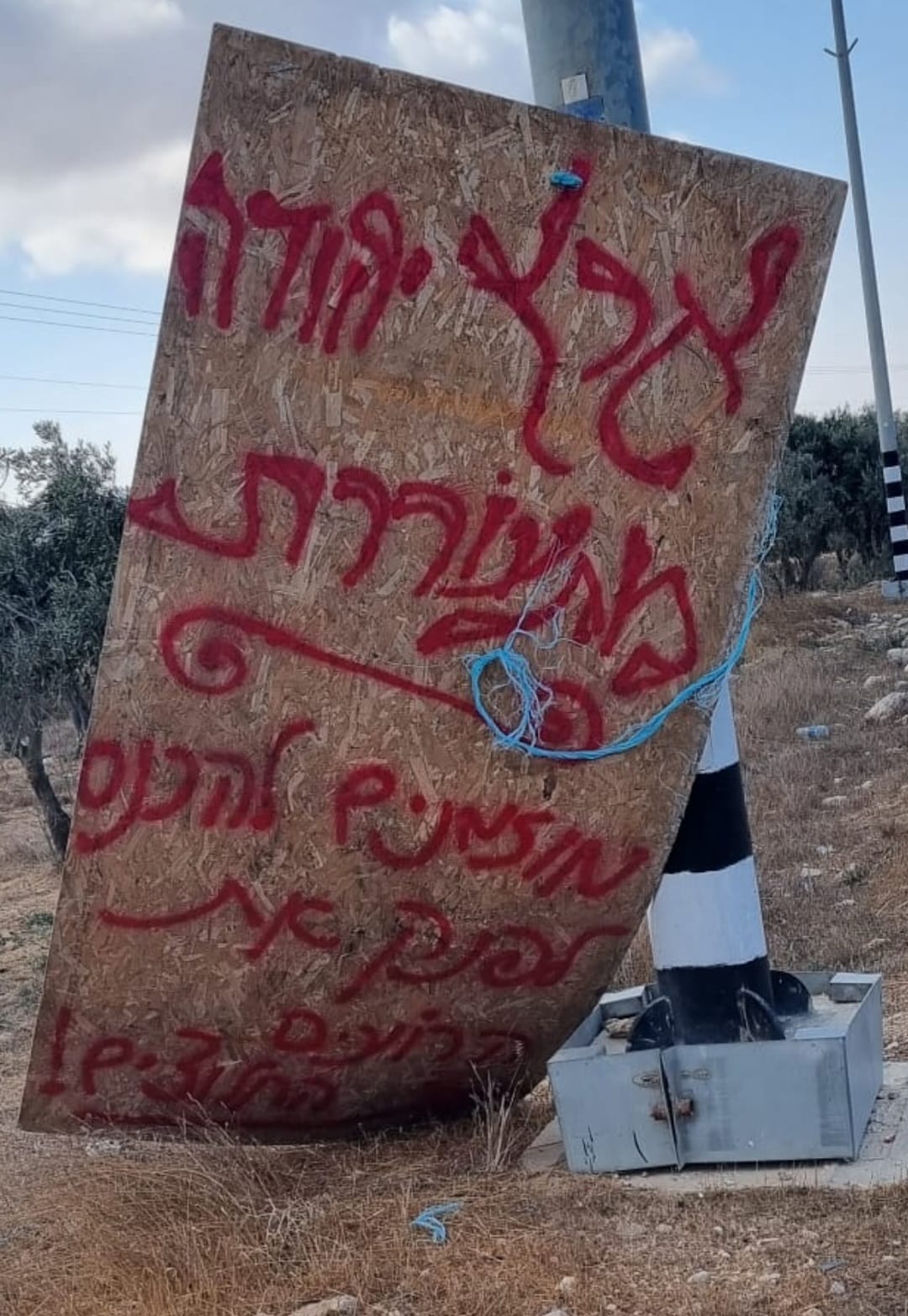 Smadar BeckerOct-17-2026A sign placed by those who call themselves the Pioneer Shepherds, at the outpost adjacent to Qawawis
-
