
Hebron, Sansana, South Hebron Hills, Tarqumiya, Tue 9.9.08, Morning
translating – Revital S.
07:00-12:00 (by Palestinian time it's an hour earlier)
Sansana-Meitar Crossing
At ten past seven there are no workers waiting. Their clock is an hour earlier, so some may yet arrive. The first bus on its way to visit imprisoned kin is being inspected. The second has not yet arrived. In short – would that it were always like this.
Highway 60
Durah Al Fawar, Sheep Junction, Shuyuch- Shair – All as usual – the pillboxes are manned and there's barely any traffic. There are no military vehicles, only on our way back, by the water hole a military jeep is stationed overlooking the highway, probably due to yesterday's stone throwing. An old man is filling bottles with water and will soon pack them on the white donkey waiting patiently the while. A soldier is eating in the jeep and I remind him it's the Ramadan fast. The infamous Anat Cohen of Hebron happens along, the one that always swears at us. She stops to let the soldiers know what kind of traitors we are and that we pee into the water hole so the Palestinians would have something to drink. I can't be bothered citing the rest of the heroin's delivery. In the meantime a father and son come to fill up water. They request the soldiers' permission. So long as we're standing there the soldiers forbid them to do so, so we leave (see attached photo).
Highway 35
At the Humanitarian Checkpoint we run across a Japanese TV team producing a feature on the Palestinian economy and Japanese businessmen. They interview us at length and we go together to the grocery at Tarqumiya to meet a group of GSS prohibited that Sylvia and the team are trying to help. We continue with them to the Tarqumiya Checkpoint to try to help them with some problems they'd encountered, but they are not granted permission to film there. We introduce them to Zion and Roni who run the checkpoint and leave. The lorry drivers testify there is no problem crossing here and the transits' morning crossing has also been worked out.
On highway 35 itself one of the roadblocks on the way into Hebron has been removed and there is now a manned checkpoint that allows lorries and cars through without queuing. The drivers say this roadblock is open from six AM and shuts at about one-two PM. Work is in progress to remove another roadblock. We'll see what's been done next week.
Hebron
The business of occupation is running its usual course, no problem at the Pharmacy, Tarpat and the Cave of the Patriarchs Checkpoints.
Giborei Hebron (Heroes of Hebron) Quarter, in the agricultural plot between Kiryat Arbah and Hebron, is deserted after the summer holidays.
In Tel Rumeida it's horrible (see attached photo below). A soldier is inspecting the belongings of a youngster in a wheelchair and his escort. The soldiers of the State of Israel are defending themselves against six and seven year olds, probably in response to warnings that children this age are absolute terrorists. A first year's scissors is a deadly weapon. They'd learnt all this through intimate association with the Jewish settlers and from a visit to the Jewish Quarter Museum. All the Arabs are murderers, do not forget 1929!
The Disputed House
Symbiotic relations between the border police soldiers and the settlers' kids that they're babysitting (see attached photo), I haven't the stamina to describe it.
Hebron
See all reports for this place-
According to Wye Plantation Accords (1997), Hebron is divided in two: H1 is under Palestinian Authority control, H2 is under Israeli control. In Hebron there are 170,000 Palestinian citizens, 60,000 of them in H2. Between the two areas are permanent checkpoints, manned at all hours, preventing Palestinian movement between them and controlling passage of permit holders such as teachers and schoolchildren. Some 800 Jews live in Avraham Avinu Quarter and Tel Rumeida, on Givat HaAvot and in the wholesale market.
Checkpoints observed in H2:
- Bet Hameriva CP- manned with a pillbox
- Kapisha quarter CP (the northern side of Zion axis) - manned with a pillbox
- The 160 turn CP (the southern side of Zion axis) - manned with a pillbox
- Avraham Avinu quarter - watch station
- The pharmacy CP - checking inside a caravan with a magnometer
- Tarpat (1929) CP - checking inside a caravan with a magnometer
- Tel Rumeida CP - guarding station
- Beit Hadassah CP - guarding station
Three checkpoints around the Tomb of the Patriarchs
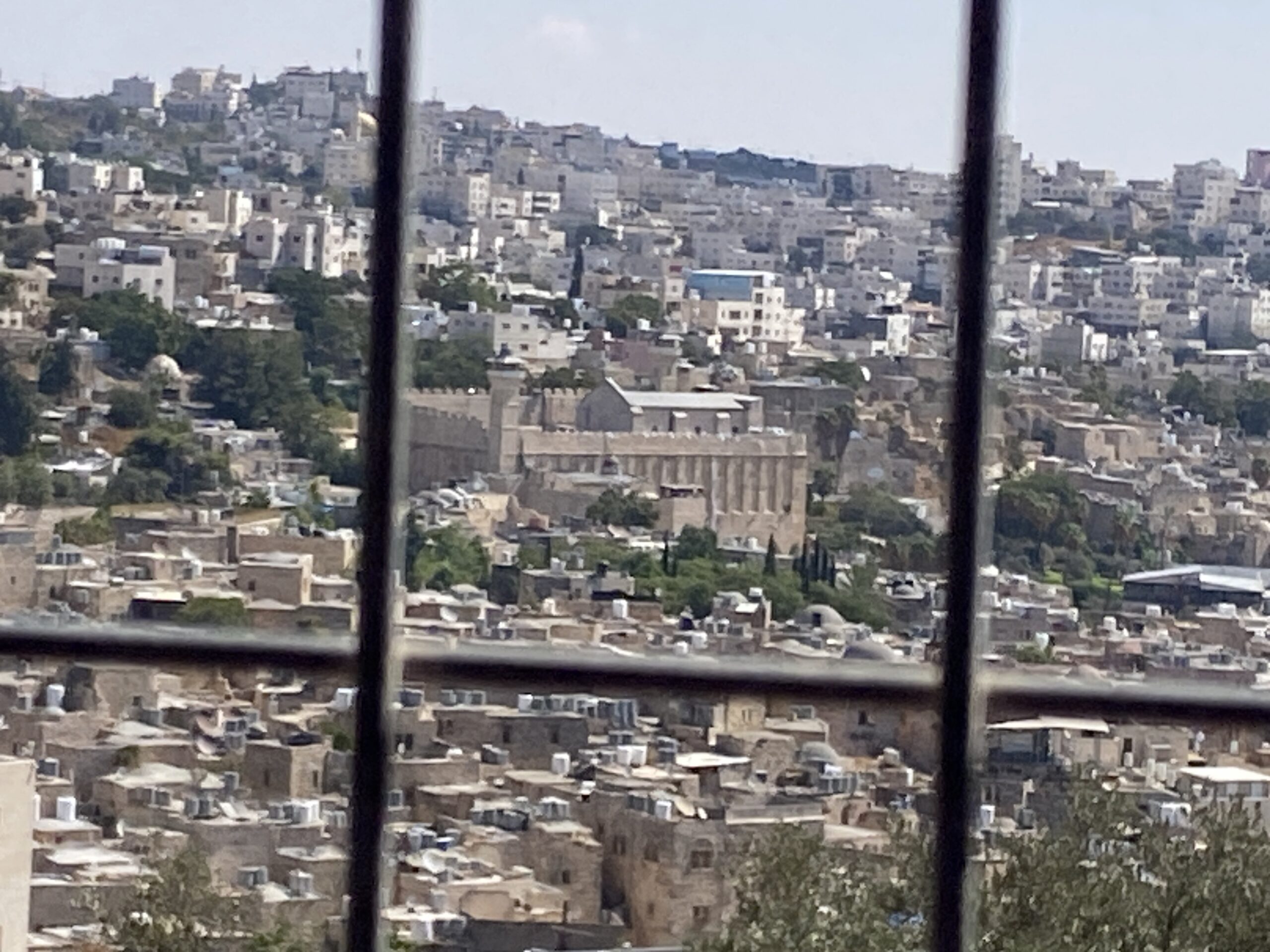 Yael ZoranSep-24-2026Hebron and the Cave of the Patriarchs from Beit Hashalom
-
Meitar checkpoint / Sansana
See all reports for this place-
Meitar Checkpoint / Sansana The checkpoint is located on the Green Line and serves as a border crossing between Israel and the West Bank. It is managed by the Border Crossing Authority of the Defense Ministry. It is comprised of sections for the transfer of goods as well as a vehicle checkpoint (intended for holders of blue identity cards, foreign nationals or diplomats and international organizations). Passing of Palestinians is prohibited, except for those with entry permits to Israel. Palestinians are permitted to cross on foot only. The crossing has a DCO / DCL / DCL / DCL (District Coordination Office), a customs unit, supervision, and a police unit. In the last year, a breach has been opened in the fence, not far from the crossing. This breach is known to all, including the army. There does not appear to be any interest in blocking it, probably as it permits needed Palestinian workers without the bureaucratic permits to get to work in Israel. Food stalls and a parking area economy have been created, but incidents of violent abuse by border police have also been recorded. Updated April 2022
-
South Hebron Hills
See all reports for this place-
South Hebron Hills
South Hebron Hills is a large area in the West Bank's southern part.
Yatta is a major city in this area: right in the border zone between the fertile region of Hebron and its surroundings and the desert of the Hebron Hills. Yatta has about 64,000 inhabitants.
The surrounding villages are called Masafer Yatta (Yatta's daughter villages). Their inhabitants subsist on livestock and agriculture. Agriculture is possible only in small plots, especially near streams. Most of the area consists of rocky terraces.Since the beginning of the 1980s, many settlements have been established on the agricultural land cultivated by the Palestinians in the South Hebron Hills region: Carmel, Maon, Susia, Masadot Yehuda, Othniel, and more. Since the settlements were established and Palestinians cultivation areas have been reduced; the residents of the South Hebron Hills have been suffering from harassment by the settlers. Attempts to evict and demolish houses have continued, along with withholding water and electricity. The military and police usually refrain from intervening in violent incidents between settlers and Palestinians do not enforce the law when it comes to the investigation of extensive violent Jewish settlers. The harassment in the South Hebron Hills includes attacking and attempting to burn residential tents, harassing dogs, harming herds, and preventing access to pastures.
There are several checkpoints in the South Hebron Hills, on Routes 317 and 60. In most of them, no military presence is apparent, but rather an array of pillboxes monitor the villages. Roadblocks are frequently set up according to the settlers and the army's needs. These are located at the Zif Junction, the Dura-al Fawwar crossing, and the Sheep Junction at the southern entrance to Hebron.
Updated April 2022
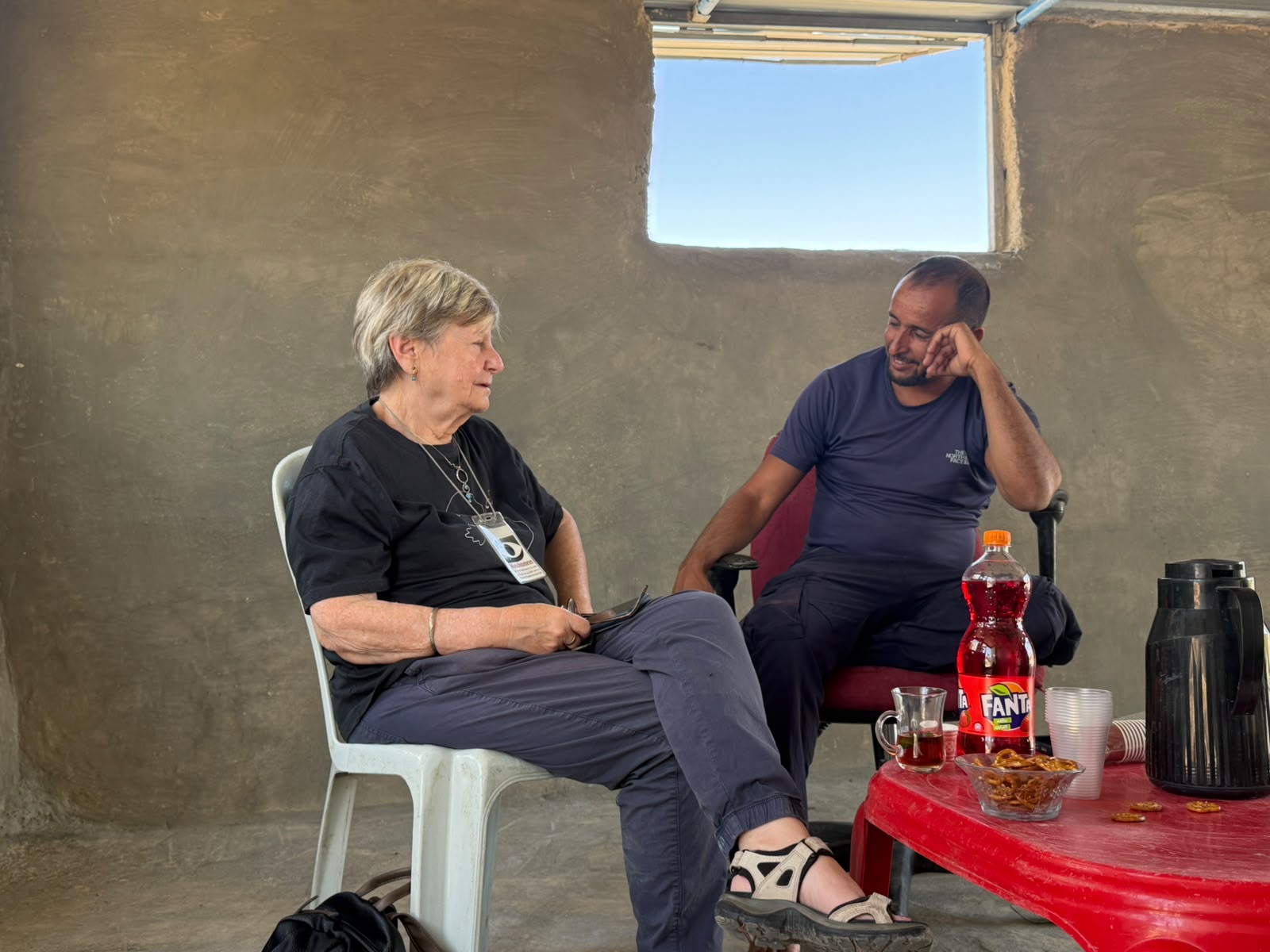 Muhammad D.Oct-10-2026Smadar with Najeh in Umm Qusa
-
Tarqumiya CP
See all reports for this place-
The Tarqumiya Checkpoint is one of the largest and busiest checkpoints where people and goods cross into Israel. It is located on the Separation Barrier close to the Green Line, on Road 35 (connecting Beer Sheva and Hebron). It is run by the Israel Defense Ministry’s Crossings Administration with civilian secuirty companies running the day to day operations. The checkpoint is indeed open to vehicles in both directions 24/7, but Palestinians are prevented from crossing in vehicles, except in special cases. MachsomWatch activists visit the checkpoint as it opens at 3:45 am, in order to observe the daily passage of nearly 10,000 Palestinian workers. The workers arrive from throughout the Southern West Bank. Our activists report on the tremendous overcrowding at this checkpoint; they have observed young men climbing and scrambling on the fences and roofs of the ‘access cages’. This is how the work day begins for those who ‘build the land of Israel’. updated November 2019
-
