
Hebron, Sansana, South Hebron Hills, Thu 23.10.08, Afternoon
Meitar-Sansana CP
14:30: The CP is empty but car park is packed.
Road 60
There seems to be many vehicles on the road. One of the road blocks was removed but we believe it was the work of the locals rather than a formal step by the military.Water tanks are ferrying the rare commodity from village to village.
At the Durah Alfawwar waterpool there are lots of children and, near by, a big transit-transformed into a kiosk is parked.
A youngster mounted on a horse pulling a cart with a water tank stands by the roadside.
At one of the entrances to Bany Na'im stand some military and police vehicles. We cannot make out what is happening there and decide to return after a turn in Hebron.
Hebron
Flags of the new unit stationed there – Giv'ati – welcome us in. How wonderful, how bright and colourful, how incongruous in this depressing place. At the point of exit from Kiryat Arbah and entry into Hebron some boys and a pregnant woman are picking olives from trees on the Kiryat Arbah side of the fence. That stands to reason – judging by their size of course they were planted after 1967…On the path leading up to the Hill of the Patriarchs Quarter a big star of David has been placed atop a synagogue, that only a few weeks ago looked like a pile of rubble. A cover against the rain has been stretched over and the place is gradually assuming the look of permanence.All across town, signs welcome visitors to the city of the patriarchs. A woman pushing a baby in a pram walks, talking on her mobile, past the row of shops between Kiryat Arbah and Hebron, manifestly unafraid.
Across from Beit Hadasah, at the top of the school steps there's a new police post. On the left hand side of the road sits a policeman and on the right a soldier.
Pharmacy Junction looks cleaner and the soldiers are indeed sweeping the street. New mortar blocks have been placed and the CP is undoubtedly a much tidier and safer place. A new commander comes, brings along some new mortar blocks. His successor removes them. The next one along brings them back and so on and so forth. How long will this stupidity and money waste go on?
At the Tel Rumeidah CP a few new fences have been put up and it looks like the inspection of schoolbags has become the routine. The soldiers show us a Closed Military Zone edict, but it expired at 10:00am. They continue to insist very politely that we must not go up. At the bottom of the road a reserve officer of the civil administration arrives and talks to us for a few minutes very contemptuously. He is touring with a higher ranking officer that avoids us. When we try to take a picture he even covers his face and stays well away on the distant end of the street. What is he afraid of? The DCO climbs back up and I think to myself what is the army planning that they need authorization of a constructions officer?And the soldiers chant their cue on and on – "not permitted to go up." As they do so, a minibus carrying religious visitors passes us by, stops and disgorges its cargo, who promptly climb the road. The soldiers must realize how ludicrous they sound. At some point we decide to ignore them politely and go up. They look unsure and confused. We are detained one more time at the border control post but after a few minutes are permitted to pass.
On our way back we find that the number of vehicles at the blocked Bany Na'im crossing has increased. Some soldiers begin to march in, but they seem leisurely. A talk with head of Bany Naim municipality yields no information.We proceed and stop by the open entrance to Bany Na'im in the hope of meeting one of the owners of the land bordering Pnei Hever. We intend to join him for the olive harvest on Saturday the 25th. The guy decided at the last minute to give the meeting a slip. The civil administration forbade him to go to his plot before the 27th so he decides to give up the joint work.
Highway 317
Zif Junction – open. The waffles are tasty and tomatoes are cheaper than in Israel.
Susiya – We stopped to unload a few packets of olives and sacks of clothes.
Meitar-Sansana
Many workers on the Palestinian side of the CP. The Israeli side is empty and that's a sign that inspection is rapid and all is well.We went home.
Hebron
See all reports for this place-
According to Wye Plantation Accords (1997), Hebron is divided in two: H1 is under Palestinian Authority control, H2 is under Israeli control. In Hebron there are 170,000 Palestinian citizens, 60,000 of them in H2. Between the two areas are permanent checkpoints, manned at all hours, preventing Palestinian movement between them and controlling passage of permit holders such as teachers and schoolchildren. Some 800 Jews live in Avraham Avinu Quarter and Tel Rumeida, on Givat HaAvot and in the wholesale market.
Checkpoints observed in H2:
- Bet Hameriva CP- manned with a pillbox
- Kapisha quarter CP (the northern side of Zion axis) - manned with a pillbox
- The 160 turn CP (the southern side of Zion axis) - manned with a pillbox
- Avraham Avinu quarter - watch station
- The pharmacy CP - checking inside a caravan with a magnometer
- Tarpat (1929) CP - checking inside a caravan with a magnometer
- Tel Rumeida CP - guarding station
- Beit Hadassah CP - guarding station
Three checkpoints around the Tomb of the Patriarchs
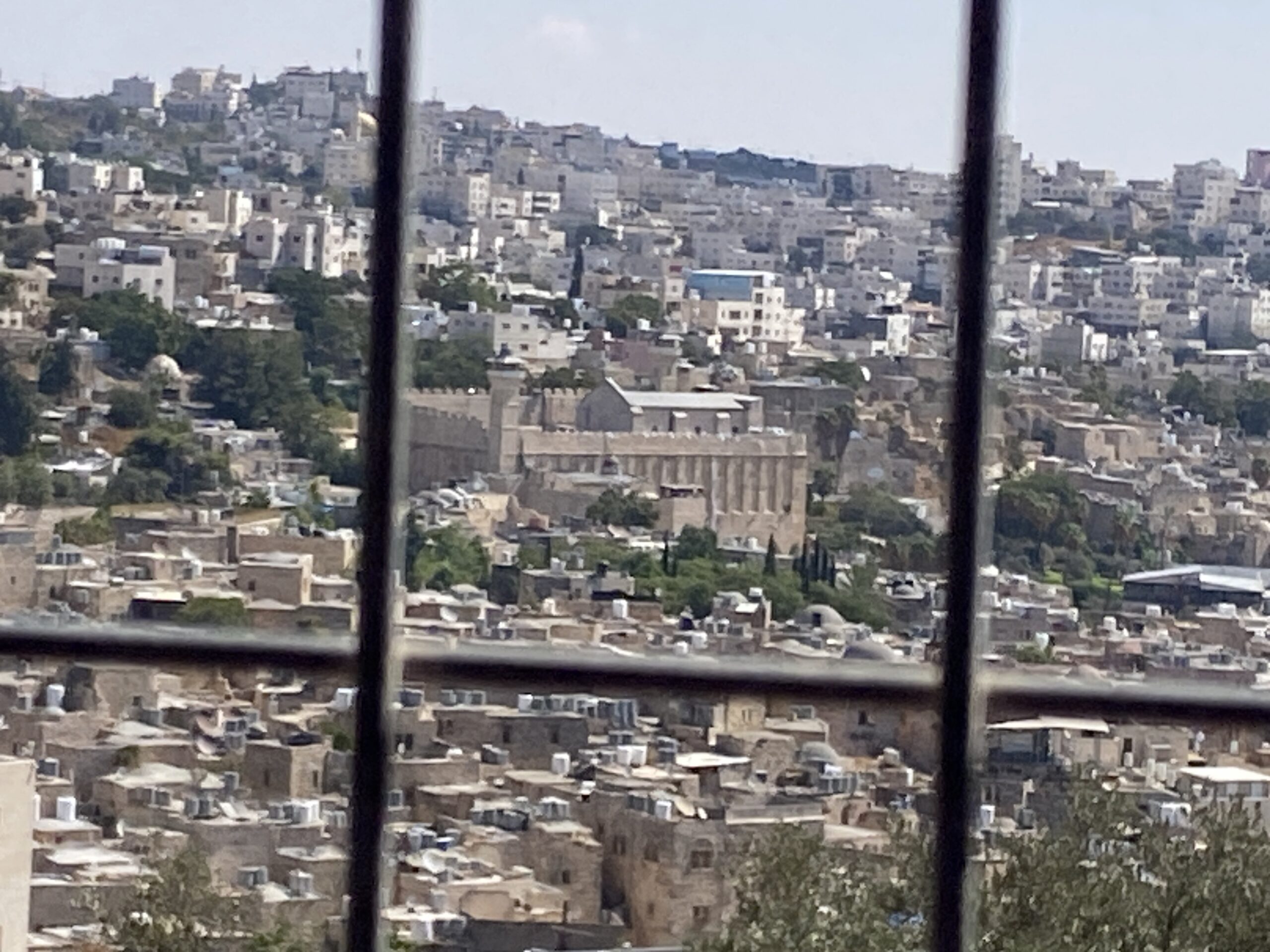 Yael ZoranSep-24-2026Hebron and the Cave of the Patriarchs from Beit Hashalom
-
Meitar checkpoint / Sansana
See all reports for this place-
Meitar Checkpoint / Sansana The checkpoint is located on the Green Line and serves as a border crossing between Israel and the West Bank. It is managed by the Border Crossing Authority of the Defense Ministry. It is comprised of sections for the transfer of goods as well as a vehicle checkpoint (intended for holders of blue identity cards, foreign nationals or diplomats and international organizations). Passing of Palestinians is prohibited, except for those with entry permits to Israel. Palestinians are permitted to cross on foot only. The crossing has a DCO / DCL / DCL / DCL (District Coordination Office), a customs unit, supervision, and a police unit. In the last year, a breach has been opened in the fence, not far from the crossing. This breach is known to all, including the army. There does not appear to be any interest in blocking it, probably as it permits needed Palestinian workers without the bureaucratic permits to get to work in Israel. Food stalls and a parking area economy have been created, but incidents of violent abuse by border police have also been recorded. Updated April 2022
-
South Hebron Hills
See all reports for this place-
South Hebron Hills
South Hebron Hills is a large area in the West Bank's southern part.
Yatta is a major city in this area: right in the border zone between the fertile region of Hebron and its surroundings and the desert of the Hebron Hills. Yatta has about 64,000 inhabitants.
The surrounding villages are called Masafer Yatta (Yatta's daughter villages). Their inhabitants subsist on livestock and agriculture. Agriculture is possible only in small plots, especially near streams. Most of the area consists of rocky terraces.Since the beginning of the 1980s, many settlements have been established on the agricultural land cultivated by the Palestinians in the South Hebron Hills region: Carmel, Maon, Susia, Masadot Yehuda, Othniel, and more. Since the settlements were established and Palestinians cultivation areas have been reduced; the residents of the South Hebron Hills have been suffering from harassment by the settlers. Attempts to evict and demolish houses have continued, along with withholding water and electricity. The military and police usually refrain from intervening in violent incidents between settlers and Palestinians do not enforce the law when it comes to the investigation of extensive violent Jewish settlers. The harassment in the South Hebron Hills includes attacking and attempting to burn residential tents, harassing dogs, harming herds, and preventing access to pastures.
There are several checkpoints in the South Hebron Hills, on Routes 317 and 60. In most of them, no military presence is apparent, but rather an array of pillboxes monitor the villages. Roadblocks are frequently set up according to the settlers and the army's needs. These are located at the Zif Junction, the Dura-al Fawwar crossing, and the Sheep Junction at the southern entrance to Hebron.
Updated April 2022
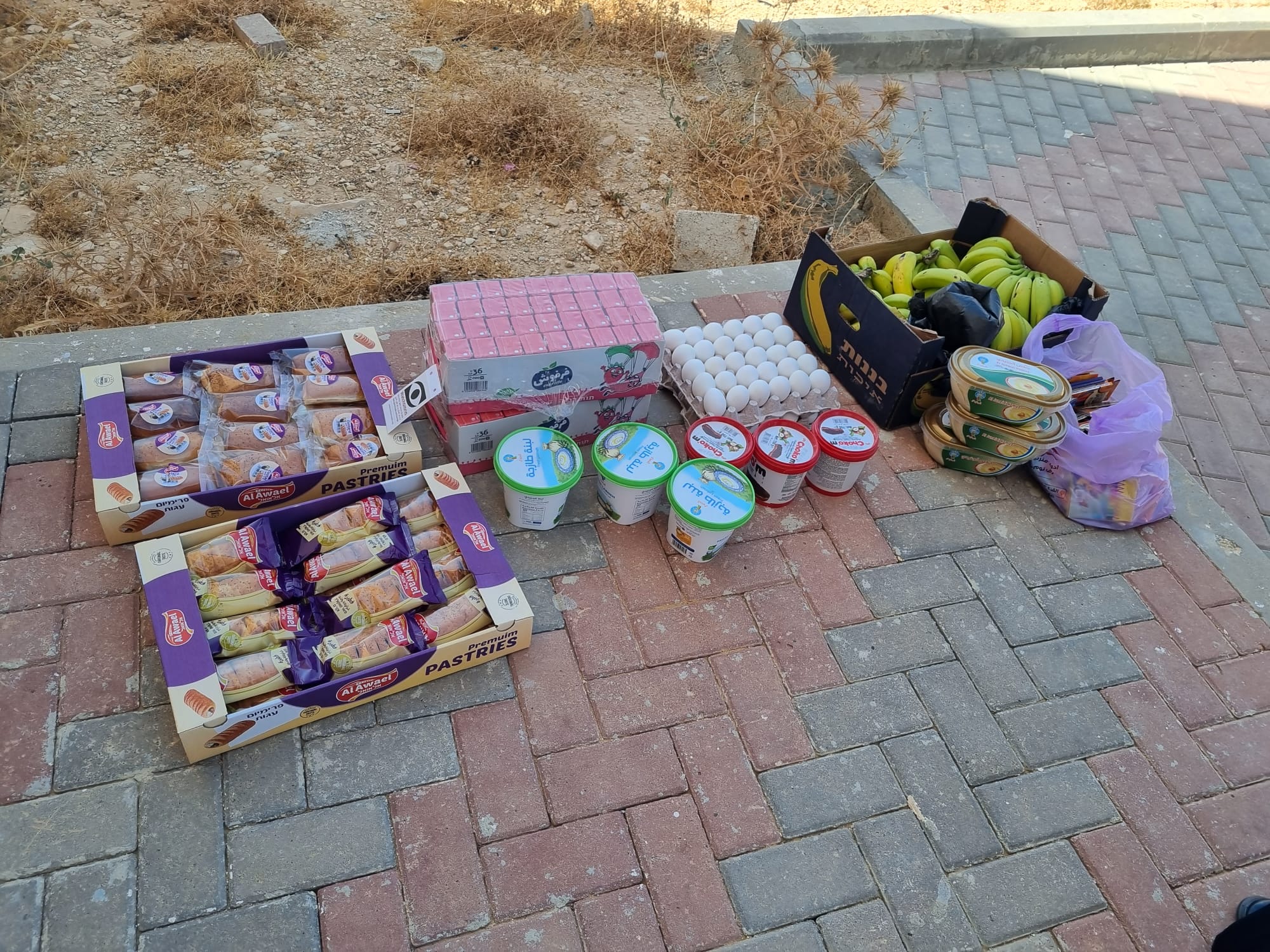 Muhammad D.Sep-27-2026Food items we brought to Huda's kindergarten in Khashem a-Daraj
-
