
Hebron, Sansana, South Hebron Hills, Tue 15.1.08, Morning
6:30 – 11:00
Summary: Very cold. The normalcy and routine of the Occupation
Sansana Checkpoint
6:35 – the Palestinian side is empty. Not all the Israeli employers have arrived and the workers are warming themselves over improvised fires on the Israeli side of the Green Line.
Road 60
The road work up to Shema continues, and we continue not to understand why money is being put into this and what the logic is behind widening the road…Soldiers are guarding the illegal outpost of Eshtamoa. They stand outside on the road, a sign (small) on the road reads: “Welcome to the Yeshiva…” From the car I can’t read the name. So if anyone had doubts regarding under whose auspices the settlement of the outpost is taking place, they can now be discarded…
Children are walking on the margins of the road to school. A bulldozer has renewed all the places where the dirt mounds let the Palestinian vehicles onto the road. There are also many new concrete blocks.
Samoa – is surrounded by high mounds of earth.
Dahariya – people waiting for a taxi. The road is blocked as usual.
Carma – An army vehicle stands at the entrance to the village. Many people are going in the direction of Hebron. The soldiers remain in the car.
Dura El Fawar – The pillbox is manned, the traffic moves. A green “frog” for trash collection decorates the pillbox.
Caligis – An army vehicle watches those crossing the street – the soldiers don’t leave the jeep.
Manoach Mountain – A new gate on the right side of the road – no bulldozers in the parking area.
The Sheep Crossing – Pedestrians crossing from side to side – no military presence
Shuiukch Hebron – An army vehicle, the soldiers aren’t stopping anyone in the meantime. They’re speaking Russian among themselves. Their attitude is very frightening; they’re hostile to us and show us the marks of rocks on their jeep. The girls crossing the road are in great danger.
Hebron
The weather today is fitting for Hebron, so cold and depressing, and yet seemingly normal. Nothing is happening, just the deserted houses and the sight of soldiers everywhere.
The Pharmacy Checkpoint – Children pass throughout freely, and the adults are not asked to take off their belts or shoes. Everyone is too cold.
The Cave of the Patriarchs Checkpoint – no detainees.
They’ve added a checkpoint at the entrance to HaShohada Street – there was something temporary until last week. They’ve added a shelter from the rain and two soldiers stand there – no detainees.
Tel Romeda Checkpoint – they’ve added a hut for the soldiers to get out of the rain – there are no detainees and they don’t ask anyone for papers. Peace activists are there.
Tarpat Checkpoint – “Death to the Arabs” is written on the metal supports of the checkpoint. The company commander is there. We show him the graffiti and he promises to remove it. He knows nothing about the birth last week. He promises that it will now be easier for ambulances to pass through (I don’t believe him). The teachers cross through the side gate and the children on their way to school are checked by two soldiers – they ask to open the satchels. You tell me if this prevents terrorism or provokes terrorism.
The Disputed House – Structures offering protection from the cold have gone up on the roof for the soldiers guarding these insane intruders. A young Palestinian who forgot to carry his identity card is being detained at the border police checkpoint. The youth is on his way to work in Hebron – what does he need this document for? His father brings his identity card from home, otherwise he would have been taken to the police station to determine his identity and he would have lost a workday.
Just a reminder – before the “purchase” of this house, there was no checkpoint!!!!
A visit to Nassar at Deir Raza – Nassar tells us all the problems he has as a detainee by the ‘Shabak’ – what troubles! And most of all he misses the sense of freedom and liberty.
Hebron
See all reports for this place-
According to Wye Plantation Accords (1997), Hebron is divided in two: H1 is under Palestinian Authority control, H2 is under Israeli control. In Hebron there are 170,000 Palestinian citizens, 60,000 of them in H2. Between the two areas are permanent checkpoints, manned at all hours, preventing Palestinian movement between them and controlling passage of permit holders such as teachers and schoolchildren. Some 800 Jews live in Avraham Avinu Quarter and Tel Rumeida, on Givat HaAvot and in the wholesale market.
Checkpoints observed in H2:
- Bet Hameriva CP- manned with a pillbox
- Kapisha quarter CP (the northern side of Zion axis) - manned with a pillbox
- The 160 turn CP (the southern side of Zion axis) - manned with a pillbox
- Avraham Avinu quarter - watch station
- The pharmacy CP - checking inside a caravan with a magnometer
- Tarpat (1929) CP - checking inside a caravan with a magnometer
- Tel Rumeida CP - guarding station
- Beit Hadassah CP - guarding station
Three checkpoints around the Tomb of the Patriarchs
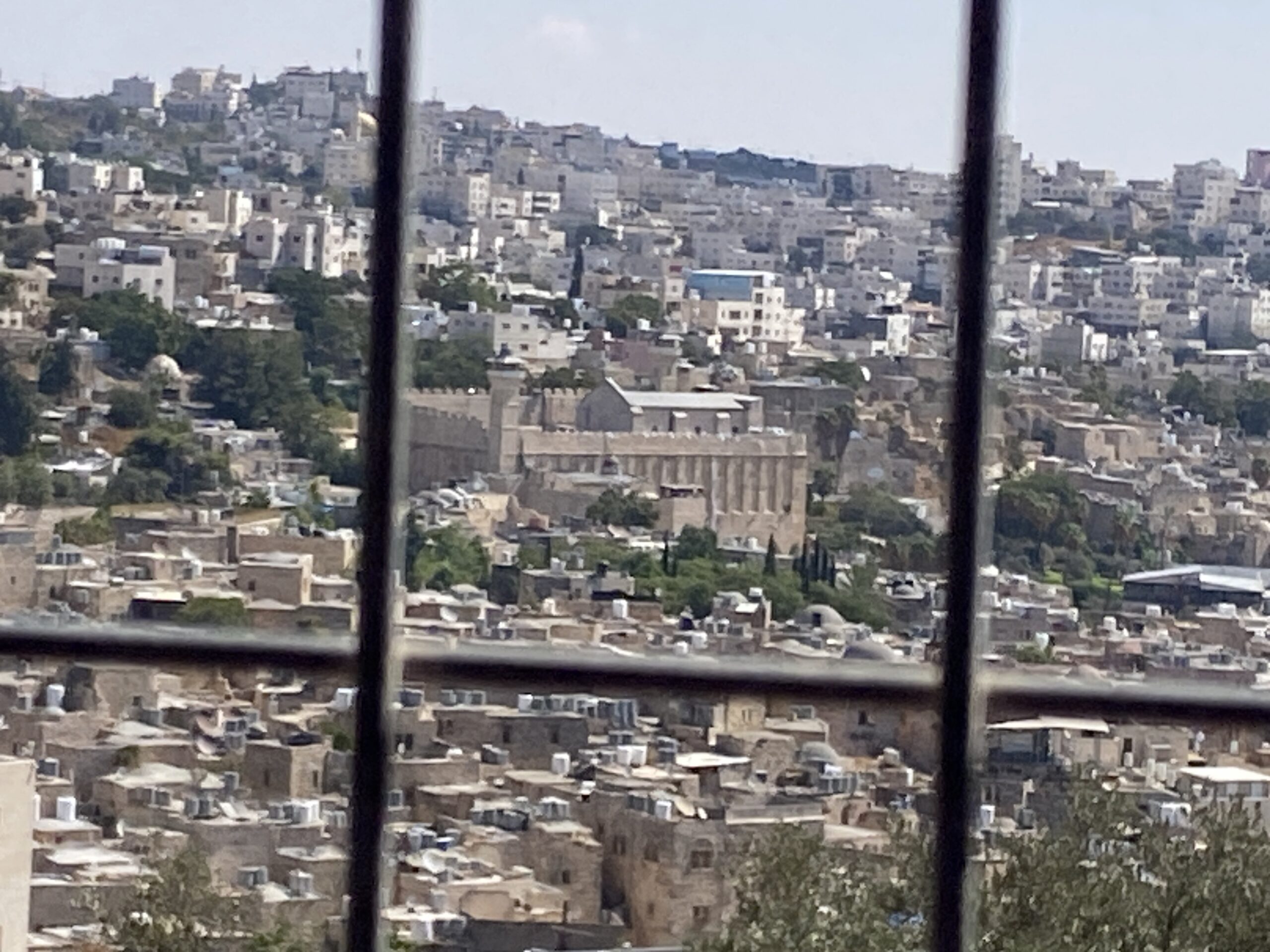 Yael ZoranSep-24-2026Hebron and the Cave of the Patriarchs from Beit Hashalom
-
Meitar checkpoint / Sansana
See all reports for this place-
Meitar Checkpoint / Sansana The checkpoint is located on the Green Line and serves as a border crossing between Israel and the West Bank. It is managed by the Border Crossing Authority of the Defense Ministry. It is comprised of sections for the transfer of goods as well as a vehicle checkpoint (intended for holders of blue identity cards, foreign nationals or diplomats and international organizations). Passing of Palestinians is prohibited, except for those with entry permits to Israel. Palestinians are permitted to cross on foot only. The crossing has a DCO / DCL / DCL / DCL (District Coordination Office), a customs unit, supervision, and a police unit. In the last year, a breach has been opened in the fence, not far from the crossing. This breach is known to all, including the army. There does not appear to be any interest in blocking it, probably as it permits needed Palestinian workers without the bureaucratic permits to get to work in Israel. Food stalls and a parking area economy have been created, but incidents of violent abuse by border police have also been recorded. Updated April 2022
-
South Hebron Hills
See all reports for this place-
South Hebron Hills
South Hebron Hills is a large area in the West Bank's southern part.
Yatta is a major city in this area: right in the border zone between the fertile region of Hebron and its surroundings and the desert of the Hebron Hills. Yatta has about 64,000 inhabitants.
The surrounding villages are called Masafer Yatta (Yatta's daughter villages). Their inhabitants subsist on livestock and agriculture. Agriculture is possible only in small plots, especially near streams. Most of the area consists of rocky terraces.Since the beginning of the 1980s, many settlements have been established on the agricultural land cultivated by the Palestinians in the South Hebron Hills region: Carmel, Maon, Susia, Masadot Yehuda, Othniel, and more. Since the settlements were established and Palestinians cultivation areas have been reduced; the residents of the South Hebron Hills have been suffering from harassment by the settlers. Attempts to evict and demolish houses have continued, along with withholding water and electricity. The military and police usually refrain from intervening in violent incidents between settlers and Palestinians do not enforce the law when it comes to the investigation of extensive violent Jewish settlers. The harassment in the South Hebron Hills includes attacking and attempting to burn residential tents, harassing dogs, harming herds, and preventing access to pastures.
There are several checkpoints in the South Hebron Hills, on Routes 317 and 60. In most of them, no military presence is apparent, but rather an array of pillboxes monitor the villages. Roadblocks are frequently set up according to the settlers and the army's needs. These are located at the Zif Junction, the Dura-al Fawwar crossing, and the Sheep Junction at the southern entrance to Hebron.
Updated April 2022
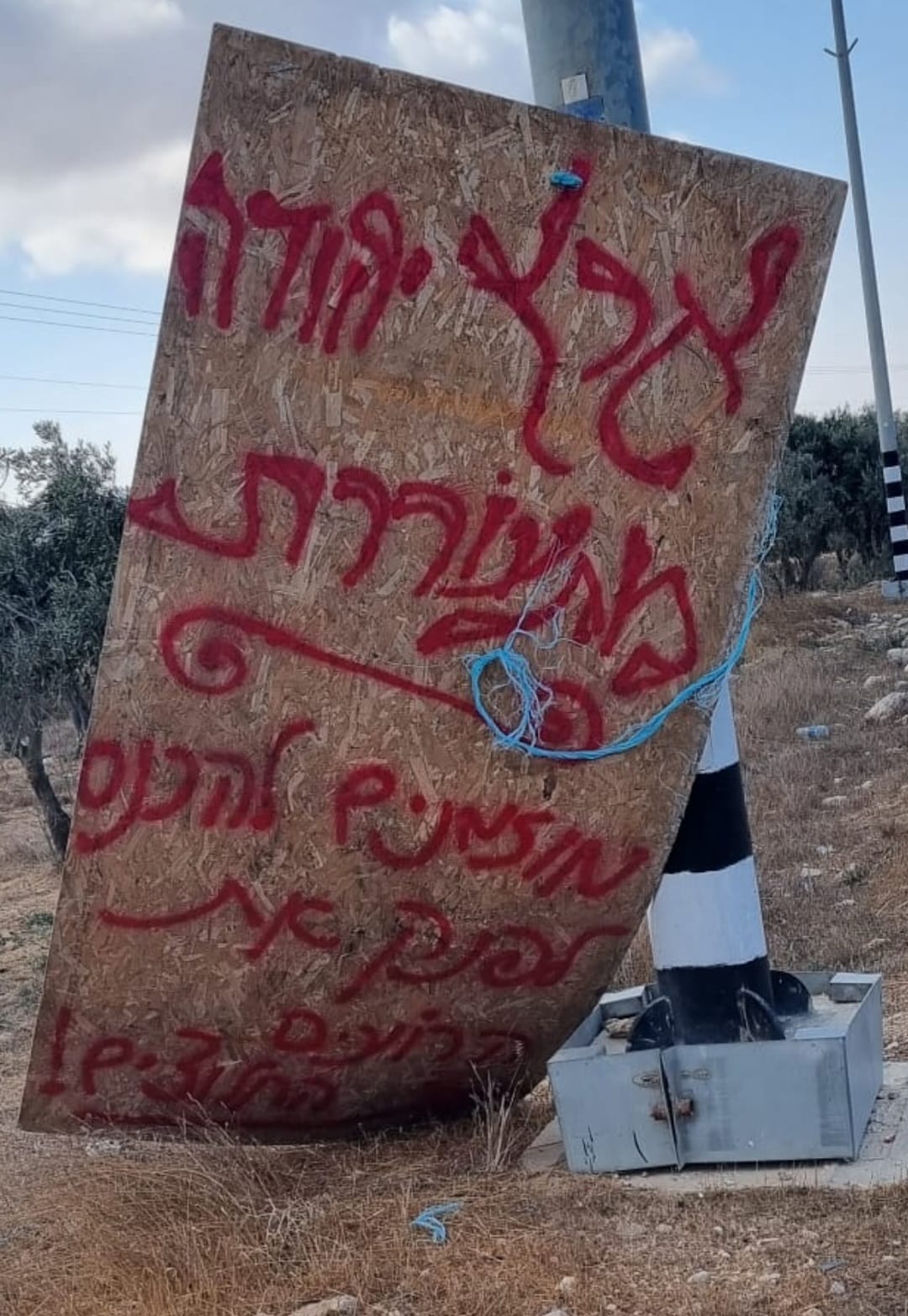 Smadar BeckerOct-17-2026A sign placed by those who call themselves the Pioneer Shepherds, at the outpost adjacent to Qawawis
-
