
Hebron, Sansana, South Hebron Hills, Tue 20.7.10, Morning
Translator: Charles K.
8:00-11:00
- No news – which means good news. Really?
- Reminder: The tale of the Jabber family.
Meitar-Sansana crossing
The Meitar crossing is deserted at this time of the morning.
The waiting area for trucks is crowded. It's clear this is an important economic lifeline.
Route 60
The road to Hebron is "boring." Almost no visible military presence today. The local residents are hardly on the road either.
Hebron
It's obvious that it's Tisha' B'Av today in Hebron. The Jews are fasting.
What are they thinking about today? Hatred for no reason? Whether their behavior encourages or discourages the "destruction of the Third Temple"? We avoided coming near the Cave of the Patriarchs. Many guests came to worship, and we don't particularly want to meet them. Soldiers are on duty at the checkpoints but don't detain anyone.
At B's grocery we had a short conversation about the difficulties of life in area H2. It's not easy living in a place where two authorities – Israeli and Palestinian – run your life.
Yesterday's incident (19.7) involving the home and fields of Atta Jabber – cf. the report.
For a number of months the family has been involved in a struggle with the authorities. Unfortunately for them, they live just below the Nofei Mamreh neighborhood that's expanding. Kiryat Arba suddenly came close to their home.
Their presence apparently delays development plans (construction freeze?), which is why they're being required to leave their ancestral land.
"If you give up the field, we won't demolish your home," they were told. No one is proposing to provide replacement fields, vineyards and orchards.
They're refusing, of course, but "leave it to the Jews." Suddenly the family turned into water thieves, and has been forced to let its tomato and vegetable crops dry up.
Various organizations have gotten involved trying to combat the land expropriation, but nothing has helped so far, and meanwhile one has to live, so recently it appears as if they again tried to grow some crops for a living, while the new buildings of Nofei Mamreh are poised to "drop" onto their home and fields.
On Monday morning, 19.7, our colleagues who had begun their shift saw a painful sight: large numbers of military and Border Police forces came to the field to provide security for those dismantling the irrigation equipment, for the Civil Administration staff, Mekorot personnel and others. They brought a large truck, dismantled all the pipes and faucets, loaded them along with the other agricultural equipment, and drove away. One of the female members of the family collapsed and was taken away by ambulance, and no amount of pleading helped. Someone decided they're stealing water, and that's that!
Representatives of the foreign press were present, but the people of Israel aren't interested. Israeli journalists didn't think it was important to be there.
But there happen to be crops that flourish without adequate water – the "shoots of hatred and anger" that will sprout on this land. They'll grow and grow. To the attention of those guarding the nation: You're raising future generations of our enemies.
Just look in the mirror.
Hebron
See all reports for this place-
According to Wye Plantation Accords (1997), Hebron is divided in two: H1 is under Palestinian Authority control, H2 is under Israeli control. In Hebron there are 170,000 Palestinian citizens, 60,000 of them in H2. Between the two areas are permanent checkpoints, manned at all hours, preventing Palestinian movement between them and controlling passage of permit holders such as teachers and schoolchildren. Some 800 Jews live in Avraham Avinu Quarter and Tel Rumeida, on Givat HaAvot and in the wholesale market.
Checkpoints observed in H2:
- Bet Hameriva CP- manned with a pillbox
- Kapisha quarter CP (the northern side of Zion axis) - manned with a pillbox
- The 160 turn CP (the southern side of Zion axis) - manned with a pillbox
- Avraham Avinu quarter - watch station
- The pharmacy CP - checking inside a caravan with a magnometer
- Tarpat (1929) CP - checking inside a caravan with a magnometer
- Tel Rumeida CP - guarding station
- Beit Hadassah CP - guarding station
Three checkpoints around the Tomb of the Patriarchs
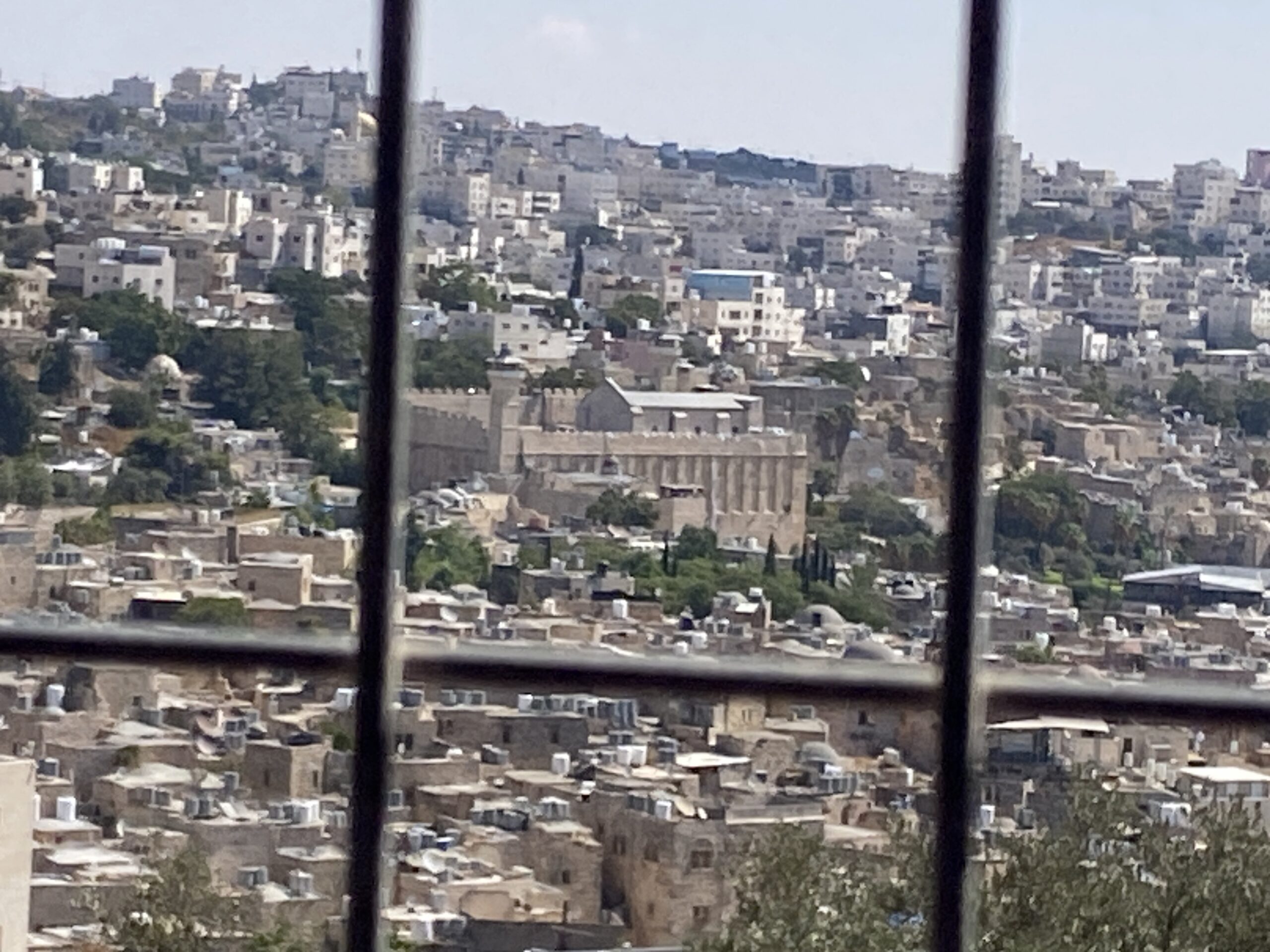 Yael ZoranSep-24-2026Hebron and the Cave of the Patriarchs from Beit Hashalom
-
Meitar checkpoint / Sansana
See all reports for this place-
Meitar Checkpoint / Sansana The checkpoint is located on the Green Line and serves as a border crossing between Israel and the West Bank. It is managed by the Border Crossing Authority of the Defense Ministry. It is comprised of sections for the transfer of goods as well as a vehicle checkpoint (intended for holders of blue identity cards, foreign nationals or diplomats and international organizations). Passing of Palestinians is prohibited, except for those with entry permits to Israel. Palestinians are permitted to cross on foot only. The crossing has a DCO / DCL / DCL / DCL (District Coordination Office), a customs unit, supervision, and a police unit. In the last year, a breach has been opened in the fence, not far from the crossing. This breach is known to all, including the army. There does not appear to be any interest in blocking it, probably as it permits needed Palestinian workers without the bureaucratic permits to get to work in Israel. Food stalls and a parking area economy have been created, but incidents of violent abuse by border police have also been recorded. Updated April 2022
-
South Hebron Hills
See all reports for this place-
South Hebron Hills
South Hebron Hills is a large area in the West Bank's southern part.
Yatta is a major city in this area: right in the border zone between the fertile region of Hebron and its surroundings and the desert of the Hebron Hills. Yatta has about 64,000 inhabitants.
The surrounding villages are called Masafer Yatta (Yatta's daughter villages). Their inhabitants subsist on livestock and agriculture. Agriculture is possible only in small plots, especially near streams. Most of the area consists of rocky terraces.Since the beginning of the 1980s, many settlements have been established on the agricultural land cultivated by the Palestinians in the South Hebron Hills region: Carmel, Maon, Susia, Masadot Yehuda, Othniel, and more. Since the settlements were established and Palestinians cultivation areas have been reduced; the residents of the South Hebron Hills have been suffering from harassment by the settlers. Attempts to evict and demolish houses have continued, along with withholding water and electricity. The military and police usually refrain from intervening in violent incidents between settlers and Palestinians do not enforce the law when it comes to the investigation of extensive violent Jewish settlers. The harassment in the South Hebron Hills includes attacking and attempting to burn residential tents, harassing dogs, harming herds, and preventing access to pastures.
There are several checkpoints in the South Hebron Hills, on Routes 317 and 60. In most of them, no military presence is apparent, but rather an array of pillboxes monitor the villages. Roadblocks are frequently set up according to the settlers and the army's needs. These are located at the Zif Junction, the Dura-al Fawwar crossing, and the Sheep Junction at the southern entrance to Hebron.
Updated April 2022
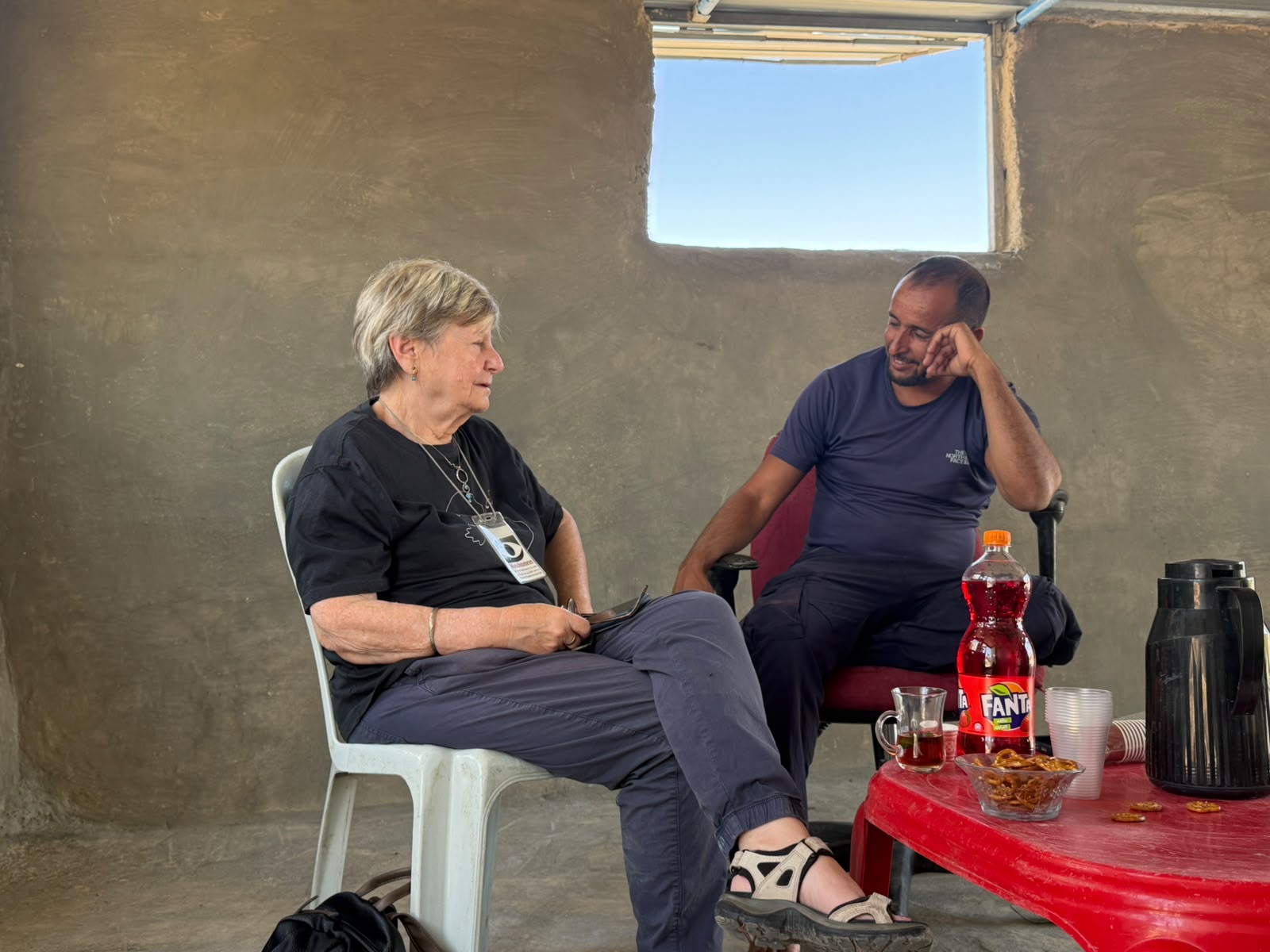 Muhammad D.Oct-10-2026Smadar with Najeh in Umm Qusa
-
