
Hebron, Sansana, South Hebron Hills, Tue 29.9.09, Morning
Translation: Bracha B.A.
Sansana Crossing
When we arrived we could see from a distance that the crossing was unusually crowded. We were met by hundreds of angry, frustrated workers who had been waiting since 4am and have still not went through. They explained that only one inspection booth was operating. It was already 6:45 and some of them claimed that there was no longer any point in crossing because their employers demanded that they get to work by 6:30.
We understood that after the closure on Yom Kippur and the subsequent weekend it was crowded, but I now called Shlomi, the CP's manager to tell him about this, enquiring whether it might be possible to hasten matters somehow. Shlomi, whom we know for his humanitarian outlook and willingness to deal with things, ensured us that all inspection booths were open and that everyone is working quickly, but said that delays were caused by the overcrowding of the CP: there were 2,400 people there today, as opposed to the usual 1,700. He invited us to go in and see that the place is operating at maximum capacity and manpower, clearing the way for us and taking us through the entire “via dellarosa”. The workers in the inspection points who had been shouting rudely at people, suddenly changed their tone and miraculously, people began to go through more quickly. When we asked why more windows couldn't be opened, he explained that he did not receive approval for an extra NIS100,000: according to him, Sansana CP is especially efficient as compared to others. However, another NIS100,000 for the benefit of the Palestinians is too much for our security system.
In light of the fact that such overcrowding at Sansana CP is exceptional, and that Shlomi always does his best to enable people to get to work and not everything is under his control, we left the crossing hoping that things will ease down over the next hour or so.
Road 60
All along the road leading to Hebron we are pleased to see that the roadblocks that were opened last week, as reported earlier, are still so now. Traffic flows smoothly at every checkpoint, including Dura Alfawwar and the Sheep's Junction.
Hebron
Hebron is as oppressive as always. The House of Dispute is empty, with the usual Border Police soldiers guarding.
The house at Curve 160 was evacuated by the army, as promised last week.
On Gross Square there are no soldiers this time.
At the other checkpoints along the Shouhada St. — Tarpat, Tel Rumeida and Pharmacy — there are soldiers, but they stop no one and people are allowed through.
The Patriarchs' Tombs' Cave: once again, ear-shattering music comes from “Beit Gutnick”. Five young people are detained by a Border Police soldier, and women from the CPT photo and report the incident. We stop in order to find out what was going on: as it turns out, this small group of the International Solidarity Organization arrived in Hebron. One of its members is a Palestinian with US citizenship. He presented his US passport and then detained because according to the soldiers, he should have also presented his Palestinian passport. The BP soldiers were vicious and behaved aggressively towards us as well. We stood on the side to avoid further provocation. The blue police, who followed us as usual, arrived. The policeman greeted us and explained that it could be dangerous if the American-Palestinian fellow decided to enter “Beit Gutnick.” (Note: Since Baruch Goldstein's massacre, Jews and Arabs are not allowed in the cave at the same time.)
Our friend Ofer Ochana appears with his camera on boot as usual. He begins to photograph us. I, in turn, take his picture. He happily notes that the Holy One, Blessed Be He, will punish anyone who endangers the People of Israel such as Rabin for example. “Futile, futile, futile" he shouts again and again, and laughs. Itamar Ben Gvir emerges from “Beit Gutnick”, gets into his car, and shouts “Traitors!” at us. Ofer Ochana is encouraged and adds another epithet, and is joined by another “friendly” Jew who attacks us angrily saying, “You're only interested in the Arabs. Why don't you care for the Jews who live here? There are 3% Jews here, surrounded by 97% Arabs, and you don't care about them.” There is no point in continuing this “conversation.” We leave feeling disgusted.
Zion Road: We are pleased to hear about the plan to operate a minibus along this road after the holidays to transport residents to the Kafisha Neighborhood and Givat Ha'Harsina. We'll see what happens.
Road 317
We returned from here, observing nothing unusual.
Hebron
See all reports for this place-
According to Wye Plantation Accords (1997), Hebron is divided in two: H1 is under Palestinian Authority control, H2 is under Israeli control. In Hebron there are 170,000 Palestinian citizens, 60,000 of them in H2. Between the two areas are permanent checkpoints, manned at all hours, preventing Palestinian movement between them and controlling passage of permit holders such as teachers and schoolchildren. Some 800 Jews live in Avraham Avinu Quarter and Tel Rumeida, on Givat HaAvot and in the wholesale market.
Checkpoints observed in H2:
- Bet Hameriva CP- manned with a pillbox
- Kapisha quarter CP (the northern side of Zion axis) - manned with a pillbox
- The 160 turn CP (the southern side of Zion axis) - manned with a pillbox
- Avraham Avinu quarter - watch station
- The pharmacy CP - checking inside a caravan with a magnometer
- Tarpat (1929) CP - checking inside a caravan with a magnometer
- Tel Rumeida CP - guarding station
- Beit Hadassah CP - guarding station
Three checkpoints around the Tomb of the Patriarchs
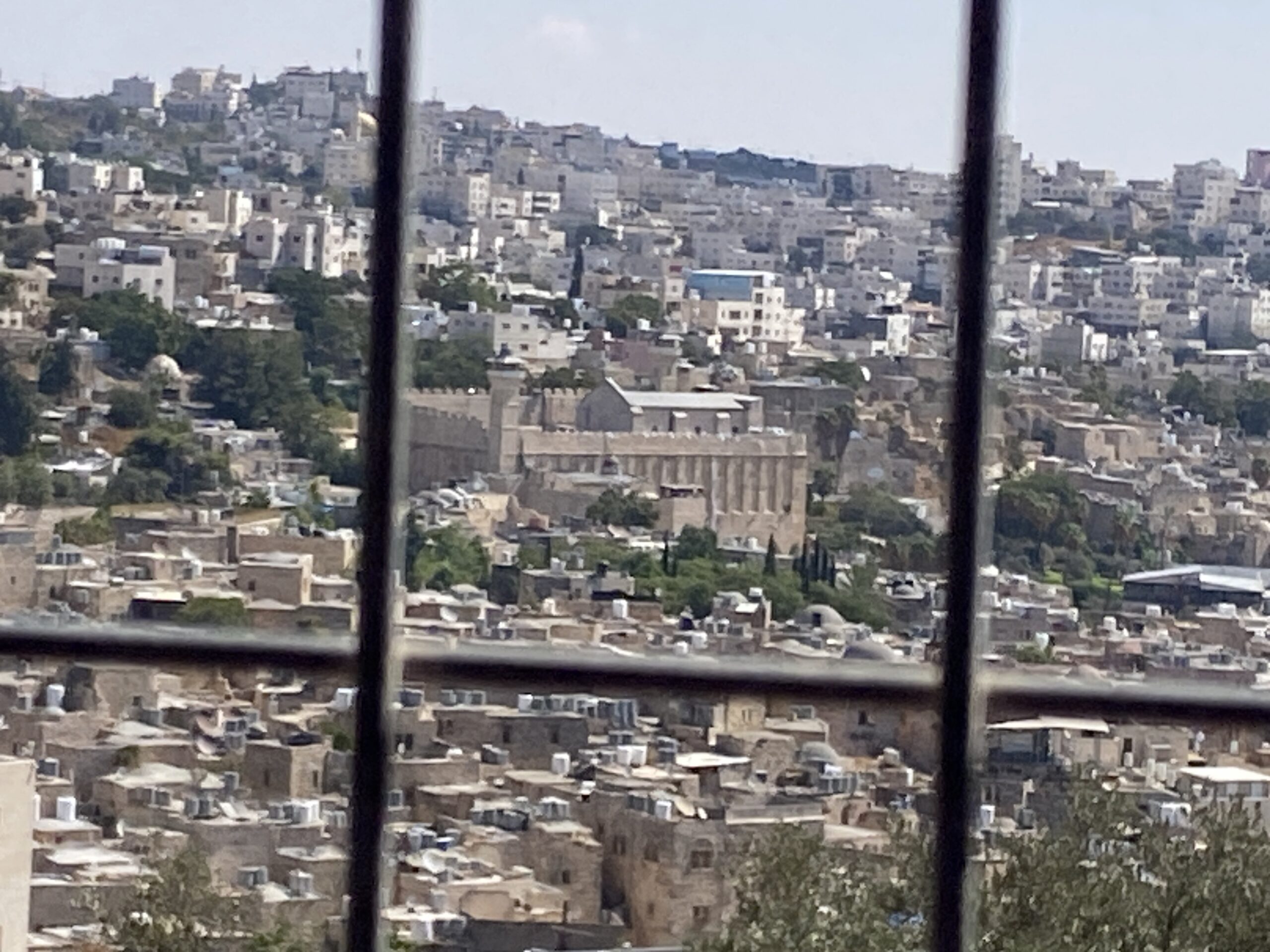 Yael ZoranSep-24-2026Hebron and the Cave of the Patriarchs from Beit Hashalom
-
Meitar checkpoint / Sansana
See all reports for this place-
Meitar Checkpoint / Sansana The checkpoint is located on the Green Line and serves as a border crossing between Israel and the West Bank. It is managed by the Border Crossing Authority of the Defense Ministry. It is comprised of sections for the transfer of goods as well as a vehicle checkpoint (intended for holders of blue identity cards, foreign nationals or diplomats and international organizations). Passing of Palestinians is prohibited, except for those with entry permits to Israel. Palestinians are permitted to cross on foot only. The crossing has a DCO / DCL / DCL / DCL (District Coordination Office), a customs unit, supervision, and a police unit. In the last year, a breach has been opened in the fence, not far from the crossing. This breach is known to all, including the army. There does not appear to be any interest in blocking it, probably as it permits needed Palestinian workers without the bureaucratic permits to get to work in Israel. Food stalls and a parking area economy have been created, but incidents of violent abuse by border police have also been recorded. Updated April 2022
-
South Hebron Hills
See all reports for this place-
South Hebron Hills
South Hebron Hills is a large area in the West Bank's southern part.
Yatta is a major city in this area: right in the border zone between the fertile region of Hebron and its surroundings and the desert of the Hebron Hills. Yatta has about 64,000 inhabitants.
The surrounding villages are called Masafer Yatta (Yatta's daughter villages). Their inhabitants subsist on livestock and agriculture. Agriculture is possible only in small plots, especially near streams. Most of the area consists of rocky terraces.Since the beginning of the 1980s, many settlements have been established on the agricultural land cultivated by the Palestinians in the South Hebron Hills region: Carmel, Maon, Susia, Masadot Yehuda, Othniel, and more. Since the settlements were established and Palestinians cultivation areas have been reduced; the residents of the South Hebron Hills have been suffering from harassment by the settlers. Attempts to evict and demolish houses have continued, along with withholding water and electricity. The military and police usually refrain from intervening in violent incidents between settlers and Palestinians do not enforce the law when it comes to the investigation of extensive violent Jewish settlers. The harassment in the South Hebron Hills includes attacking and attempting to burn residential tents, harassing dogs, harming herds, and preventing access to pastures.
There are several checkpoints in the South Hebron Hills, on Routes 317 and 60. In most of them, no military presence is apparent, but rather an array of pillboxes monitor the villages. Roadblocks are frequently set up according to the settlers and the army's needs. These are located at the Zif Junction, the Dura-al Fawwar crossing, and the Sheep Junction at the southern entrance to Hebron.
Updated April 2022
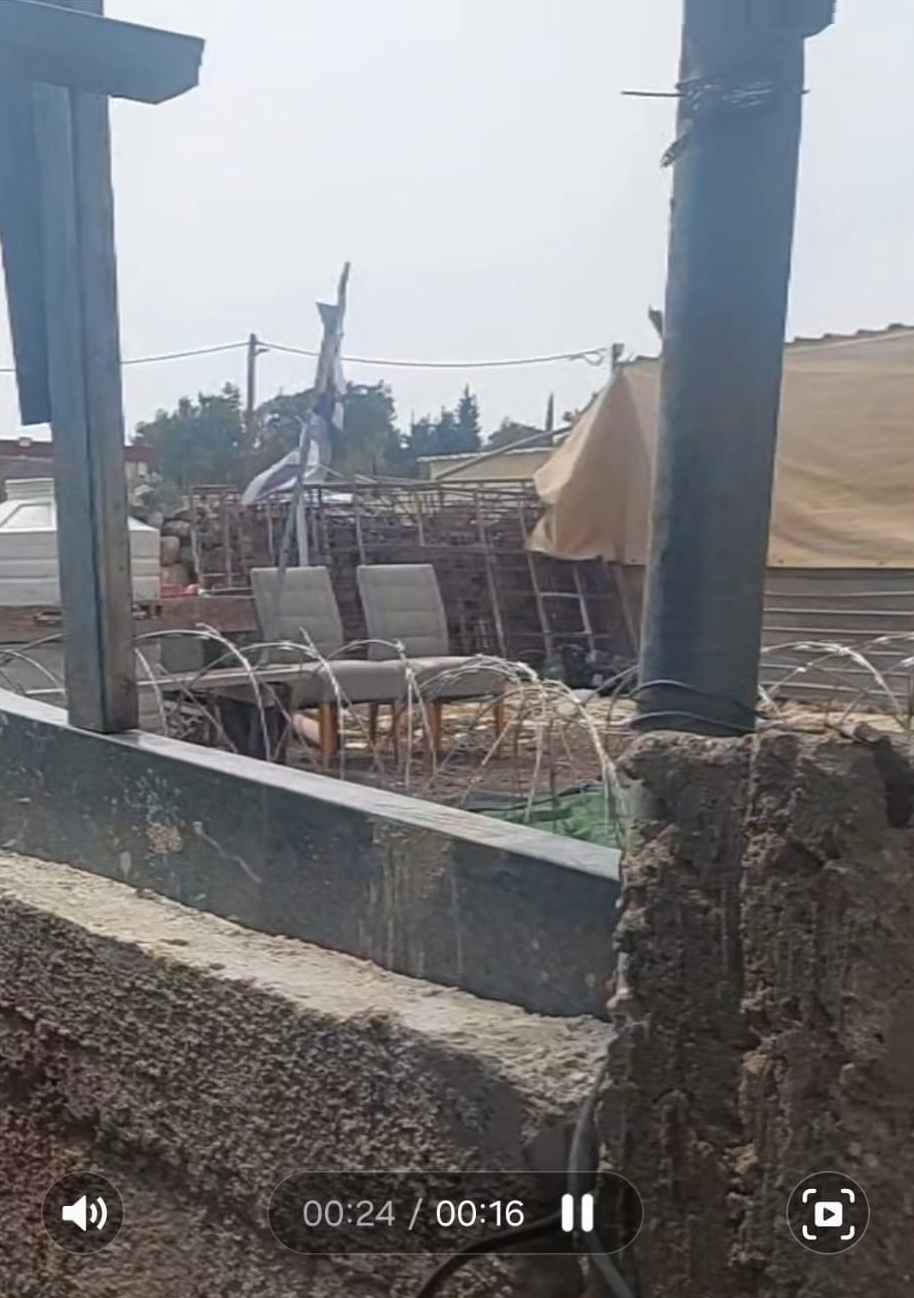 Michal TsadikOct-12-2026Umm al-Khair - Concertina wire and fences
-
