
Hebron, Sansana, South Hebron Hills, Tue 4.8.09, Morning
Trans. by Revital S.
Sansana
Many sand-tracks are waiting on the Palestinian side.
When we get to the CP we hear the following complaints from the workers who are still crossing:
first, why are they told to lift their arms up by women; second, the X-ray machine is a health hazard and finally, the machine which reads hand palms (for identification) often fails to recognise them.
By and large, though, people appear quite pleased with this crossing (and so are we).
Six buses are in the process of crossing and by 07:30 all the prisoners' families have already been inspected. We did not cross over to the Israeli side to see how long the inspection took. The bus drivers say it's going smoothly because we're there. I think credit is due to Shlomi, the CP's manager. 
See photo (left), for the handicapped child Shlomi carried on his arms from his wheelchair to another, with which he could cross and then, back to his own, allowing him to use the gate rather than turnstile.
The problem with the prisoners' families is that they arrive too early. The procedure is to start inspecting them only after the workers have all been seen through, which never happens before 07:15.
Highway 317
There are new road blocks by Samoa East. The Beit Yatir CP is still operated by Boarder Police soldiers and nobody crossed while we were there. The parking lot was full of cars which the police claims to be stolen, including an old tractor. The electricity board and road repairs authority are still busy putting up lights on this apartheid road, having gotten only as far as Maon settlement.
Highway 356
Zif and Bnei Naim CPs: open.
Highway 60
Between Dura Alfawwar and the Sheep Junction, pillboxes are manned and traffic flows. The Palestinians paved the road into Abda.
Hebron
Pillboxes on either side of the Zion Route – at Quefeisha Quarter and Curve 160 – are manned by Boarder Police soldiers and the gates are closed. Each pillbox has a list of five authorised vehicles. Most, however, do not seek authorisation for two reasons: 1. During the nine years, since the road was last open, most of those who owned a car sold it and can no longer afford buying a new one. 2. Those who do (still?) have a car, prefer not to issue a personal permit, waiting instead for the all El-Khalil vehicles to be permitted through, and not just their neighbourhood.They are right of course, because without freedom of movement, there's no trade anyway. We were told of this all by a young and hospitable couple who run a grocery, where we've now stopped for the first time and then, verified it against others.
The House of Dispute; Pharmacy; Tel Rumeida and Patriarchs' Tombs' Cave CPs: all deserted – nobody crosses over and there are no detainees. On the grass before the Jewish entrance to the Cave preparations are in progress for a concert to be held there tonight, it being the 15th of Av (tu be-shvat, Jewish "lovers' day"). How these people, so full of hatred for everyone but themselves, can celebrate this day is a wonder.
Beit Hadassa CP – under the steps leading to the Cordoba school in the middle of the Shuhada street there are two detainees. They are clad in ultra orthodox attire and with them is a woman completely veiled in black, hand in hand with a little girl. We stop by. Next to the door of one of the shops (locked of course) three TIF policepersons (two women and a man) armed with cameras are observing events. Anat Cohen arrives with the usual tirade of swearing and taking photographs of us all the time. We don't respond, instead taking her photo, too…
 Tamar goes back to the transit to sit with our driver who receives his share of swearing. The swearing is the usual "traitors", "Arab whores" etc. The TIF is taking photographs of us all the time. From the corner of my eye I notice Cohen trying to deflate our tyres. I go towards her and receive a blow to my shoulder that sends the camera flying. I collect it from the road and – knowing she overdid it – she's off. We go to the Patriarchs' Tombs' Cave, to file a complaint. Though the policemen there all know us, we have to go to a police station to file the complaint because there are no inspectors in place. On our way back, Anat is already in another vehicle and they try to get us off the road. We filed the complaint at the Township's police station. We doubt that anything will be done with it; still, it is always worth filing a complaint.
Hebron
See all reports for this place-
According to Wye Plantation Accords (1997), Hebron is divided in two: H1 is under Palestinian Authority control, H2 is under Israeli control. In Hebron there are 170,000 Palestinian citizens, 60,000 of them in H2. Between the two areas are permanent checkpoints, manned at all hours, preventing Palestinian movement between them and controlling passage of permit holders such as teachers and schoolchildren. Some 800 Jews live in Avraham Avinu Quarter and Tel Rumeida, on Givat HaAvot and in the wholesale market.
Checkpoints observed in H2:
- Bet Hameriva CP- manned with a pillbox
- Kapisha quarter CP (the northern side of Zion axis) - manned with a pillbox
- The 160 turn CP (the southern side of Zion axis) - manned with a pillbox
- Avraham Avinu quarter - watch station
- The pharmacy CP - checking inside a caravan with a magnometer
- Tarpat (1929) CP - checking inside a caravan with a magnometer
- Tel Rumeida CP - guarding station
- Beit Hadassah CP - guarding station
Three checkpoints around the Tomb of the Patriarchs
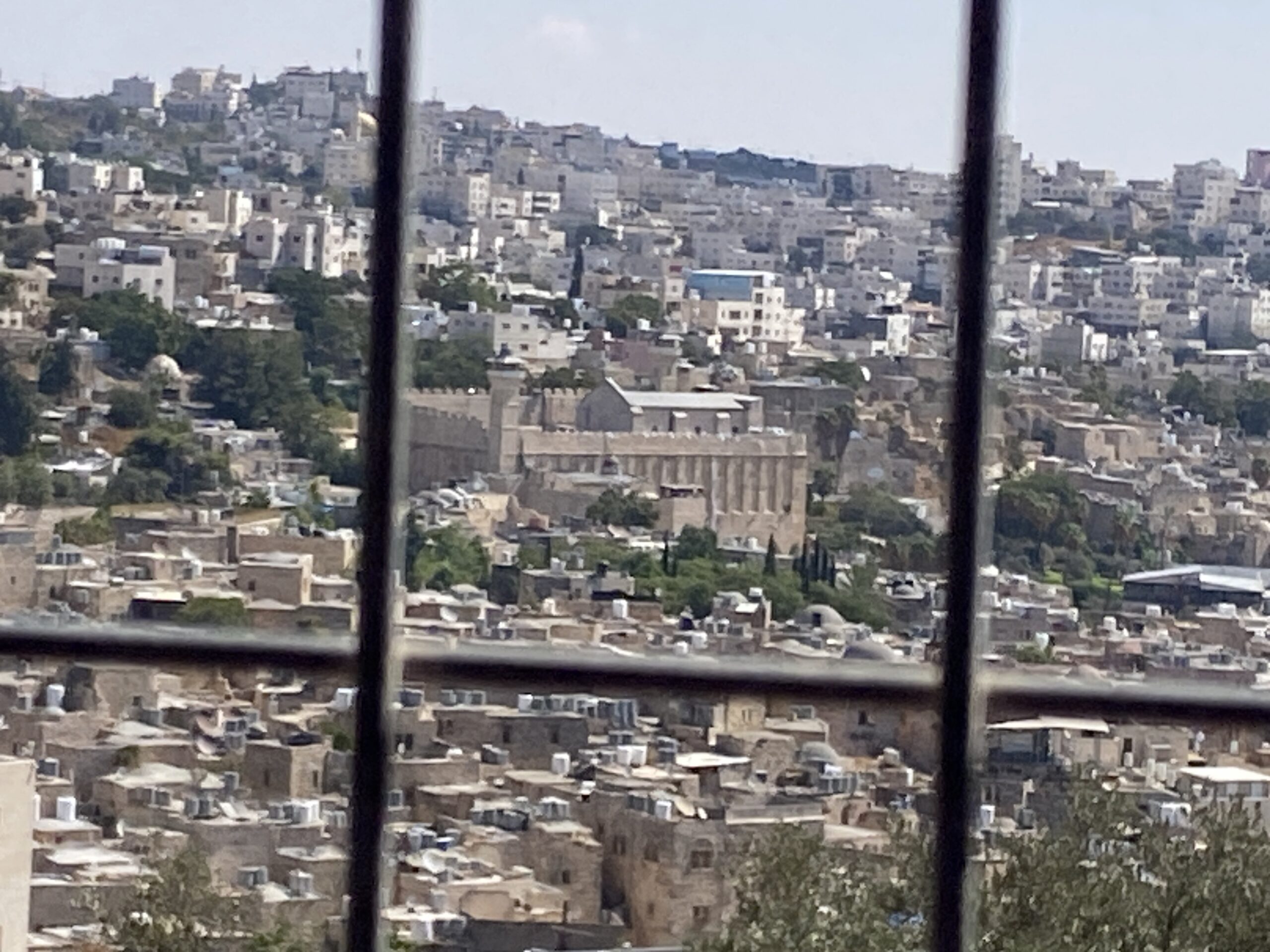 Yael ZoranSep-24-2026Hebron and the Cave of the Patriarchs from Beit Hashalom
-
Meitar checkpoint / Sansana
See all reports for this place-
Meitar Checkpoint / Sansana The checkpoint is located on the Green Line and serves as a border crossing between Israel and the West Bank. It is managed by the Border Crossing Authority of the Defense Ministry. It is comprised of sections for the transfer of goods as well as a vehicle checkpoint (intended for holders of blue identity cards, foreign nationals or diplomats and international organizations). Passing of Palestinians is prohibited, except for those with entry permits to Israel. Palestinians are permitted to cross on foot only. The crossing has a DCO / DCL / DCL / DCL (District Coordination Office), a customs unit, supervision, and a police unit. In the last year, a breach has been opened in the fence, not far from the crossing. This breach is known to all, including the army. There does not appear to be any interest in blocking it, probably as it permits needed Palestinian workers without the bureaucratic permits to get to work in Israel. Food stalls and a parking area economy have been created, but incidents of violent abuse by border police have also been recorded. Updated April 2022
-
South Hebron Hills
See all reports for this place-
South Hebron Hills
South Hebron Hills is a large area in the West Bank's southern part.
Yatta is a major city in this area: right in the border zone between the fertile region of Hebron and its surroundings and the desert of the Hebron Hills. Yatta has about 64,000 inhabitants.
The surrounding villages are called Masafer Yatta (Yatta's daughter villages). Their inhabitants subsist on livestock and agriculture. Agriculture is possible only in small plots, especially near streams. Most of the area consists of rocky terraces.Since the beginning of the 1980s, many settlements have been established on the agricultural land cultivated by the Palestinians in the South Hebron Hills region: Carmel, Maon, Susia, Masadot Yehuda, Othniel, and more. Since the settlements were established and Palestinians cultivation areas have been reduced; the residents of the South Hebron Hills have been suffering from harassment by the settlers. Attempts to evict and demolish houses have continued, along with withholding water and electricity. The military and police usually refrain from intervening in violent incidents between settlers and Palestinians do not enforce the law when it comes to the investigation of extensive violent Jewish settlers. The harassment in the South Hebron Hills includes attacking and attempting to burn residential tents, harassing dogs, harming herds, and preventing access to pastures.
There are several checkpoints in the South Hebron Hills, on Routes 317 and 60. In most of them, no military presence is apparent, but rather an array of pillboxes monitor the villages. Roadblocks are frequently set up according to the settlers and the army's needs. These are located at the Zif Junction, the Dura-al Fawwar crossing, and the Sheep Junction at the southern entrance to Hebron.
Updated April 2022
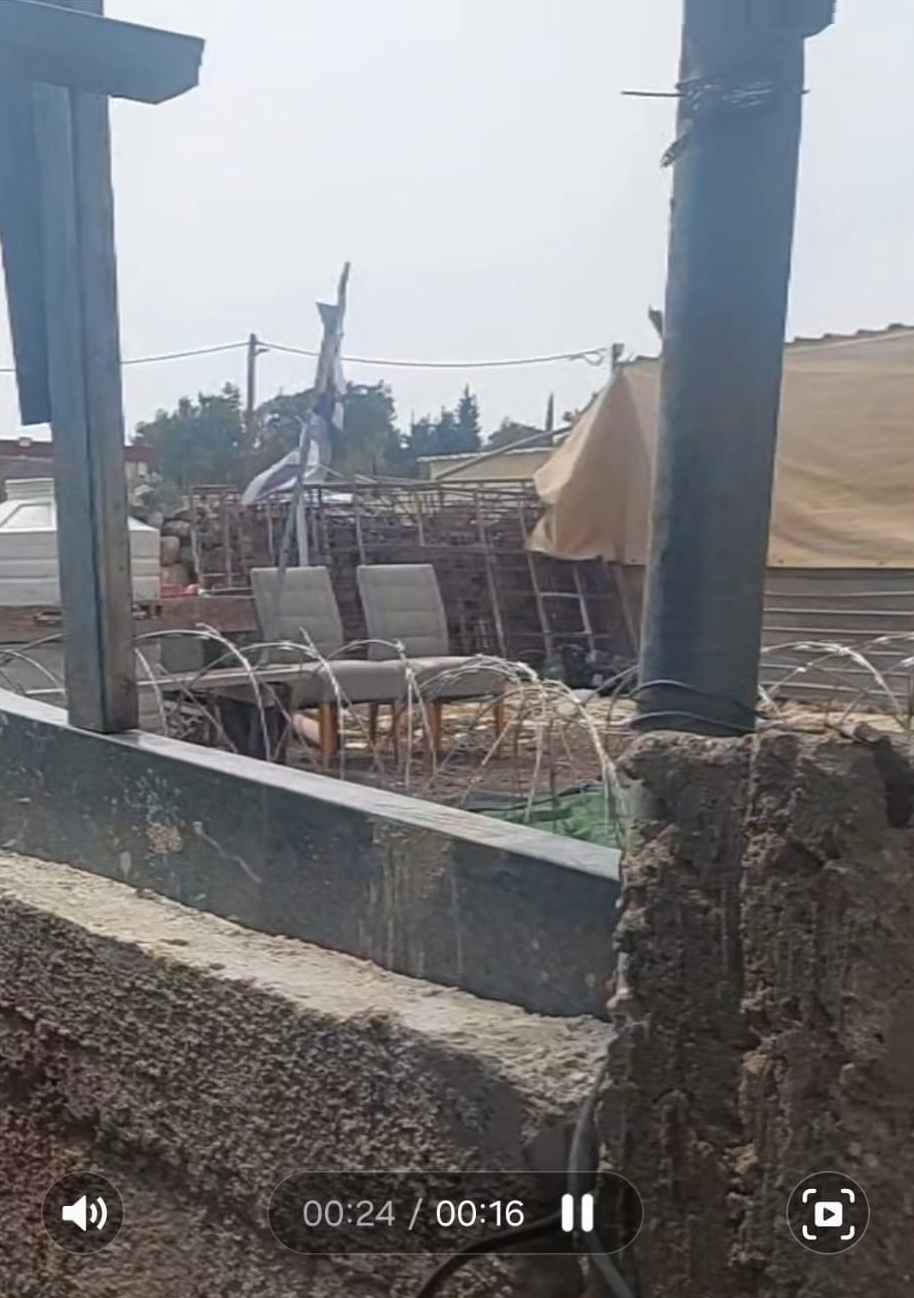 Michal TsadikOct-12-2026Umm al-Khair - Concertina wire and fences
-
