
Hebron, Sansana, South Hebron Hills, Wed 26.3.08, Morning
Meitar – Sansana CP
It is 6:30am, a bus of families who wish to visit prisoners awaits. Tens of farmers were not allowed to pass and were sent home. This was done even though their pass permits are valid till mid June. Shlomi says that their employers must have spoke to the Israeli employment office in order to cancel their permits. Shlomi sends the farmers, who say that in the other checkpoints the passage is allowed, to the Civilian Administration in Hebron.
On the Israeli side of the checkpoint the drivers say that 300 farmers were denied entrance today and the day before. This is because the employers has stopped paying for the permits (later we have spoke with Tarek fron the Civilian Administration who authenticate that claim). No one has bothered to notify the farmers who have risen early came to the checkpoint and waited for no reason.
7:00 am – from the speakers at the checkpoint shouts in Hebrew are being uttered: "do you understand what I am saying to you? Take out all the things that you have in your bags!" The workers take of their shoes, coats and belts. The isolation zone is covered by a green cloth so it is impossible to see what is happening in it.
7:10 am – we left the checkpoint. The visitors buss remained in the same place. When we pass there in our way back – the place is empty. It is 9:40. During our tour Zippi spoke to Nasser, a "Tayaush" and "Betzelem" activist, who needs to press five complaints in the police station at Kiryat Arba. When he arrived to the station he was told that he can't submit all the five in one day and each case should be reported in a different day. In that way every submission of a complaint requires two trips and waste of money, valuable time and a day work.
Road 60
7:30am – there is no army at Sheep junction and Dura Al-Fawar.
Two Military command cars are located on road 60 a few meters away from each other. There were still present at 8:30.
Hebron
7:45am – the Palestinian children (who are restricted from motor passage here) are walking to school on the road.
At the pharmaceutical check point.
Two CPT volunteers. The men who pass the check point are required to open their jackets, even though they just passed through the magno-meter. A soldier examines a child's bag that looks like he is a second grader. During our stay at the checkpoint all the passers are required to open their bag for the soldier. A child arrives on a wheelchair. The CPT volunteer opens him the barbed wire gate. The volunteer says that most of the people who have passed were not checked and that that this morning was relatively good. He says that in his opinion it is absurd that three weeks ago the school principal arrived to thank the soldiers because they have not checked anybody for two days. He think that it is madness that he should thank somebody for allowing him to move freely in his own city. (if you don't count the magno-meter and the encounter with an armed soldier on the morning).
Tel Rumeida – 8:00am – there is almost no movement of people. The two soldiers who are situated there look tired. Machpela cave – No detainees.
Road 60 (on the way back to Beer Sheva)
On Pnay Hever road there is ten Palestinians with passes who are detained from 7:30. Next to them a yellow licensed plate Van awaits. The Van is stuck between the gravel blocks. The reason that the Van won't go is that the exit from Bani-Naim is blocked. They tell us that when the car got stuck the driver went to get a tractor. Meanwhile the soldiers arrived and the drivers refuse to return because of fear that the soldiers will hurt him. The soldiers say that no one can go until the driver will return. One of the detainees (and elderly person with a heart condition who does not feel well) complain before the soldiers and request that all the detainee will be released so they can take the car. In response the soldiers are starting to make accusation that the detainee are linked to recent suicide bombing in Dimmona.
A girl passes who has to go several kilometers in order to get to school.
The detainee calls the driver who says that he is afraid to return. They complain and the soldiers reply them: "speak nicely". The Palestinian says that the driver is afraid because the soldiers grab the people and hits them. None of this would have happen if the Bney Naaim entrance was open. At 8:40 we called the Humanitarian center and Addina told us that she will check what is going on. Mean while we went to see the entrance to Bani Naaim which is blocked. And elderly woman (looks proximally 90 years old) barely moves from one car to another on who await on the other side of the blocked entrance. The village people are blocked this way for about a month. The only exit is located and hours drive away. Someone says that we should live as brethren but when his children will see Jews they will want to drink their blood. He says that the sheep here has better lives than the villagers. A car tries to pass from the side and get stuck.
9:00 am – we return to the detainee, their I.D cards are returned to them after we heard from the soldier radio an order for them to live the area and to go to another location in order to secure a vehicle. They release the car.
Hebron
See all reports for this place-
According to Wye Plantation Accords (1997), Hebron is divided in two: H1 is under Palestinian Authority control, H2 is under Israeli control. In Hebron there are 170,000 Palestinian citizens, 60,000 of them in H2. Between the two areas are permanent checkpoints, manned at all hours, preventing Palestinian movement between them and controlling passage of permit holders such as teachers and schoolchildren. Some 800 Jews live in Avraham Avinu Quarter and Tel Rumeida, on Givat HaAvot and in the wholesale market.
Checkpoints observed in H2:
- Bet Hameriva CP- manned with a pillbox
- Kapisha quarter CP (the northern side of Zion axis) - manned with a pillbox
- The 160 turn CP (the southern side of Zion axis) - manned with a pillbox
- Avraham Avinu quarter - watch station
- The pharmacy CP - checking inside a caravan with a magnometer
- Tarpat (1929) CP - checking inside a caravan with a magnometer
- Tel Rumeida CP - guarding station
- Beit Hadassah CP - guarding station
Three checkpoints around the Tomb of the Patriarchs
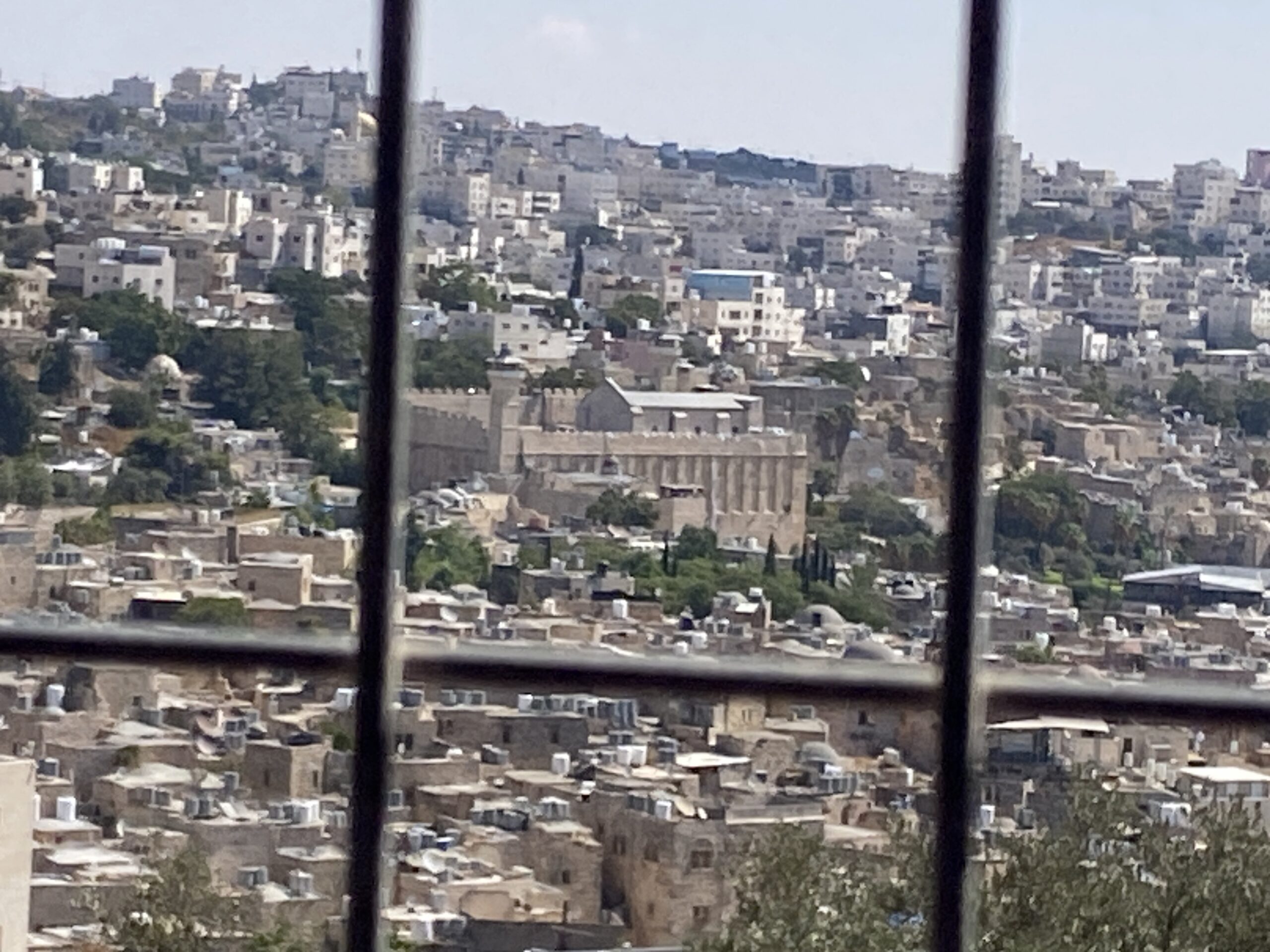 Yael ZoranSep-24-2026Hebron and the Cave of the Patriarchs from Beit Hashalom
-
Meitar checkpoint / Sansana
See all reports for this place-
Meitar Checkpoint / Sansana The checkpoint is located on the Green Line and serves as a border crossing between Israel and the West Bank. It is managed by the Border Crossing Authority of the Defense Ministry. It is comprised of sections for the transfer of goods as well as a vehicle checkpoint (intended for holders of blue identity cards, foreign nationals or diplomats and international organizations). Passing of Palestinians is prohibited, except for those with entry permits to Israel. Palestinians are permitted to cross on foot only. The crossing has a DCO / DCL / DCL / DCL (District Coordination Office), a customs unit, supervision, and a police unit. In the last year, a breach has been opened in the fence, not far from the crossing. This breach is known to all, including the army. There does not appear to be any interest in blocking it, probably as it permits needed Palestinian workers without the bureaucratic permits to get to work in Israel. Food stalls and a parking area economy have been created, but incidents of violent abuse by border police have also been recorded. Updated April 2022
-
South Hebron Hills
See all reports for this place-
South Hebron Hills
South Hebron Hills is a large area in the West Bank's southern part.
Yatta is a major city in this area: right in the border zone between the fertile region of Hebron and its surroundings and the desert of the Hebron Hills. Yatta has about 64,000 inhabitants.
The surrounding villages are called Masafer Yatta (Yatta's daughter villages). Their inhabitants subsist on livestock and agriculture. Agriculture is possible only in small plots, especially near streams. Most of the area consists of rocky terraces.Since the beginning of the 1980s, many settlements have been established on the agricultural land cultivated by the Palestinians in the South Hebron Hills region: Carmel, Maon, Susia, Masadot Yehuda, Othniel, and more. Since the settlements were established and Palestinians cultivation areas have been reduced; the residents of the South Hebron Hills have been suffering from harassment by the settlers. Attempts to evict and demolish houses have continued, along with withholding water and electricity. The military and police usually refrain from intervening in violent incidents between settlers and Palestinians do not enforce the law when it comes to the investigation of extensive violent Jewish settlers. The harassment in the South Hebron Hills includes attacking and attempting to burn residential tents, harassing dogs, harming herds, and preventing access to pastures.
There are several checkpoints in the South Hebron Hills, on Routes 317 and 60. In most of them, no military presence is apparent, but rather an array of pillboxes monitor the villages. Roadblocks are frequently set up according to the settlers and the army's needs. These are located at the Zif Junction, the Dura-al Fawwar crossing, and the Sheep Junction at the southern entrance to Hebron.
Updated April 2022
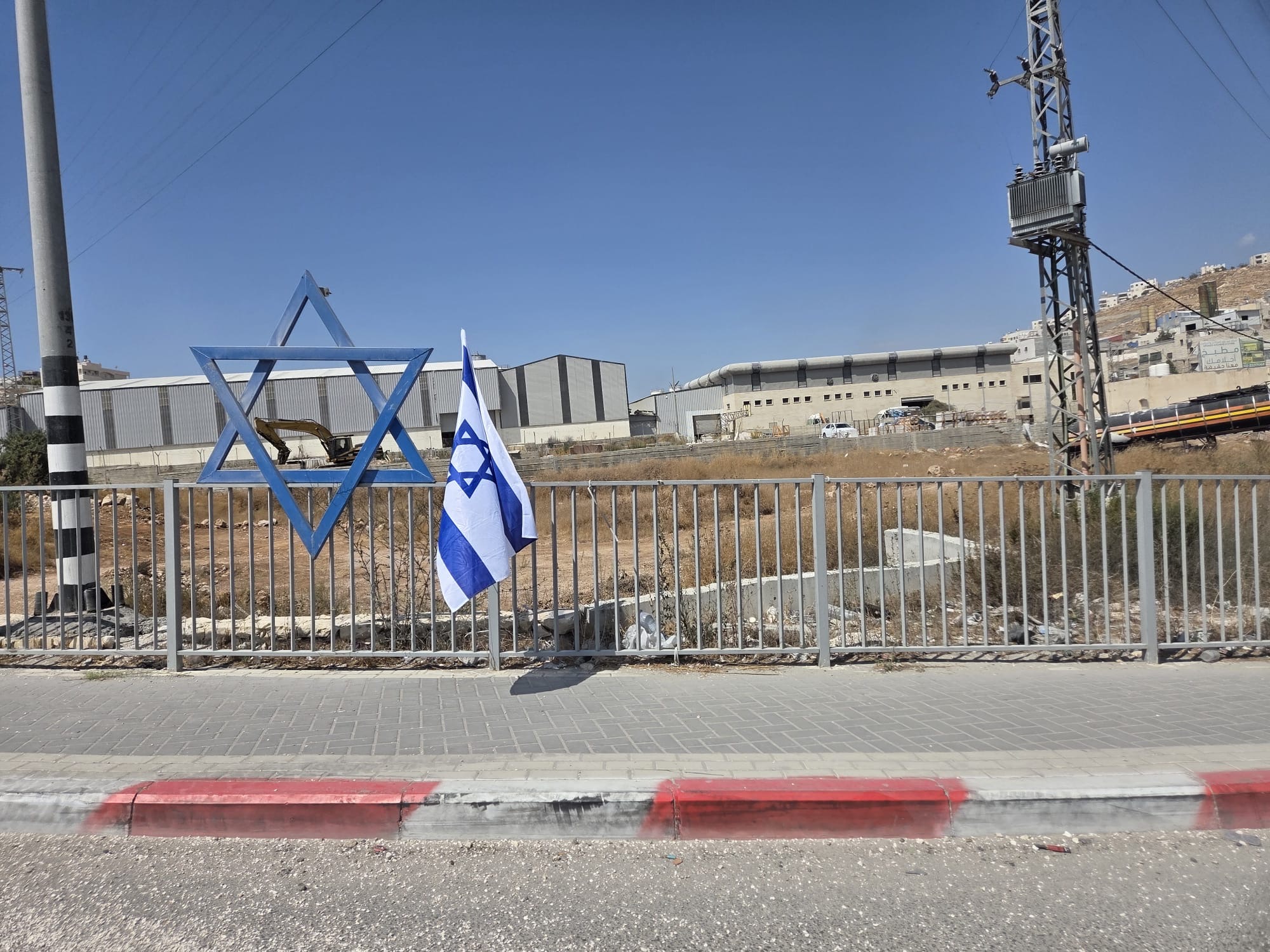 Timna OrevSep-24-2026Replacing flags on Highway 6
-
