
Hebron, South Hebron Hills
It’s a rainy and heavily foggy day – as if the fog could somehow hide the human ugliness of the occupation.
The Palestinians have moved their clock and are now on Daylight Saving Time, like the State of Israel.
Road 60
Traffic is very sparse – Sheep Junction blocked at the entrance to Hebron. No flying checkpoints. The entrance to Hebron is now either from Beit Hagai Junction or from Dura Al Fawar or from the northern entrances to the city, which adds considerable mileage for people coming from Yatta, for example.
New signs in Hebrew and Arabic are placed at the entrance to localities (so the settlers won’t mistake them, God forbid) – these signs were not here a week ago. Along the entire way (about 1 km) from one sign to the other, are concrete blocs painted yellow. We have not solved the riddle – why they are there.
Hebron
The barrier near Tamimi’s home – below the industrial zone of the Kiryat Arba settlement – is still in place, so Palestinians living in this neighborhood must take the long way to “the olive” crossing or to Beit Hagai in order to reach the nearest infirmary.
We went to meet Imad and Faiza – Imad is the person who video-filmed the incident with the shooting soldier. Their home is up on Tel Rumeida. They and their children gave us a very happy welcome. I was even a bit embarrassed. We were there for not even ten minutes when a soldier approached the house, wishing to speak with me. “Where are you from? “Breaking the Silence”? –No, from Machsomwatch”, I answered. “Are you a leftist organization too?” –Yes, I said. “Then you are not allowed here, this is a closed military zone”. –If I don’t leave, will you make trouble for Imad and Faiza? We ask. “No, I’ll not harm them,” he answers. –Okay, I say. So we stay until you show us the order. He calls whoever he calls and goes up to his post to get the written order. At his post, where the attack had taken place, the road to the Habad cemetery is closed. Only pedestrians are now allowed through. In another ten minutes, he brings the order. The soldier himself is nice and polite. I do not take his picture, at his request. He also asks me not to photograph the order itself. What I did manage to see was a photo of the closed zone and the signature of the senior officer of the Central Regional Command, General Roni Numa.
On our way back, bear the Prayers’ Road, we meet Jabar who tells us that for over a month now the soldiers are not present near the schoolhouse, and no stones are being thrown, the army post in the house is unmanned, the soldiers come there only on weekends at times when the people from Kiryat Arba are on their way to prayer. We go for coffee at Jabar’s house, and he shows us this film clip:
https://www.youtube.com/watch?v=-ntmUIDLYvo&feature=em-upload_owner
In this video, the soldier who killed the terrorist shakes hands with Ofer Ohana and Baruch Marzel. We sent it to (reporter) Ohad Hemo.
Below the Hill of the Fathers, the soldiers huddle inside an improvised shack, finding shelter from the rain, no one is out and no one is arrested.
At the House of Contention, two cute Palestinian kids, about 10-years old, approach the soldiers and ask them for packs of potato chips… The soldiers do so gladly – there are soldiers of another kind. (The children would not let us photograph them).
The Jewish Committee of Hebron spends the money it abundantly receives from Minister of Agriculture Uri Ariel on giving new names to streets emptied of Palestinians.
And on decorating with painted Israeli flags concrete blocks, the Gross Square and the entrance to the wholesale market.
And if that is not enough, we found the same thing opposite the Cave of the Fathers.
The Pharmacy Checkpoint and Curve 160 Checkpoint are also being reconstructed… Checkpoints that will divide the city forever.
Too sad for words.
Hebron
See all reports for this place-
According to Wye Plantation Accords (1997), Hebron is divided in two: H1 is under Palestinian Authority control, H2 is under Israeli control. In Hebron there are 170,000 Palestinian citizens, 60,000 of them in H2. Between the two areas are permanent checkpoints, manned at all hours, preventing Palestinian movement between them and controlling passage of permit holders such as teachers and schoolchildren. Some 800 Jews live in Avraham Avinu Quarter and Tel Rumeida, on Givat HaAvot and in the wholesale market.
Checkpoints observed in H2:
- Bet Hameriva CP- manned with a pillbox
- Kapisha quarter CP (the northern side of Zion axis) - manned with a pillbox
- The 160 turn CP (the southern side of Zion axis) - manned with a pillbox
- Avraham Avinu quarter - watch station
- The pharmacy CP - checking inside a caravan with a magnometer
- Tarpat (1929) CP - checking inside a caravan with a magnometer
- Tel Rumeida CP - guarding station
- Beit Hadassah CP - guarding station
Three checkpoints around the Tomb of the Patriarchs
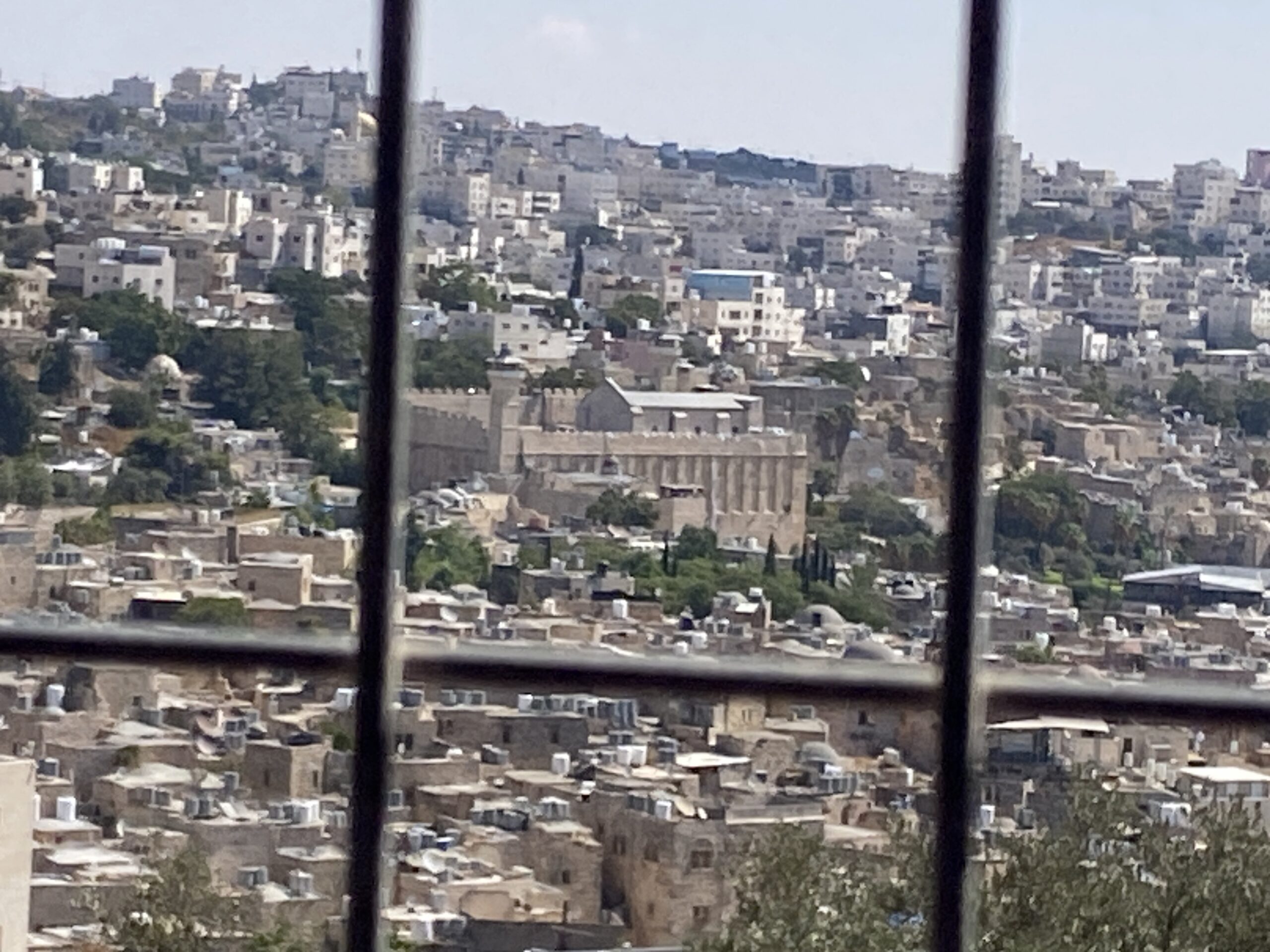 Yael ZoranSep-24-2026Hebron and the Cave of the Patriarchs from Beit Hashalom
-
South Hebron Hills
See all reports for this place-
South Hebron Hills
South Hebron Hills is a large area in the West Bank's southern part.
Yatta is a major city in this area: right in the border zone between the fertile region of Hebron and its surroundings and the desert of the Hebron Hills. Yatta has about 64,000 inhabitants.
The surrounding villages are called Masafer Yatta (Yatta's daughter villages). Their inhabitants subsist on livestock and agriculture. Agriculture is possible only in small plots, especially near streams. Most of the area consists of rocky terraces.Since the beginning of the 1980s, many settlements have been established on the agricultural land cultivated by the Palestinians in the South Hebron Hills region: Carmel, Maon, Susia, Masadot Yehuda, Othniel, and more. Since the settlements were established and Palestinians cultivation areas have been reduced; the residents of the South Hebron Hills have been suffering from harassment by the settlers. Attempts to evict and demolish houses have continued, along with withholding water and electricity. The military and police usually refrain from intervening in violent incidents between settlers and Palestinians do not enforce the law when it comes to the investigation of extensive violent Jewish settlers. The harassment in the South Hebron Hills includes attacking and attempting to burn residential tents, harassing dogs, harming herds, and preventing access to pastures.
There are several checkpoints in the South Hebron Hills, on Routes 317 and 60. In most of them, no military presence is apparent, but rather an array of pillboxes monitor the villages. Roadblocks are frequently set up according to the settlers and the army's needs. These are located at the Zif Junction, the Dura-al Fawwar crossing, and the Sheep Junction at the southern entrance to Hebron.
Updated April 2022
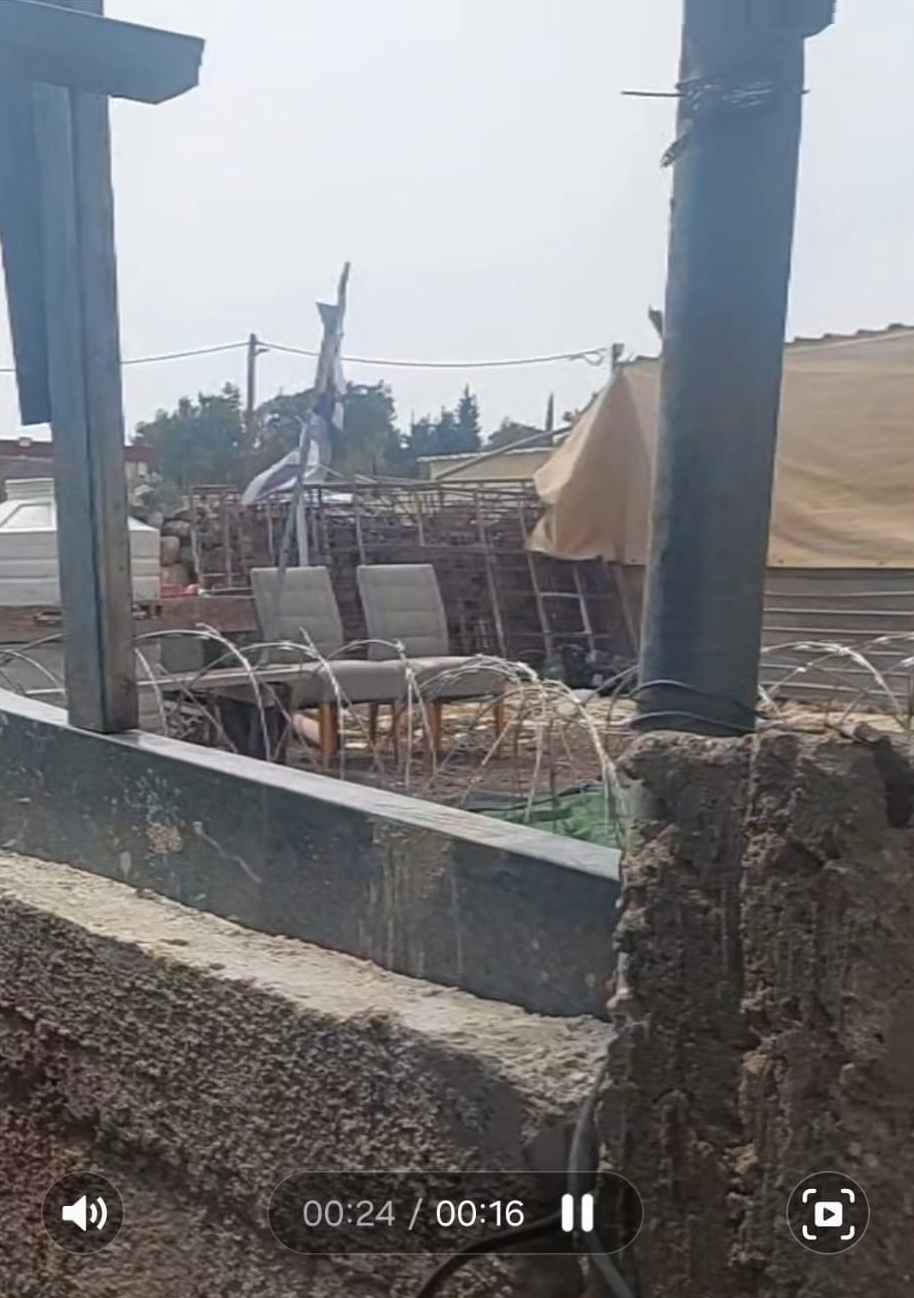 Michal TsadikOct-12-2026Umm al-Khair - Concertina wire and fences
-
