
Hebron, South Hebron Hills, Mon 13.5.13, Morning
Translator: Charles K.
Wickedness and injustice everywhere
We drove first to the destroyed olive grove below the notorious Ma’on Farm and a-Tuwani. The small grove had just begun to recover and during the past harves
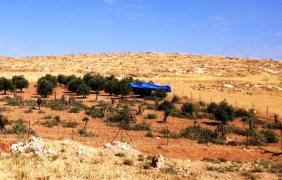
t began for the first time in six years to bear fruit.
Why? Because the settlers had cut down all the trees. After being treated they again began to put out leaves, and even bore fruit.
So, last week, the hidden hand [?] belonging to Tag Mechir (Price Tag)
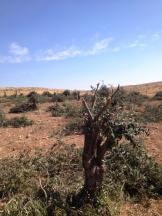
destroyed some seventy trees.
K., the grove’s owner, says/asks: “The cameras surrounding the settlements and Highway 317 that record every passing cat – how come they never see the settlers? Red Cross personnel helped us erect a fence. But any metal snips can cut it.” “Did anyone compensate you?” we ask. [Maybe there are some decent people in this story].
“No one,” he replies. All the organizations and TV channels were there.
But who will compensate people for human natural disasters? Who will compensate people injured by Jewish terror?
Israel’s laws exist only for its citizens. Those subject to its control aren’t entitled to anything.
Hagit telephoned Knesset members from Meretz to have them submit a question. Perhaps some justice will be done as a result of their efforts and our pressure.
Hebron
We decided to drive straight to Giv’at Gal, a settlement located south of Kiryat Arba, adjoining its industrial zone. It’s surrounded on all sides by the Jalous neighborhood. The intentions of the settlers, who continue to add another pre-fab, and then another, are clear. We visited Shakar Tamimi, whom we all saw being arrested for no reason while he was working his land and was immediately released the next day after Judge Sharon Rivlin determined there were no grounds for arresting him.
His groves and lands had been a closed military area for 30 years.
Two years ago he was allowed to return to them.
But in the meantime the settlers and their pre-fabs appeared, and they’re making his life miserable. Two years ago they poisoned dozens of his sheep. “One night” at the same time, he says, “a settler appeared, uprooted the vegetable seedlings and destroyed the drip irrigation lines.” Shakar caught him. The settler begged for his life; Shakar told him he’d take him to Gil’ad Shalit. Instead he brought him to the nearby army base, woke the soldiers (don’t make me describe the condition in which he found the sentries at night) and gave them the settlorist. What punishment was imposed? Only a few days in jail. Shakar stopped complaining because neither the Israeli police nor the army pays any attention to him.
While he was working his field last week, sheep belonging to a man named Avner Cohen, a Jewish neighbor, entered it. Shakar helped Avner removed them Although there had been no argument, settlers suddenly came and began hitting him. [Avner Cohen didn’t try to defend him, of course]
That’s already sufficient reason for the IDF, the police and Kiryat Arba’s security force to turn the victim into the aggressor. They decided to arrest him, his son and his nephew (we saw it all on television). First they took them handcuffed and blindfolded to interrogation in the Kiryat Arba police station, and then moved them to Etzion. The next day, in the court at the Ofer base, the judge heard testimony, viewed on an iPad what had happened and ordered their immediate release. [We saw the order]
But the IDF kept them in a cell in the sun for many more hours, handcuffed. Twelve hours later they put them in a stifling, stinking paddy wagon for six more hours. They were “thrown out” by the roadside only at midnight, caught a taxi and returned home.
Again – who’ll compensate them for the false arrest? Who’ll compensate them for property damage?
Who allows settlers to erect new pre-fabs in a location where signs announce the third stage in the development of the industrial zone and approach the homes and fields of Hebron residents so closely as to deny them freedom of movement?
Why are settlers permitted to harass someone who’s legally working his land?
I’m making you laugh, right? Stupid questions – right?
We also told Shakar Tamimi that we’d try to get law enforcement agencies involved; maybe something will happen.
“I proposed,” he said, “to the neighboring settlers that we organize a soccer game for our children…” And added: “I have faith in the Israeli court”…
Hebron
See all reports for this place-
According to Wye Plantation Accords (1997), Hebron is divided in two: H1 is under Palestinian Authority control, H2 is under Israeli control. In Hebron there are 170,000 Palestinian citizens, 60,000 of them in H2. Between the two areas are permanent checkpoints, manned at all hours, preventing Palestinian movement between them and controlling passage of permit holders such as teachers and schoolchildren. Some 800 Jews live in Avraham Avinu Quarter and Tel Rumeida, on Givat HaAvot and in the wholesale market.
Checkpoints observed in H2:
- Bet Hameriva CP- manned with a pillbox
- Kapisha quarter CP (the northern side of Zion axis) - manned with a pillbox
- The 160 turn CP (the southern side of Zion axis) - manned with a pillbox
- Avraham Avinu quarter - watch station
- The pharmacy CP - checking inside a caravan with a magnometer
- Tarpat (1929) CP - checking inside a caravan with a magnometer
- Tel Rumeida CP - guarding station
- Beit Hadassah CP - guarding station
Three checkpoints around the Tomb of the Patriarchs
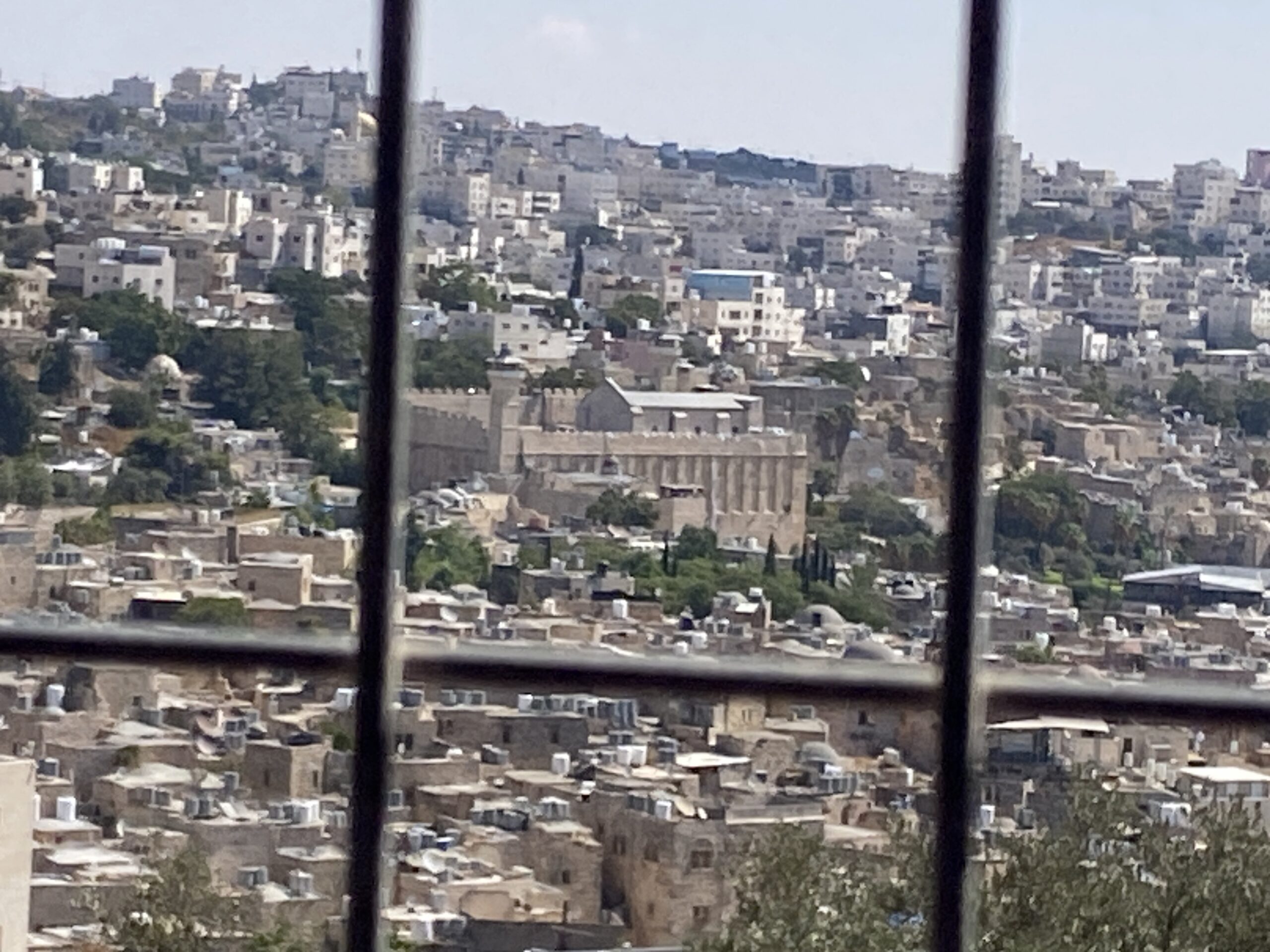 Yael ZoranSep-24-2026Hebron and the Cave of the Patriarchs from Beit Hashalom
-
South Hebron Hills
See all reports for this place-
South Hebron Hills
South Hebron Hills is a large area in the West Bank's southern part.
Yatta is a major city in this area: right in the border zone between the fertile region of Hebron and its surroundings and the desert of the Hebron Hills. Yatta has about 64,000 inhabitants.
The surrounding villages are called Masafer Yatta (Yatta's daughter villages). Their inhabitants subsist on livestock and agriculture. Agriculture is possible only in small plots, especially near streams. Most of the area consists of rocky terraces.Since the beginning of the 1980s, many settlements have been established on the agricultural land cultivated by the Palestinians in the South Hebron Hills region: Carmel, Maon, Susia, Masadot Yehuda, Othniel, and more. Since the settlements were established and Palestinians cultivation areas have been reduced; the residents of the South Hebron Hills have been suffering from harassment by the settlers. Attempts to evict and demolish houses have continued, along with withholding water and electricity. The military and police usually refrain from intervening in violent incidents between settlers and Palestinians do not enforce the law when it comes to the investigation of extensive violent Jewish settlers. The harassment in the South Hebron Hills includes attacking and attempting to burn residential tents, harassing dogs, harming herds, and preventing access to pastures.
There are several checkpoints in the South Hebron Hills, on Routes 317 and 60. In most of them, no military presence is apparent, but rather an array of pillboxes monitor the villages. Roadblocks are frequently set up according to the settlers and the army's needs. These are located at the Zif Junction, the Dura-al Fawwar crossing, and the Sheep Junction at the southern entrance to Hebron.
Updated April 2022
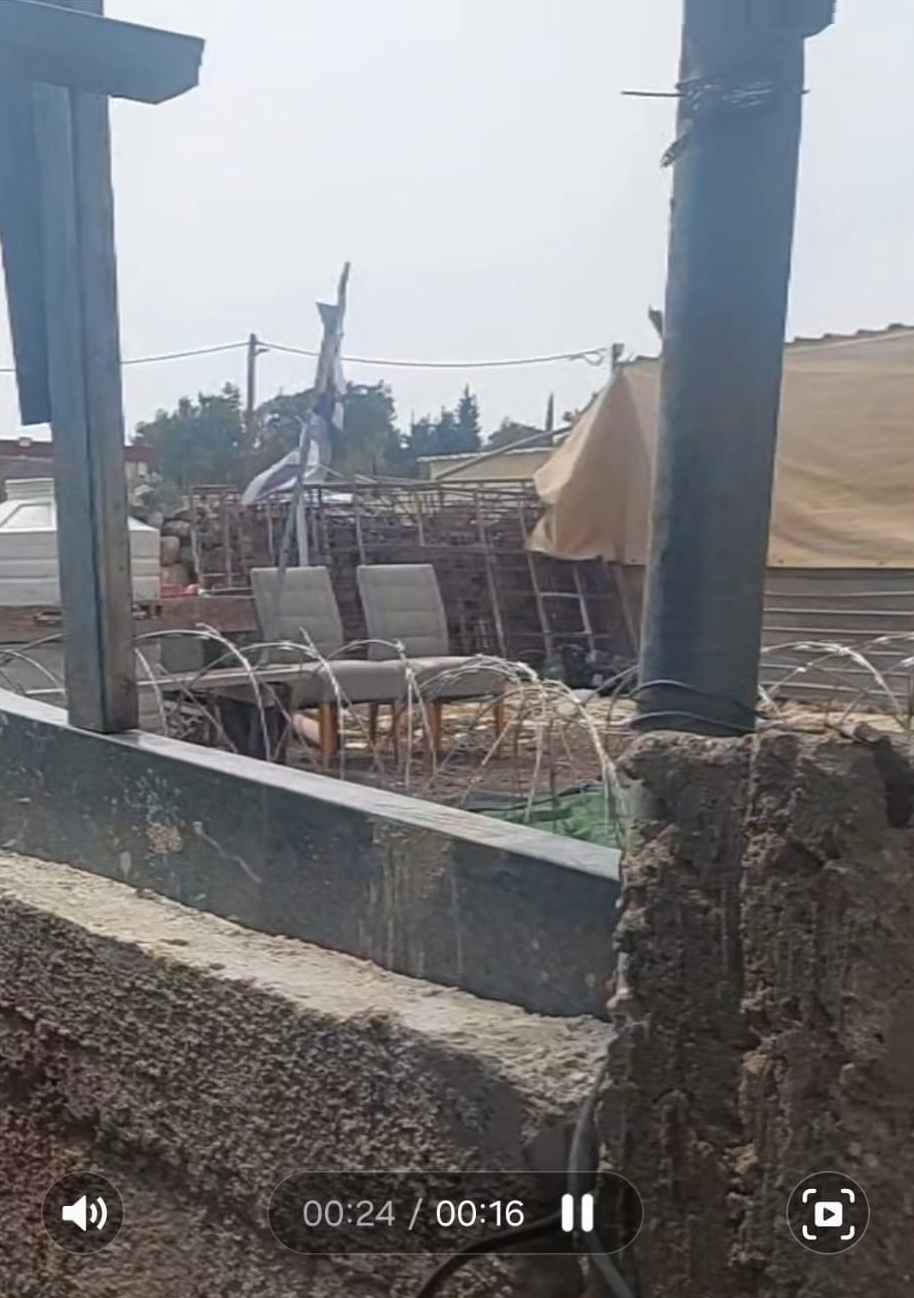 Michal TsadikOct-12-2026Umm al-Khair - Concertina wire and fences
-
