
Hebron, South Hebron Hills, Mon 20.12.10, Morning
Translator: Charles K.
Sansana
By 06:40 there’s no longer a line and many laborers wait on the Israeli side, some lighting bonfires to keep warm. There will be no buses today with relatives of prisoners.
On our way back through the Meitar crossing they always open the side door of the transit to see what we’re bringing – today they saw the tasty rolls we bought next to the al Ibrahamiya school for boys in Hebron.
Route 60
Soldiers guard the illegal “Eshtamo’a” outpost. Their bench, under the prefab, is painted blue. Really cheap. Soldiers below Beit Haggai, at the entrance to Klilikis and also at Hakvasim junction, and they are the only ones who get out of the jeep but don’t stop cars. At the pillbox above Kliklis, where you can see the observation balloon in the air, infrastructure work continues. Three pieces of heavy equipment are still there, apparently building a military base. There’s another military position at Beit Haggai – a low pillbox that wasn’t manned, and now is.
At Shayukh – a school for girls – a red sign has been erected announcing that one is entering the Palestinian Authority, which, of course, we’re not allowed to do. The road here has been straightened, and there are piles of sand on both sides: a ”lovely” checkpoint. The concrete barriers and large boulders are still there, and you still take your life in your hands to cross the road. Still, someone who wants to go from Shayukh to Hebron must, instead of a five-minute ride must drive more than half an hour via Sa’ir to Halhul and from there to Hebron. New graffiti reading “Kahana was right” on many boulders on both sides of the road. Adurayim is also Jewish – above Kiryat Arba, in the direction of Bani Na’im a new settlement or an expansion of Kiryat Araba is creeping along not so slowly – a large shed has been erected there – access is through the Kiryat Arba industrial zone – not exactly a creeping annexation of Palestinian lands.
Hebron
No detainees at any manned checkpoint and the children run to school. We met the CPT women at the Pharmacy checkpoint. Because of the holidays, only three remained and we had a pleasant conversation. One had already been here five years ago, and there hasn’t been anything new under the occupation’s sun.
What is new – the worshipper’s route is open to cars (just Israeli cars?). When Netanya and I were walking a car belonging to settlers roared past…(one of Anat Cohen’s friends). The checkpoint at Beit HaMeriva has been removed – the soldiers are still on the roof. The Palestinians we met on the worshippers route said that most of the harassment in on Friday and Saturday, and asked us to be present on those days, but we can’t. There’s an army jeep opposite the worshippers route, a major standing beside it. His name is Li’al – a pleasant, smiling guy. I report the Palestinians’ complaints about the settlers’ harassment and the officer replies that he understands every humiliation and harassment of Palestinians by soldiers or settlers creates security problems, and he protects Palestinians only because of security issues. To illustrate what he means he tells us the following story: Yesterday in the late afternoon children from Kiryat Arba arrived to play soccer near the “Giborei Khevron” neighborhood. Their ball rolled to the Palestinian side and was lost. The children called their mothers who, in an act of reprisal against the Palestinian children, decided to steal a donkey from the Palestinians! The soldiers stopped the mothers and prevented them from doing so… Only in Hebron could something like that occur. The officer explains to me why pillboxes are required in Area H1 – which is under Palestinian control – for security reasons, of course – and shows me the way to the pillbox in the Jabel Juhar neighborhood (through the Kiryat Arba industrial zone). I ask him about the Tziyon route; he answers that 28 Palestinian cars have permits from the DCO to drive on the route on Giv’at He’Avot. He says they have to blow their horn so the soldier guarding the entrance to the Jewish neighborhood will open the gate for them. It is unnecessary to mention that there is so little freedom of movement that no Palestinian, even if he has a permit, uses that route. The settlers, on the other hand, use it in spades, with nary an ounce of manners or politeness – it’s very dangerous to drive there.
Next to Beit HaMeriva we run into Osama, who tells us that they’re still renovating his house on the worshippers route, and there’s nothing new regarding the judicial process.
This evil, delusional city (because of us…) always leaves a bad taste in the mouth, and a terrible feeling.
Hebron
See all reports for this place-
According to Wye Plantation Accords (1997), Hebron is divided in two: H1 is under Palestinian Authority control, H2 is under Israeli control. In Hebron there are 170,000 Palestinian citizens, 60,000 of them in H2. Between the two areas are permanent checkpoints, manned at all hours, preventing Palestinian movement between them and controlling passage of permit holders such as teachers and schoolchildren. Some 800 Jews live in Avraham Avinu Quarter and Tel Rumeida, on Givat HaAvot and in the wholesale market.
Checkpoints observed in H2:
- Bet Hameriva CP- manned with a pillbox
- Kapisha quarter CP (the northern side of Zion axis) - manned with a pillbox
- The 160 turn CP (the southern side of Zion axis) - manned with a pillbox
- Avraham Avinu quarter - watch station
- The pharmacy CP - checking inside a caravan with a magnometer
- Tarpat (1929) CP - checking inside a caravan with a magnometer
- Tel Rumeida CP - guarding station
- Beit Hadassah CP - guarding station
Three checkpoints around the Tomb of the Patriarchs
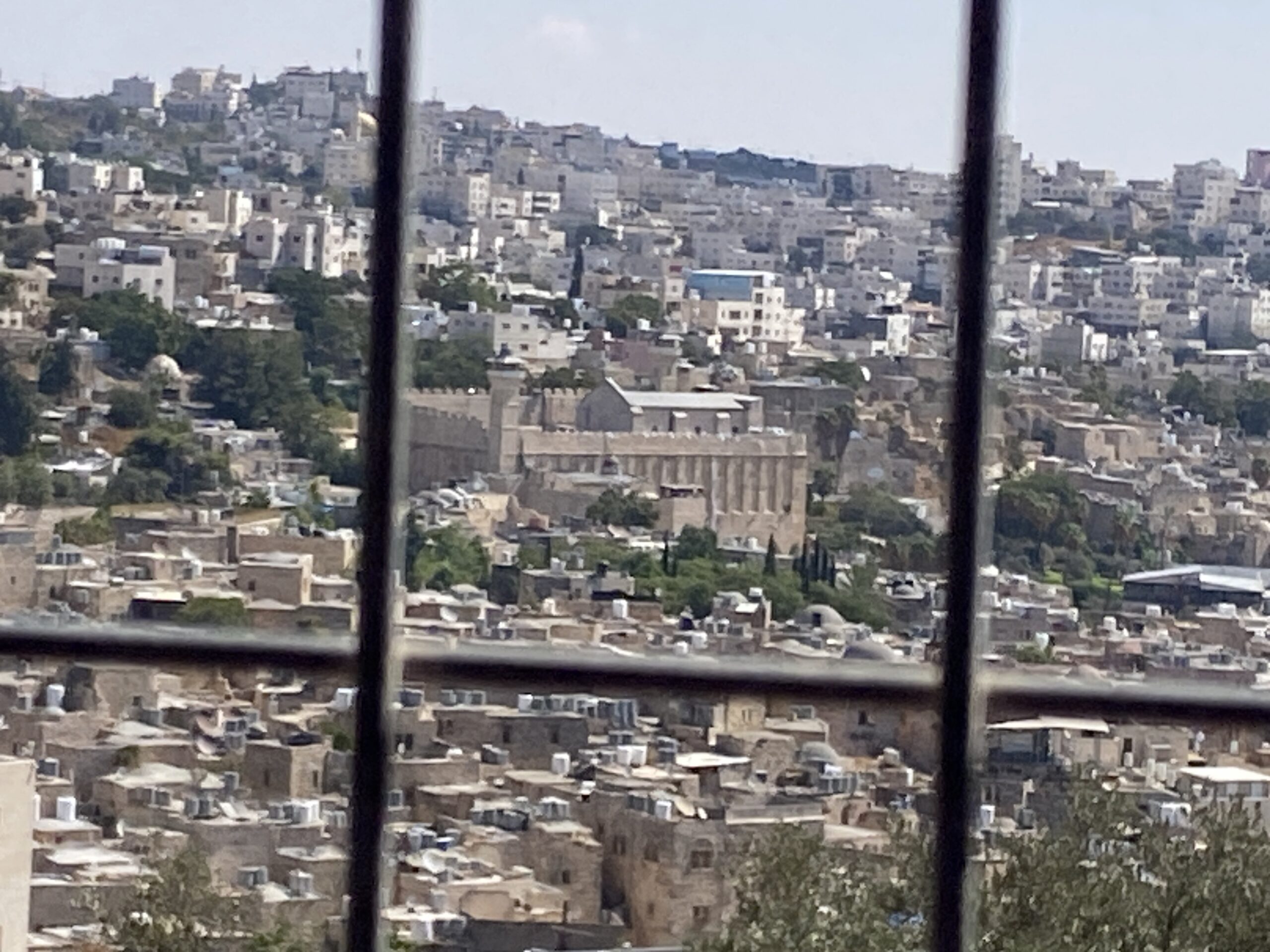 Yael ZoranSep-24-2026Hebron and the Cave of the Patriarchs from Beit Hashalom
-
South Hebron Hills
See all reports for this place-
South Hebron Hills
South Hebron Hills is a large area in the West Bank's southern part.
Yatta is a major city in this area: right in the border zone between the fertile region of Hebron and its surroundings and the desert of the Hebron Hills. Yatta has about 64,000 inhabitants.
The surrounding villages are called Masafer Yatta (Yatta's daughter villages). Their inhabitants subsist on livestock and agriculture. Agriculture is possible only in small plots, especially near streams. Most of the area consists of rocky terraces.Since the beginning of the 1980s, many settlements have been established on the agricultural land cultivated by the Palestinians in the South Hebron Hills region: Carmel, Maon, Susia, Masadot Yehuda, Othniel, and more. Since the settlements were established and Palestinians cultivation areas have been reduced; the residents of the South Hebron Hills have been suffering from harassment by the settlers. Attempts to evict and demolish houses have continued, along with withholding water and electricity. The military and police usually refrain from intervening in violent incidents between settlers and Palestinians do not enforce the law when it comes to the investigation of extensive violent Jewish settlers. The harassment in the South Hebron Hills includes attacking and attempting to burn residential tents, harassing dogs, harming herds, and preventing access to pastures.
There are several checkpoints in the South Hebron Hills, on Routes 317 and 60. In most of them, no military presence is apparent, but rather an array of pillboxes monitor the villages. Roadblocks are frequently set up according to the settlers and the army's needs. These are located at the Zif Junction, the Dura-al Fawwar crossing, and the Sheep Junction at the southern entrance to Hebron.
Updated April 2022
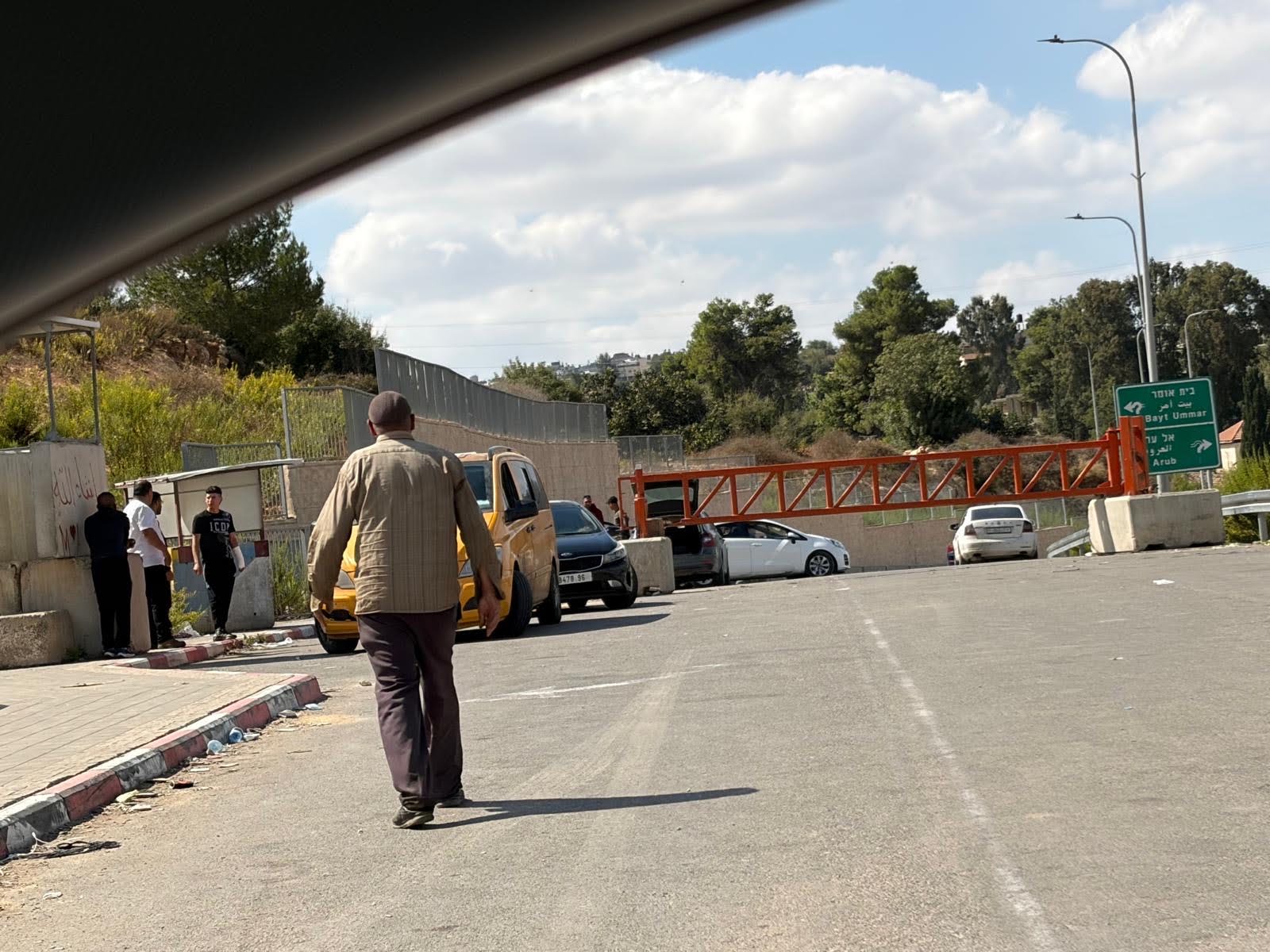 Natanya GinsburgOct-5-2026Beit Ummar - a red barrier to prevent Palestinians from entering or exiting the town
-
