
Hebron, South Hebron Hills, Sun 2.1.11, Morning
Translator: Charles K.
We watched the livelihoods of people and families being trampled, as if it were an Xbox game.
We watched the dignity of a Palestinian citizen being trampled by a reservist at a flying checkpoint.
The account of a father who’s son was run over in Hebron, and more.
Sansana-Meitar crossing
We arrived about 7:00; there was still a short line on the Palestinian side, so we entered. Relatives of prisoners already stood on line, but moved aside for the trickle of laborers who were still arriving.
We started walking back to our vehicle, passing the stands – we didn’t know we that we should have photographed them because there’d soon be no memory of them – people wishing us “Sabah al hir” [Good morning], when suddenly a large force comprising dozens of Border Police soldiers, DCO staff, GSS men (apparently) and others, closed the place off and rushed in “in a daring military operation.” The forces broke though towar the “dangerous criminals,” the stallkeepers at the entrance to the checkpoint. Quickly the goods were confiscated, keys to the vehicles taken, and that was it!! One merchant tried to reclaim his pitas, hoping he’d be allowed to take them with him…but nothing was missed: not a box of candy people tried to hide in a different vehicle, nor a pot nor a can of soda. We couldn’t do anything. The confiscated cars were taken in a caravan to the Etzion DCO. Regarding the merchandise, they have to contact the Palestinian DCO. They can get the vehicles back after paying a large fine, which, of course, they can’t afford.
In the absence of other wars, a battle against peddlers is the best we can do.
Route 60
At the entrance to Karameh – a flying checkpoint. A Hummer ambulance parked on the side and three reservists inspect vehicles with yellow license plates. Soon after we stopped the green ID was returned and the passengers allowed to continue. They stoped next to us and the passenger told us how the soldiers humiliated them. While we were listening to him, the reservist showed up and demonstrated what the hobnailed boot is like: “Get out of the car! You! Now!” he ordered/barked at the man in the car. He was angry that we spoke to the man he’d just inspected at the checkpoint. We stood between them and begged that he allow them to go; we were the ones who stopped them – how were they at fault?! Unwillingly, the soldier released his prey, but hissed at us, “They’re bad enough, but he’ll never get used to Israel-haters like us” – so be it. The officer tried, in fact, to calm him down and shut him up. What I still don’t understand: an ambulance serving as a checkpoint?
We saw no delays at the rest of the junctions and checkpoints, but there were patrols.
Hebron
We arrived at about 9 AM. A new guard contacted his superiors before allowing us to continue. We drove on the worshippers route and an elderly Palestinian, who identified our vehicle, stopped us and told Muhammad his story. He lives near the entrance to Kiryat Arba. Last Wednesday his 10-year-old son was hit by a car driven by a settler. Hit-and-run. The army took the boy to the hospital. He was released, but has bruises and neck pains. The father wrote down the license number of the vehicle, and has its exact description. But the police did nothing. The man’s name is Abdel Rahman al Harbawi. He isn’t accusing the driver of intentionally hitting his son, but is pained that he didn’t stop to help.
We didn’t come across any other incidents.
Additional hearsay testimonies
Leah stopped at the Etzion DCO on her way to Jerusalem, and this is what she was told:
She met a disabled man who isn’t able to get out of his vehicle but came to the DCO from Hebron in order to find out what happened to his 18-year-old son who was arrested last Thursday. He lives near Kiryat Arba. Last Thursday settlers threw rocks at his home. His son, together with three friends, got mad at them. In response the army showed up and arrested them. Leah acceded to his request and went to find out what happened to the son and his three friends. It turned out that the GSS are now holding them. Thus shall be done to he who tries to resist settlers who throw rocks at him.
A man from Bethlehem who went to pray at the Cave of the Patriarchs was stopped at its entrance and told to meet an officer named Gidron at 10:30 at the Etzion DCO. Leah met him waiting there because he’d gotten a note to that effect at the Cave of the Patriarchs checkpoint.
Hebron
See all reports for this place-
According to Wye Plantation Accords (1997), Hebron is divided in two: H1 is under Palestinian Authority control, H2 is under Israeli control. In Hebron there are 170,000 Palestinian citizens, 60,000 of them in H2. Between the two areas are permanent checkpoints, manned at all hours, preventing Palestinian movement between them and controlling passage of permit holders such as teachers and schoolchildren. Some 800 Jews live in Avraham Avinu Quarter and Tel Rumeida, on Givat HaAvot and in the wholesale market.
Checkpoints observed in H2:
- Bet Hameriva CP- manned with a pillbox
- Kapisha quarter CP (the northern side of Zion axis) - manned with a pillbox
- The 160 turn CP (the southern side of Zion axis) - manned with a pillbox
- Avraham Avinu quarter - watch station
- The pharmacy CP - checking inside a caravan with a magnometer
- Tarpat (1929) CP - checking inside a caravan with a magnometer
- Tel Rumeida CP - guarding station
- Beit Hadassah CP - guarding station
Three checkpoints around the Tomb of the Patriarchs
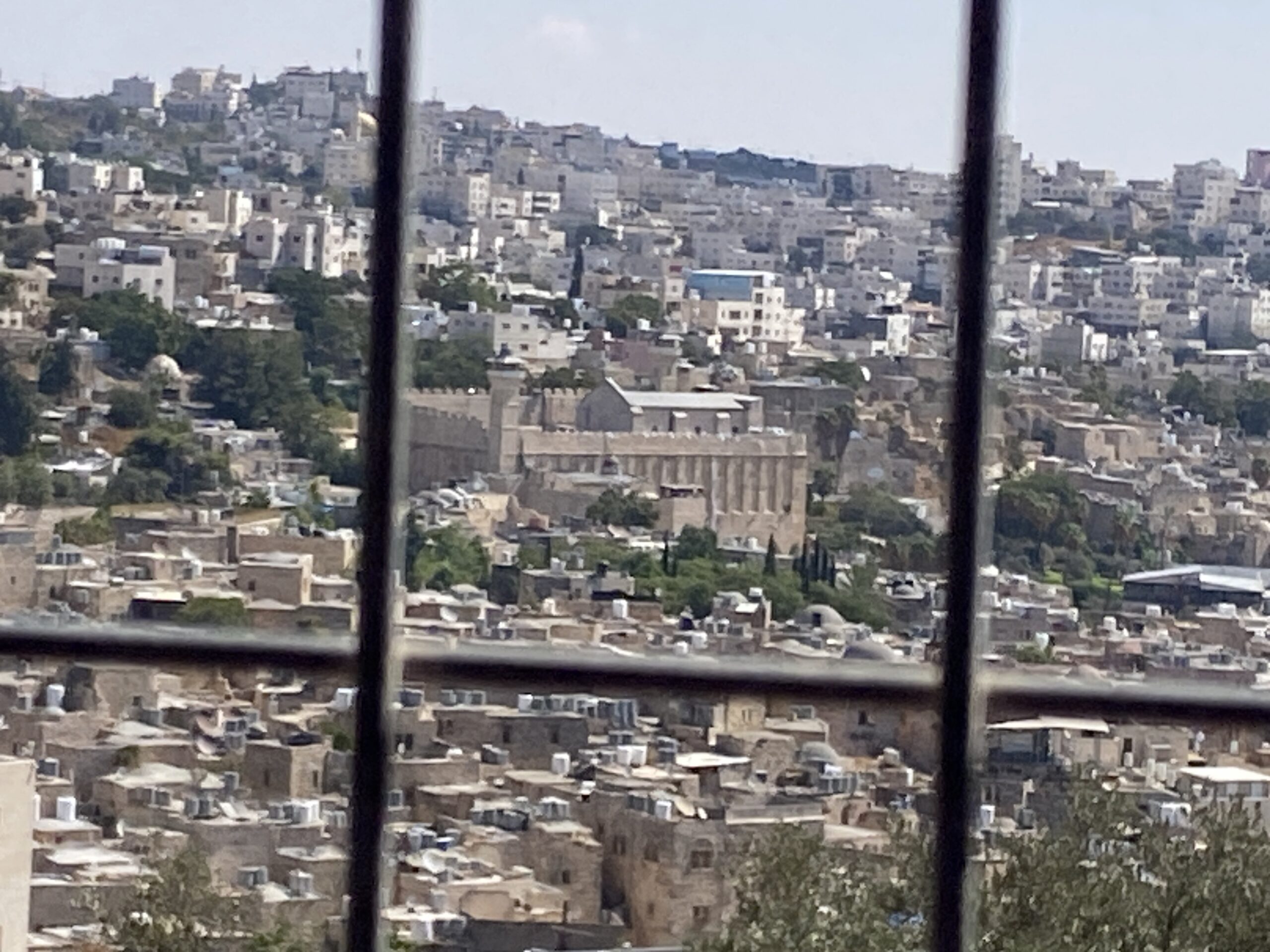 Yael ZoranSep-24-2026Hebron and the Cave of the Patriarchs from Beit Hashalom
-
South Hebron Hills
See all reports for this place-
South Hebron Hills
South Hebron Hills is a large area in the West Bank's southern part.
Yatta is a major city in this area: right in the border zone between the fertile region of Hebron and its surroundings and the desert of the Hebron Hills. Yatta has about 64,000 inhabitants.
The surrounding villages are called Masafer Yatta (Yatta's daughter villages). Their inhabitants subsist on livestock and agriculture. Agriculture is possible only in small plots, especially near streams. Most of the area consists of rocky terraces.Since the beginning of the 1980s, many settlements have been established on the agricultural land cultivated by the Palestinians in the South Hebron Hills region: Carmel, Maon, Susia, Masadot Yehuda, Othniel, and more. Since the settlements were established and Palestinians cultivation areas have been reduced; the residents of the South Hebron Hills have been suffering from harassment by the settlers. Attempts to evict and demolish houses have continued, along with withholding water and electricity. The military and police usually refrain from intervening in violent incidents between settlers and Palestinians do not enforce the law when it comes to the investigation of extensive violent Jewish settlers. The harassment in the South Hebron Hills includes attacking and attempting to burn residential tents, harassing dogs, harming herds, and preventing access to pastures.
There are several checkpoints in the South Hebron Hills, on Routes 317 and 60. In most of them, no military presence is apparent, but rather an array of pillboxes monitor the villages. Roadblocks are frequently set up according to the settlers and the army's needs. These are located at the Zif Junction, the Dura-al Fawwar crossing, and the Sheep Junction at the southern entrance to Hebron.
Updated April 2022
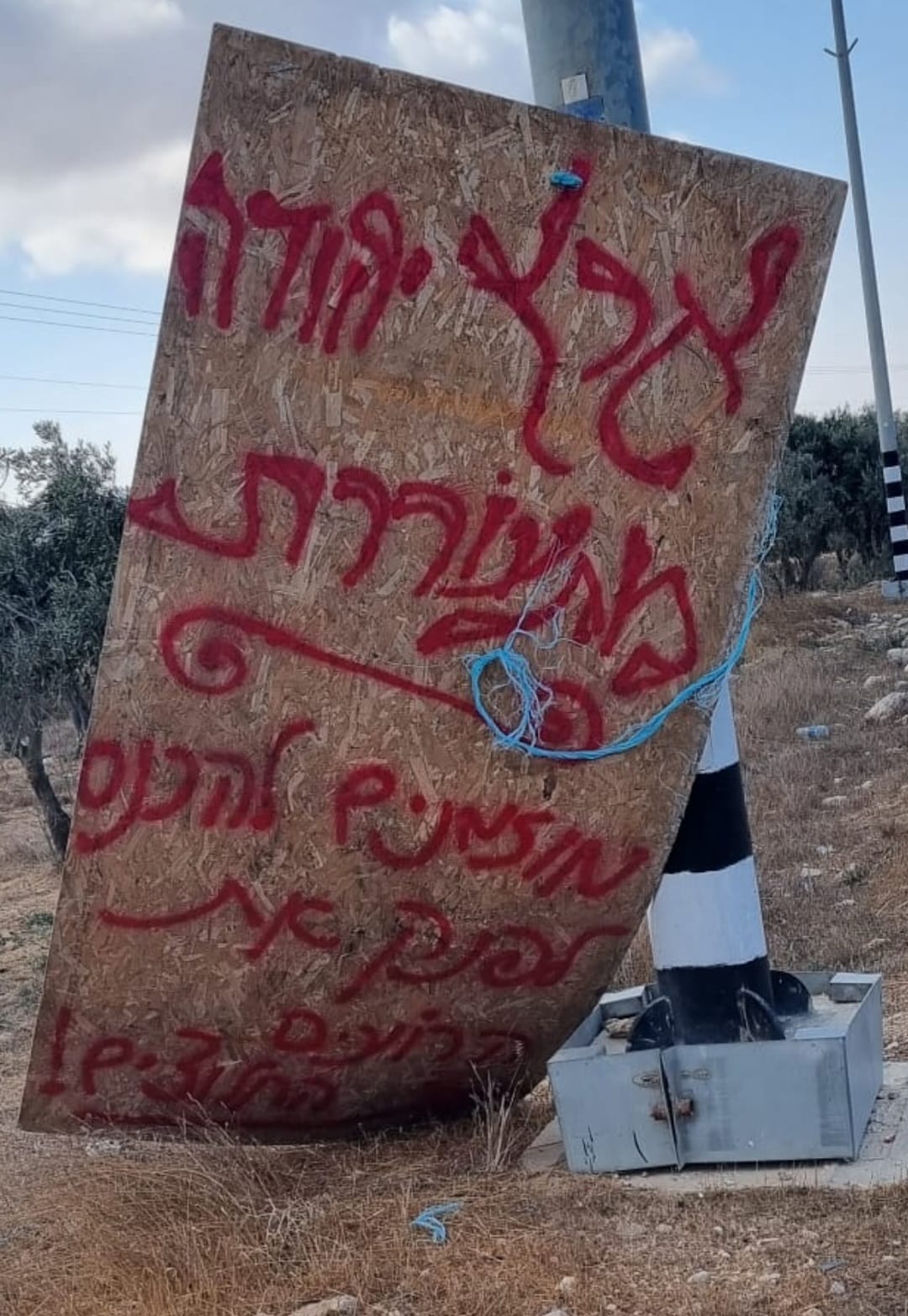 Smadar BeckerOct-17-2026A sign placed by those who call themselves the Pioneer Shepherds, at the outpost adjacent to Qawawis
-
