
Hebron, South Hebron Hills, Sun 8.2.09, Morning
Road 35
Leaving Taqumiya, we head for Hebron.
South Hebron CP is closed (Ibrahim tells us that it was open for only a short while in recent days).
Olive Pathway: open and the soldiers checking. Traffic flows.
Shayuch Shair: A Boarder Police jeep, and four Palestinian detainees. When pass by, on our way back an hour later, they are gone.
Hebron
The House of Dispute is surrounded by a concrete wall and barbed wire. No soldiers seen in the area.
At the entry to the Prayers' Route a Boarder Police jeep blocks the way.
On the turn right, immediately before the Patriarch's Tomb Cave, another Boarder Police Jeep is stationed.
Pharmacy CP: the children's passage to school is held up a bit, and a local elderly stands there and shouts at the soldiers, to let the children through.
Tarpat CP: Two overseas volunteers report that the last hour passed reasonable smoothly, with no special problems.
Tel Rumeida CP: Give'ati soldiers, just back from the fighting in Gaza, animatedly converse with us about this and that, including their vote in the upcoming elections – most of them will vote for Barak, who they applaud for handling the war excellengtly.
They never heard of "MachsomWatch" before and so, weren't aware that talking to us was "prohibited" for them. The children have all gone through now.
We leave Hebron, and head for Halhul east – a rolling CP.
At the CP we talk to the soldier, whose gun is directed right into the cars he checks up.
We suggest that he lower his gum down somewhat, as the children in the car seem terrified. He retors back that his job is to ensure they live in constant uncertainty and fear.
He tells us of the alternative to the "neighbor procedure" (outlawed by the Israel High Court) namely, the "uninvolved procedure": it is the same procedure, under a different name.
He described how he enters a village were stones are thrown with old Daud, making sure that Daud walks ahead of him, so that the stones hit the old man. He claims that the youngsters keep throwing stones even then.
He enquires whether our children served in the army and in what units. He believes that if we had a serious occupation, as his engineer-mother has, we wouldn't have been roaming around the territories.
Cheerful, educated but friendly, we leave the CP.
In Tarqumiya we part with A the driver and hasten to the Beit Govrin gas station
Hebron
See all reports for this place-
According to Wye Plantation Accords (1997), Hebron is divided in two: H1 is under Palestinian Authority control, H2 is under Israeli control. In Hebron there are 170,000 Palestinian citizens, 60,000 of them in H2. Between the two areas are permanent checkpoints, manned at all hours, preventing Palestinian movement between them and controlling passage of permit holders such as teachers and schoolchildren. Some 800 Jews live in Avraham Avinu Quarter and Tel Rumeida, on Givat HaAvot and in the wholesale market.
Checkpoints observed in H2:
- Bet Hameriva CP- manned with a pillbox
- Kapisha quarter CP (the northern side of Zion axis) - manned with a pillbox
- The 160 turn CP (the southern side of Zion axis) - manned with a pillbox
- Avraham Avinu quarter - watch station
- The pharmacy CP - checking inside a caravan with a magnometer
- Tarpat (1929) CP - checking inside a caravan with a magnometer
- Tel Rumeida CP - guarding station
- Beit Hadassah CP - guarding station
Three checkpoints around the Tomb of the Patriarchs
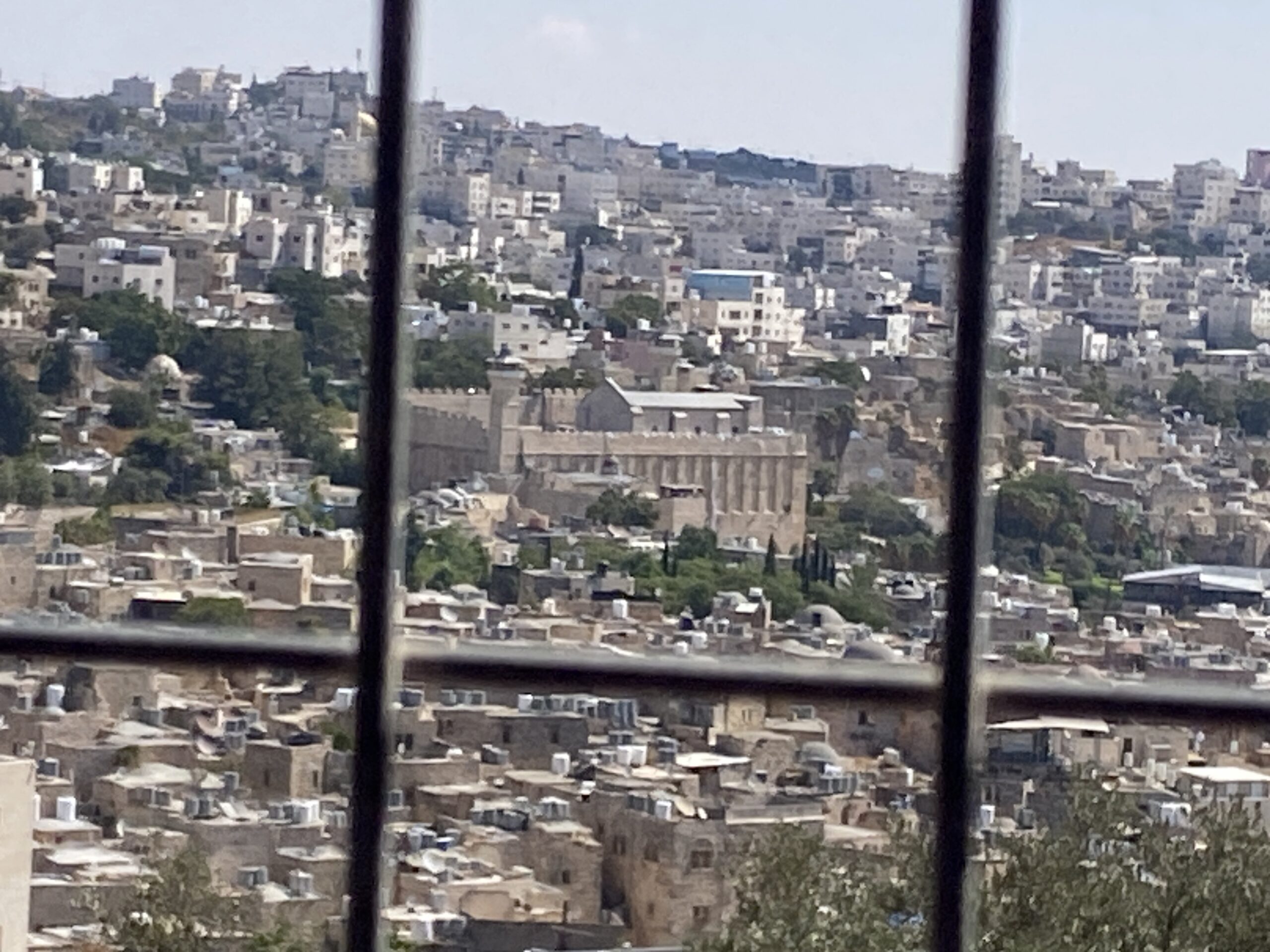 Yael ZoranSep-24-2026Hebron and the Cave of the Patriarchs from Beit Hashalom
-
South Hebron Hills
See all reports for this place-
South Hebron Hills
South Hebron Hills is a large area in the West Bank's southern part.
Yatta is a major city in this area: right in the border zone between the fertile region of Hebron and its surroundings and the desert of the Hebron Hills. Yatta has about 64,000 inhabitants.
The surrounding villages are called Masafer Yatta (Yatta's daughter villages). Their inhabitants subsist on livestock and agriculture. Agriculture is possible only in small plots, especially near streams. Most of the area consists of rocky terraces.Since the beginning of the 1980s, many settlements have been established on the agricultural land cultivated by the Palestinians in the South Hebron Hills region: Carmel, Maon, Susia, Masadot Yehuda, Othniel, and more. Since the settlements were established and Palestinians cultivation areas have been reduced; the residents of the South Hebron Hills have been suffering from harassment by the settlers. Attempts to evict and demolish houses have continued, along with withholding water and electricity. The military and police usually refrain from intervening in violent incidents between settlers and Palestinians do not enforce the law when it comes to the investigation of extensive violent Jewish settlers. The harassment in the South Hebron Hills includes attacking and attempting to burn residential tents, harassing dogs, harming herds, and preventing access to pastures.
There are several checkpoints in the South Hebron Hills, on Routes 317 and 60. In most of them, no military presence is apparent, but rather an array of pillboxes monitor the villages. Roadblocks are frequently set up according to the settlers and the army's needs. These are located at the Zif Junction, the Dura-al Fawwar crossing, and the Sheep Junction at the southern entrance to Hebron.
Updated April 2022
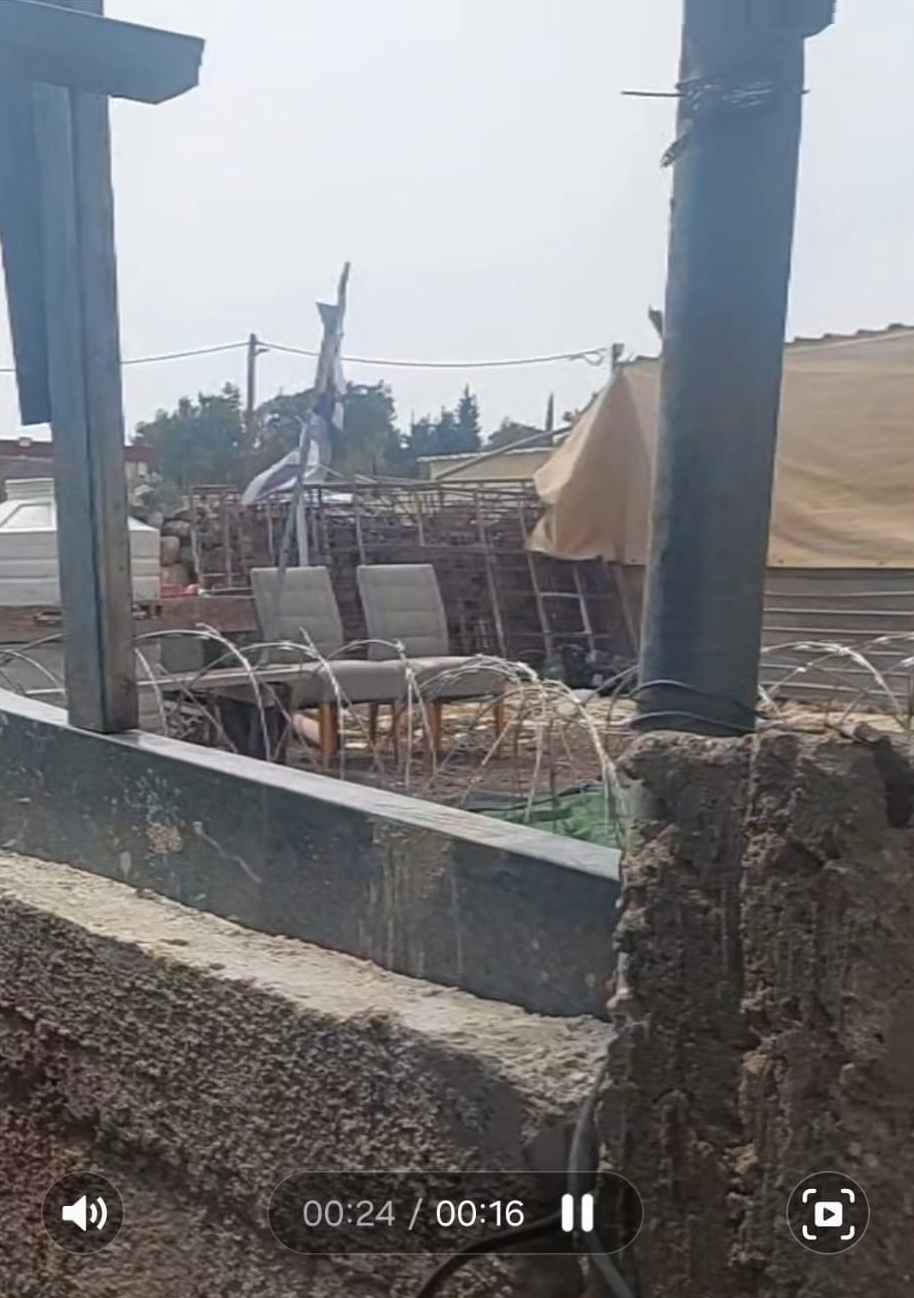 Michal TsadikOct-12-2026Umm al-Khair - Concertina wire and fences
-
