
Hebron, South Hebron Hills, Susiya
The imminent threat of demolitin has been removed, but they still don't sleep well at night. The Ecumenicals are around 24 hours a day. The Susya settlers are surprisingly quiet, and he is wary even of that. As to the negotiations, their expereince taught them to distrust words and agreements. They met the deputy director of the DCO in Beit El, the DCO's legal advisor, and the head of the HEbron region. These people suggested that the Susya inhabitants move 3-4 kilometers or to alternative locations that belong to them anyhow. But the inhabitants are united in determination to stay put, and they know that the powers that be admit that they legally own their lands.
On Aug. 11 or 14 there are supposed to b court hearings in their matter, in continuance of the appeal to the High Court brought by the Rabbis for Human Rights, and they're hoping for the best.
Later ZAzam brings up the relationship with Mitzpe Yair, which had its start as a settlement of just a few loners. Relationships were fine then, and Dalia, Yair's wife, would come over to learn from Azam's wife how to prepare butter and cheese. But eventually the harrassments began, disclosing the true intentions to take over the lands, and the shepherds were often provoked. Later Yair Har-Sinai was murdered by someone from Yata, who was eliminated by Israel's security people. Since 2004, the settlement consists of 8 familes.
Hebron:
MAny visitors in the area of the Cave of the Patriarchs, including many religious Jews taking advantage of the "in between" time from 9th of Ab to the start of Elul. Also Muslim pilgrims from South East Asia, and ITalian tourists who applaud us when they find iout who we are, and want to shake our hands. They have heard of us. With shining eyes they ask "Are you Israeli?", as in disbelief.
At the Pharmacy CP there are cranes, military vehicles, and working equipment. IT is apparently undergoing significant change. 3 Border Police female soldiers stand near the road, and upon seeing us summon us rudelt to approach. Leah refuses, and I start talking to them about respect for the elderly. They explain that they cannot move from their position, but re obligated to find out who we are, and why we are taking pictures. They have not heard of our organization. I insist that there tyelling is out of line.
Three tots with soup buckets approach, wanting to cross over to H1. The soldiers yell refusal. "How will they get home?", I assk. LEt them go around", they answer. "Meaning what?". "Through bend number 160". Brave women …
In all the other CPs and blockades we see no detainees.
Hebron
See all reports for this place-
According to Wye Plantation Accords (1997), Hebron is divided in two: H1 is under Palestinian Authority control, H2 is under Israeli control. In Hebron there are 170,000 Palestinian citizens, 60,000 of them in H2. Between the two areas are permanent checkpoints, manned at all hours, preventing Palestinian movement between them and controlling passage of permit holders such as teachers and schoolchildren. Some 800 Jews live in Avraham Avinu Quarter and Tel Rumeida, on Givat HaAvot and in the wholesale market.
Checkpoints observed in H2:
- Bet Hameriva CP- manned with a pillbox
- Kapisha quarter CP (the northern side of Zion axis) - manned with a pillbox
- The 160 turn CP (the southern side of Zion axis) - manned with a pillbox
- Avraham Avinu quarter - watch station
- The pharmacy CP - checking inside a caravan with a magnometer
- Tarpat (1929) CP - checking inside a caravan with a magnometer
- Tel Rumeida CP - guarding station
- Beit Hadassah CP - guarding station
Three checkpoints around the Tomb of the Patriarchs
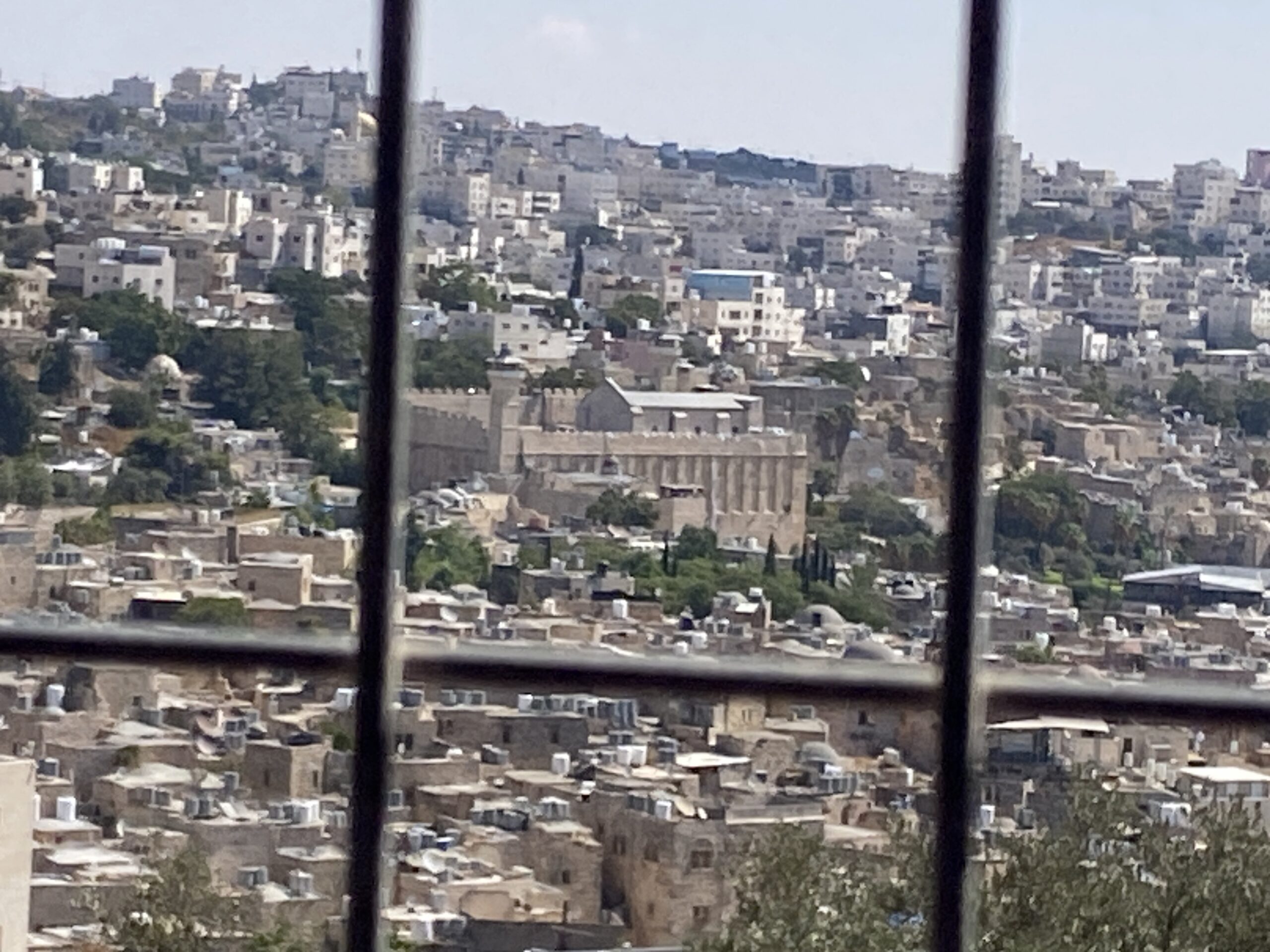 Yael ZoranSep-24-2026Hebron and the Cave of the Patriarchs from Beit Hashalom
-
South Hebron Hills
See all reports for this place-
South Hebron Hills
South Hebron Hills is a large area in the West Bank's southern part.
Yatta is a major city in this area: right in the border zone between the fertile region of Hebron and its surroundings and the desert of the Hebron Hills. Yatta has about 64,000 inhabitants.
The surrounding villages are called Masafer Yatta (Yatta's daughter villages). Their inhabitants subsist on livestock and agriculture. Agriculture is possible only in small plots, especially near streams. Most of the area consists of rocky terraces.Since the beginning of the 1980s, many settlements have been established on the agricultural land cultivated by the Palestinians in the South Hebron Hills region: Carmel, Maon, Susia, Masadot Yehuda, Othniel, and more. Since the settlements were established and Palestinians cultivation areas have been reduced; the residents of the South Hebron Hills have been suffering from harassment by the settlers. Attempts to evict and demolish houses have continued, along with withholding water and electricity. The military and police usually refrain from intervening in violent incidents between settlers and Palestinians do not enforce the law when it comes to the investigation of extensive violent Jewish settlers. The harassment in the South Hebron Hills includes attacking and attempting to burn residential tents, harassing dogs, harming herds, and preventing access to pastures.
There are several checkpoints in the South Hebron Hills, on Routes 317 and 60. In most of them, no military presence is apparent, but rather an array of pillboxes monitor the villages. Roadblocks are frequently set up according to the settlers and the army's needs. These are located at the Zif Junction, the Dura-al Fawwar crossing, and the Sheep Junction at the southern entrance to Hebron.
Updated April 2022
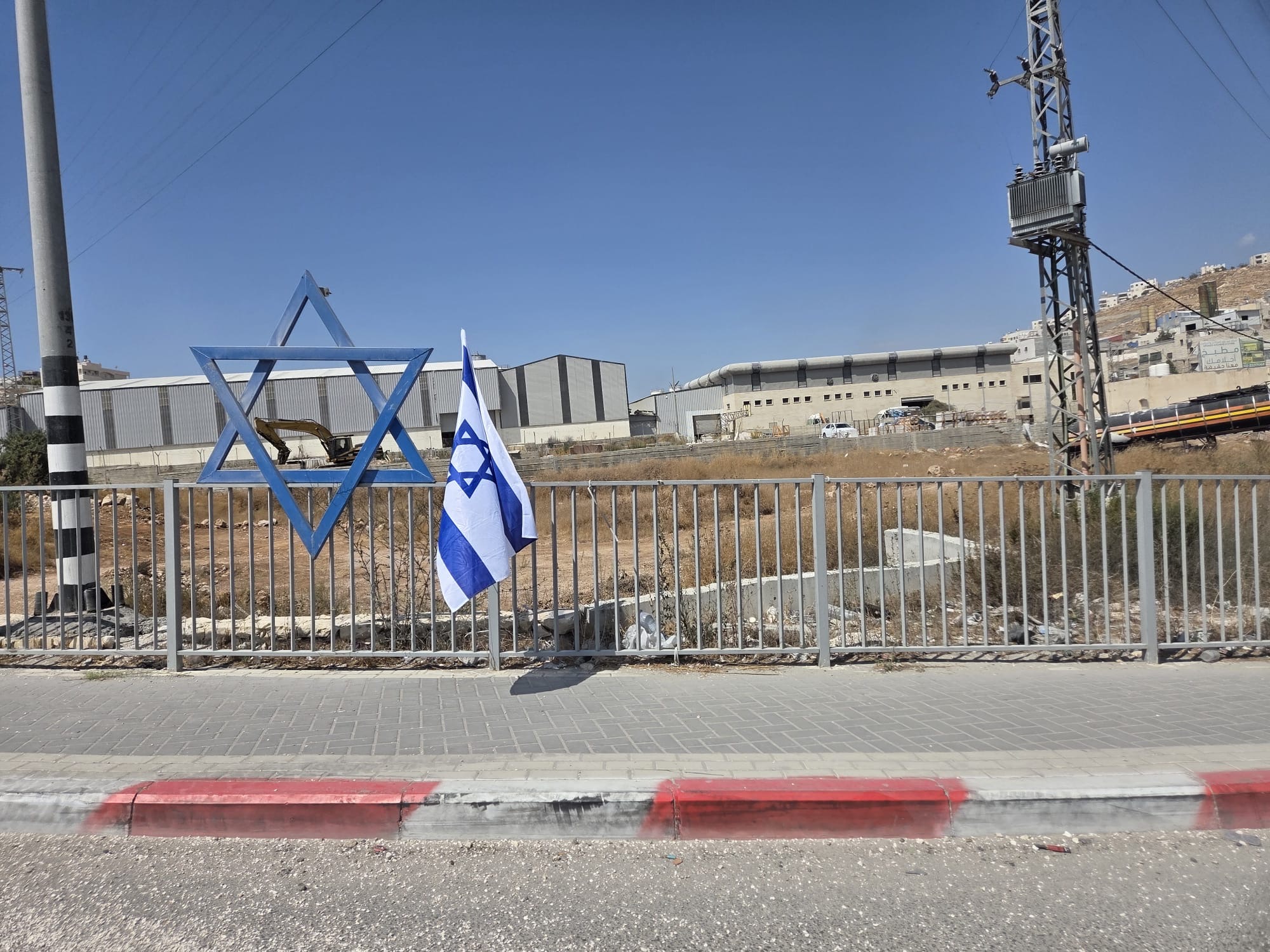 Timna OrevSep-24-2026Replacing flags on Highway 6
-
Susiya
See all reports for this place-
Susiya The Palestinian area lies between the settlement of Susya and a military base. The residents began to settle in areas outside the villages in the 1830s and lived in caves, tents and sukkot. To this day they maintain a traditional lifestyle and their livelihood is based on agriculture and herding. Until the 1948 war, the farmers cultivated areas that extended to the Arad area. As a result of the war, a significant portion of their land left on the Israeli side was lost. After the 1967 war and the Israeli occupation, military camps were established in the area, fire zones and nature reserves were declared, and the land area was further reduced. The Jewish settlement in Susya began in 1979. Since then, there has been a stubborn struggle to remove the remains of Palestinian residents who refuse to leave their place of birth and move to nearby town Yatta. With the development of a tourist site in Khirbet Susya in the late 1980s (an ancient synagogue), dozens of families living in caves in its vicinity were deported. In the second half of the 1990s, a new form of settlement developed in the area - shepherds' farms of individual settlers. This phenomenon increased the tension between the settlers and the original, Palestinian residents, and led to repeated harassment of the residents of the farms towards the Palestinians. At the same time, demolition of buildings and crop destruction by security forces continued, as well as water and electricity prevention. In the Palestinian Susya, as in a large part of the villages of the southern Hebron Mountains, there is no running water, but the water pipe that supplies water to the Susya Jewish settlement passes through it. Palestinians have to buy expensive water that comes in tankers. Solar electricity is provided by a collector system, installed with donation funds. But the frequent demolitions in the villages do not spare water cisterns or the solar panels and power poles designed to transfer solar electricity between the villages. Updated April 2021, Anat T.
-
