
Hebron, South Hebron Hills, Tarqumiya, Tue 11.8.09, Morning
Trans. by Naomi S.
Tarquomiya: when we arrive, all workers have already gone through and there are no families' visits (to Israeli prisons).
Idna-Tarqumiya CP: Pillbox is manned.
On the entryway to Idna, a red signpost was set up, announcing this to be A zone (until today there was no such signpost, and the area was considered B – I hope that it's announcement as A are would mean that residents of Idna, Beit Awwa, and the rest of the villages on this road, leading up to Dahariya, are no longer hustled. At the grocery in Idna, traders who arrived later to the CP complain that no additional lanes are opened on days when there are families' visits. Apart from that, there are no complaints regarding the CP's operation.On the road leading from Tarqumiya CP to the Idna-Tarqumiya junction, serious paving work is being done – the road will lead directly from Halhul to Tarqumiya CP, thus sparing those arriving north of the CP to reach it via Road 35.
Road 35
Pillboxes (x3) are all manner. A Palestinian vehicle on the road. Excellent figs for sale.
The olive pathway is open, and traffic flows on the Halhul-Hebron road.
Road 60
Shayouch Hebron: still blocked and there's no way to cross road 60 – the place is deserted when we drive through.
The same goes for Dura Alfawwar, Sheeps' Junction – whatever was open last week is still open now and there appear to be no changes – all seems sleepy and lifeless.

Hebron
On the road leading to Kiryat Arba we see there is activity in the illegal settlement set up there. There are no detainees at any of the CPs and Hebron seems sad and deserted – we visited all the following CPs and they were all manned by Border Police soldiers and Paratroopers: The House of Dispute; Curve 160; Beit Hadasah; Tarpat; Tel Rumeidah; Patriarchs' Tombs' Cave; Gross Square.
Yesterday night we saw on Ynet that, following the evacuation of an illegal outpost, and in accordance with their "price-tag" policy, settlers harmed Palestinian cars in the Abu Senan neighbourhood, so we wanted to hear some testimonies. However, we were unsuccessful as whoever we asked next to all of these CPs – and we've asked almost everyone who walked past there (not many) – either didn't know or did not want to tell.What we were told of, further up, in the Tel Rumeidah neighbourhood is that yesterday, at around 7pm, settlers threw stones at a local house. furthermore, a TIF patrol van was stoned, too – the Palestinians claimed it was the settlers work – the patrol people themselves said they didn't see who did it, and it could well have been Palestinians too – neither side like us, they said, thanking their good luck, as none was in the vehicle when the stones were hurled at it.
On the Prayers' route, a little past the pillbox next to Kiryat Arba, we walk to the house of a Palestinian who tells us of the damage done to it by settlers, but not yesterday — a week ago .
.
Shouhada St., next to the military base: new signposts.
According to A (Bezelem volunteer), yesterday, at around 5pm, a settlers' mob came out from the direction of the Gross Sq., heading toward Abu Snan neighbourhood – they went past the grey gate there, breaking the windows of three cars parked next to the cemetery. The distance from the wholesale market to those cars is no more than 100m – so they did it all very quickly, then running away and never being caught. Today's most annoying CP is the one in Kapiesha Neighborhood, located where the Zion Route begins. Three Border Police soldiers man the pillbox here 24hrs a day.
Eleven cars now have permits to drive through (last week, it was five!), one soldier examines documents, while the two others open the green/white painted gate. While we're there, two cars drive through. But what is annoying is the interruption inflicted on this neighborhood's residents by the CP's very existence (before it was put up, there was only a blockage). The owners of the local factory are not allowed to use a crane to move merchandise around – a mere 10m separate the yard they used as storage and the factory itself – but the yard is now sealed with concrete blocks and the soldiers will not allow them to move merchandise to the other side, beyond those blocks – nor will they remove the block itself, in order to make things easier… before the CP was put up, this would have been possible. So why?
Well, because removing merchandise between Zone H1 and Zone H2 requires a special permit from the local command HDQ and if there's no such permit, no merchandise can be moved. The factory owners claim they have such permit, the BP soldiers say they don't. If only they were a bit more imaginative or motivated, the crane would have downloaded its load on the right side of the concrete blocks and it would have been possible to move the merchandize on to the factory with a small tractor.In short, the occupation regulations require requesting a permit and there are no exceptions, etc. – and the owners who, until now, did not need to submit any such request seem right irritated. The track, anyway, is allowed to enter Kiryat Arba. Again, we have witnessed the apathy experienced by the Palestinians on every move and turn. We gave the factory's owner the phone number of K, from the local command headquarters', so that he can handle this on his own.
Hebron
See all reports for this place-
According to Wye Plantation Accords (1997), Hebron is divided in two: H1 is under Palestinian Authority control, H2 is under Israeli control. In Hebron there are 170,000 Palestinian citizens, 60,000 of them in H2. Between the two areas are permanent checkpoints, manned at all hours, preventing Palestinian movement between them and controlling passage of permit holders such as teachers and schoolchildren. Some 800 Jews live in Avraham Avinu Quarter and Tel Rumeida, on Givat HaAvot and in the wholesale market.
Checkpoints observed in H2:
- Bet Hameriva CP- manned with a pillbox
- Kapisha quarter CP (the northern side of Zion axis) - manned with a pillbox
- The 160 turn CP (the southern side of Zion axis) - manned with a pillbox
- Avraham Avinu quarter - watch station
- The pharmacy CP - checking inside a caravan with a magnometer
- Tarpat (1929) CP - checking inside a caravan with a magnometer
- Tel Rumeida CP - guarding station
- Beit Hadassah CP - guarding station
Three checkpoints around the Tomb of the Patriarchs
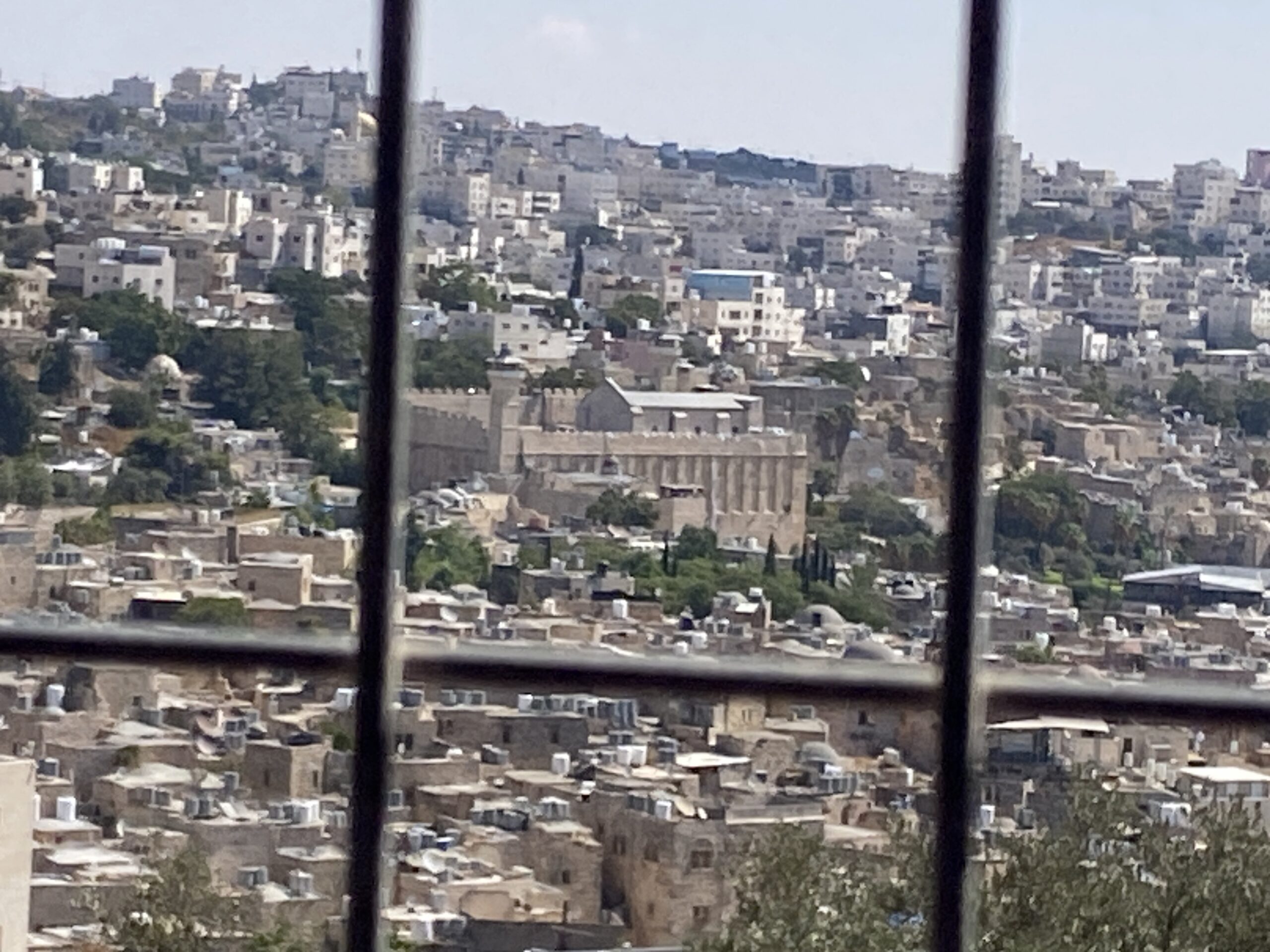 Yael ZoranSep-24-2026Hebron and the Cave of the Patriarchs from Beit Hashalom
-
South Hebron Hills
See all reports for this place-
South Hebron Hills
South Hebron Hills is a large area in the West Bank's southern part.
Yatta is a major city in this area: right in the border zone between the fertile region of Hebron and its surroundings and the desert of the Hebron Hills. Yatta has about 64,000 inhabitants.
The surrounding villages are called Masafer Yatta (Yatta's daughter villages). Their inhabitants subsist on livestock and agriculture. Agriculture is possible only in small plots, especially near streams. Most of the area consists of rocky terraces.Since the beginning of the 1980s, many settlements have been established on the agricultural land cultivated by the Palestinians in the South Hebron Hills region: Carmel, Maon, Susia, Masadot Yehuda, Othniel, and more. Since the settlements were established and Palestinians cultivation areas have been reduced; the residents of the South Hebron Hills have been suffering from harassment by the settlers. Attempts to evict and demolish houses have continued, along with withholding water and electricity. The military and police usually refrain from intervening in violent incidents between settlers and Palestinians do not enforce the law when it comes to the investigation of extensive violent Jewish settlers. The harassment in the South Hebron Hills includes attacking and attempting to burn residential tents, harassing dogs, harming herds, and preventing access to pastures.
There are several checkpoints in the South Hebron Hills, on Routes 317 and 60. In most of them, no military presence is apparent, but rather an array of pillboxes monitor the villages. Roadblocks are frequently set up according to the settlers and the army's needs. These are located at the Zif Junction, the Dura-al Fawwar crossing, and the Sheep Junction at the southern entrance to Hebron.
Updated April 2022
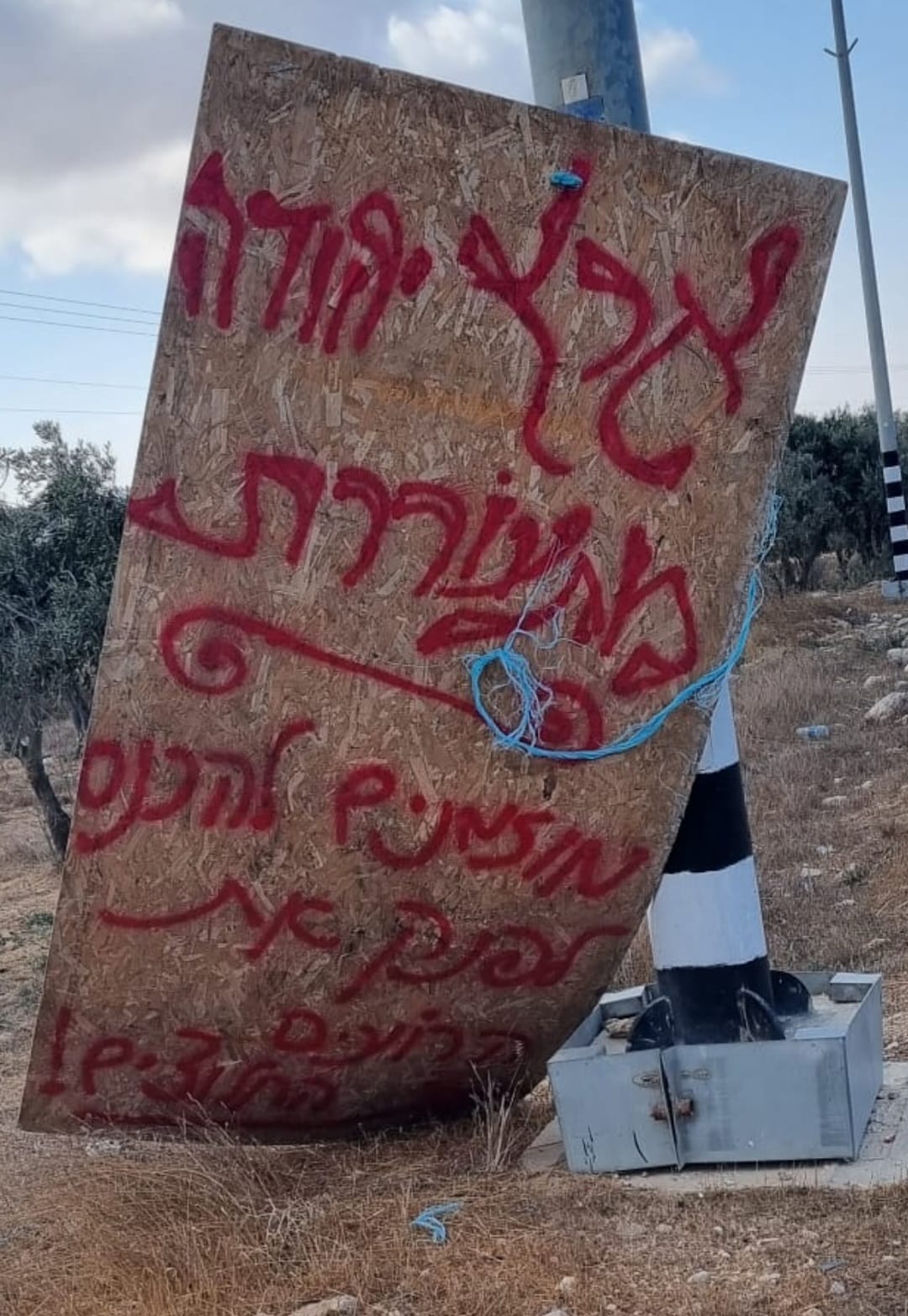 Smadar BeckerOct-17-2026A sign placed by those who call themselves the Pioneer Shepherds, at the outpost adjacent to Qawawis
-
Tarqumiya CP
See all reports for this place-
The Tarqumiya Checkpoint is one of the largest and busiest checkpoints where people and goods cross into Israel. It is located on the Separation Barrier close to the Green Line, on Road 35 (connecting Beer Sheva and Hebron). It is run by the Israel Defense Ministry’s Crossings Administration with civilian secuirty companies running the day to day operations. The checkpoint is indeed open to vehicles in both directions 24/7, but Palestinians are prevented from crossing in vehicles, except in special cases. MachsomWatch activists visit the checkpoint as it opens at 3:45 am, in order to observe the daily passage of nearly 10,000 Palestinian workers. The workers arrive from throughout the Southern West Bank. Our activists report on the tremendous overcrowding at this checkpoint; they have observed young men climbing and scrambling on the fences and roofs of the ‘access cages’. This is how the work day begins for those who ‘build the land of Israel’. updated November 2019
-
