
Hebron, South Hebron Hills, Thu 16.2.12, Morning
Translator: Charles K.
Rain, rain, rain.

It’s no cliché: Things are hard. So I’ll just repeat for the hundredth time: the almond trees don’t care. The man-made ugliness doesn’t spoil nature’s beauty.
Photographs:
Top: New No Entry signs at the turn from the Cave of the Patriarchs plaza to the Worshippers Route.
Center: A new concrete roadblock at the entrance to the Worshippers Route.

Entry to “Permit Holders Only.” Guess who? Bottom More of the settlers’ pearls of wisdom:
Hebron
In Hebron, everything’s as it has always been, except that various new signs have been added. The townspeople also demonstrate their presence by new signs, posters and graffiti.
Almost no one walking on the street because of the weather. The soldiers also  shelter in their slapdash positions, some of which are being “restorated.” The Golani brigade enjoys making its mark here as well. So, what did we see? That the entry of vehicles to the Worshippers Route has been blocked, and a sign erected reading “Entry to Permit Holders Only.” We wonder who holds permits in an area which is already “apartheid.” They also hung a sign at the entry to the route from the Cave of the Patriarchs plaza, “No Entry.” Maybe they’re preparing for Purim, and it will be removed later? And maybe the segregation is simply being extended, as expected. And, as has already occurred in Israel itself, when people discriminate against others because of race, skin color or nationality, and such discrimination becomes legitimized, now, like a boomerang, they’re discriminating because of sex, class and then political views, and without being aware of it we’re now all slipping down the slope…
Later we again saw part of the marked path, as if it were a Nature Protection Society hiking trail – an arrow and graffiti. Where to?! To the Father Abraham spring. And next to it the settlers’ well-known “blessings” to their Palestinian neighbors. And we also saw a note reminding us what they’re doing in Kiryat Arba. One guess? “Deepening roots.”
A Border Police soldier stops us at the entrance to the plaza, politely this time, and asks M., our driver: “Are you Moslem? You know you’re not allowed to stop there and get out of the car.”
“Why must you say that?”, we ask. “What’s changed? We’re aware of the rules of this plaza, we come every day with this vehicle.”
“OK, I’m just reminding you, I have to do that,” the soldier continues quietly and politely.
We left the city and drove to A-Tuwwani.
A-Tuwwani
We wanted to see and hear what was happening with the children the IDF escorts to and from school, to protect them from being attacked by settlers from Ma’on. It’s good we came. “The honeymoon was short.”
For three days after the meeting with the authorities the jeep arrived on time, but that was it. Thursday, when we arrived, it was already 12:30; they were supposed to have been there at 12:00. It was bitterly cold outside, freezing winds on these hills, unceasing rain, the children waiting outside with the Italian peace activists.
We telephone the DCO, after a number of calls obtain the phone number of the officer in charge. Finally. “What?!” he responds in surprise. “The jeep didn’t arrive?! I’ll look into it immediately.”
Another quarter of an hour passes, an eternity in this cold weather. We update the Italians.
Another call to the DCO: “They’ll be there soon,” the officer in charges replies. The children have already lit a fire to keep warm.
Another quarter of an hour goes by, another phone call: “The company commander is on the way, he’ll be right there,” replies the DCO officer.
And everyone continues to wait in the cold wind. “What’s going on?!” we ask again. “Operational constraints, he’ll be there right away.” An in fact – an hour late, the jeep that enables the children to get home safely finally arrives.
It’s possible, after all, to call the school principal ahead of time on a day such as this to notify him that that escort will be late, and he should keep the children inside! We suggest that to the IDF. That’s a brilliant solution that no one in the IDF is capable of thinking of, based simply on treating people humanely. We gave the Italians the relevant phone number, to give to the principal, and to pressure for at least this minimum.
On our way back we saw the regional council’s children’s bus next to Sussia. Why can’t a similar solution be arranged jointly with the Palestinian Authority for the non-Jewish children from the southern Hebron hills?! Why?!
Hebron
See all reports for this place-
According to Wye Plantation Accords (1997), Hebron is divided in two: H1 is under Palestinian Authority control, H2 is under Israeli control. In Hebron there are 170,000 Palestinian citizens, 60,000 of them in H2. Between the two areas are permanent checkpoints, manned at all hours, preventing Palestinian movement between them and controlling passage of permit holders such as teachers and schoolchildren. Some 800 Jews live in Avraham Avinu Quarter and Tel Rumeida, on Givat HaAvot and in the wholesale market.
Checkpoints observed in H2:
- Bet Hameriva CP- manned with a pillbox
- Kapisha quarter CP (the northern side of Zion axis) - manned with a pillbox
- The 160 turn CP (the southern side of Zion axis) - manned with a pillbox
- Avraham Avinu quarter - watch station
- The pharmacy CP - checking inside a caravan with a magnometer
- Tarpat (1929) CP - checking inside a caravan with a magnometer
- Tel Rumeida CP - guarding station
- Beit Hadassah CP - guarding station
Three checkpoints around the Tomb of the Patriarchs
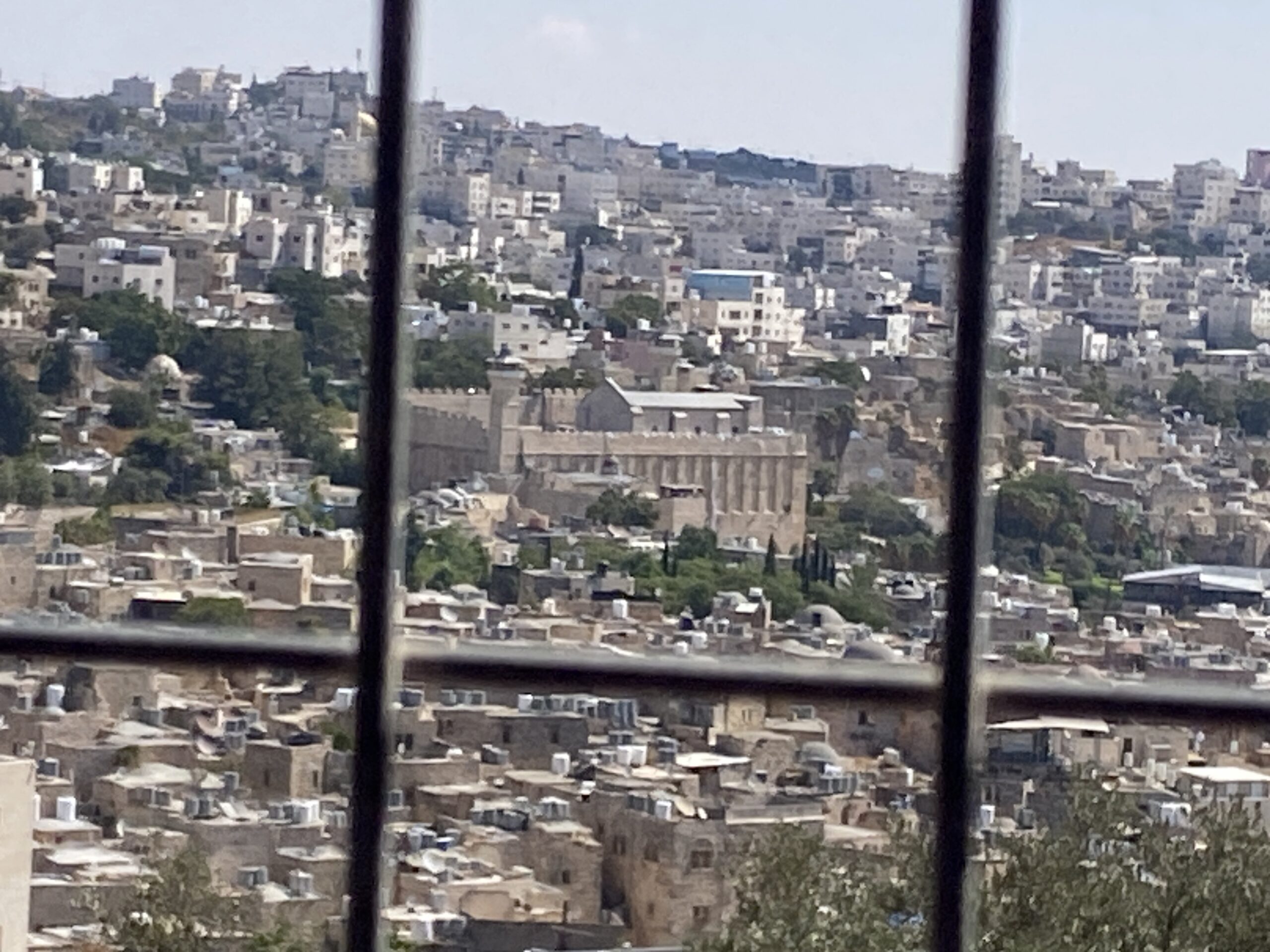 Yael ZoranSep-24-2026Hebron and the Cave of the Patriarchs from Beit Hashalom
-
South Hebron Hills
See all reports for this place-
South Hebron Hills
South Hebron Hills is a large area in the West Bank's southern part.
Yatta is a major city in this area: right in the border zone between the fertile region of Hebron and its surroundings and the desert of the Hebron Hills. Yatta has about 64,000 inhabitants.
The surrounding villages are called Masafer Yatta (Yatta's daughter villages). Their inhabitants subsist on livestock and agriculture. Agriculture is possible only in small plots, especially near streams. Most of the area consists of rocky terraces.Since the beginning of the 1980s, many settlements have been established on the agricultural land cultivated by the Palestinians in the South Hebron Hills region: Carmel, Maon, Susia, Masadot Yehuda, Othniel, and more. Since the settlements were established and Palestinians cultivation areas have been reduced; the residents of the South Hebron Hills have been suffering from harassment by the settlers. Attempts to evict and demolish houses have continued, along with withholding water and electricity. The military and police usually refrain from intervening in violent incidents between settlers and Palestinians do not enforce the law when it comes to the investigation of extensive violent Jewish settlers. The harassment in the South Hebron Hills includes attacking and attempting to burn residential tents, harassing dogs, harming herds, and preventing access to pastures.
There are several checkpoints in the South Hebron Hills, on Routes 317 and 60. In most of them, no military presence is apparent, but rather an array of pillboxes monitor the villages. Roadblocks are frequently set up according to the settlers and the army's needs. These are located at the Zif Junction, the Dura-al Fawwar crossing, and the Sheep Junction at the southern entrance to Hebron.
Updated April 2022
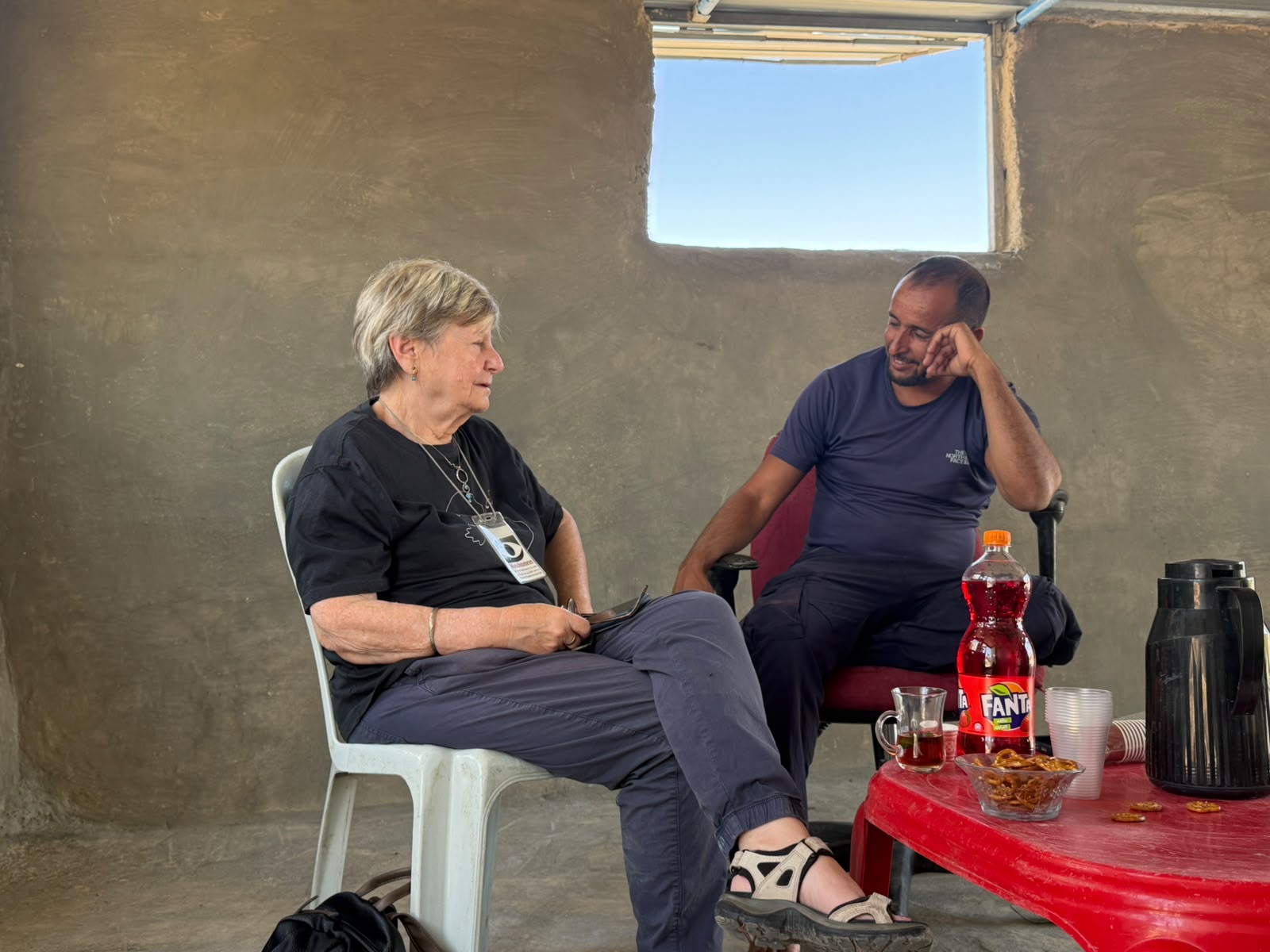 Muhammad D.Oct-10-2026Smadar with Najeh in Umm Qusa
-
