
Hebron, South Hebron Hills, Tue 8.1.13, Morning
Because of the weather we left Beersheva at 7:30, Meitar checkpoint saw just a few stragglers still crossing.
Route 60
fairly quiet, a few trucks the odd private and army vehicle.
At the entrance to Kiryat Arba, (the settler's checkpoint) a hostile guard demands ID's and informs M that he won't let him pass because he is an Arab. M gives him a piece of his mind and after a cursory check of the vehicle the surprised guard slams the door hard and lets us go. We've rarely seen M lose his cool, but it was right on the mark this time.
Hebron
deserted except for children making their way to school on foot in the rain. After an explanation that this demonstrates the lack of public transport and/or the prohibition of Palestinian vehicles in the city, several willingly pose for photographs (to be forwarded separately).
Opposite the upper entrance to the Worshippers' Alley, a platoon(?) of soldiers in full battle gear, several jeeps and an armed personnel carrier are hanging out. We brave the rain and cold to ask what occasion this marks and to our surprise the soldiers are all smiles and tell us that its an exercise and why aren't we staying indoors in the warm.
A small boy collecting sacks in a nearby store-room seems unperturbed by this military presence, until we ask after his well-being (n Arabic(, when the poor child becomes quite alarmed! The soldiers disperse and we continue our round of the ghost town, all the checkpoints are empty, except for the un-staffed blockades.
The flooded streets reported yesterday are now clear. We note that the separation fence near the Border Police post at the Machpela Cave which yesterday had an opening wide enough for a human being, a pram or a wheelchair, has now been closed with bright yellow blocks of concrete.
Route 317
deserted, near the illegal outpost of Avigail there seems to be some building going on near the road. Beersheva is dry but cold. Home sweet home.
Hebron
See all reports for this place-
According to Wye Plantation Accords (1997), Hebron is divided in two: H1 is under Palestinian Authority control, H2 is under Israeli control. In Hebron there are 170,000 Palestinian citizens, 60,000 of them in H2. Between the two areas are permanent checkpoints, manned at all hours, preventing Palestinian movement between them and controlling passage of permit holders such as teachers and schoolchildren. Some 800 Jews live in Avraham Avinu Quarter and Tel Rumeida, on Givat HaAvot and in the wholesale market.
Checkpoints observed in H2:
- Bet Hameriva CP- manned with a pillbox
- Kapisha quarter CP (the northern side of Zion axis) - manned with a pillbox
- The 160 turn CP (the southern side of Zion axis) - manned with a pillbox
- Avraham Avinu quarter - watch station
- The pharmacy CP - checking inside a caravan with a magnometer
- Tarpat (1929) CP - checking inside a caravan with a magnometer
- Tel Rumeida CP - guarding station
- Beit Hadassah CP - guarding station
Three checkpoints around the Tomb of the Patriarchs
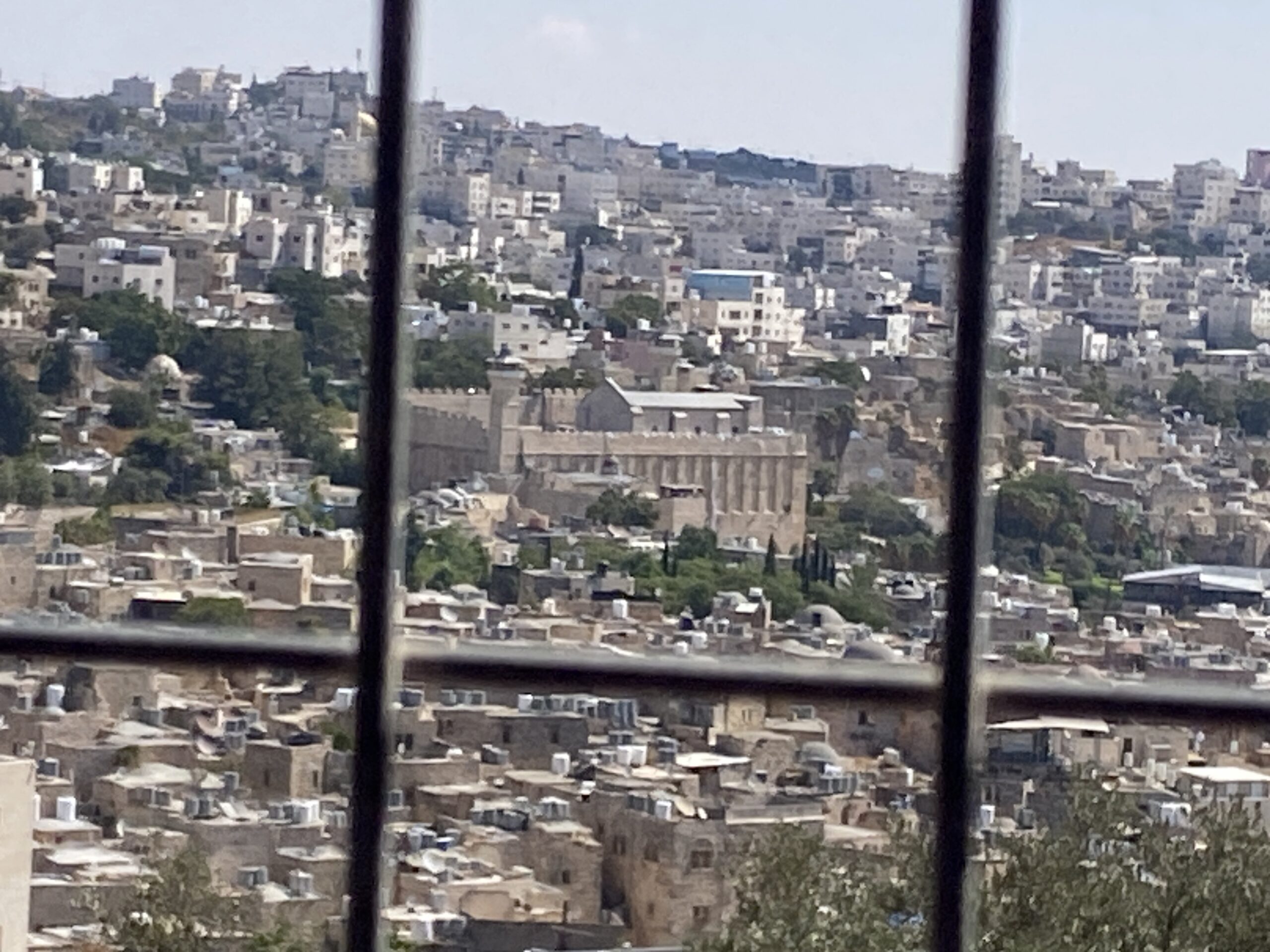 Yael ZoranSep-24-2026Hebron and the Cave of the Patriarchs from Beit Hashalom
-
South Hebron Hills
See all reports for this place-
South Hebron Hills
South Hebron Hills is a large area in the West Bank's southern part.
Yatta is a major city in this area: right in the border zone between the fertile region of Hebron and its surroundings and the desert of the Hebron Hills. Yatta has about 64,000 inhabitants.
The surrounding villages are called Masafer Yatta (Yatta's daughter villages). Their inhabitants subsist on livestock and agriculture. Agriculture is possible only in small plots, especially near streams. Most of the area consists of rocky terraces.Since the beginning of the 1980s, many settlements have been established on the agricultural land cultivated by the Palestinians in the South Hebron Hills region: Carmel, Maon, Susia, Masadot Yehuda, Othniel, and more. Since the settlements were established and Palestinians cultivation areas have been reduced; the residents of the South Hebron Hills have been suffering from harassment by the settlers. Attempts to evict and demolish houses have continued, along with withholding water and electricity. The military and police usually refrain from intervening in violent incidents between settlers and Palestinians do not enforce the law when it comes to the investigation of extensive violent Jewish settlers. The harassment in the South Hebron Hills includes attacking and attempting to burn residential tents, harassing dogs, harming herds, and preventing access to pastures.
There are several checkpoints in the South Hebron Hills, on Routes 317 and 60. In most of them, no military presence is apparent, but rather an array of pillboxes monitor the villages. Roadblocks are frequently set up according to the settlers and the army's needs. These are located at the Zif Junction, the Dura-al Fawwar crossing, and the Sheep Junction at the southern entrance to Hebron.
Updated April 2022
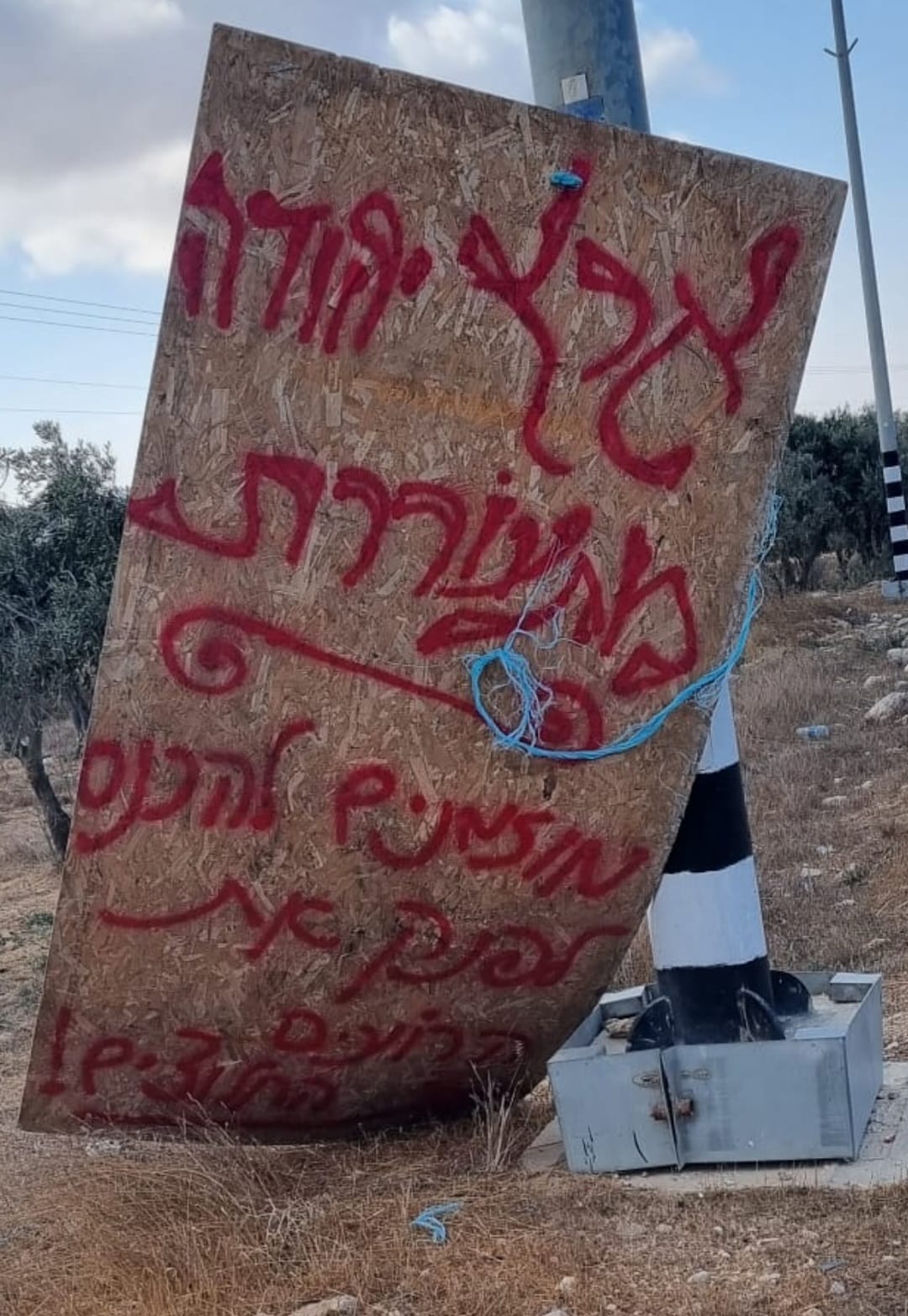 Smadar BeckerOct-17-2026A sign placed by those who call themselves the Pioneer Shepherds, at the outpost adjacent to Qawawis
-
