
Hebron, Sun 12.8.12, Morning
Translating: Naomi Gal
Hebron
Ramadan. We left at nine o’clock. The settlers’ youth are on a break, as well, and they amuse themselves riding around on wagons bridled to donkeys, and as noted by our driver M., the writings on the wagons are in Arabic. M. also showed us the checkpoint behind “Biet Hameriva” (The Contention House), which has become a fortified zone, with a soldier on the building’s roof, surrounded by barbed wire and concrete barricades. A family arrived by car to the checkpoint. A child stepped down with a green ID in his hand and headed to the building. The soldier descended from the roof, checked, and opened the barrier.
This is what we saw.
Hebron
See all reports for this place-
According to Wye Plantation Accords (1997), Hebron is divided in two: H1 is under Palestinian Authority control, H2 is under Israeli control. In Hebron there are 170,000 Palestinian citizens, 60,000 of them in H2. Between the two areas are permanent checkpoints, manned at all hours, preventing Palestinian movement between them and controlling passage of permit holders such as teachers and schoolchildren. Some 800 Jews live in Avraham Avinu Quarter and Tel Rumeida, on Givat HaAvot and in the wholesale market.
Checkpoints observed in H2:
- Bet Hameriva CP- manned with a pillbox
- Kapisha quarter CP (the northern side of Zion axis) - manned with a pillbox
- The 160 turn CP (the southern side of Zion axis) - manned with a pillbox
- Avraham Avinu quarter - watch station
- The pharmacy CP - checking inside a caravan with a magnometer
- Tarpat (1929) CP - checking inside a caravan with a magnometer
- Tel Rumeida CP - guarding station
- Beit Hadassah CP - guarding station
Three checkpoints around the Tomb of the Patriarchs
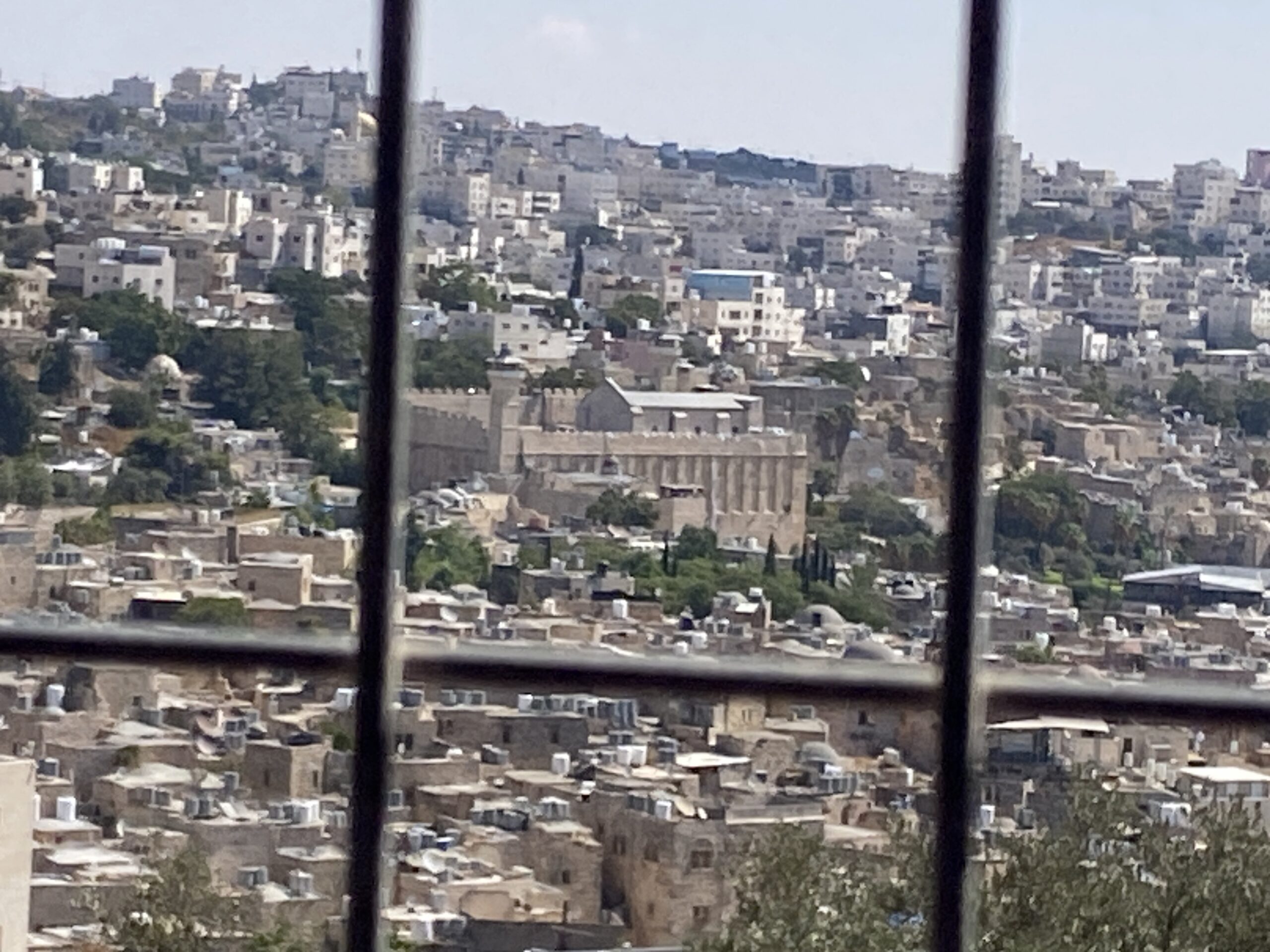 Yael ZoranSep-24-2026Hebron and the Cave of the Patriarchs from Beit Hashalom
-
