
Hebron, Susiya
We went to Susya, simply to be with them.
Nasser was happy about all the support, and tells us that for the time being, only the Border Police hang around there. In the big tent is a large group of the Ecumenical Accompaniers who are there all the time. They rotate. Erella of the Villages Group arrived as well. We also with Azam and Nasser’s father.
A new playground for the children has been built again.
They are actually living in anticipation and uncertainty, for the demolition threat exists, without a specific date. They have only been warned that it will take place in the next two weeks. That is why constant presence is so important there for anyone supporting their struggle. We asked to be notified for we could show up within the half hour, if the demolition forces do arrive.
Hebron
The only structure that had stood in Mitzpe Avichai outpost has been demolished again. Chazon David ‘synagogue’ shows constant signs of life. Among the rags that were once a tent, a table and some prayer books “are holding on”.
At the entrance to the burial site of Baruch Goldstein, Gush Etzyon settlement bloc’s summer camp children of various age groups disembark from two buses. 3 army vehicles, an ambulance, settler Ofer Ohana and his gang secure the children who are led on foot to the House of Contention and from there to the Cave of the Fathers and from there… What a “fun” summer camp. We see no special detentions at the city’s checkpoints, and if there are, they are soon released.
The entrance to the wholesale market has been blocked by a new fence. On second sight, these are two mini-football goal posts. What can one say more about the settler children’s happy childrehood?
At Tarpat Checkpoint there are so many concrete blocks of every possible type and watchtowers as well as signs informing of the existence of a special “humanitarian” crossing for wheelchairs and prams. Besides, Hebron is as always Hebron.
We returned via road 317.
At Zif Junction we met T. and his daughter R. The efforts to have her accepted to study for her doctorate in mathematics at Ben Gurion University persist. Hopefully nothing will stand in the way.
Hebron
See all reports for this place-
According to Wye Plantation Accords (1997), Hebron is divided in two: H1 is under Palestinian Authority control, H2 is under Israeli control. In Hebron there are 170,000 Palestinian citizens, 60,000 of them in H2. Between the two areas are permanent checkpoints, manned at all hours, preventing Palestinian movement between them and controlling passage of permit holders such as teachers and schoolchildren. Some 800 Jews live in Avraham Avinu Quarter and Tel Rumeida, on Givat HaAvot and in the wholesale market.
Checkpoints observed in H2:
- Bet Hameriva CP- manned with a pillbox
- Kapisha quarter CP (the northern side of Zion axis) - manned with a pillbox
- The 160 turn CP (the southern side of Zion axis) - manned with a pillbox
- Avraham Avinu quarter - watch station
- The pharmacy CP - checking inside a caravan with a magnometer
- Tarpat (1929) CP - checking inside a caravan with a magnometer
- Tel Rumeida CP - guarding station
- Beit Hadassah CP - guarding station
Three checkpoints around the Tomb of the Patriarchs
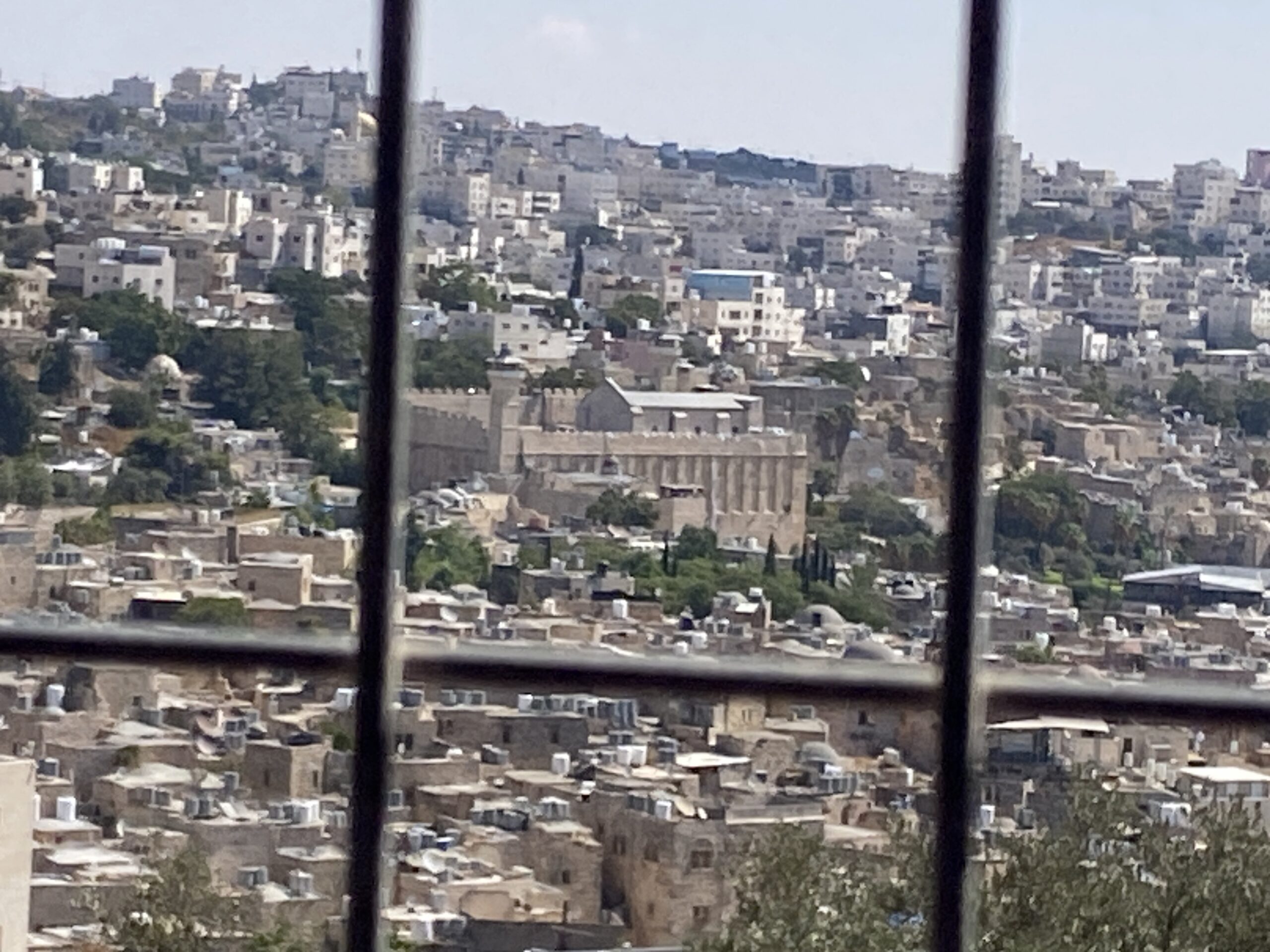 Yael ZoranSep-24-2026Hebron and the Cave of the Patriarchs from Beit Hashalom
-
Susiya
See all reports for this place-
Susiya The Palestinian area lies between the settlement of Susya and a military base. The residents began to settle in areas outside the villages in the 1830s and lived in caves, tents and sukkot. To this day they maintain a traditional lifestyle and their livelihood is based on agriculture and herding. Until the 1948 war, the farmers cultivated areas that extended to the Arad area. As a result of the war, a significant portion of their land left on the Israeli side was lost. After the 1967 war and the Israeli occupation, military camps were established in the area, fire zones and nature reserves were declared, and the land area was further reduced. The Jewish settlement in Susya began in 1979. Since then, there has been a stubborn struggle to remove the remains of Palestinian residents who refuse to leave their place of birth and move to nearby town Yatta. With the development of a tourist site in Khirbet Susya in the late 1980s (an ancient synagogue), dozens of families living in caves in its vicinity were deported. In the second half of the 1990s, a new form of settlement developed in the area - shepherds' farms of individual settlers. This phenomenon increased the tension between the settlers and the original, Palestinian residents, and led to repeated harassment of the residents of the farms towards the Palestinians. At the same time, demolition of buildings and crop destruction by security forces continued, as well as water and electricity prevention. In the Palestinian Susya, as in a large part of the villages of the southern Hebron Mountains, there is no running water, but the water pipe that supplies water to the Susya Jewish settlement passes through it. Palestinians have to buy expensive water that comes in tankers. Solar electricity is provided by a collector system, installed with donation funds. But the frequent demolitions in the villages do not spare water cisterns or the solar panels and power poles designed to transfer solar electricity between the villages. Updated April 2021, Anat T.
-
