
Hebron, Tarqumiya
Tarqumiyya – few merchants at the crossing in mid-morning. The drivers waiting for them are our driver’s neighbors.
The road to Hebron is fairly quiet, as is the city itself. The plaza at the Cave of the Patriarchs compound is still ready for the expected celebrations: a stage well-equipped with sound equipment, etc., and rows of chairs already set up. It turns out there were already celebrations yesterday evening. A sign announces a performance by “Adon HaSlichot.”
At ‘Abed’s shop is a group of youths from South Africa and New Zealand with guides from Dror-HaBonim. They’re spending eight months in Israel and also learning about the conflict.
Signs along Shuhadeh street (“The roots of the Jewish people”….”Giv’at Assaf is in danger – mass prayer”…etc.). The street is almost empty.
We visited the Jaber family. We sat with Yusri; ‘Abed joined us after he returned from the vineyard. The whole family is busy picking grapes. He says he wasn’t able to access one of his plots because soldiers were engaged in some operation and didn’t permit him to enter.
They say they haven’t had any problems for about a year and a half (remember they had been severely harassed by their neighbors). We asked about the water problems they’d had with the Civil Administration and with Mekorot (their water had been cut off, all their irrigation lines had been uprooted – we were present when the terrible event occurred). In short – the problem still hasn’t been solved. The DCL officer wants to help them; he asked them to write letters but they haven’t received replies. Meanwhile they’re using water from cisterns in the courtyard and buying tanks of water.
The water is for drinking and for agriculture, their sole source of income.
May you be inscribed in the book of life.
Hebron
See all reports for this place-
According to Wye Plantation Accords (1997), Hebron is divided in two: H1 is under Palestinian Authority control, H2 is under Israeli control. In Hebron there are 170,000 Palestinian citizens, 60,000 of them in H2. Between the two areas are permanent checkpoints, manned at all hours, preventing Palestinian movement between them and controlling passage of permit holders such as teachers and schoolchildren. Some 800 Jews live in Avraham Avinu Quarter and Tel Rumeida, on Givat HaAvot and in the wholesale market.
Checkpoints observed in H2:
- Bet Hameriva CP- manned with a pillbox
- Kapisha quarter CP (the northern side of Zion axis) - manned with a pillbox
- The 160 turn CP (the southern side of Zion axis) - manned with a pillbox
- Avraham Avinu quarter - watch station
- The pharmacy CP - checking inside a caravan with a magnometer
- Tarpat (1929) CP - checking inside a caravan with a magnometer
- Tel Rumeida CP - guarding station
- Beit Hadassah CP - guarding station
Three checkpoints around the Tomb of the Patriarchs
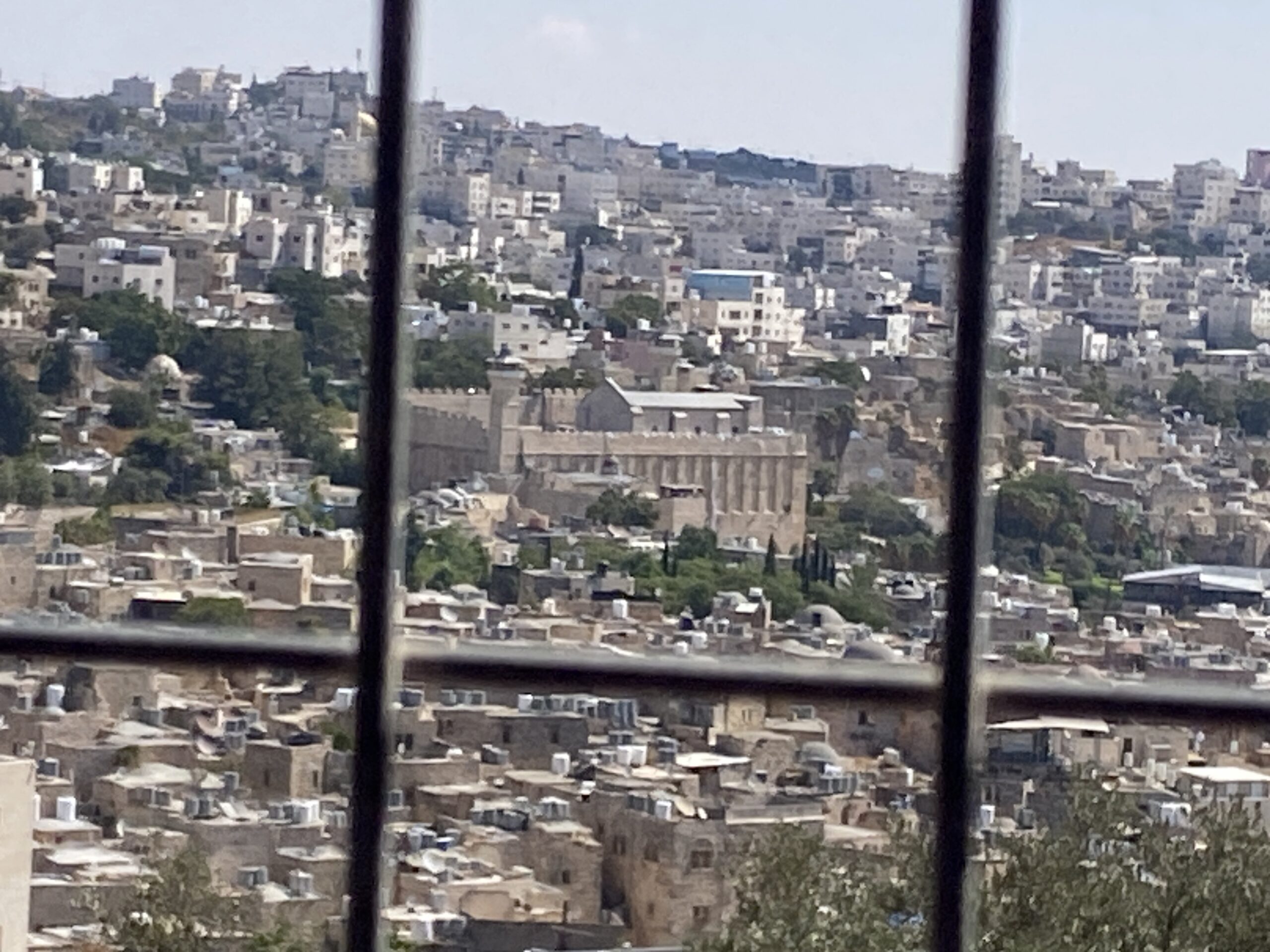 Yael ZoranSep-24-2026Hebron and the Cave of the Patriarchs from Beit Hashalom
-
Tarqumiya CP
See all reports for this place-
The Tarqumiya Checkpoint is one of the largest and busiest checkpoints where people and goods cross into Israel. It is located on the Separation Barrier close to the Green Line, on Road 35 (connecting Beer Sheva and Hebron). It is run by the Israel Defense Ministry’s Crossings Administration with civilian secuirty companies running the day to day operations. The checkpoint is indeed open to vehicles in both directions 24/7, but Palestinians are prevented from crossing in vehicles, except in special cases. MachsomWatch activists visit the checkpoint as it opens at 3:45 am, in order to observe the daily passage of nearly 10,000 Palestinian workers. The workers arrive from throughout the Southern West Bank. Our activists report on the tremendous overcrowding at this checkpoint; they have observed young men climbing and scrambling on the fences and roofs of the ‘access cages’. This is how the work day begins for those who ‘build the land of Israel’. updated November 2019
-
