
Hebron, Tarqumiya
We entered through the Tarqumiya crossing. At this hour (10:30) it was crowded primarily with trucks.
Highway 35 – few cars. The two gates, to Hebron and Halhul, are open.
In the new plaza between Hebron and Shuyukh-Sa’ir a military vehicle parks watching the crossing, even though the road is empty.
Hebron:
Curve 160 – two youths detained to inspect their IDs, released pretty quickly. On the way back we saw the gate open and the child in a wheelchair go through.
The area between the curve and the Cave of the Patriarchs is being renovated with funding from Spain. The interiors of the ruined buildings are being turned into lovely, clean stone structures.
The area around the Cave of the Patriarchs is empty, souvenir sellers sit with nothing to do. It’s cold, the rain pelting, the only visitors are diplomats who arrived in three official cars and are being taken around by Yehuda, from Breaking the Silence, in the area of Shuhadah Street.
Tarpat checkpoint – An electric gate has been erected in place of the metal detector that was burned, and another metal booth is still being erected by Jewish workers.
TIPH observers are parked there, and also volunteers from the Christian organizations. They told us there isn’t any way to go freely through the checkpoint, as in the past through the side gate. Everyone must go through the electric gate and return through the revolving gate.
We went up to Tel Rumeida where it turns out the excavations have acquired an official aspect – a sign directs people to them, promising a birding lookout, toilets and antiquities, all for one price!
On the way back: Highway 60 is also almost empty. It’s very busy at the southern entrance to Hebron near Beit Hagai – many vehicles leave the city through there, and quite a few enter.
Hebron
See all reports for this place-
According to Wye Plantation Accords (1997), Hebron is divided in two: H1 is under Palestinian Authority control, H2 is under Israeli control. In Hebron there are 170,000 Palestinian citizens, 60,000 of them in H2. Between the two areas are permanent checkpoints, manned at all hours, preventing Palestinian movement between them and controlling passage of permit holders such as teachers and schoolchildren. Some 800 Jews live in Avraham Avinu Quarter and Tel Rumeida, on Givat HaAvot and in the wholesale market.
Checkpoints observed in H2:
- Bet Hameriva CP- manned with a pillbox
- Kapisha quarter CP (the northern side of Zion axis) - manned with a pillbox
- The 160 turn CP (the southern side of Zion axis) - manned with a pillbox
- Avraham Avinu quarter - watch station
- The pharmacy CP - checking inside a caravan with a magnometer
- Tarpat (1929) CP - checking inside a caravan with a magnometer
- Tel Rumeida CP - guarding station
- Beit Hadassah CP - guarding station
Three checkpoints around the Tomb of the Patriarchs
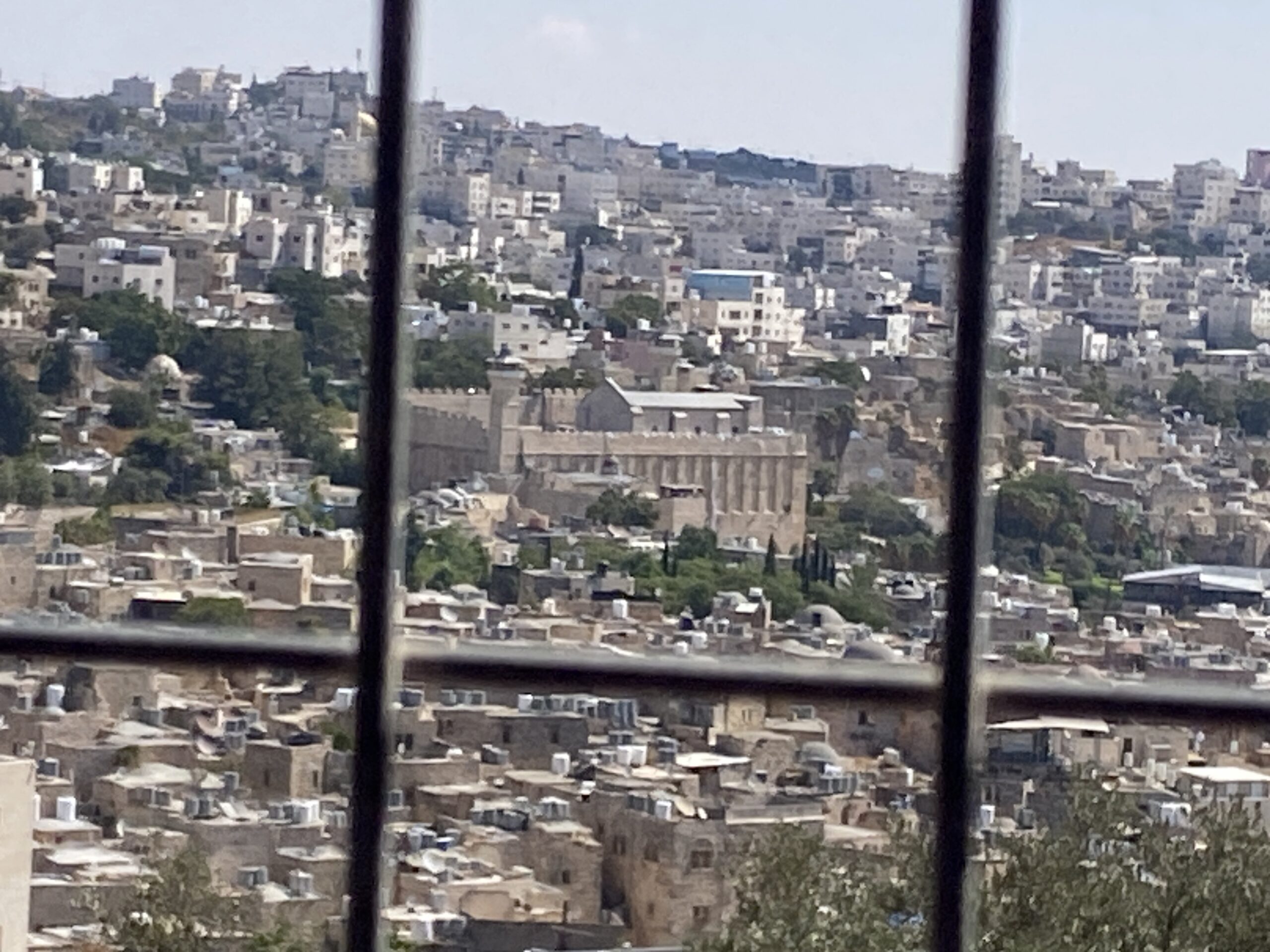 Yael ZoranSep-24-2026Hebron and the Cave of the Patriarchs from Beit Hashalom
-
Tarqumiya CP
See all reports for this place-
The Tarqumiya Checkpoint is one of the largest and busiest checkpoints where people and goods cross into Israel. It is located on the Separation Barrier close to the Green Line, on Road 35 (connecting Beer Sheva and Hebron). It is run by the Israel Defense Ministry’s Crossings Administration with civilian secuirty companies running the day to day operations. The checkpoint is indeed open to vehicles in both directions 24/7, but Palestinians are prevented from crossing in vehicles, except in special cases. MachsomWatch activists visit the checkpoint as it opens at 3:45 am, in order to observe the daily passage of nearly 10,000 Palestinian workers. The workers arrive from throughout the Southern West Bank. Our activists report on the tremendous overcrowding at this checkpoint; they have observed young men climbing and scrambling on the fences and roofs of the ‘access cages’. This is how the work day begins for those who ‘build the land of Israel’. updated November 2019
-
