
Hebron, Tarqumiya, Mon 15.2.10, Morning
Translated by Naomi S.
Tarquomiya
It is quiet here today, with no special events. Past the CP, many tracks stand waiting.
Route 35
Not many vehicles, Palestinian or Israeli, are to be seen.At the glass factory, we are told that there are not many tourists and that business is slow.
Route 60
No traffic whatsoever – neither military nor any other.
Shayokh Sair: The boulders stand there, at their usual posts on either side, and many people cross over, from one side to the other. By foot, of course. The almond trees are in full bloom, the vines seem wonderfully taken care of – carefully groomed throughout. There's no weed to be seen: a real pleasure.
Hebron
At the entrance to Kiryat Arba, construction work is in full swing!! The building to our left has grown bigger, and on the hill to our right there are now three caravans, plus flags, and two vehicles. Further down the road we see more construction work in action and some expansions, too.
Curve 160: the gate is shut, as usual. A private Israeli car stops, and it turns out to be an Arab-Israeli family from Beit Zafafa (Jerusalem) who came to take their son, who is stranded in Hebron, and are not allowed to enter Kiryat Arba without police escort. The soldiers didn't know how to help them, and following Michal's advice we drove with them to the police station at the Patriarchs' Cave, where the policeman called for a van to arrive – which happened promptly, and we were thanked for our help.
Patriarchs' Cave: a friendly talk with A'abed – as against the endless Hassidic music coming out of the Gutnik House, after a long period of silence. Why? In honour of what, precisely? Truly irritating! Apart from the summery-heat in mid-February, there was nothing new.
Hebron
See all reports for this place-
According to Wye Plantation Accords (1997), Hebron is divided in two: H1 is under Palestinian Authority control, H2 is under Israeli control. In Hebron there are 170,000 Palestinian citizens, 60,000 of them in H2. Between the two areas are permanent checkpoints, manned at all hours, preventing Palestinian movement between them and controlling passage of permit holders such as teachers and schoolchildren. Some 800 Jews live in Avraham Avinu Quarter and Tel Rumeida, on Givat HaAvot and in the wholesale market.
Checkpoints observed in H2:
- Bet Hameriva CP- manned with a pillbox
- Kapisha quarter CP (the northern side of Zion axis) - manned with a pillbox
- The 160 turn CP (the southern side of Zion axis) - manned with a pillbox
- Avraham Avinu quarter - watch station
- The pharmacy CP - checking inside a caravan with a magnometer
- Tarpat (1929) CP - checking inside a caravan with a magnometer
- Tel Rumeida CP - guarding station
- Beit Hadassah CP - guarding station
Three checkpoints around the Tomb of the Patriarchs
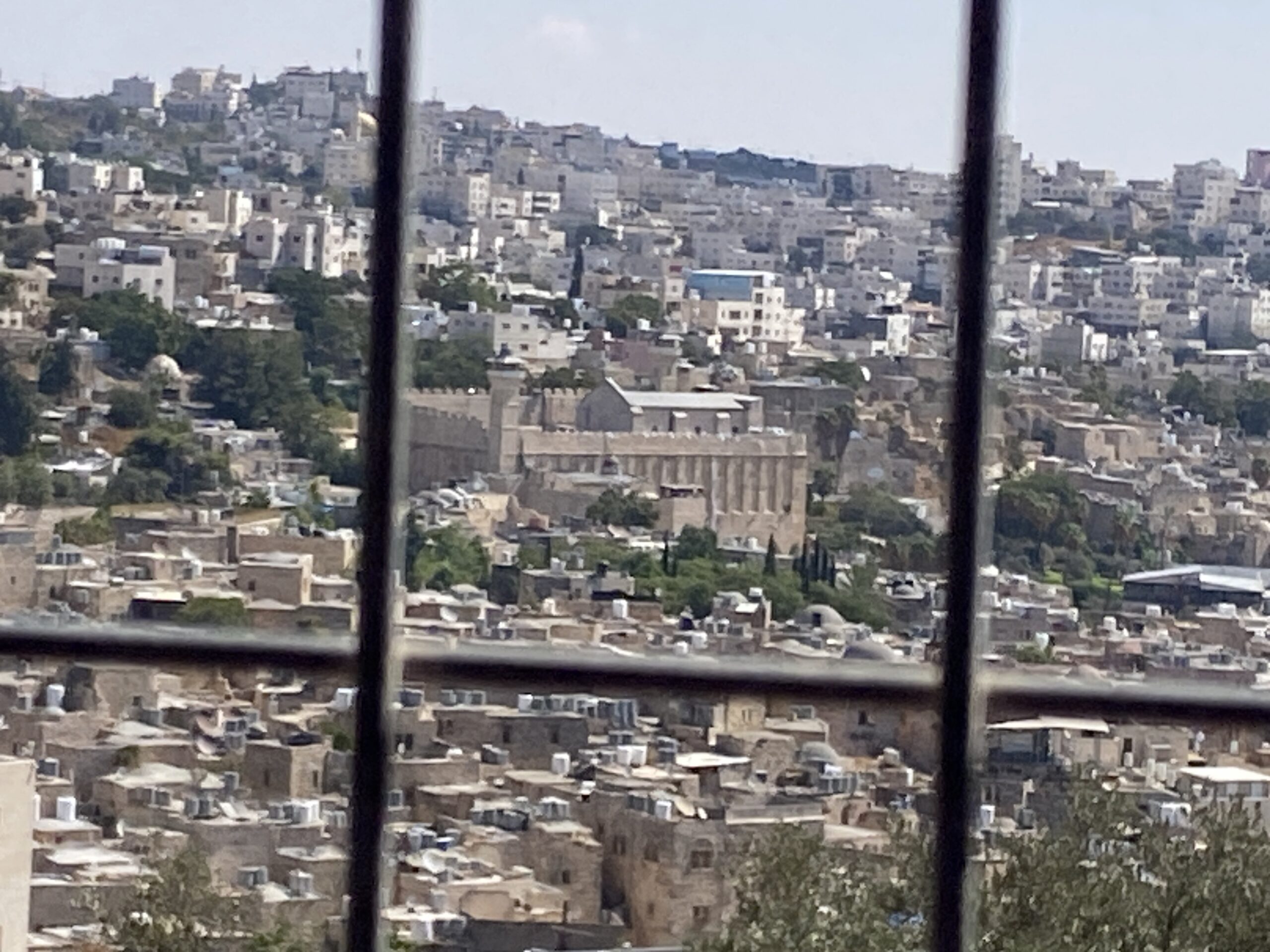 Yael ZoranSep-24-2026Hebron and the Cave of the Patriarchs from Beit Hashalom
-
Sa'ir
See all reports for this place-
A relatively affluent suburb of Palestinian Hebron. West of Highway 60 leading from Bethlehem to Hebron. The entrance to Highway 60 and to Shuyukh and Beit Einun to the east is open, but is subject to changes - concrete blocks denying passage are stationed according to the needs of the army.
-
Tarqumiya CP
See all reports for this place-
The Tarqumiya Checkpoint is one of the largest and busiest checkpoints where people and goods cross into Israel. It is located on the Separation Barrier close to the Green Line, on Road 35 (connecting Beer Sheva and Hebron). It is run by the Israel Defense Ministry’s Crossings Administration with civilian secuirty companies running the day to day operations. The checkpoint is indeed open to vehicles in both directions 24/7, but Palestinians are prevented from crossing in vehicles, except in special cases. MachsomWatch activists visit the checkpoint as it opens at 3:45 am, in order to observe the daily passage of nearly 10,000 Palestinian workers. The workers arrive from throughout the Southern West Bank. Our activists report on the tremendous overcrowding at this checkpoint; they have observed young men climbing and scrambling on the fences and roofs of the ‘access cages’. This is how the work day begins for those who ‘build the land of Israel’. updated November 2019
-
