
Hebron - the settlers spit, the Palestinians ignore
At the Tarkumiya checkpoint you can see a number of merchants, some with masks and some without claiming that there may not be a corona … because they do not believe in corona.
At Muhammad’s grocery store at the Tarkumiya junction in front of the usual olive oil factory everything is as usual and everyone is waiting for the opening of the oil mill in front of the store. There is usually no exact date at the end of October.
On Route 35 we met the sellers of figs and grapes who are happy to market their wares and earn a few shekels for their livelihood and Inshalla all will be well
We met with the Jaber family at their home at the entrance to Kiryat Arba. They say this is their best season. They make honey from grapes and sell a lot of goods.
Along with this the family is very worried about thieves (they are convinced that these are settlers). In their vineyard they see young people with white shirts, kippot and tassels so there is no reason to think that they were Palestinians.
Unfortunately they do not have enough water, the water comes in tankers and not through a pipe. They suffer the price of being Palestinians. It is a frustrating situation that the Jewish neighbors who live near their house have a regular supply of water while they live in Area C and pay heavily for the water. The price of water is high so they try to save in every way possible.
Bassem Jaber lives in front of the House of Contention in Hebron and opens the store for the sale of groceries, etc. every day. Bassem reports that a fixed number of settlers (not many) regularly challenge them, whether by cursing or spitting on both him and his children.
They prefer not to comment and ignore the provocation.
South Hebron Hills
See all reports for this place-
South Hebron Hills
South Hebron Hills is a large area in the West Bank's southern part.
Yatta is a major city in this area: right in the border zone between the fertile region of Hebron and its surroundings and the desert of the Hebron Hills. Yatta has about 64,000 inhabitants.
The surrounding villages are called Masafer Yatta (Yatta's daughter villages). Their inhabitants subsist on livestock and agriculture. Agriculture is possible only in small plots, especially near streams. Most of the area consists of rocky terraces.Since the beginning of the 1980s, many settlements have been established on the agricultural land cultivated by the Palestinians in the South Hebron Hills region: Carmel, Maon, Susia, Masadot Yehuda, Othniel, and more. Since the settlements were established and Palestinians cultivation areas have been reduced; the residents of the South Hebron Hills have been suffering from harassment by the settlers. Attempts to evict and demolish houses have continued, along with withholding water and electricity. The military and police usually refrain from intervening in violent incidents between settlers and Palestinians do not enforce the law when it comes to the investigation of extensive violent Jewish settlers. The harassment in the South Hebron Hills includes attacking and attempting to burn residential tents, harassing dogs, harming herds, and preventing access to pastures.
There are several checkpoints in the South Hebron Hills, on Routes 317 and 60. In most of them, no military presence is apparent, but rather an array of pillboxes monitor the villages. Roadblocks are frequently set up according to the settlers and the army's needs. These are located at the Zif Junction, the Dura-al Fawwar crossing, and the Sheep Junction at the southern entrance to Hebron.
Updated April 2022
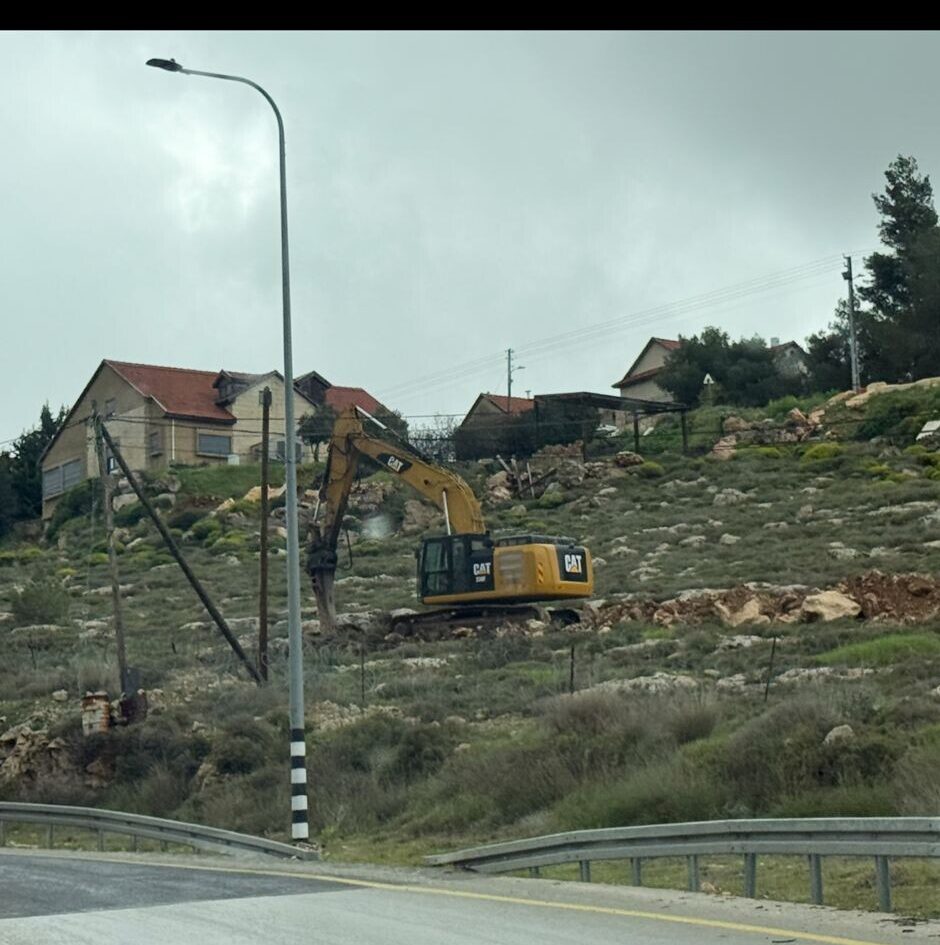 MuhammadFeb-24-2026South Hebron Hill, Beit Hagai: Paving an internal security road
-