
Hursa - the village with a pillbox in its midst
The old Road 358, before they built the wall there was and still is a main road that connects all Palestinian villages and towns between Tarkumiya and Ramadin in West Mount Hebron.
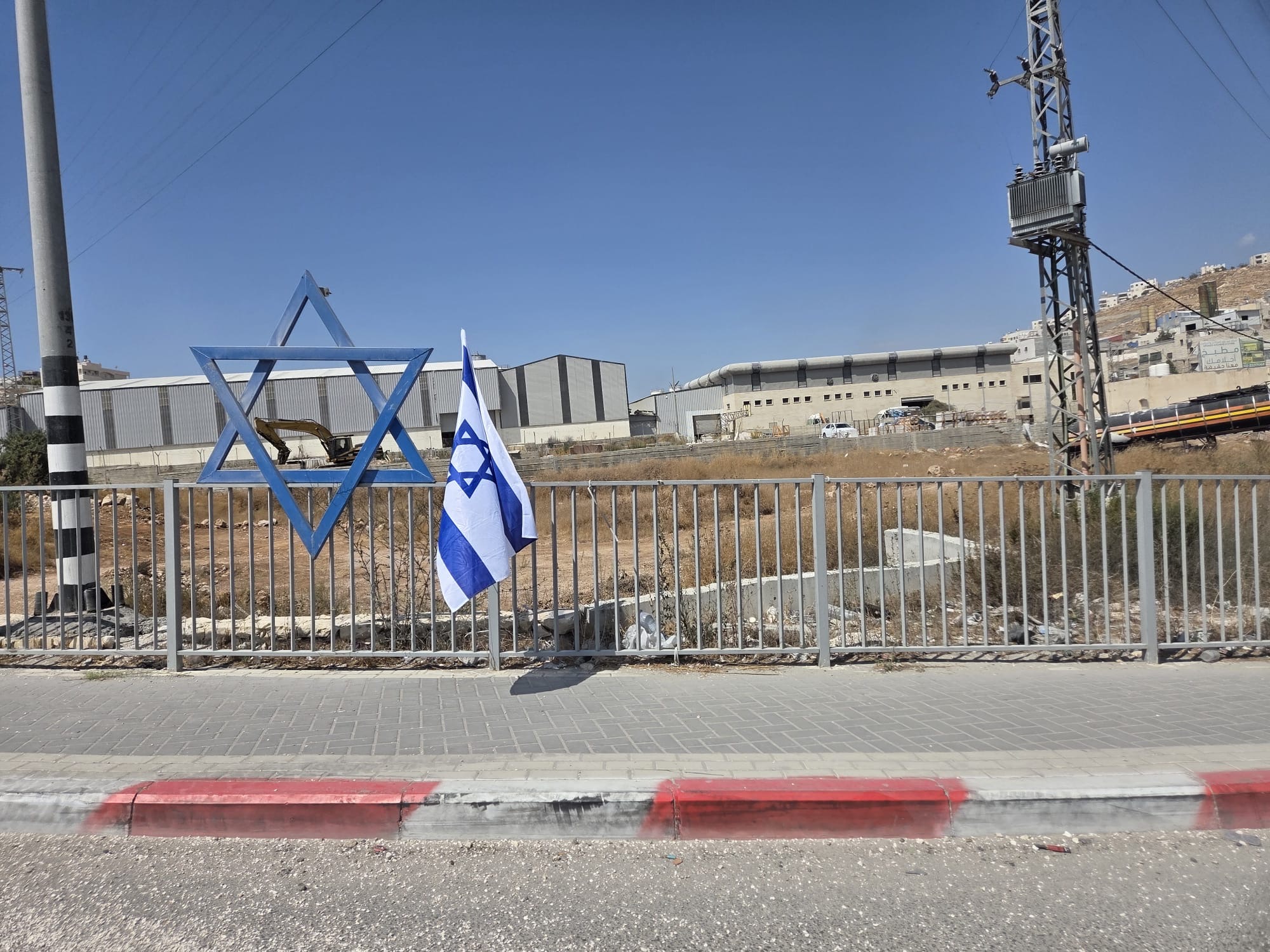
Negohot is an isolated settlement located between Route 358 and Route 60. This lonely settlement resulted in the construction of a pillbox inside Hursa, and this settlement causes the road to be closed by a gate which disconnects this main transport artery.
Today on our way to Hebron we passed there and saw the gate closed. The army bulldozer has piled up heaps of dirt that would prevent the entry for side roads. The soldiers at the pillbox stop every car that passes and, according to the Palestinians, also take the car keys. On both sides of the gate are many parked cars and people have to pass on foot and the distances are not small. The people at the garage at the intersection are complaining about how there are increasing problems to make a living.
And so it has been for a week.
In our attempts to find out what had happened we found that Molotov cocktails had been thrown at the pillbox a week ago and therefore a collective punishment had been imposed on everyone. We talked to the garage people and passers by for half an hour and.
It is increasingly difficult to talk and talk because there are high expectations of us to help. Only visits to identify with their problems are not always accepted sympathetically. The people refused to be photographed and I understand why.
I haven’t met such despair in a long time.
The occupation did not become more comfortable.
South Hebron Hills
See all reports for this place-
South Hebron Hills
South Hebron Hills is a large area in the West Bank's southern part.
Yatta is a major city in this area: right in the border zone between the fertile region of Hebron and its surroundings and the desert of the Hebron Hills. Yatta has about 64,000 inhabitants.
The surrounding villages are called Masafer Yatta (Yatta's daughter villages). Their inhabitants subsist on livestock and agriculture. Agriculture is possible only in small plots, especially near streams. Most of the area consists of rocky terraces.Since the beginning of the 1980s, many settlements have been established on the agricultural land cultivated by the Palestinians in the South Hebron Hills region: Carmel, Maon, Susia, Masadot Yehuda, Othniel, and more. Since the settlements were established and Palestinians cultivation areas have been reduced; the residents of the South Hebron Hills have been suffering from harassment by the settlers. Attempts to evict and demolish houses have continued, along with withholding water and electricity. The military and police usually refrain from intervening in violent incidents between settlers and Palestinians do not enforce the law when it comes to the investigation of extensive violent Jewish settlers. The harassment in the South Hebron Hills includes attacking and attempting to burn residential tents, harassing dogs, harming herds, and preventing access to pastures.
There are several checkpoints in the South Hebron Hills, on Routes 317 and 60. In most of them, no military presence is apparent, but rather an array of pillboxes monitor the villages. Roadblocks are frequently set up according to the settlers and the army's needs. These are located at the Zif Junction, the Dura-al Fawwar crossing, and the Sheep Junction at the southern entrance to Hebron.
Updated April 2022
 Timna OrevSep-24-2026Replacing flags on Highway 6
-
