
Huwwara
Huwwara, Tapuach Junction, D.C.O. Huwwara. 26 June 2005 Watchers and reporters: Sharon V, Shelley M.Tapuach Junction7:30 a.m.There are 30 cars. The drivers tell us that it takes 30 – 40 minutes from joining the queue until they cross, the queue moves relatively rapidly. The soldiers do not cooperate enthusiastically but tell us that the roadblock is open 24 hours and the checks are superficial (i.e. they only ask to see I.D. cards and do not check bags and vehicles). The Palestinians confirm this: “We wait around for nothing, at the end the soldier does not even check us”. In spite of this, while we are present, we see pedestrians having their bags and documents checked thoroughly, and passengers are required to alight from buses to be checked.8:15 a.m.On the way to the roadblock we stop by the taxi drivers. According to them the situation is ‘all right-ish’. Their complaints are mainly directed at Tapuach Junction. They say that they many of them simply let their passengers down there and return so as not to get stuck at the roadblock (in fact the situation has produced a new taxi route: Huwwara to Tapuach). Their main complaint is about the roadblocks and they describe a situation in which roadblocks disappear and appear every day and they never know where they will be held up.New soldiers led by A., a polite and businesslike officer, staff the roadblock. The few people who are behind the gates cross quickly and we decide to go to the D.C.O. in Huwwara.8:30 a.m.40 people wait in a very orderly queue at the D.C.O. The D.C.O. opens at 8:00 a.m., and the people claim that they have been waiting since 5:00 a.m. The queue moves relatively rapidly, someone goes in almost every minute. The people stand in the sun, most of them with applications for magnetic cards (whose validity has lately been extended to four years).We finally discovered how much it costs: it appears that every application for a card costs 92 shekels. Each time the application is turned down the D.C.O. takes stamps in the sum of 12 shekels from the applicant. The remaining stamps can be sold in Nablus. However, in the event of another application, stamps in the sum of 92 shekels must be presented again. In short, with each additional visit to the D.C.O. they lose 12 additional shekels to the 92 shekels they paid to start with.We went into the D.C.O. and asked to speak to the officer about arranging an awning. The officer was polite but made it clear that there is no way that the army will put up an awning. He explained that the queue is longer inside; in fact the queue outside is the queue before the queue. In the real queue, inside, the people can take a number and sit down in a closed and air conditioned room. We were not allowed to go in so we just had to take his word for this. In any case, because the queue outside is not the real queue and because it is outside the D.C.O., it is not their responsibility.Question: considering that in the unreal queue there are real people, is it not possible to contact with some humanitarian organisation to build an awning? Perhaps we ourselves could arrange it?The officer also told us that the D.C.O. opens from 8:00 a.m. (sometimes 7:30 a.m.) until 7:00 p.m. and they deal with 180 people a day. It must be noted that the situation at the D.C.O. has improved out of all recognition since the last time we were there (a month ago): there are many less people, the queue proceeds relatively rapidly (at least the outside queue does) and the people in the queue are calm.9:00 a.m.We returned to the roadblock which was as quiet as before. At its busiest 20 people waited to leave Nablus, and they all crossed speedily. The soldiers were relaxed. No one was detained. While we were there a soldier, wearing civilian clothes and who had previously served at the roadblock, arrived. We asked if he had been on leave and he told us that he had applied to the army psychologist to be moved to another post as he could not stand working at the roadblock. We left together with him at 10:00 a.m.On the way back Tapuach Junction was as packed as it had been previously.
Huwwara
See all reports for this place-
The Huwwara checkpoint is an internal checkpoint south of the city of Nablus, at the intersection of Roads 60 and 5077 (between the settlements of Bracha and Itamar). This checkpoint was one of the four permanent checkpoints that closed on Nablus (Beit Furik and Awarta checkpoints to the east and the Beit Iba checkpoint to the west). It was a pedestrian-only barrier. As MachsomWatch volunteers, we watched therre since 2001 two shifts a day - morning and noon, the thousands of Palestinians leaving Nablus and waiting for hours in queues to reach anywhere else in the West Bank, from the other side of the checkpoint the destination could only be reached by public transport. In early June 2009, as part of the easing of Palestinian traffic in the West Bank, the checkpoint was opened to vehicular traffic. The passage was free, with occasional military presence in the guard tower. Also, there were vehicle inspections from time to time. Since the massacre on 7.10.2023, the checkpoint has been closed to Palestinians.
On February 26, 2023, about 400 settlers attacked the town's residents for 5 hours and set fire to property, such as houses and cars. Disturbances occurred in response to a shooting of two Jewish residents of Har Bracha by a Palestinian Terrorist. The soldiers stationed in the town did not prevent the arson and rescued Palestinian families from their homes only after they were set on fire. No one was punished and Finance Minister Smotrich stated that "the State of Israel should wipe out Hawara." Left and center organizations organized solidarity demonstrations and support actions for the residents of Hawara.Hawara continued to be in the headlines in all the months that followed: more pogroms by the settlers, attacks by Palestinians and a massive presence of the army in the town. It amounted to a de facto curfew of commerce and life in the center of the city. On October 5, 2023, MK Zvi established a Sukkah in the center of Hawara and hundreds of settlers backed the army blocked the main road and held prayers in the heart of the town all night and the next day. On Saturday, October 7, 23 The "Swords of Iron" war began with an attack by Hamas on settlements surrounding Gaza in the face of a poor presence of the IDF. Much criticism has been made of the withdrawal of military forces from the area surrounding Gaza and their placement in the West Bank, and in the Hawara and Samaria region in particular, as a shield for the settlers who were taking over and rioting.
On November 12, 2023, the first section of the Hawara bypass road intended for Israeli traffic only was opened. In this way, the settlers can bypass the road that goes through the center of Hawara, which is the main artery for traffic from the Nablus area to Ramallah and the south of the West Bank. For the construction of the road, the Civil Administration expropriated 406 dunams of private land belonging to Palestinians from the nearby villages. The settlers are not satisfied with this at the moment, and demand to also travel through Hawara itself in order to demonstrate presence and control.(updated November 2023)
.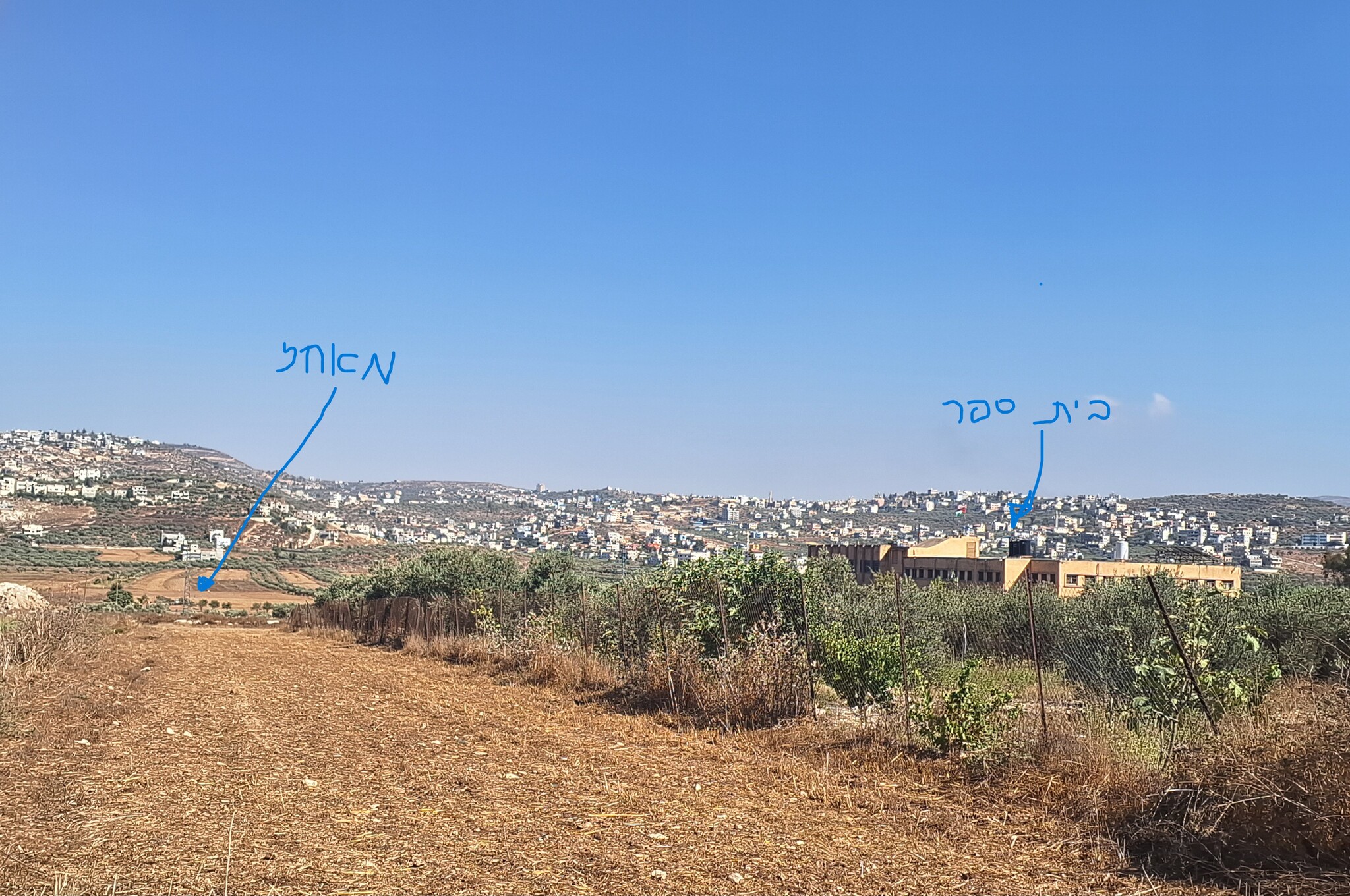 Ronit Dahan-RamatiAug-24-2026Huwara: The school on the outskirts of town and an outpost hidden among the trees
-
