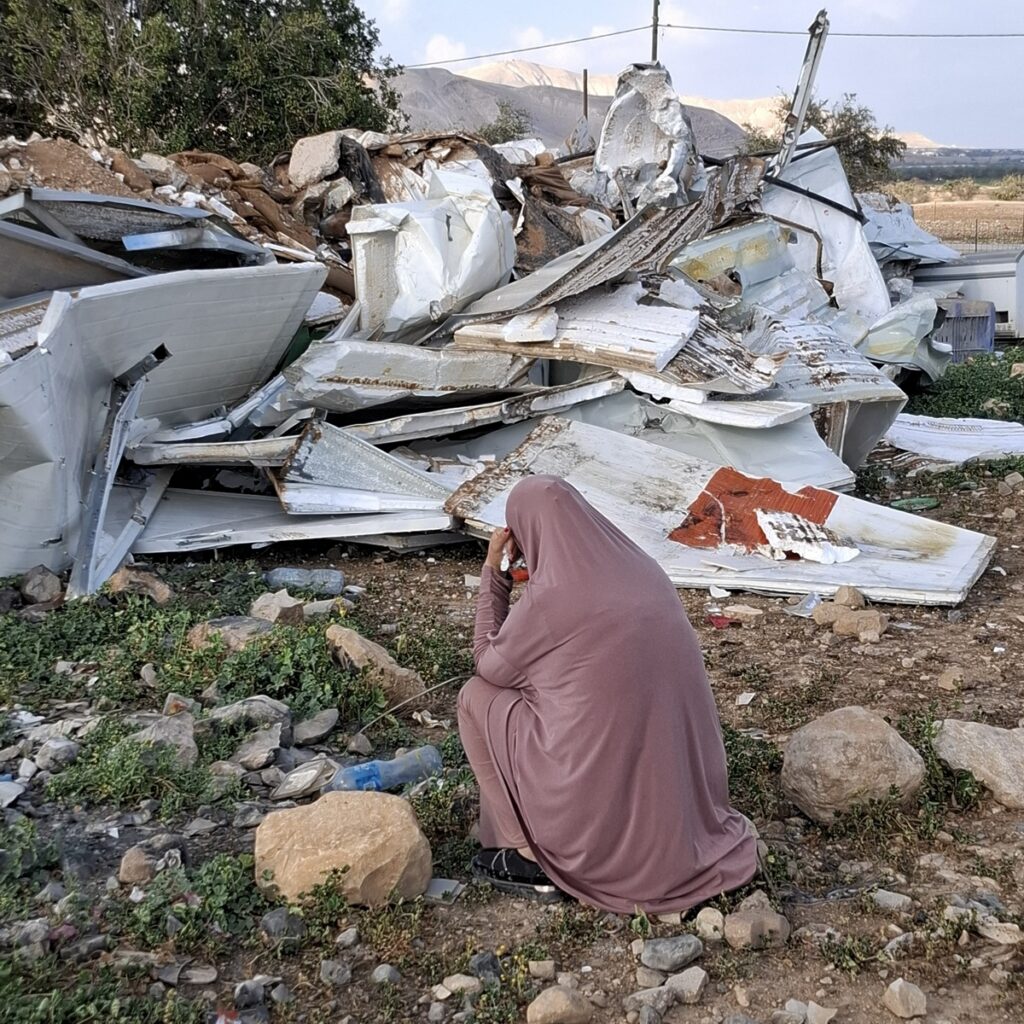
Huwwara Beit Furik
Huwwara, Beit Furik, Tuesday 14.3.06 PMObservers: Tami P. and Hagit A. (reporting)14:00 – Zaatara Junction. Purim. Young people in costumes are waiting for hitch-hikes in all directions, to Nablus, to the Jordan Valley, southwards. The city of Sussan was happy and rejoicing.Huwwara – the queue is terribly crowded. Men, women, children and old people are squashed between the fences and the turnstiles. In the women’s queue the iron gate opens inwards, into the bodies of the people crowded and compressed between the iron fences. In order to get out by the narrow opening one is obliged to push the iron gate into the belly of those standing behind it. (in the front turnstile there is a moving gate which can be moved aside in the track and it does not touch those standing in the queue). A girl with a tortured face is squashed between the fence and the big women behind her. A sweating crying toddler-girl is extricated from the queue with her father. Old ladies are squashed between the iron fences. In the turnstiles people push and shove and at each round a few people are caught inside. In the men’s queue there is shouting, pushing and spitting. The tension is enormous. The CSO representative is on the spot but does not do much good. The CP commander says that they have no added soldiers to the shift, but no relief is felt. When the pressure and the shouts grow one of the soldiers stops the checking and the tension mounts even more. The CP commander speeds up the renewal of the checking.At the same time a vehicle with yellow registration plates, in which there are a man, a woman and a sick baby who has returned from treatment at the hospital, tries to enter in the direction of Nablus. They are inhabitants of Nablus and say they have an authorization from the CSO to enter with their vehicle, but they are not allowed to enter. We offer help and they refuse and say they are in contact with the woman officer of the DCO.It’s hot, crowded and overburdened. One woman in the queue feels unwell, people help her to extract herself from the queue and she collapses pale and perspiring. We bring here water and the soldiers bring her a chair. She looks as if she is in real distress. She does not want to go on an ambulance and after a short discussion she is persuaded to let us take her with her friend to her house at Huwwara. She is short of breath and we are worried and and try to persuade her to go to see a doctor. She only wants to reach her home and we bring her there, at the outskirts of the village.When we return from Huwwara the vehicle with the sick baby girl is still waiting. The man says he has again talked to the woman officer, got an authorization by phone and she wondered by he was not let through. They have been waiting already for almost an hour with the sick baby. We get involved and insist that the soldiers clarify the matter by phone. Within minutes it turns out that they are authorized to pass. This clarification could have been done a long time before!16:00 Beit Furik. Immediately when we arrive a soldier comes up to us and asks us to leave the CP as there is a warning regarding a shooting attack. The atmosphere at Beit Furik is quite and peaceful , the soldiers are relaxed and banter, the CP is opened for traffic, it doesn’t seem that there is any special alert or tension. We stay at the place, standing a little to the side. People pass in a completely routine manner. There is a relatively long queue of cars (about fifteen vehicles) which are being checked with nerve-racking slowness. The soldiers reprimand us, but we go on observing.On our way back we stop again at Huwwara. The pressure at the CP has been eased, and people pass at relative speed. The terrible tension that was there before has dissipated, but the echoes of the cries we heard before are still in our ears.As a desert – on the way from Beit Furik to Huwwara we saw about twenty mountain-goats hopping on the rocky ground. Some are adult goats with horns, others are really young bambis. Heartwarming.
Huwwara
See all reports for this place-
The Huwwara checkpoint is an internal checkpoint south of the city of Nablus, at the intersection of Roads 60 and 5077 (between the settlements of Bracha and Itamar). This checkpoint was one of the four permanent checkpoints that closed on Nablus (Beit Furik and Awarta checkpoints to the east and the Beit Iba checkpoint to the west). It was a pedestrian-only barrier. As MachsomWatch volunteers, we watched therre since 2001 two shifts a day - morning and noon, the thousands of Palestinians leaving Nablus and waiting for hours in queues to reach anywhere else in the West Bank, from the other side of the checkpoint the destination could only be reached by public transport. In early June 2009, as part of the easing of Palestinian traffic in the West Bank, the checkpoint was opened to vehicular traffic. The passage was free, with occasional military presence in the guard tower. Also, there were vehicle inspections from time to time. Since the massacre on 7.10.2023, the checkpoint has been closed to Palestinians.
On February 26, 2023, about 400 settlers attacked the town's residents for 5 hours and set fire to property, such as houses and cars. Disturbances occurred in response to a shooting of two Jewish residents of Har Bracha by a Palestinian Terrorist. The soldiers stationed in the town did not prevent the arson and rescued Palestinian families from their homes only after they were set on fire. No one was punished and Finance Minister Smotrich stated that "the State of Israel should wipe out Hawara." Left and center organizations organized solidarity demonstrations and support actions for the residents of Hawara.Hawara continued to be in the headlines in all the months that followed: more pogroms by the settlers, attacks by Palestinians and a massive presence of the army in the town. It amounted to a de facto curfew of commerce and life in the center of the city. On October 5, 2023, MK Zvi established a Sukkah in the center of Hawara and hundreds of settlers backed the army blocked the main road and held prayers in the heart of the town all night and the next day. On Saturday, October 7, 23 The "Swords of Iron" war began with an attack by Hamas on settlements surrounding Gaza in the face of a poor presence of the IDF. Much criticism has been made of the withdrawal of military forces from the area surrounding Gaza and their placement in the West Bank, and in the Hawara and Samaria region in particular, as a shield for the settlers who were taking over and rioting.
On November 12, 2023, the first section of the Hawara bypass road intended for Israeli traffic only was opened. In this way, the settlers can bypass the road that goes through the center of Hawara, which is the main artery for traffic from the Nablus area to Ramallah and the south of the West Bank. For the construction of the road, the Civil Administration expropriated 406 dunams of private land belonging to Palestinians from the nearby villages. The settlers are not satisfied with this at the moment, and demand to also travel through Hawara itself in order to demonstrate presence and control.(updated November 2023)
. Shoshi AnbarMay-18-2025Huwara: The old houses in Area C
-
Jordan Valley
See all reports for this place-
Jordan Valley The Jordan Valley is the eastern strip of the West Bank. Its area consists of almost a third of the West Bank area. About 10,000 settlers live there, about 65,000 Palestinian residents in the villages and towns. In addition, about 15,000 are scattered in small shepherd communities. These communities are living in severe distress because of two types of harassment: the military declaring some of their living areas, as fire zones, evicting them for long hours from their residence to the scorching heat of the summer and the bitter cold of the winter. The other type is abuse by rioters who cling to the grazing areas of the shepherd communities, and the declared fire areas (without being deported). The many groundwaters in the Jordan Valley belong to Mekorot and are not available to Palestinians living in the Jordan Valley. The Palestinians bring water to their needs in high-cost followers.
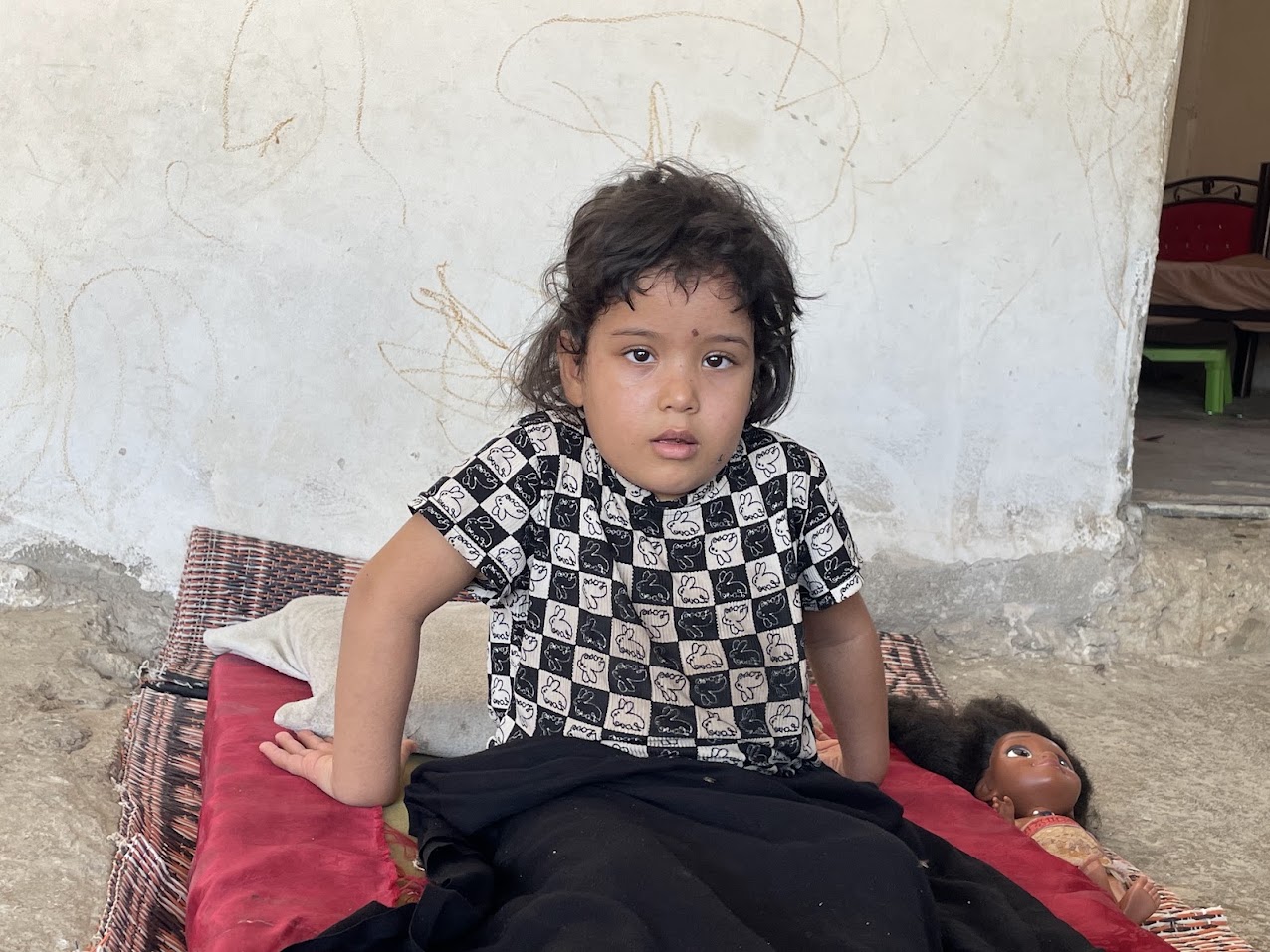 Rachel AfekAug-13-2026Jiftlik: A. was born with spina bifida
-