
Huwwara Beit Furiq
Huwwara, Beit Fouriq, Saturday, 6.1.07, PM Observers: Vivi T., Aya K., Roni H. (reporting) Summary: No easing of restrictions of movement. The soldiers do not respect even the orders of the army. Checkpoint commander E. declares that everybody can pass today. So why was a 13 year old boy who travelled with his uncle and with a birth certificate detained? And why was a 21 year old resident of Khares detained, who was just released from Nablus hospital with a medical certificate? And why was a young women with 2 babies detained for an hour in the pouring rain? E. has an answer : every case has to be judged individually! So where is the easement? A cold and rainy Saturday. Traffic is sparse. At Zaatara CP no lines. We travel a couple of kilometers on the road to Maale Efraim (Jordan Valley). Fences were built all along the road, which will prevent the cars from the villages to reach the main road when this road will be turned into an apartheid road. At this stage there are still some exits left, but the substructure is prepared. Yitzhar junction Is reactivated and operates in full capacity!HuwwaraWe arrive at 14:00. Not a long waiting line, but nevertheless a long wait of 45 – 60 minutes. We learn from the CP commander E. that everybody can pass today! We are approached by a person, who tells us that a 13 years old boy from Beita (with birth certificate) was not allowed to cross because he did not travel with his parents but with his uncle. “Bring his father and he will go through”. We call several authorities, who promise to help. In the meantime we look for the boy and cannot find him. Later we are told by E. that they let him pass. with his uncle. Why were they detained in the first place? Because a soldier made a wrong decision. Why does he have to make a decision, when the order is to let everybody pass? Well, …….. The father of a young man from Kharres turns to us for help. The son was released today from hospital after surgery in the abdomen, with a medical certificate . For some reason the son is detained. Again we call. In the meantime we meet the DCO representative and he tells us that the young man has been released. On the car lane the Palestinian wheel barrow driver is beeing checked. A plastic bag with flyers is confiscated as “agitation material”. These are pamphletes for the festivities of 42 years of Fatah. Arafat’s portrait is suspicious. The man to whom this material belongs is being detained. The soldiers have to consult with the officers. After 35 minutes they receive the o.k. to let the man go together with his plastic bag.A woman whose daughter has been detained at the Allenby Bridge, because her baby daughter was not yet registered in her ID, turns to us for help. Vivi finds out the phone number of Allenby Bridge and talks with the registration soldier. The grand daughter of the woman has been registred in the meanwhile and with this good news the woman could go home.A young man was beeing detained since we have arrived. His ID number appears on one of the black lists. His cousin waited for him already more than 2 hours and no decision has been taken yet by the army of what to do with him. Unfortuntely we have to leave without getting his phone number for further inquiry. Beit Fouriq (15:30)Quite vivid traffic from Nablus to Beit Fouriq. A private car with 2 little children was being checked. A toy rifle is found. The man explains the soldier that during Id el Adha it is customary to give the children toy guns. (B’tselem has warned of killing of children playing with toy guns during the holidays!) The ID of the woman turned out to be “problematic”. We learn that her husband was killed a couple of months ago as a martyr. That’s why she was on the black list. Now she had moved from Nablus to Beit Fouriq to her parents in law and to her husband’s brother (who drove the car).She was body searched thoroughly and detained near the soldiers. The rain was getting stronger and the overall depression of this checkpoint was felt even cruder. The children stayed in the car with the uncle, but the little one wanted to be with the mother and was taken to her. It took one full hour of waiting before she was released and could continue on her way to Beit Fouriq Comic relief:on the way back to Huwwara, a family of 5 wild pigs crossed the apartheid road before our car and behind the car we saw another family. No one hunts them so they can proliferate.
Huwwara
See all reports for this place-
The Huwwara checkpoint is an internal checkpoint south of the city of Nablus, at the intersection of Roads 60 and 5077 (between the settlements of Bracha and Itamar). This checkpoint was one of the four permanent checkpoints that closed on Nablus (Beit Furik and Awarta checkpoints to the east and the Beit Iba checkpoint to the west). It was a pedestrian-only barrier. As MachsomWatch volunteers, we watched therre since 2001 two shifts a day - morning and noon, the thousands of Palestinians leaving Nablus and waiting for hours in queues to reach anywhere else in the West Bank, from the other side of the checkpoint the destination could only be reached by public transport. In early June 2009, as part of the easing of Palestinian traffic in the West Bank, the checkpoint was opened to vehicular traffic. The passage was free, with occasional military presence in the guard tower. Also, there were vehicle inspections from time to time. Since the massacre on 7.10.2023, the checkpoint has been closed to Palestinians.
On February 26, 2023, about 400 settlers attacked the town's residents for 5 hours and set fire to property, such as houses and cars. Disturbances occurred in response to a shooting of two Jewish residents of Har Bracha by a Palestinian Terrorist. The soldiers stationed in the town did not prevent the arson and rescued Palestinian families from their homes only after they were set on fire. No one was punished and Finance Minister Smotrich stated that "the State of Israel should wipe out Hawara." Left and center organizations organized solidarity demonstrations and support actions for the residents of Hawara.Hawara continued to be in the headlines in all the months that followed: more pogroms by the settlers, attacks by Palestinians and a massive presence of the army in the town. It amounted to a de facto curfew of commerce and life in the center of the city. On October 5, 2023, MK Zvi established a Sukkah in the center of Hawara and hundreds of settlers backed the army blocked the main road and held prayers in the heart of the town all night and the next day. On Saturday, October 7, 23 The "Swords of Iron" war began with an attack by Hamas on settlements surrounding Gaza in the face of a poor presence of the IDF. Much criticism has been made of the withdrawal of military forces from the area surrounding Gaza and their placement in the West Bank, and in the Hawara and Samaria region in particular, as a shield for the settlers who were taking over and rioting.
On November 12, 2023, the first section of the Hawara bypass road intended for Israeli traffic only was opened. In this way, the settlers can bypass the road that goes through the center of Hawara, which is the main artery for traffic from the Nablus area to Ramallah and the south of the West Bank. For the construction of the road, the Civil Administration expropriated 406 dunams of private land belonging to Palestinians from the nearby villages. The settlers are not satisfied with this at the moment, and demand to also travel through Hawara itself in order to demonstrate presence and control.(updated November 2023)
.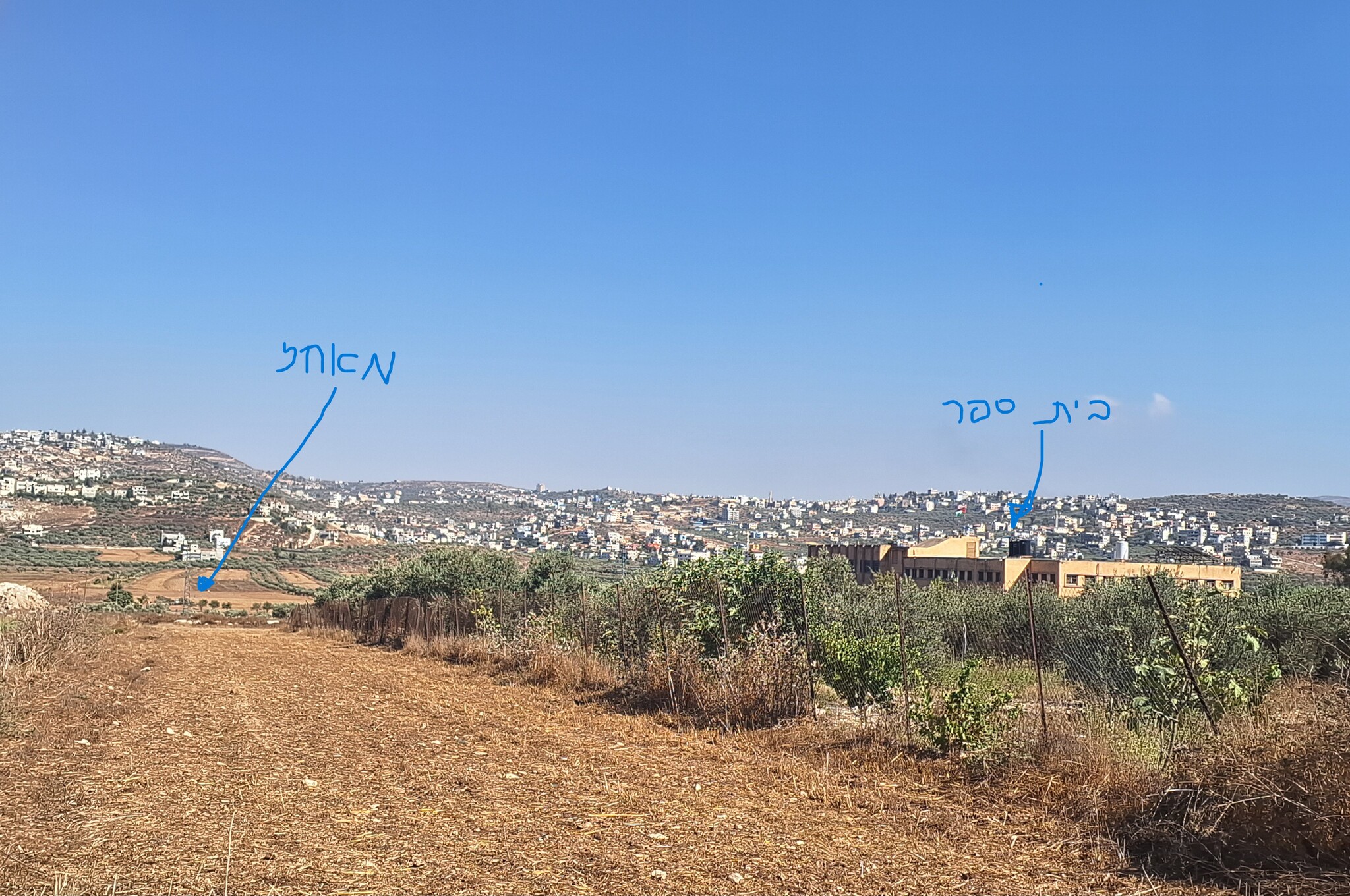 Ronit Dahan-RamatiAug-24-2026Huwara: The school on the outskirts of town and an outpost hidden among the trees
-
Jordan Valley
See all reports for this place-
Jordan Valley The Jordan Valley is the eastern strip of the West Bank. Its area consists of almost a third of the West Bank area. About 10,000 settlers live there, about 65,000 Palestinian residents in the villages and towns. In addition, about 15,000 are scattered in small shepherd communities. These communities are living in severe distress because of two types of harassment: the military declaring some of their living areas, as fire zones, evicting them for long hours from their residence to the scorching heat of the summer and the bitter cold of the winter. The other type is abuse by rioters who cling to the grazing areas of the shepherd communities, and the declared fire areas (without being deported). The many groundwaters in the Jordan Valley belong to Mekorot and are not available to Palestinians living in the Jordan Valley. The Palestinians bring water to their needs in high-cost followers.
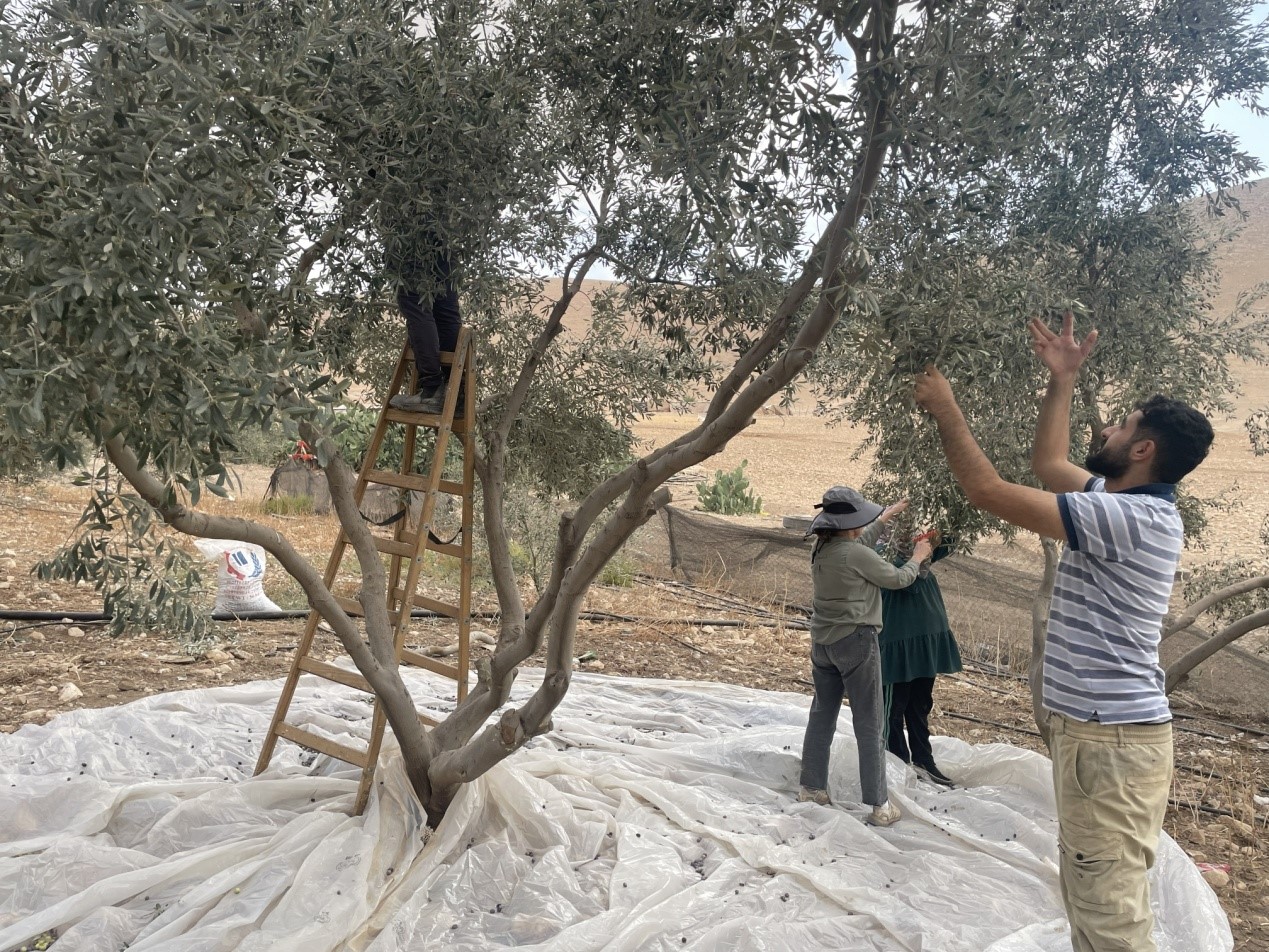 Rachel AfekOct-15-2026Olive Harvest in the Jordan Valley
-
