
Huwwara, Za’tara (Tapuah), Thu 11.3.10, Afternoon
Translator: Charles K.
“Biden’s here to make statements and plan how to bomb Iran. Not because he cares about the Palestinians.” (Abu Bashir’s parliament at the spice shop in Huwwara)
The morning shift called to tell us that the army units had been replaced; now the checkpoints are manned by the Border Police and today there were delays. Apparently things had changed by afternoon.
Za’tara: 21 cars on line coming from Nablus. The line moves quickly.
Huwwara village: At Abu Bashir’s parliament (he sells labaneh and spices next to the falafel stand).
People tell us that Biden’s visit today is only for the Israelis. To issue statements and to plan the attack on Iran. Not out of concern for the Palestinians. Here no one has any expectations.
Huwwara checkpoint, 13:45
A jeep with two passengers is stopped on its way to Nablus and the Border Police inspect it “hard.”
One passenger is moved aside, the second apparently told to dismantle the radio and display it…The first passenger says that it’s because of the alarm.
Vehicles leaving Nablus are inspected at random, and there’s no line. The Border Police stop a bus and remove the passengers for inspection. It takes a few minutes. They make a big effort to move us back from our usual corner, with threats and such. We remain where we are.
Awarta village, 14:00
We had arranged to introduce ourselves to the members of the local council (the majlis or baladiyya).
Some of them were elected and serve without pay, and three others are salaried and deal with problems that come up. There’s a sparkling new local council building in Awarta, an impressive structure with an imposing office for the local council head; the crowd around us made it hard to know who he was.
The main problems are:
- Freedom of movement
Private cars are not allowed on the direct road to Nablus. As you know, only trucks are permitted to drive on the winding village roads and enter Nablus through the Awwarta checkpoint. Everyone else must make a long trip via Odala-Beita-Huwwara to enter Nablus; Awarta is located on its outskirts. The trip takes half an hour instead of five minutes, a waste of gas and time.
They don’t understand the logic, since the huge trucks go directly through Awwarta to Nablus.
- Cultivating agricultural land
The village has about 7000 inhabitants. There are 8000 dunums to the north of the village, where the settlement of Itamar is located. Access to those lands is forbidden to Awarta’s farmers.
A work permit can be obtained only twice a year. As a result, the lands are neglected.
We were told, for example, that Hassan’s land used to produce 1000 kg. of olives, but now gives only 10 kg. each season. Hassan takes a book dating from 1965, listing Awarta’s lands, out of a cabinet.
People are afraid to complain.
30% of the laborers work in Israel, many of them without permits.
It’s hard to obtain a work permit. 80% of the young men have been in Israeli jails, and therefore can’t get a permit to work in Israel.
15,000 former residents of the village have left and now live abroad! If I understood correctly, transfer is proceeding apace.
3. Visits to tombs by the ultra-orthodox and settlers
About two months ago we described the violent actions of the army in the home of the Shurav family, who live next to the cemetery. It turns out that the violent events occurred at two additional homes which the soldiers entered, as well as at an observation tower in the olive grove – along with praying and prostrating themselves on the graves of the righteous, they also destroyed gravestones. Such visits occur all the time. Twice a year they turn into a major incident which threatens the residents of the village.
The village of Odala
Located south of Awarta.
Here, too, we’d arranged to meet the head of the local council, and additional representatives arrived.
Freedom of movement.
A few times a week a military vehicle shows up and sets up a roadblock near the well and stops men, women and children for inspection.
Sometimes people get stuck there for three hours and lose a day of work.
Harassment of villagers by the army
n The army enters; sometimes children throw rocks. Children are detained for 2-3 hours.
n The children were 10-12 years old.
n About one month ago, the army threw a tear gas grenade into the mosque courtyard while people were praying.
n Five young women from the village were arrested at the start of the second intifada in 2000, and have been imprisoned since.
The conversation began hesitantly. At the beginning we said who we were, and why we came. Afterwards the talk flowed. We left phone numbers, and promised the village representatives to return in two weeks.
It’s the start of a relationship.
Meanwhile, perhaps we’ve planted a few seeds of hope on the day Biden gave a speech in Tel Aviv.
But no one here believes in declarations. “It’s just wheeling and dealing between the Americans and Israel.”
On the way back there were no delays at the checkpoints. Only the two of us were detained at the Shomron Gate checkpoint, because Machsom Watch flags were flying from the car. They wanted to know where, exactly, we’d been. They took our IDs, we stood next to the checkpoint offices. Our IDs were returned after being checked.
.
'Awarta
See all reports for this place-
Awarta, an internal checkpoint in the heart of the West Bank, is located east of the Hawara checkpoint, at the junction of Roads 555 (which was forbidden for Palestinian traffic in this area) and the entrance road to Nablus. It was one of the four checkpoints that surrounded Nablus until 2009. We used to watch it at Huwwara shifts because it was the only one where goods could be transferred to and from Nablus, using the back-to-back method. It was operated by the army, from 06:00 to 20:00. Until 2009.
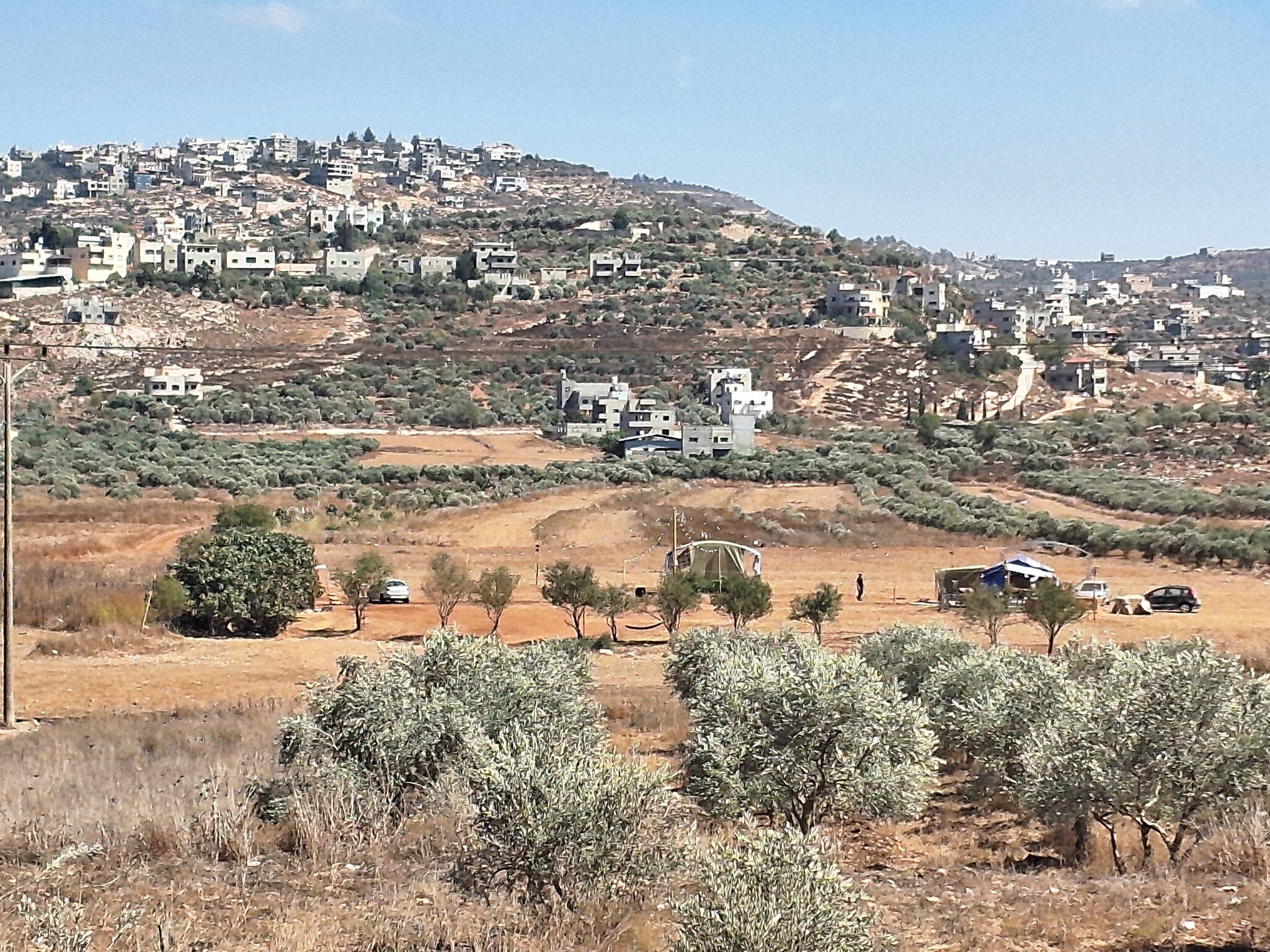 Ronit Dahan-RamatiSep-10-2026Awarta. Outpost below the town
-
Huwwara
See all reports for this place-
The Huwwara checkpoint is an internal checkpoint south of the city of Nablus, at the intersection of Roads 60 and 5077 (between the settlements of Bracha and Itamar). This checkpoint was one of the four permanent checkpoints that closed on Nablus (Beit Furik and Awarta checkpoints to the east and the Beit Iba checkpoint to the west). It was a pedestrian-only barrier. As MachsomWatch volunteers, we watched therre since 2001 two shifts a day - morning and noon, the thousands of Palestinians leaving Nablus and waiting for hours in queues to reach anywhere else in the West Bank, from the other side of the checkpoint the destination could only be reached by public transport. In early June 2009, as part of the easing of Palestinian traffic in the West Bank, the checkpoint was opened to vehicular traffic. The passage was free, with occasional military presence in the guard tower. Also, there were vehicle inspections from time to time. Since the massacre on 7.10.2023, the checkpoint has been closed to Palestinians.
On February 26, 2023, about 400 settlers attacked the town's residents for 5 hours and set fire to property, such as houses and cars. Disturbances occurred in response to a shooting of two Jewish residents of Har Bracha by a Palestinian Terrorist. The soldiers stationed in the town did not prevent the arson and rescued Palestinian families from their homes only after they were set on fire. No one was punished and Finance Minister Smotrich stated that "the State of Israel should wipe out Hawara." Left and center organizations organized solidarity demonstrations and support actions for the residents of Hawara.Hawara continued to be in the headlines in all the months that followed: more pogroms by the settlers, attacks by Palestinians and a massive presence of the army in the town. It amounted to a de facto curfew of commerce and life in the center of the city. On October 5, 2023, MK Zvi established a Sukkah in the center of Hawara and hundreds of settlers backed the army blocked the main road and held prayers in the heart of the town all night and the next day. On Saturday, October 7, 23 The "Swords of Iron" war began with an attack by Hamas on settlements surrounding Gaza in the face of a poor presence of the IDF. Much criticism has been made of the withdrawal of military forces from the area surrounding Gaza and their placement in the West Bank, and in the Hawara and Samaria region in particular, as a shield for the settlers who were taking over and rioting.
On November 12, 2023, the first section of the Hawara bypass road intended for Israeli traffic only was opened. In this way, the settlers can bypass the road that goes through the center of Hawara, which is the main artery for traffic from the Nablus area to Ramallah and the south of the West Bank. For the construction of the road, the Civil Administration expropriated 406 dunams of private land belonging to Palestinians from the nearby villages. The settlers are not satisfied with this at the moment, and demand to also travel through Hawara itself in order to demonstrate presence and control.(updated November 2023)
.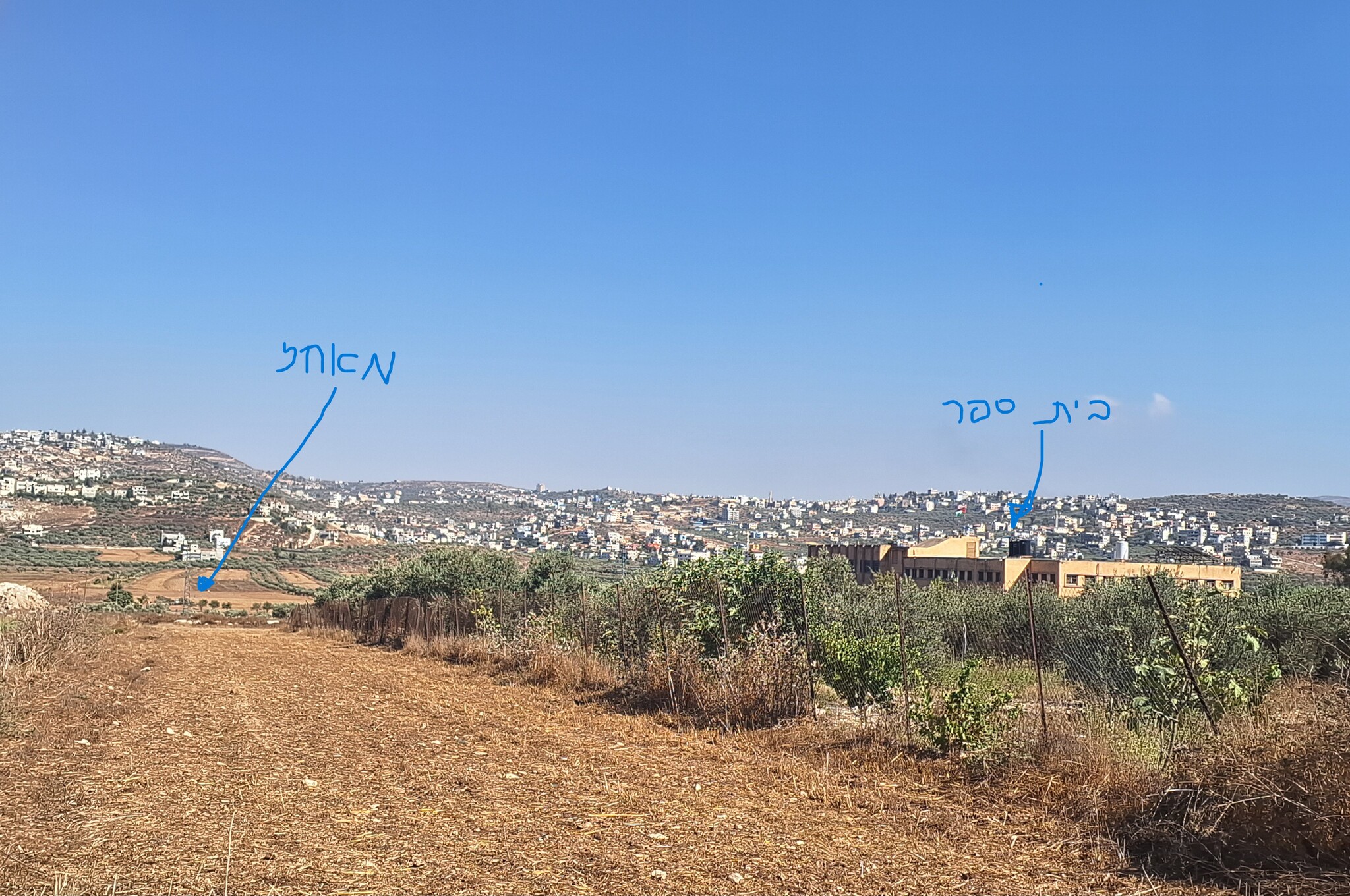 Ronit Dahan-RamatiAug-24-2026Huwara: The school on the outskirts of town and an outpost hidden among the trees
-
Za'tara (Tapuah)
See all reports for this place-
Za'tara (Tapuah) Za'tara is an internal checkpoint in the heart of the West Bank, at the intersection of Road 60 and Road 505 (Trans-Samaria), east of the Tapuah settlement. This checkpoint is the "border" marked by the IDF between the north and south of the West Bank, in accordance with the policy of separation between the two parts of the West Bank that has been in place since December 2005. At the Za'tara checkpoint, there are separate routes for Israelis and Palestinians. In the route for Israelis, there are no inspections and the route for Palestinians inspects. The queue lengthens and shortens suits. The checkpoint is open 24 hours a day. The checkpoint is partially staffed and the people who pass through it are checked at random.
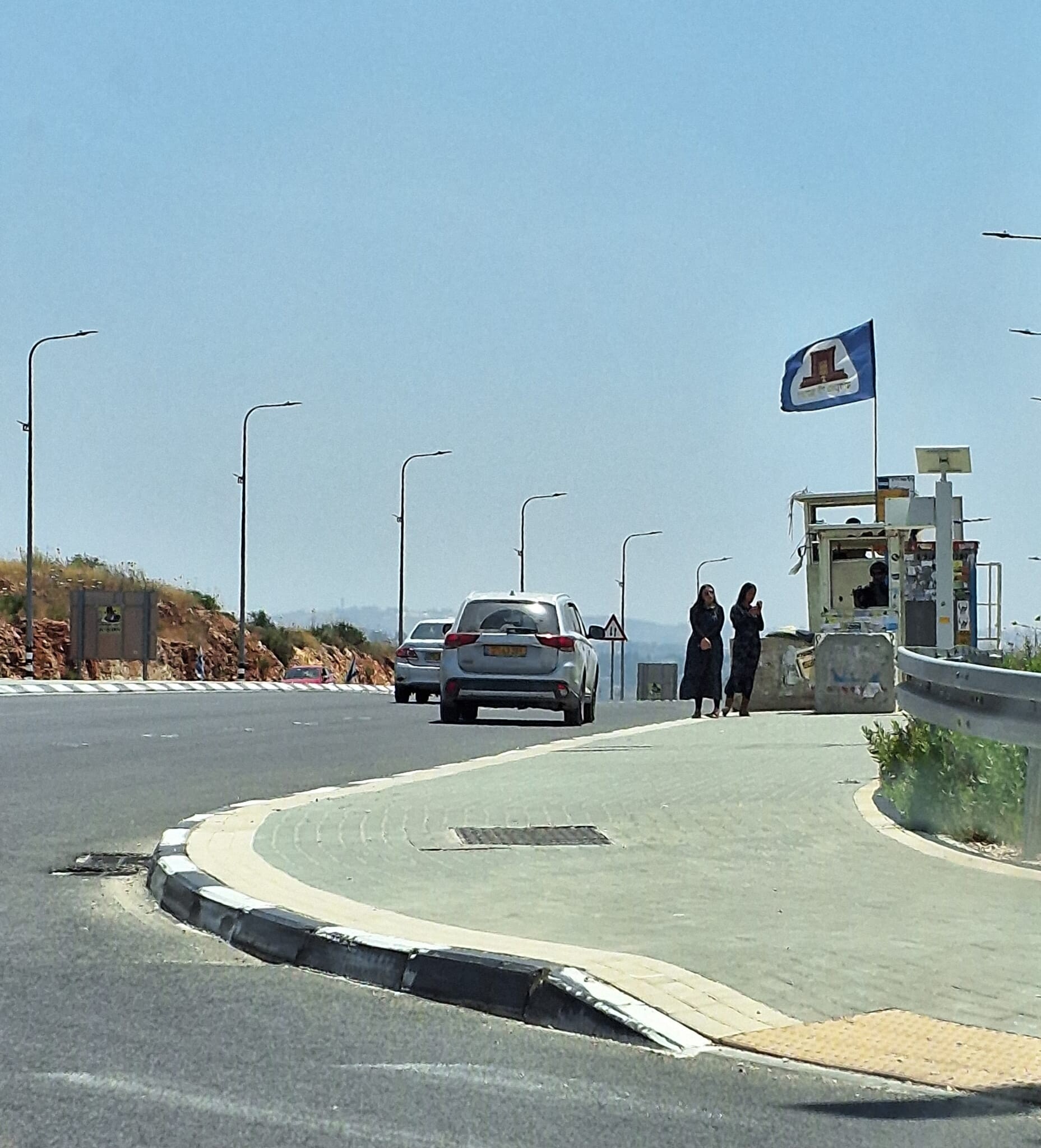 Ronit Dahan-RamatiJun-9-2026Za'atara (Tapuach Junction). The Temple Flag Above a Station
-
