
Huwwara, Za’tara (Tapuah), Tue 27.4.10, Morning
We began the tour at Hares. We entered a grocery store which we’ve been to at a previous tour; this time only the grocery owner and two young men, who didn't speak Hebrew, were there. They welcomed us cordially and offered us drinks. When we asked where the men who had been there last time were, they answered that they were working at Barkan. We bought some things and left.
We passed a house which the IDF had destroyed a week ago. According to our map the village is situated in the A Zone, or at least in the B Zone, and therefore it is not clear why the army has destroyed the house.We entered a clothing shop and started to talk with the shop owner, who spoke excellent Hebrew (before we even could utter a word coffee arrived on a tray). He was not so familiar with the boundries of the zones and said that he didn't know in which zone the house was situated. According to him it was said that the house was built without license, the demolition was carried out without warning, and no chance was given to appeal against it in court. The person whose house was demolished had invested in it all the money he had saved for many years and now all went down the drain. He talked about the housing shortage in the village. Since Ariel was established the area of the village diminished more and more, road no. 5 robbed some of their lands and now the main road between the villages passes through the village itself and is narrow and winding.
Those who have lands near to Ariel, south of the road, cannot build. Those who have lands on the northern side of the road, in the area farther from Ariel – can build (the house we were talking about is on the remote side, and was destroyed nonetheless). According to the person we were talking with, the policy is to reduce the village as much as possible. We asked him how come he spoke such excellent Hebrew, and he told us that he had worked for many years in Israel, but when the closures began it became very difficult, and then he decided to open the shop. It is difficult to make a living from the shop because he sells on credit and in installments; people have no money to pay cash. He said that they very much want peace, but "the Israelis only want us to sit quietly".
Later we met the owner of a cosmetics shop who told us that her husband was working for the Palestinian Authority. He was lucky to have work, but the pay is low.
We passed through Kira, Zeita, Jam'in and entered Inabus. There we met the owners of the second hand shop. He had approached us in former visits asking for help for his daughter who is prevented from visiting her husband in prison. Regretfully we didn't have good tidings in the matter. Now he had another problem – his second daughter is married to a young man from Gaza. They had lived in Inabus and their house had been destroyed. They are not living in Ein Urif in a house they bought, they are afraid that the husband will be expelled according to the new regulations. As a result of the destruction of their former home the children suffer from anxieties and one of them started stuttering. They ask for medical aid. We made contact between them and "Doctors without Borders".
We arrived at the Huwwara CP. The inspection is random and the queues aren't long.
On the main street of Huwwara there are soldiers but they don't check the passersby. At Zaatara cars aren't being checked but at the entrance to Kifel Hares from road no. 5 – there are checks.
Huwwara
See all reports for this place-
The Huwwara checkpoint is an internal checkpoint south of the city of Nablus, at the intersection of Roads 60 and 5077 (between the settlements of Bracha and Itamar). This checkpoint was one of the four permanent checkpoints that closed on Nablus (Beit Furik and Awarta checkpoints to the east and the Beit Iba checkpoint to the west). It was a pedestrian-only barrier. As MachsomWatch volunteers, we watched therre since 2001 two shifts a day - morning and noon, the thousands of Palestinians leaving Nablus and waiting for hours in queues to reach anywhere else in the West Bank, from the other side of the checkpoint the destination could only be reached by public transport. In early June 2009, as part of the easing of Palestinian traffic in the West Bank, the checkpoint was opened to vehicular traffic. The passage was free, with occasional military presence in the guard tower. Also, there were vehicle inspections from time to time. Since the massacre on 7.10.2023, the checkpoint has been closed to Palestinians.
On February 26, 2023, about 400 settlers attacked the town's residents for 5 hours and set fire to property, such as houses and cars. Disturbances occurred in response to a shooting of two Jewish residents of Har Bracha by a Palestinian Terrorist. The soldiers stationed in the town did not prevent the arson and rescued Palestinian families from their homes only after they were set on fire. No one was punished and Finance Minister Smotrich stated that "the State of Israel should wipe out Hawara." Left and center organizations organized solidarity demonstrations and support actions for the residents of Hawara.Hawara continued to be in the headlines in all the months that followed: more pogroms by the settlers, attacks by Palestinians and a massive presence of the army in the town. It amounted to a de facto curfew of commerce and life in the center of the city. On October 5, 2023, MK Zvi established a Sukkah in the center of Hawara and hundreds of settlers backed the army blocked the main road and held prayers in the heart of the town all night and the next day. On Saturday, October 7, 23 The "Swords of Iron" war began with an attack by Hamas on settlements surrounding Gaza in the face of a poor presence of the IDF. Much criticism has been made of the withdrawal of military forces from the area surrounding Gaza and their placement in the West Bank, and in the Hawara and Samaria region in particular, as a shield for the settlers who were taking over and rioting.
On November 12, 2023, the first section of the Hawara bypass road intended for Israeli traffic only was opened. In this way, the settlers can bypass the road that goes through the center of Hawara, which is the main artery for traffic from the Nablus area to Ramallah and the south of the West Bank. For the construction of the road, the Civil Administration expropriated 406 dunams of private land belonging to Palestinians from the nearby villages. The settlers are not satisfied with this at the moment, and demand to also travel through Hawara itself in order to demonstrate presence and control.(updated November 2023)
.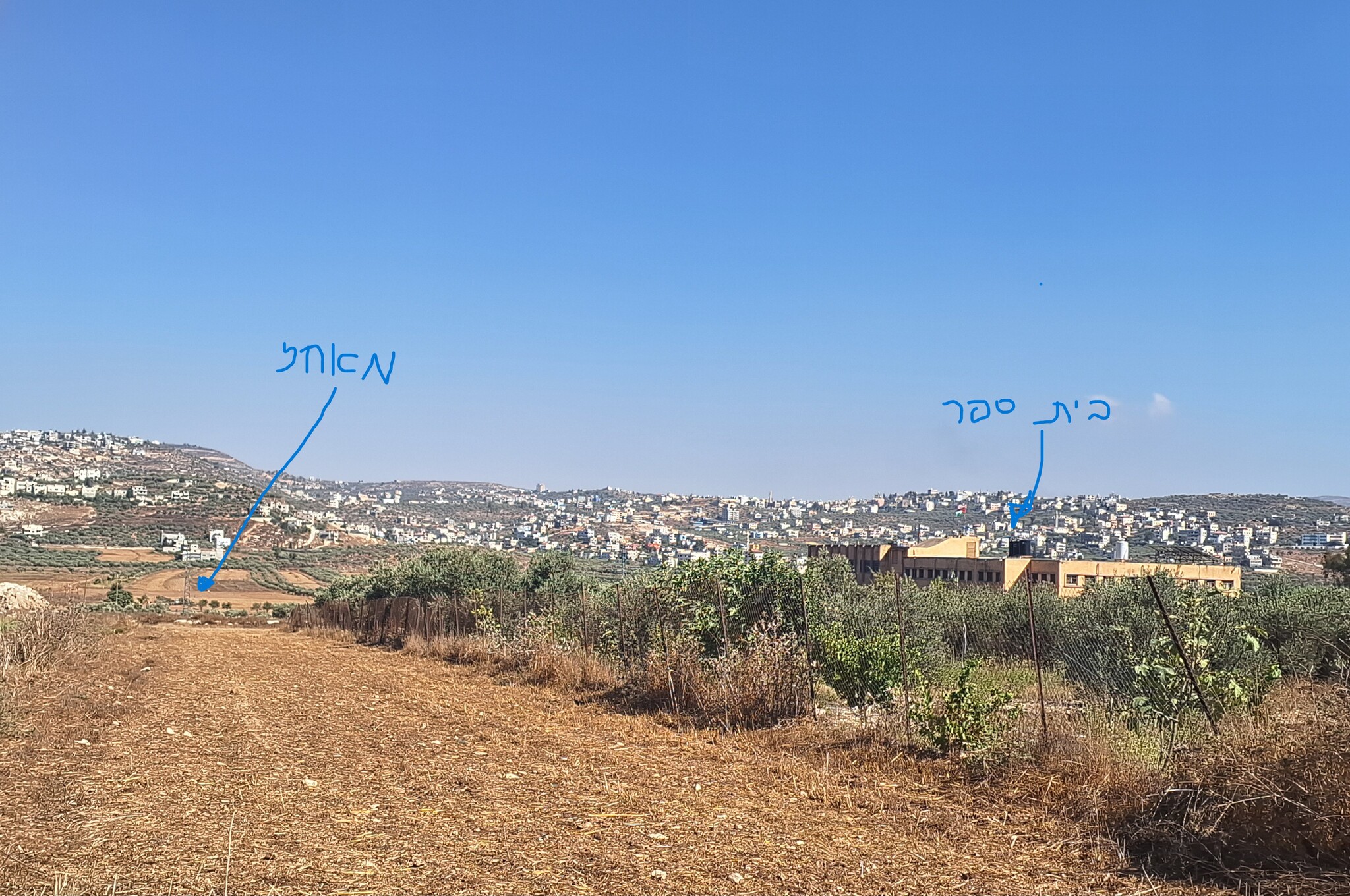 Ronit Dahan-RamatiAug-24-2026Huwara: The school on the outskirts of town and an outpost hidden among the trees
-
Za'tara (Tapuah)
See all reports for this place-
Za'tara (Tapuah) Za'tara is an internal checkpoint in the heart of the West Bank, at the intersection of Road 60 and Road 505 (Trans-Samaria), east of the Tapuah settlement. This checkpoint is the "border" marked by the IDF between the north and south of the West Bank, in accordance with the policy of separation between the two parts of the West Bank that has been in place since December 2005. At the Za'tara checkpoint, there are separate routes for Israelis and Palestinians. In the route for Israelis, there are no inspections and the route for Palestinians inspects. The queue lengthens and shortens suits. The checkpoint is open 24 hours a day. The checkpoint is partially staffed and the people who pass through it are checked at random.
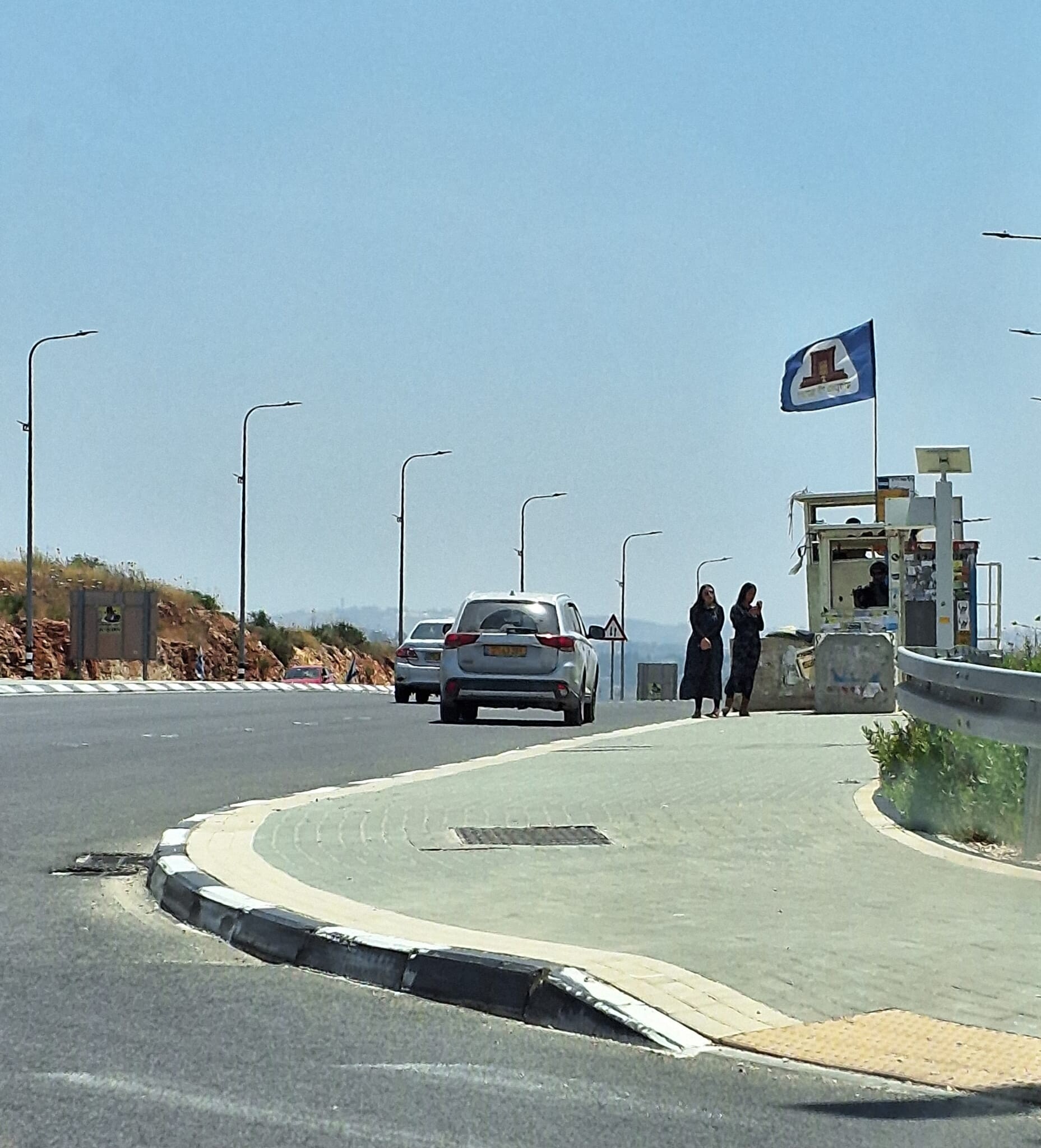 Ronit Dahan-RamatiJun-9-2026Za'atara (Tapuach Junction). The Temple Flag Above a Station
-
